Kenya's Living
Swahili Capital
A UNESCO fortress guards a harbour that has taken deliveries from Arabia, India, Portugal, and Britain for a thousand years, and the working port beneath it still does business today, not a museum piece but a genuinely busy Indian Ocean city.
A Working City, Not Just a Transit Point
Most Kenya coast guests pass through Mombasa on the way to somewhere else. That undersells it, this is Kenya's second city and the historical capital of the Swahili coast, with a working port and an Old Town dense enough with genuine history to reward a proper stay rather than a layover.
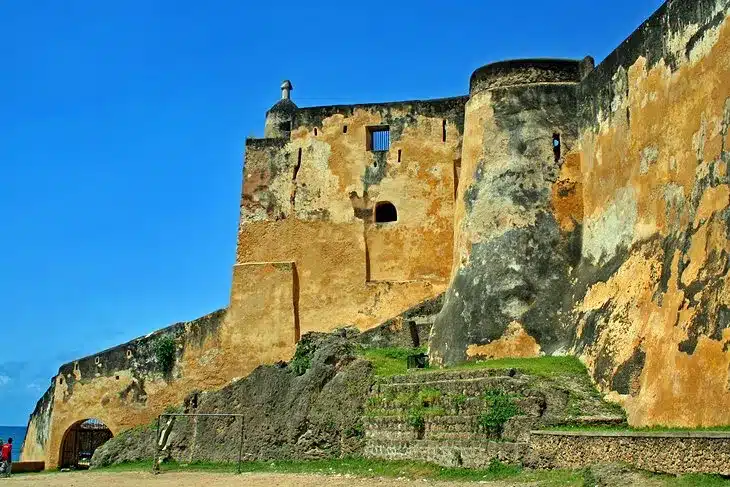
Fort Jesus, a UNESCO World Heritage Site
Built between 1593 and 1596 to guard the harbour entrance, this UNESCO World Heritage Site condenses five centuries of Portuguese, Omani, and British occupation into a single fortress.
Mombasa Old Town
Within about two square kilometres, carved wooden doors, Omani style balconies, mosques, and Hindu temples document more than a thousand years of Indian Ocean commercial civilisation.
A Cosmopolitan Food Culture
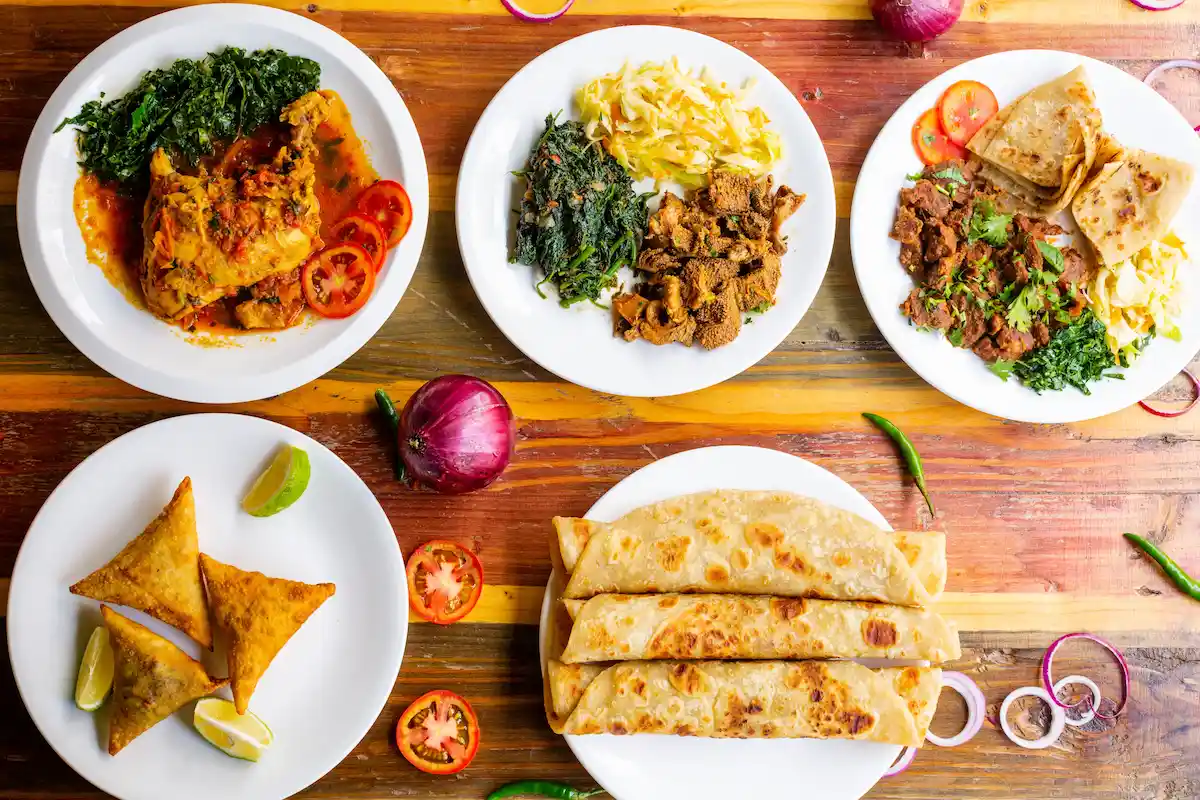
Swahili, Arab, Indian, and Goan culinary traditions meet here in dishes found nowhere else in Kenya, pilau, Zanzibari style biryani, urojo, and the freshest possible harbour seafood.
Island Core, Working Port, and Beach Coastline
Mombasa's historical core, its working port, and its beach resort coastline are architecturally and culturally distinct, understanding the difference matters for planning a visit that actually delivers what you came for.
The Historic Core
Bounded by the Fort Jesus headland, the dhow harbour, and the modern city centre, this roughly two square kilometre quarter concentrates Mombasa's historical identity almost entirely.
A City That Still Works
Kilindini Harbour, one of East Africa's busiest commercial ports, and the Old Port's dhow mooring give Mombasa an economic reality that purely resort focused coastal destinations lack.
Where the Beach Resorts Sit
Bamburi, Nyali, and Shanzu to the north and Likoni and Shelly Beach to the south provide the resort infrastructure of Kenya's coastal tourism, architecturally and culturally distinct from the island's historic core.
What Sets Mombasa Apart
 Fort Jesus
 Fort Jesus, a UNESCO World Heritage Site
Designed by the Italian architect Giovanni Battista Cairati in the angular bastion form of sixteenth century military engineering, the fort was captured by the Omanis in 1698 after a lengthy siege, retaken by the Portuguese, reconquered again, and later used as a British prison, condensing the entire Indian Ocean colonial era into one structure.

Mombasa Old Town's Carved Doors and Balconies
Swahili carved wooden doors with Indian influenced geometric patterns, Omani style latticed balconies, Portuguese era church ruins, and active mosques and Hindu temples turn a walk between the fort and the dhow harbour into a genuine architectural anthology.
 Mombasa Cuisine
 Mombasa's Food Culture
Pilau, Zanzibari style biryani, urojo, and the freshest possible harbour seafood reflect a synthesis of Swahili, Arab, Indian, and Goan culinary traditions found nowhere else in Kenya, best experienced in the Old Town's tea houses and the biryani restaurants near Fort Jesus.

The Dhow Harbour and Fish Market
Traditional hand built dhows still arrive here from smaller Kenyan ports and, seasonally, from the Arabian Gulf, one of the Indian Ocean's last operational working dhow harbours, at its most alive when the night's fishing fleet unloads at first light.
 Haller Park
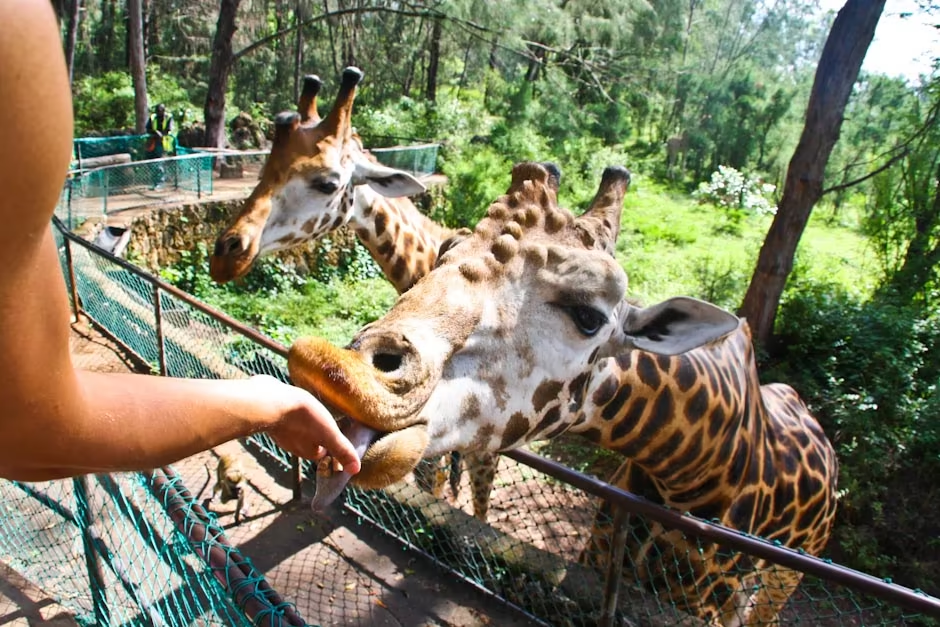
 Haller Park's Wildlife Rehabilitation Story
A decommissioned cement quarry rehabilitated over four decades into a genuine wildlife sanctuary, hippo, buffalo, giraffe, and waterbuck all present within minutes of the city centre, without any of the logistics a conventional safari requires.

Wasini Island and Kisite Mpunguti Marine Park
Fifty five kilometres south near the Tanzania border, this reef system is generally considered in better condition than Mombasa's own more heavily visited marine park, full day dhow excursions from the city or from Diani cover snorkelling and dolphin encounters.
How You'll Spend Your Days
Fort Jesus and Mombasa Museum
A half day visit covers the fort’s architectural history, the Omani siege of 1696 to 1698, one of the longest and most dramatic in East African history, the ongoing archaeological excavations, and the Mombasa Museum’s collection of Swahili and Indian Ocean maritime artefacts, with battlement views over the Old Port and the Old Town.
Old Town Walking Tour
A two to three hour guided walk covers the Mandhry Mosque, one of the coast’s oldest surviving mosques, the Leven House former British naval post, the carved door anthology along Old Harbour Road, and the Swahili Cultural Centre at Basheikh House.
Mombasa Food Experience
Old Town tea houses for morning mandazi and chai, the biryani restaurants of Nkrumah Road for lunch, and the seafood restaurants of the Nyali and Mama Ngina waterfront for evening, a full day’s tour through Mombasa’s most authentic and characterful food environments.
Haller Park
Developed on a former cement quarry and rebuilt over four decades into a genuine wildlife sanctuary, Haller Park gives families or guests with a single day in Mombasa a rewarding wildlife morning without any safari logistics.
Excursions from Mombasa
Diani Beach, thirty kilometres south via the Likoni Ferry, Shimba Hills National Reserve for sable antelope and coastal forest elephant, and full day dhow excursions to Wasini Island and Kisite Mpunguti Marine Park all extend a Mombasa stay without requiring a domestic flight.
Comfortable Nearly Any Time of Year
As a cultural and culinary destination rather than a wildlife one, Mombasa rewards a visit in almost any month, the two dry seasons simply add better beach conditions on top.
Primary Season
Jul to Oct (Dry)
Clear skies, lower humidity, and the Kusi trade winds moderate temperatures to a comfortable 26 to 28 degrees Celsius, with minimal rainfall throughout. August and September bring the finest south coast beach conditions of the year.
Secondary Season
Jan to Mar
Warm, calm conditions suit marine activities and lower humidity Old Town visits well. January and February are Mombasa’s quietest months despite good conditions, genuinely good value and a more relaxed city atmosphere than the July to October peak.
Getting to Mombasa
Moi International Airport receives direct international flights from Nairobi, Zanzibar, and Dar es Salaam, with onward connections to European hubs via Nairobi. Domestic services on Kenya Airways, AirKenya, Fly540, and Safarilink connect Mombasa with Nairobi, around one hour, Malindi, around 30 minutes, and Lamu, around 45 minutes.
The A109 Nairobi to Mombasa highway covers around 480 km in six to eight hours depending on traffic, road quality has improved substantially with recent upgrades. The Standard Gauge Railway offers a genuinely enjoyable alternative, connecting Nairobi Terminus to Miritini Station on Mombasa’s mainland in around four hours, followed by a short transfer to the island, we recommend it for guests who value the journey itself and have flexibility on arrival timing.
“By the fifteenth century Mombasa was already one of the most powerful city states on this coast, and its wealth was inseparable from a trade that included human beings alongside ivory and gold.”On a City Fought Over for Five Centuries
Arab geographers were describing Mombasa as a significant, well established Swahili trading port by the twelfth century. By the fifteenth century it was one of the most powerful city states on the East African coast, its wealth built on its role as the primary entrepot between the African interior and the Indian Ocean world, a trade that moved ivory and gold alongside enslaved people, a history the city does not hide from and that RYDER Signature addresses directly rather than passing over in guided tours.
The Portuguese arrival in 1498 opened a century of violent conflict between Lisbon and the Swahili coastal city states, Mombasa was sacked by Portuguese forces more than once, most devastatingly in 1505 and 1528, before Fort Jesus gave Portugal a more permanent presence from 1593. The Omani Arab conquest of 1698 ended that dominance and established the sultanate authority over the coast that eventually produced Zanzibar’s own nineteenth century Arab sultanate. British colonial rule, established in 1895, made Mombasa the terminus of the Uganda Railway, the line that opened East Africa’s interior to European settlement and set the conditions for modern Nairobi’s growth, while Mombasa itself remained the region’s primary port and Indian Ocean gateway throughout.
Honest About a Reef Under City Pressure
Mombasa Marine National Park, directly offshore from the Nyali and Bamburi beachfront, gives formal reef protection within the city’s immediate coastal zone, but its condition reflects the pressures of proximity to a major city and high visitor volumes, and it is generally in worse shape than Watamu or Kisite Mpunguti further south. We tell guests this plainly rather than oversell a reef visit from a Mombasa base, and recommend the Kisite Mpunguti excursion, 55 km south, for anyone whose priority is genuine marine wildlife.
Haller Park stands as the city’s most compelling conservation story in its own right, a devastated industrial quarry rebuilt over four decades into a functioning wildlife sanctuary, a genuinely inspiring demonstration that even severely degraded land can recover with sustained effort.
Duration and Combinations
One to two nights covers Fort Jesus, the Old Town tour, the food experience, and a Haller Park morning, along with the practical transit logistics most guests need anyway. If beach relaxation is your priority, Diani, thirty kilometres south, makes a far better base, and a half day Mombasa cultural excursion from there covers the essentials.
Mombasa + Diani Beach
The natural Kenya south coast combination, one to two nights for Mombasa's cultural programme followed by three to five nights at Diani for beach and marine activities.
Mombasa + Watamu + Malindi
The full Kenya coast programme, using Mombasa as the arrival hub and moving north to Watamu and Malindi before flying home from Malindi Airport.
Safari + Mombasa
Mombasa as a coast finale after any Kenya safari, the Standard Gauge Railway makes the Nairobi to Mombasa leg an experience in itself rather than a transfer to endure.
Travellers Mombasa Rewards
History and Heritage Travellers
Fort Jesus, the Old Town, and the dhow harbour make Mombasa the Kenya coast's most historically rich urban destination.
Transit Guests Adding Cultural Depth
Guests arriving at Mombasa's international airport for a coast holiday can add a night or two of cultural programme without meaningful extra logistical complexity.
Food Enthusiasts
Biryani, urojo, and coastal seafood make this the Kenya coast's most distinctive and rewarding culinary environment.
Families
Haller Park's accessible wildlife experience and the fort's dramatic history make Mombasa a genuinely rewarding family stop.
What to Pack
Clothing
- Modest clothing for Old Town, mosque areas, and the fish market, covered shoulders and knees, this is a working Muslim community
- Lightweight, breathable fabrics, daytime temperatures run 28 to 34 degrees Celsius year round
Footwear
- Comfortable, closed toe, supportive walking shoes, the Old Town's terrain is uneven cobblestone and compacted earth
Health
- DEET based insect repellent and antimalarial prophylaxis, Mombasa carries a year round malaria risk
Mombasa FAQ
Fort Jesus, a UNESCO World Heritage Site and one of the finest Portuguese era military fortifications in Africa, whose five hundred year history encompasses the entire colonial drama of the Indian Ocean coast.
For historical immersion and easy Old Town access, Mombasa Island’s Tudor, Nyali, or town centre hotels. For beach access within the city zone, the north coast Bamburi and Nyali strip. For the finest beach quality overall, Diani Beach, thirty kilometres south, is the preferred base.
Around thirty kilometres south by road, including the Likoni Ferry crossing, typically forty five minutes to an hour in normal traffic.
Yes, the Standard Gauge Railway connects Nairobi and Mombasa in around four hours, a comfortable, scenic journey worth taking for its own sake if your schedule allows the flexibility.
Yes, year round. Antimalarial prophylaxis is strongly recommended.
A genuine synthesis of Swahili, Arab, Indian, and Goan culinary traditions producing biryani, urojo, pilau, and fresh seafood dishes unavailable elsewhere in Kenya, a guided food experience is one of the most immediately rewarding things you can do here.
Begin Planning Your Mombasa Coast Extension
Every Mombasa itinerary we design treats the city as a genuine destination, whether that means a full cultural programme or simply a smarter transit than you'd otherwise plan.