Activities
1.5 to 2.5 hours · From $70 per person, including guide and entrance
Fort Jesus Museum
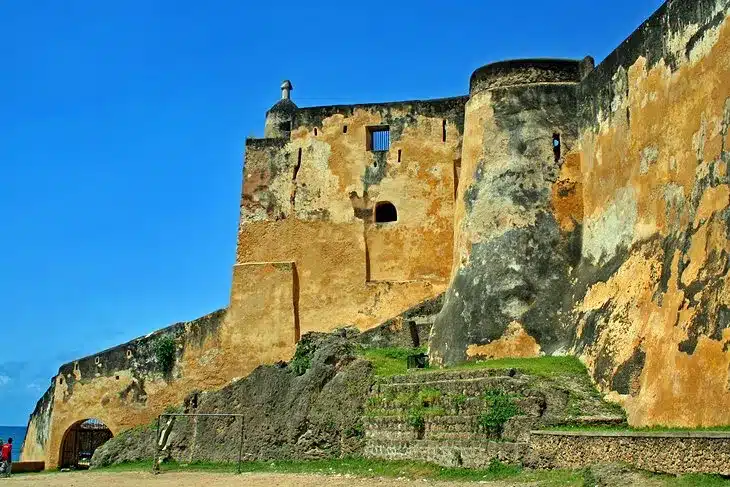
Fort Jesus is one of the most significant fortifications on the Swahili coast, and among the earliest European-style forts built outside Europe. Portuguese forces raised it between 1593 and 1596 to secure the Old Port, working to a design by the Italian military architect Giovanni Battista Cairati. It held under Portuguese control for roughly a century until a two year Omani siege ended in 1698, after which the fort changed hands several more times between Omani, Portuguese and eventually British forces, who converted it into a prison in 1895. It was declared a national monument in 1958 and inscribed as a UNESCO World Heritage Site in 2011.
What survives is a fortress that still reads as a working timeline: Portuguese stonework, an Omani house adapted for residence within the walls, and British era additions, all standing on the same coral ridge overlooking the harbour.
The fortifications: walls reaching up to 18 metres, angled bastions designed for overlapping fields of fire, and a layout that still traces its original sixteenth century footprint.
The Omani House: a preserved residence built within the fort after the 1698 siege, furnished to reflect how later occupants adapted a military structure for daily life.
Soldiers’ graffiti: wall etchings and sketches left by garrisoned soldiers, a rare and informal counterpoint to the fort’s formal history.
The museum collection: Portuguese armaments, Omani period objects, and ceramics and artefacts recovered from wreck sites and excavations, tracing the coast’s long trading history.
Paths and stairways are uneven in places. The site has limited shade, so a morning visit is noticeably more comfortable than an afternoon one.
Our guides specialise in East African coastal history and take the four hundred year story in proper sequence, Portuguese, Omani, British, rather than as a single blur of old stone. We often extend the visit into a wider Old Town walk, and can arrange a stop at a traditional restaurant nearby.
Licensed guide, museum and fort entrance, guided walk through the fortifications and Omani House

2 to 3 hours · From $70 per person in a small group, private tours run higher
Mombasa Old Town Walking Tour
Old Town is where Mombasa’s layered history is still lived in rather than simply displayed. Narrow streets, carved wooden balconies and coral stone buildings sit alongside working shops, mosques, temples and churches, the physical result of centuries of African, Arab, Indian and European exchange along this stretch of coast. Where Zanzibar’s Stone Town has been carefully preserved as a heritage precinct, Mombasa’s Old Town keeps functioning as an ordinary, busy quarter of the city, which gives the walk a different, more everyday texture.
Swahili architecture: carved doors, ornate balconies and coral stone construction that reflects generations of trade and intermarriage along the coast.
Religious diversity: mosques, Hindu temples and churches within a few streets of each other, evidence of a genuinely cosmopolitan trading port.
Working markets: spice traders, dried fish sellers and small workshops doing business much as they have for generations.
Craft quarters: woodcarvers, metalworkers and textile sellers still practising trades passed down through families.
Streets are narrow and can be crowded around market hours. Modest dress is appropriate given the number of religious sites along the route.
We route these walks with guides who grew up in Old Town, so the commentary comes from lived familiarity rather than a script. We can extend the route to include a stop at Fort Jesus for a fuller half day of history.
Licensed local guide, walking route through Old Town’s key streets and landmarks
2 to 3 hours · From $70 per person, including transport and entrance
Haller Park Nature Sanctuary
Haller Park is one of Africa’s better known land rehabilitation stories. Bamburi Cement began quarrying limestone here in 1954, and by the early 1970s the site was a bare, lifeless wasteland. Company ecologist Dr Rene Haller took on the job of reclaiming it, and after years of trial and error, mostly using hardy pioneer trees and a colony of millipedes to build the first layer of soil, the quarry slowly became the wooded, wildlife filled park visitors walk through today. It later gained wider recognition as the home of Owen and Mzee, an orphaned hippo and a giant tortoise whose unlikely friendship, formed after the 2004 Indian Ocean tsunami, drew attention from around the world.
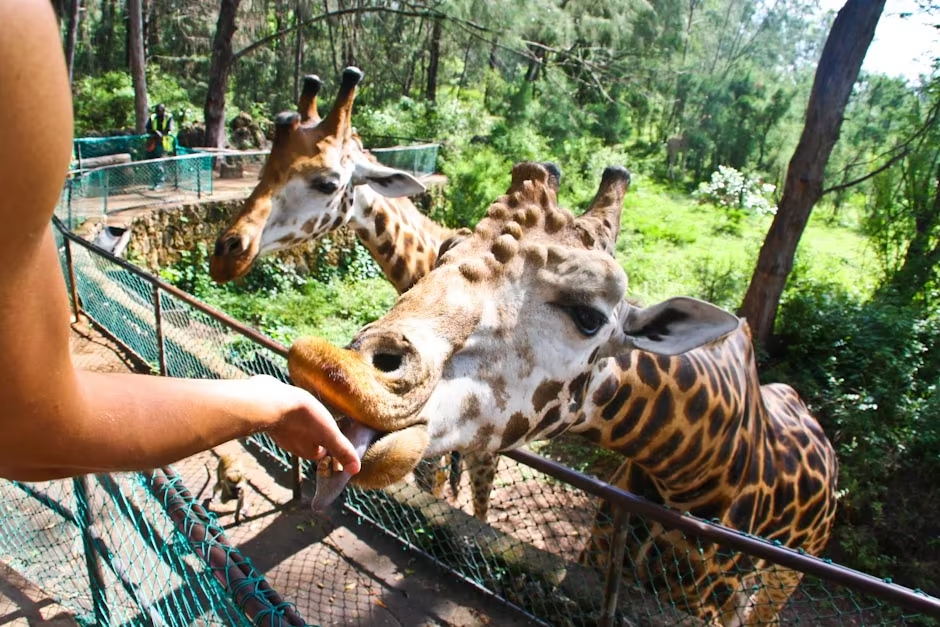
Wildlife on foot: giraffe, hippo, buffalo and various antelope roam within reach of the walking trails, a gentler alternative to a full safari for families or those short on time.
Giant tortoises: several long lived Aldabra tortoises live in the park, a favourite stop for children.
The rehabilitation story itself: guides explain how a barren limestone quarry became one of the coast’s most cited conservation successes.
Fish farm and reptile displays: smaller scale exhibits rounding out a visit that covers considerably more ground than its size suggests.
Paths are flat and well maintained, making this one of the easier outings on this list, suitable for most ages and mobility levels.
We schedule this for the afternoon feeding window, when the animals are noticeably more active, and our guides bring the Haller rehabilitation story to life with the detail it deserves, not just as a wildlife stop but as one of the coast’s genuinely remarkable environmental turnarounds.
Return transport from your accommodation, park entrance, guide
1 to 1.5 hours at the project, plus roughly 4 hours of return travel from Mombasa · From $70 per person, including transport, guide and entrance
Kipepeo Butterfly Project
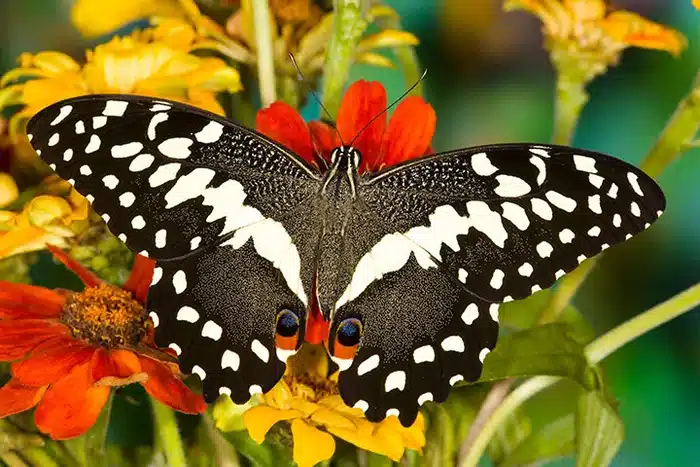
Kipepeo, Swahili for butterfly, began in 1993 as a community based alternative to logging and hunting around Arabuko Sokoke Forest, the largest remaining stretch of coastal forest in East Africa. Local farmers rear butterfly pupae for export to butterfly exhibits abroad, earning income that gives them a direct stake in keeping the surrounding forest intact. It sits beside the Gede Ruins, roughly two hours north of Mombasa toward Watamu, so it suits travellers extending a stay in that direction rather than a quick outing from the city itself.
The conservation model: a clear, workable example of how income from a natural resource can protect it, rather than deplete it.
Butterfly life cycle: observe every stage from egg to emerging adult, with species specific to the surrounding forest.
Gede Ruins nearby: the thirteenth century Swahili settlement ruins sit right next door, making an easy pairing for the same outing.
Because of the distance, this is best combined with the Gede Ruins or arranged on a day that includes travel toward Watamu or Malindi, rather than added on to a Mombasa city itinerary.
Because this one sits well outside the city, we only recommend it as part of a north coast day that also takes in the Gede Ruins, so the travel time earns its keep. We are glad to build that day into a longer Mombasa itinerary on request.
Return transport, guide, project entrance
3 to 4 hours · From $70 per person, including transport and guide
Mombasa City Tour
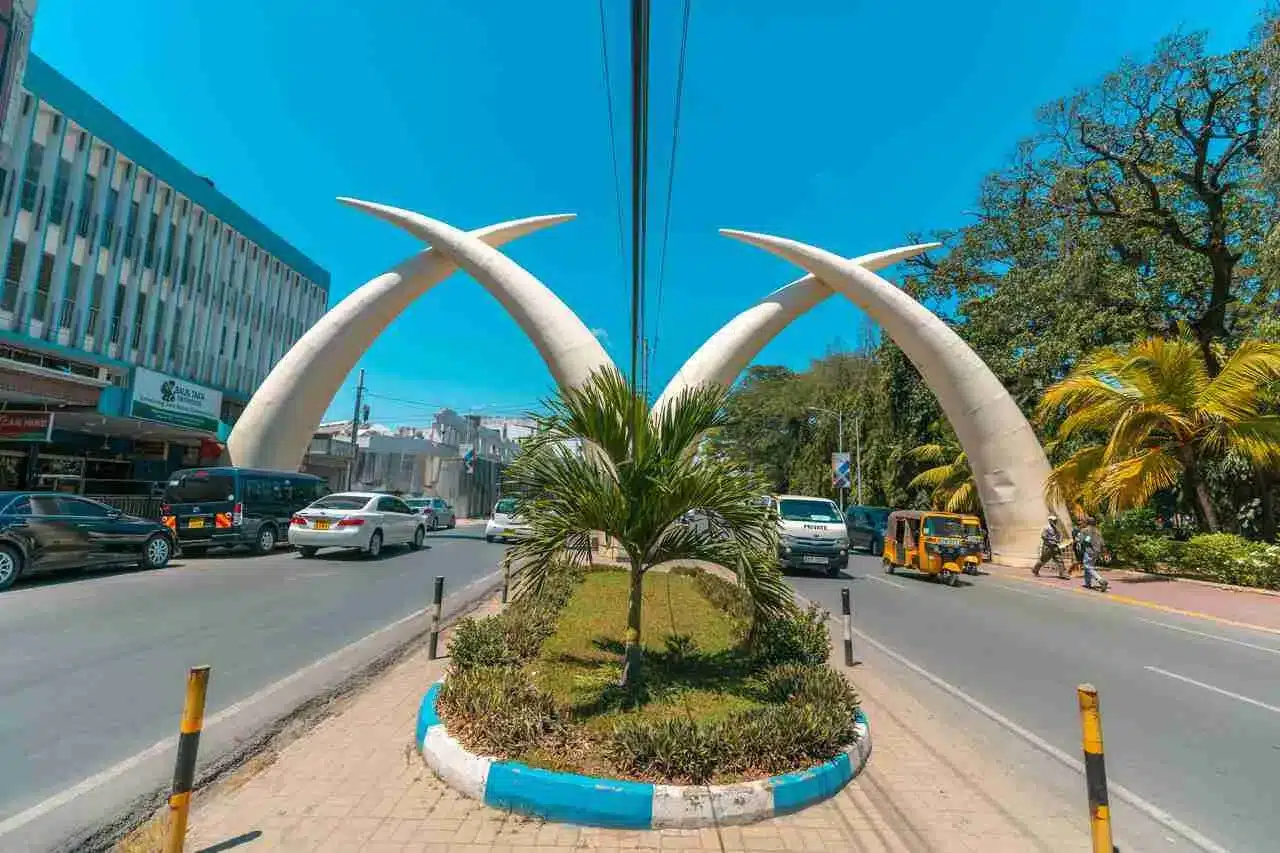
A broader city tour rounds out the historical sites with the contemporary life around them. The route usually takes in the Mombasa Tusks on Moi Avenue, an aluminium landmark shaped like an M and raised in 1952 to mark a visit from the then Princess Elizabeth, alongside the mix of mosques, temples and churches that reflect the city’s long standing diversity, and its busy modern markets.
The Mombasa Tusks: the city’s best known modern landmark, with a genuinely interesting backstory behind what looks at first like a simple photo stop.
Religious architecture: Hindu temples, historic churches and mosques within a short drive of each other.
Markets and street life: from modern retail to traditional stalls, a good measure of how the city works day to day.
This tour covers ground primarily by vehicle with short walking stops, making it a comfortable option in hotter weather.
We treat this as the connective tour that ties a Mombasa stay together, pairing well with either Fort Jesus or Haller Park depending on how much history versus wildlife you want in a day.
Private vehicle transport, guide, stops at the tusks, key religious sites and markets