Tanzania's Greatest
Wilderness
Tanzania's largest national park holds its largest lion population and some of its biggest elephant herds, seen from a vehicle that shares the view with almost no one else.
Wildlife Without the Crowd
A semi arid wilderness of ancient baobabs, rocky escarpment, and the permanent Great Ruaha River, this is Tanzania's biggest park by area, and one of the last places in East Africa where a sighting genuinely belongs to your vehicle alone.
Tanzania's Largest Lion Population
Ruaha holds roughly ten percent of Africa's entire remaining lion count, with prides known to hunt buffalo and even giraffe.
Massive Elephant Herds
Estimates for the wider ecosystem range from 12,000 to 20,000 elephants, converging on the Great Ruaha River in dry season concentrations that rival Tarangire.
Genuine Wilderness Exclusivity
Minimal vehicle traffic means every predator encounter unfolds at the pace of the wildlife, not a queue of other Land Cruisers.
Three Landscapes Across One Vast Park
At over 20,000 square kilometres, Ruaha is Tanzania's largest park, its terrain shifting from permanent river to seasonal woodland to rocky highland across its enormous area.
The Great Ruaha's Permanent Water
The Great Ruaha flows along the park's southern boundary, the one permanent water source that draws the dry season's heaviest wildlife concentrations to its banks.
Miombo Country
Brachystegia and Julbernardia woodland, ancient baobabs, and the seasonal Mwagusi and Jongomero rivers define the park's interior, where much of the best game viewing is organised.
Granite Country
Granite inselbergs and rocky escarpment in the north add a visual complexity to the landscape well beyond the open plains typical of the Northern Circuit.
What Sets Ruaha Apart

Tanzania's Largest Lion Population
Ruaha's prides have adapted hunting behaviours rarely documented elsewhere, regularly taking buffalo and, with exceptional coordination, occasionally giraffe, encounters in the open riverine areas are among the most intense in East Africa.

Elephant at the River
Herds converge on the Great Ruaha River as seasonal water recedes elsewhere, in concentrations that rival Tarangire's famous dry season gatherings, generally less habituated to vehicles than their Northern Circuit counterparts.

African Wild Dog
The park's vast miombo woodland supports one of Tanzania's most significant wild dog populations, and low visitor numbers mean sightings, when they happen, are uncontested and close.
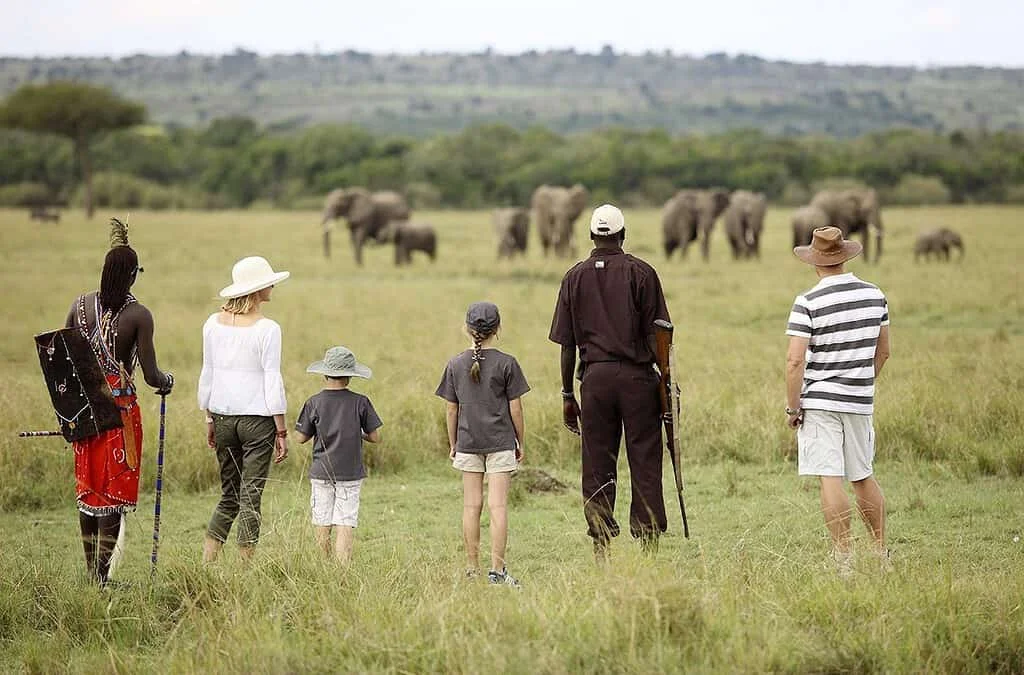 Walking Safari
 Walking Safaris of Exceptional Quality
Tracking lion, elephant, and giraffe on foot through the Mwagusi riverbed, reading the previous night's activity in the sand, is a form of engagement no vehicle drive can fully replicate.

Kudu and Sable Antelope
Greater kudu and sable antelope, both largely absent from the Northern Circuit, thrive in Ruaha's dense thicket and rocky ground, essential sightings for anyone with a serious interest in antelope diversity.

Boat Safaris on the Ruaha River
When water levels allow, boat safaris on the Great Ruaha River offer a different vantage entirely, floating past hippo pods and drinking elephant from the water's surface.
How You'll Spend Your Days
Game Drives
Morning drives focus on river facing areas where overnight predator activity leaves tracks and kills to read, afternoons extend into interior woodland where kudu, sable, and leopard show up most reliably. Full day drives reach distant sectors with wildlife essentially undisturbed by even the park’s modest visitor numbers.
Walking Safaris
Led by specialist guides alongside armed TANAPA rangers, routes follow the previous day’s game drive intelligence and adapt in real time, tracking lion spoor through the Mwagusi sand and reading giraffe browse heights along the way.
Bird Watching
Ruaha’s miombo woodland holds a bird community entirely distinct from Northern Circuit acacia savannah species, with river corridors adding waterbirds and rocky escarpment attracting raptors and cliff nesting species, a single morning can produce eighty or more species.
Cultural Visits
Visits to Hehe and Sangu communities near the park boundary add historical and contemporary context, including the story of Chief Mkwawa’s resistance to German colonial forces in the 1890s.
Photography
Uncontested sightings, strong semi arid light, and an unusually high predator density make Ruaha one of the most rewarding photographic environments in East Africa, with guides who position vehicles around light quality as much as proximity.
Concentration or Solitude, Pick Your Season
Ruaha rewards visitors in both its dry and green seasons, the trade off is wildlife density against an even quieter, greener park.
Peak Season
Jun to Oct (Dry)
As seasonal rivers and waterholes dry out, wildlife funnels toward the Great Ruaha River and the permanent pools of the Mwagusi and Jongomero, elephant herds of 200 or more, lion prides hunting on open sandbanks, and wild dog denning in the escarpment are all typical. July and August bring the highest concentrations and clearest skies, September and October stay excellent as the heat builds.
Green Season
Nov to May
The landscape turns from ochre to vivid green, wildlife disperses more widely, and birdwatching peaks with the arrival of migratory species. Visitor numbers, already modest, drop further, and the cooler, softer ground makes this the most comfortable window for walking safaris.
Getting to Ruaha
Charter flight is the standard route, around 1.5 hours from Dar es Salaam to Msembe, Mwagusi, or Jongomero airstrip depending on camp. Connections also run from Zanzibar, around 1.5 to 2 hours, and Arusha, around 2 hours with a possible stop at Mikumi or Iringa. Coastal Aviation runs scheduled service from Dar es Salaam, typically stopping at Mikumi en route.
- Msembe AirstripPark headquarters, primary access for most camps
- Mwagusi AirstripCentral Ruaha, serves Mwagusi area camps
- Jongomero AirstripRemote southern sector, serves Jongomero Camp
The road journey from Dar es Salaam takes around eight to ten hours on the TANZAM highway, good tarmac throughout with a final graded dirt stretch from Iringa to the park gate. We recommend flying in for any itinerary under five nights, since the drive consumes a full day each way.
Jabali Ridge by Asilia – High-End Luxury in Ruaha National Park, Tanzania
Jabali Ridge by Asilia Africa: 8 suites woven among granite boulders in Ruaha National Park, with an infinity pool, on-site spa, rain showers, and some of Africa’s finest lion and wild dog country.
View Property →Ruaha River Lodge – Luxury in Ruaha National Park, Tanzania
Ruaha River Lodge: 24 stone and thatch en-suite chalets on the Ruaha River, offering year-round wildlife from the veranda, two exceptional dining locations, and Foxes Safari Camps’ pioneering bush hospitality.
View Property →Ruaha Hilltop Lodge – Mid-Range in Ruaha National Park, Tanzania
Ruaha Hilltop Lodge: 27 hilltop cottages on Ideremle Mountain with panoramic Ruaha plains views, an infinity pool, and an affordable base for Ruaha National Park safari drives and walking safaris.
View Property →“The wildlife roaming Ruaha today does so on ground the Hehe fought to keep for themselves a century ago.”On the Hehe and Sangu Peoples of This Landscape
The highlands surrounding Ruaha are the ancestral home of the Hehe people, remembered above all for their sustained resistance to German colonial forces under Chief Mkwawa. The Hehe War, fought from 1891 to 1898, ranks among colonial East Africa’s longest and costliest campaigns, and Mkwawa’s guerrilla tactics across this same highland terrain became a lasting symbol of African resistance to conquest.
To the south, in the Usangu Wetlands, the Sangu people maintain a pastoral tradition whose water use has direct consequences for the park today, agricultural draw from the wetlands affects the dry season flow of the very river that concentrates Ruaha’s wildlife each year.
The Core of a Vast Ecosystem
Ruaha anchors the Rungwa Ruaha ecosystem, a protected area network covering roughly 45,000 square kilometres once surrounding game reserves are included, one of East Africa’s most significant intact large mammal landscapes. Its lion and elephant numbers matter materially to Tanzania’s national conservation picture, and its wild dog population ranks among the most important for the species’ long term survival in East Africa.
The Great Ruaha River’s flow faces a direct threat from agricultural water abstraction upstream in the Usangu Wetlands, a conservation problem with real consequences for the park’s dry season wildlife concentrations. RYDER Signature tracks this issue closely and supports the organisations working to protect minimum environmental flows in the river system.
Duration and Combinations
Three nights is our minimum recommendation, enough for multiple drives across the river and interior zones, a walking safari, and a night drive. Four nights gives a more relaxed pace and adds a full day drive into the park's remote sectors.
Ruaha + Nyerere
The definitive Southern Circuit pairing, two of Tanzania's most extraordinary and least visited wilderness areas connected by charter flight, in a single eight to ten night itinerary.
Southern Circuit + Zanzibar
Adding three to five nights on Zanzibar creates a complete journey, the raw Southern Circuit wilderness against the turquoise coast.
Ruaha + Northern Circuit
For guests covering both halves of Tanzania, Ruaha and Nyerere first, then a flight north to Arusha for the Serengeti and Ngorongoro, across twelve to sixteen nights.
Travellers Ruaha Rewards
Experienced Safari Travellers
Guests returning to East Africa after covering the Northern Circuit find Ruaha genuinely different, more remote, and in many ways more rewarding for the quality of its encounters.
Walking Safari Enthusiasts
Ruaha's walking safari program ranks among Africa's finest for guests drawn to on foot wildlife encounters and bush skills.
Wildlife Photographers
Uncontested sightings, strong light, and exceptional predator diversity make this one of East Africa's premier photographic destinations.
Conservation Minded Travellers
The park's scale, its role in Tanzania's lion and elephant conservation, and its community programs give conservation minded guests real depth to engage with.
What to Pack
Clothing
- Light, breathable layers for hot days that often exceed 35 degrees Celsius, plus a light fleece for cool early mornings and nights
- Neutral bush colours, khaki, olive, and tan, avoiding blue and black during tsetse fly season
Sun and Health
- Very high SPF sunscreen, a wide brimmed hat, and UV sunglasses, the sun here is intense
- DEET based insect repellent, Ruaha carries a malaria risk year round
Footwear
- Sturdy boots for walking safaris across rocky, thorny terrain
Ruaha Safari FAQ
Ruaha’s semi arid miombo landscape, its near total absence of other vehicles, and the specific character of its wildlife, lion prides adapted to hunting buffalo and giraffe, huge elephant herds, and miombo specific birds and antelope, set it apart. It trades the Serengeti’s migration spectacle for a more exclusive and in many ways more intense wilderness encounter.
Lion, leopard, cheetah, African wild dog, spotted hyena, elephant, buffalo, hippo, Nile crocodile, greater and lesser kudu, sable antelope, roan antelope, zebra, giraffe, eland, and more than 570 bird species. Carnivore density here, particularly lion and wild dog, ranks among the highest of any protected area in Africa.
June through October, the dry season, delivers the most spectacular concentrations along the Great Ruaha River, with July and August the peak months. November through May offers exceptional birding, comfortable walking safari conditions, and an almost entirely private wilderness experience.
Charter or scheduled flight from Dar es Salaam, around 1.5 hours, to Msembe or Mwagusi airstrip is the recommended route. Road access from Dar es Salaam takes around eight to ten hours and suits itineraries of five nights or more.
Yes, though it suits guests prepared for a more remote, less structured experience than the Northern Circuit’s developed parks. Guests who strongly prefer confirmed big wildlife sightings on a short itinerary may find the Northern Circuit a more reliable starting point.
Yes, Ruaha carries a malaria risk year round, and antimalarial medication is recommended for every guest.
Yes, Zanzibar and Mafia Island are the most popular beach extensions for Southern Circuit itineraries, both easily reached by charter flight connecting through Dar es Salaam.
Begin Planning Your Ruaha Safari
Every Ruaha itinerary we design puts you in front of wildlife encounters that belong entirely to your vehicle, not a queue of others.