Kenya's Ancient
Swahili Soul
The oldest continuously inhabited town in East Africa, a UNESCO World Heritage Site, and one of the world's most extraordinary surviving examples of Swahili coastal civilisation.
A Living Swahili Civilisation
Lamu Old Town is East Africa's most complete and continuously inhabited Swahili settlement, a UNESCO World Heritage Site whose carved doors, stone houses, and dhow culture have endured for seven centuries.
Living Swahili Heritage
Continuously inhabited for at least 700 years, Lamu Old Town preserves the architecture, traditions, and social fabric of Swahili, Arab, Persian, and Indian coastal culture found nowhere else in East Africa.
Shela and the Archipelago's Beaches
Fine sand dunes, an unspoiled Indian Ocean shoreline, and the quieter beaches of Manda Island rank among Kenya's finest coastal scenery.
Dhow Sailing Culture
Hand built, lateen rigged dhows still launch from Lamu's working boatyard using techniques unchanged since the medieval period.
Three Islands, Three Characters
The archipelago lies within a sheltered channel off Kenya's northern coast, roughly 340 kilometres northeast of Mombasa. Its three main islands, Lamu, Manda, and Pate, each carry a distinct character and contribution to the region's Swahili heritage.
The Living Centre
Home to nearly all of the archipelago's population, its narrow lanes and working waterfront still run on the daily rhythms of a Swahili trading town rather than a tourist stop.
The Quiet Side of the Channel
Sparsely developed and largely wild, the island's mangrove creeks and quiet beaches sit a short boat ride across the channel from the crowds Lamu never really has.
The Remote Archipelago
The most remote of the three main islands, reachable only by dhow, home to the ancient ruins of Siyu, Shanga, and Pate Town.
Moments Defined by This Archipelago

Lamu Old Town, UNESCO World Heritage Site
East Africa's most complete Swahili coastal town, a labyrinth of coral rag stone houses and more than three hundred documented carved wooden doors spanning centuries of Indian Ocean cultural exchange.

Shela Beach
Three kilometres of fine, wind rippled sand dunes and clean Indian Ocean shoreline, reached on foot or by donkey from the Old Town with no resort infrastructure in sight.

Dhow Sailing
Hand built, lateen rigged dhows navigate the Indian Ocean using techniques unchanged since the medieval period, from sunset channel sails to full day island excursions.
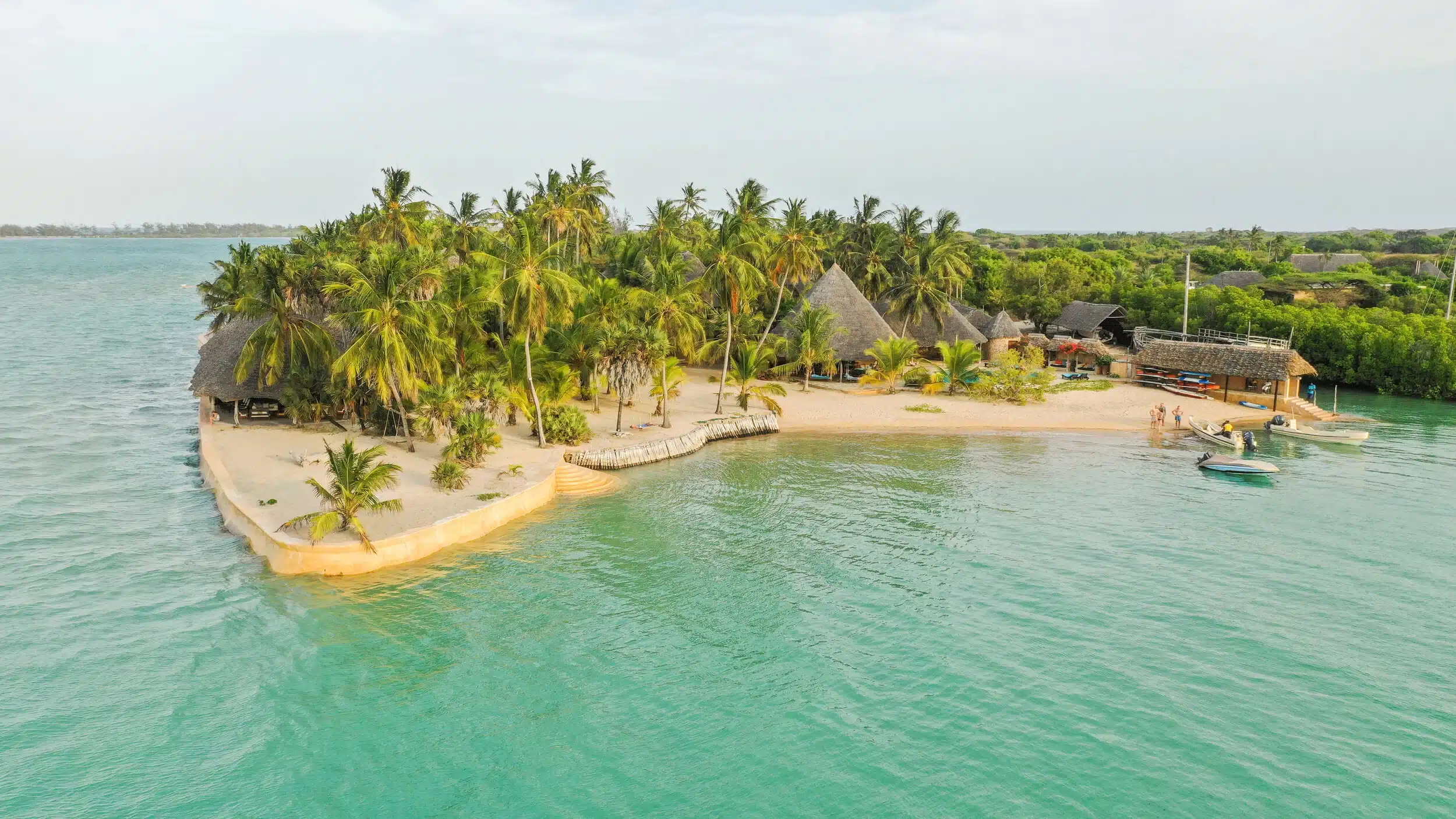 Manda Island
 Takwa Ruins, Manda Island
A deserted Swahili settlement abandoned in the late seventeenth century, its coral stone walls now standing within dense forest that has grown up since its abandonment.

Manda Creek Mangrove Kayaking
One of East Africa's most ecologically productive mangrove environments, explored by kayak or paddleboard, home to kingfishers, mangrove herons, sea eagles, and the occasional crocodile.

The Donkey Sanctuary
Lamu's 3,000 plus working donkeys, the island's primary transport system, are cared for by the Lamu SPCA's Donkey Sanctuary, offering a window into the island's transport culture and a meaningful conservation encounter.
How You'll Spend Your Days
Old Town Cultural Exploration
A specialist local guide leads a two to four hour tour covering the principal architectural landmarks, private homes accessible through community relationships, the dhow boatyard, and the waterfront market. The carved door tour, the Swahili House Museum, Lamu Fort and Museum, and the Riyadha Mosque are among the main program elements.
Dhow Excursions
Private dhow sailing is the defining recreational activity of the Lamu experience, offered at several levels. A sunset channel sail as the light drops toward the mangroves is one of East Africa’s most atmospheric experiences. A full day excursion reaches Manda’s beaches and the Takwa Ruins, or the deserted sandbars north of the channel. For guests with time, a two to three day dhow expedition to Pate Island, sleeping aboard or in basic guesthouses, is an extraordinarily remote experience few visitors ever undertake.
Beach Time at Shela
The beach at Shela, approached on foot or by donkey from the Old Town, offers swimming at high tide, walking along the dune system, and an afternoon of genuinely restorative relaxation. At least one full unscheduled day at Shela is recommended for all guests.
Water Sports
Windsurfing, kite surfing on the open ocean side of Manda Island, kayaking in the channel, and snorkelling on the shallow reef areas of the northern archipelago are available through operators selected for equipment quality and environmental commitment.
Food and Culinary Exploration
Lamu’s Swahili coastal cuisine, drawing on Arab, Indian, and African traditions, is among the most distinctive on the East African coast. Biryani, pilau rice, samosas, freshly grilled reef fish, and the sweet pastries of the island’s Indian heritage community offer real culinary depth, including curated restaurant experiences and a private Swahili cooking class with an island family for selected guests.
Two Dry Seasons, One Festival
Peak Season
Dry Season, July to October and December to March
Consistent sunshine, moderate temperatures, and the northeast trade winds, kusi from June to September and kaskazi from December to March, make dhow sailing most reliable and the beach most comfortable.
Cultural Highlight
Lamu Cultural Festival, November
Held annually over three days, celebrating traditional dhow racing, donkey racing, henna art, Swahili poetry, and traditional food, one of East Africa’s finest cultural events.
Getting to Lamu
Lamu Airport, on Manda Island directly across the channel from the Old Town, is served by daily scheduled domestic flights from Nairobi’s Wilson Airport, approximately one hour and forty five minutes, and from Mombasa, approximately fifty minutes. Guests are transferred across the Lamu Channel by a short motorboat from the Manda airport jetty to the Old Town waterfront, one of East Africa’s most atmospheric arrivals. Charter flights from Nairobi, the Maasai Mara, or the Kenya coast connect to Manda Airport on custom timeframes.
- Manda AirportMain gateway, boat transfer to Lamu Old Town
Road access from Malindi or Mombasa to the mainland opposite Lamu, at Mokowe, followed by a thirty minute public ferry to the island, is possible but time consuming and not recommended as the primary access method for most guests.
Lamu Old Town’s UNESCO World Heritage designation recognises the outstanding universal value of the Swahili cultural landscape, the architectural heritage, the living traditions, and the social fabric of a maritime civilisation that has persisted continuously for seven centuries. The conservation challenge is preservation in the context of a living, inhabited, growing community, balancing protection of the architectural fabric with the economic development aspirations of Lamu’s residents.
Protecting the Mangrove Ecosystem
The archipelago’s mangrove ecosystem, one of East Africa’s most significant, is under pressure from charcoal production and coastal development. RYDER Signature supports community based mangrove protection initiatives through our operator selection and by educating guests on the ecological significance of the mangrove environment.
Duration and Combinations
Four to five nights is the ideal Lamu stay, allowing Old Town exploration, a Takwa Ruins excursion, two full beach days at Shela, a sunset dhow sail, and mangrove kayaking. Three nights covers the essentials; fewer does not allow the slow pace Lamu rewards.
Lamu + Diani
The Kenya coast combination, Diani's active beach and marine environment paired with Lamu's cultural depth and historic character.
Maasai Mara + Lamu
Kenya's premium safari and culture combination, pairing the Mara's wildlife intensity with Lamu's cultural and maritime heritage.
Lamu + Watamu
For guests following the Kenya coast southward, Lamu to Watamu via Malindi creates a coastal circuit of ecological and cultural complementarity.
Five Travellers Lamu Rewards
Cultural Travellers
Deep interest in Islamic and Indian Ocean coastal heritage.
Honeymooners
Some of Kenya's most intimate and beautiful boutique properties.
Slow Travellers
Rewards unhurried, unscheduled exploration.
Dhow Sailing Enthusiasts
A living maritime tradition unlike anywhere else on the coast.
Kenya Coast Combiners
Pairs naturally with a wider coastal or safari itinerary.
Lamu FAQ
Lamu Old Town and Shela are considered safe and welcoming for tourists. The archipelago has maintained a positive security environment for visitors. RYDER Signature monitors the security situation actively and advises guests based on current conditions.
On foot through the Old Town’s narrow lanes, by donkey for slightly longer distances on Lamu Island, and by motorboat across the channel to Manda and other islands. There are no cars or motorcycles on Lamu Island.
Shela Beach, three kilometres of fine sand dune beach on Lamu’s southeastern end, is the archipelago’s finest beach. Several pristine and largely deserted beaches on Manda Island are accessible by boat.
Yes, with some caveats. The Old Town’s narrow lanes, boat excursions, and beach activities suit families with children of appropriate age. The more remote excursions to Pate Island are best suited for older children and teenagers.
Yes, Lamu and the northern Kenya coast carry year round malaria risk. Antimalarial prophylaxis is recommended.
Begin Planning Your Lamu Journey
Every Lamu itinerary we design reflects the archipelago's slow pace, its living Swahili heritage, and the exact rhythm of tide and dhow that makes this coastline unlike anywhere else in East Africa.