Tanzania's Elephant
Capital
Herds three hundred strong move toward the Tarangire River beneath baobabs a thousand years old, a dry season spectacle that outdoes even the Serengeti for elephant.
The Northern Circuit's Most Underrated Park
As the dry season empties the surrounding steppe of water, wildlife funnels toward the Tarangire River in numbers that place this park among the finest elephant viewing destinations anywhere, all beneath some of Africa's oldest baobab trees.
Tanzania's Largest Elephant Population
Herds of 200 to 300 elephant converge on the Tarangire River in dry season, among the finest elephant concentrations anywhere in Africa.
Ancient Baobab Trees
Some individuals exceed a thousand years in age and eight to ten metres in trunk circumference, an unmistakable visual signature found nowhere else on the Northern Circuit at this density.
Massive Buffalo Herds
Buffalo herds exceeding a thousand animals gather on the floodplains in the dry season, drawing large lion prides and hyena clans in behind them.
A River Corridor, Woodland, and a Quiet South
Tarangire's terrain shifts from open river corridor in the north to dense woodland and, further south, a quieter wetland sector most visitors never reach.
Where the Water Never Fully Disappears
Flowing year round through the park's northern and central sections, this is where dry season concentrations of elephant and buffalo are heaviest and most reliable.
Acacia and Commiphora Country
Dense acacia and commiphora woodland in the central and southern park hides leopard, lesser kudu, and much of Tarangire's richest birdlife.
The Park's Quietest Corner
Far less visited than the northern gate area, the park's southern sector holds seasonal wetlands and a sense of private wilderness increasingly rare on the Northern Circuit.
What Sets Tarangire Apart

Elephant Herds at the River
With more than 3,000 individuals across the wider ecosystem, herds of 200 to 300 converge on the river in dry season, habituated enough to vehicles to allow remarkably close, unhurried viewing.
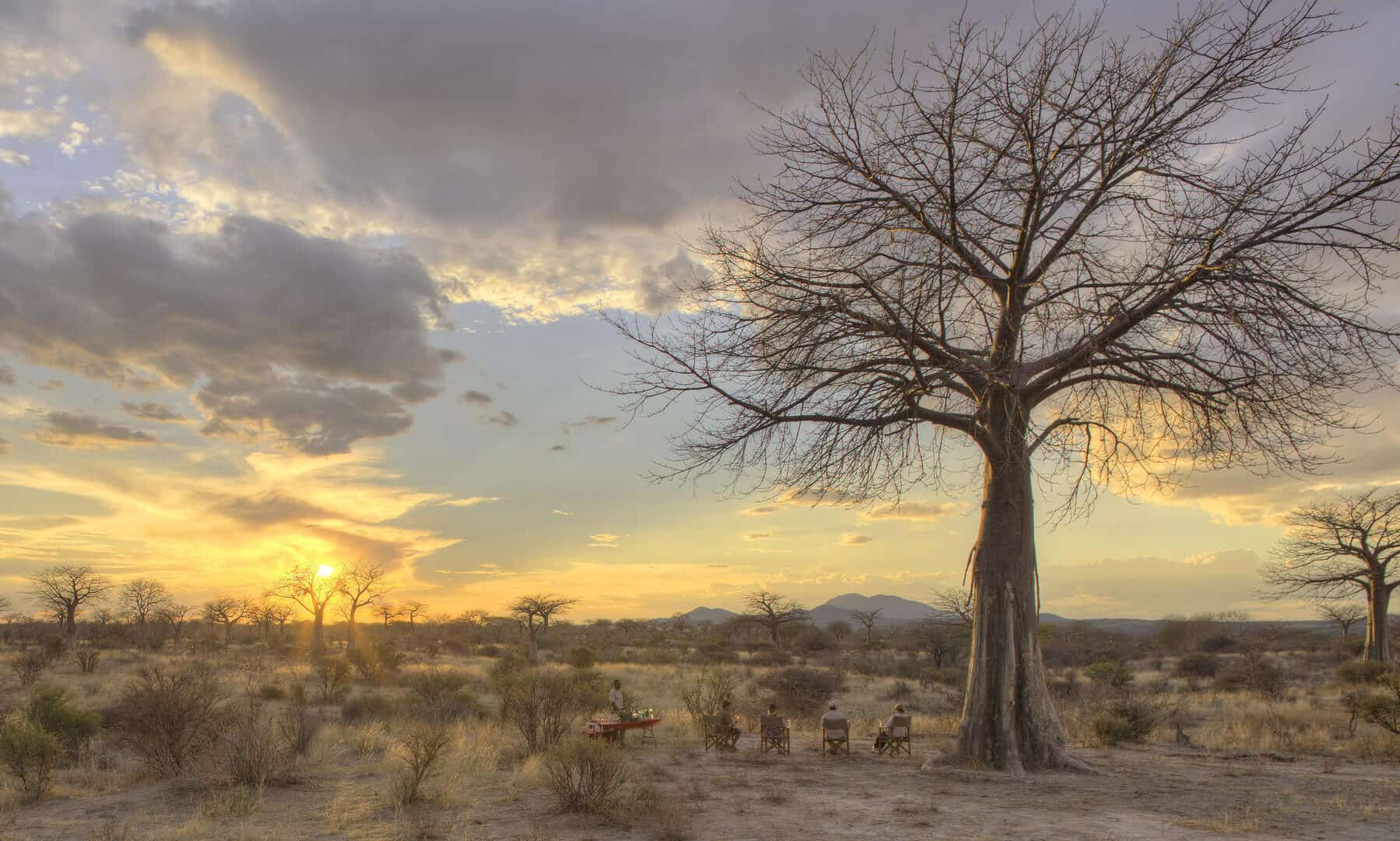 Baobab Tree
Ancient Baobab Landscape
Some individuals exceed a thousand years old, their bottle shaped silhouettes against a Tarangire sunset among the most recognisable images in East African safari photography.

Massive Buffalo Herds
Herds exceeding a thousand animals gather on the open floodplains in dry season, drawing large lion prides and spotted hyena clans in behind them.

Tanzania Endemic Birdlife
The Tanzania endemic ashy starling, yellow collared lovebird, and rufous tailed weaver join more than 550 recorded species across the park's varied habitats.
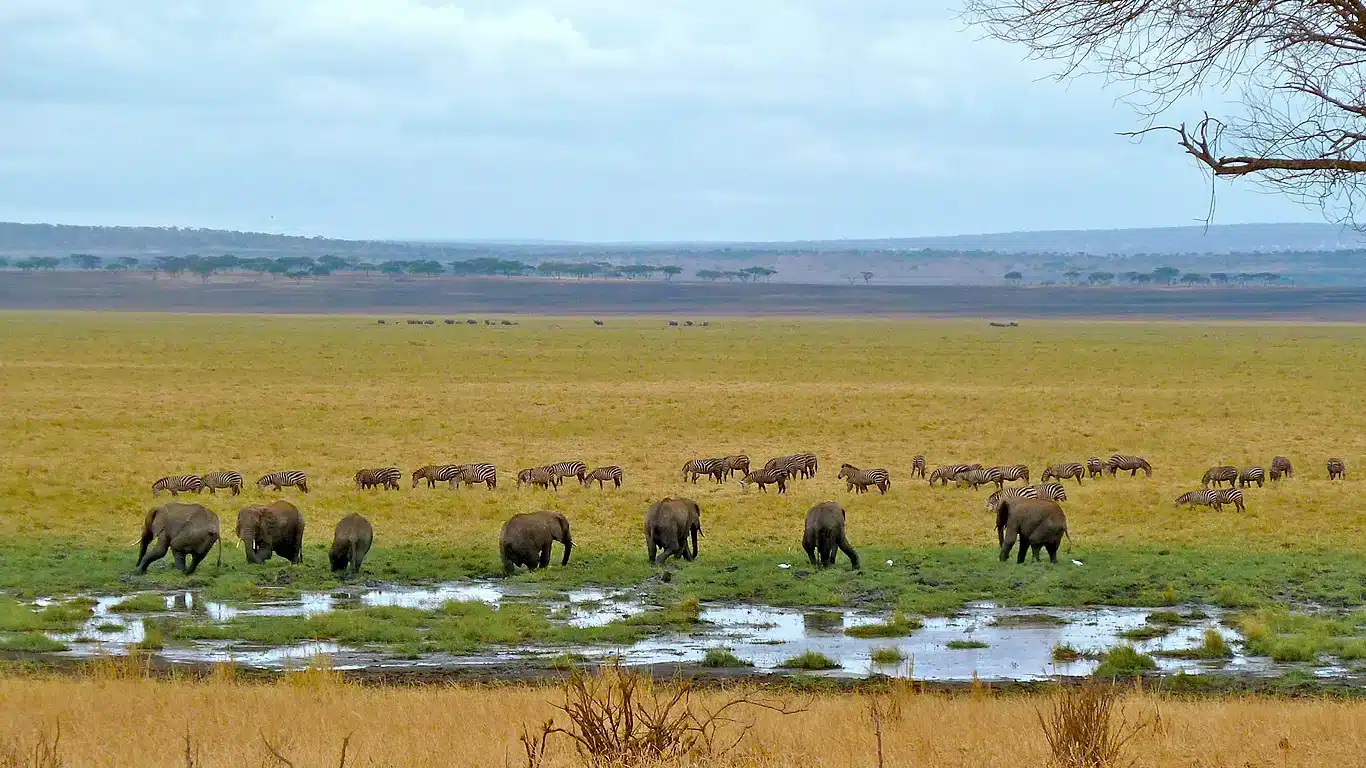 Silale Swamp
The park's southern wetland supports outstanding waterbird concentrations and some of Tarangire's finest, least crowded game viewing for guests willing to make the drive.
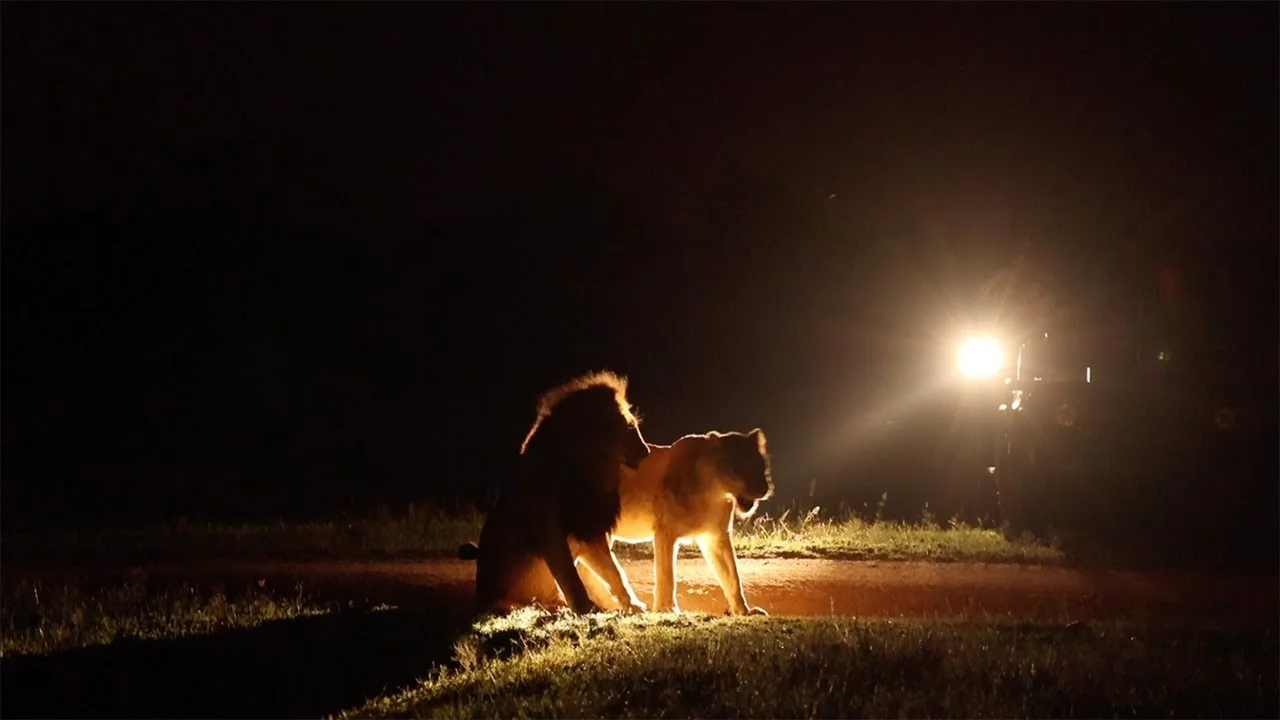 Night Drive
Night Game Drives
Regulated night drives within the park reveal a different Tarangire entirely, genet, serval, civet, porcupine, and occasionally aardvark active after dark.
How You'll Spend Your Days
Game Drives
Morning drives follow the river corridor where elephant and buffalo begin their movement toward water from before dawn, and the open northern floodplains where lion prides rest in the shade of termite mounds and baobab clusters. Afternoons push into woodland zones for leopard, lesser kudu, and much of the park’s birdlife, and full day drives reach the quieter southern Silale and Lemiyon areas.
Walking Safaris
Available from a small number of camps holding walking concessions, accompanied by an armed TANAPA ranger and a specialist guide, these walks read elephant tracks, termite mound architecture, and vegetation at a pace and proximity no vehicle allows.
Bird Watching
Habitat diversity from floodplain to woodland to swamp margin can produce species lists of 100 or more in a single day, with the ashy starling, yellow collared lovebird, and southern ground hornbill among the park’s signature sightings.
Cultural Visits
Visits to Maasai homesteads near the park boundary offer a genuine introduction to pastoral life and livestock keeping traditions, alongside the real conversation about coexisting with one of Africa’s most prolific wildlife ecosystems.
Night Game Drives
Regulated after dark drives within the park boundary reveal genet, serval, African civet, porcupine, spring hare, and occasionally aardvark, species almost never encountered on a standard daytime drive.
Density or Diversity, Pick Your Season
Tarangire's character changes dramatically by season, dry months bring the density that made its reputation, wet months spread wildlife wider and bring the birds.
Peak Season
Jun to Oct (Dry)
As the surrounding steppe dries out, elephant herds that were scattered across hundreds of kilometres converge on the river in their thousands, buffalo gather in herds of remarkable size, and large predator groups follow. July and August are the absolute peak, with the highest densities, clearest skies, and best road conditions, though Tarangire stays far less crowded than the Serengeti even at its busiest.
Green Season
Nov to May
The landscape turns vivid green and the baobabs leaf out, wildlife disperses across the wider ecosystem rather than funnelling into the river corridor, newborn calves are abundant, and birdwatching reaches its annual peak with the arrival of migratory species.
Getting to Tarangire
Lake Manyara Airstrip, about 60 km north, is the most practical air access point, served by scheduled Coastal Aviation flights from Arusha and Kilimanjaro International Airport, followed by a road transfer of around an hour. Several private airstrips near conservancy areas bordering the park serve guests staying at those properties.
- Lake Manyara AirstripNearest scheduled airstrip, about 60 km north, then road transfer
Tarangire’s main gate sits around two hours from Arusha on the well maintained A104 tarmac highway, direct and reliable in every season, making it the most accessible of the Northern Circuit’s major parks and a natural starting point for a road based safari.
Nimali Tarangire – High-End Luxury Tented Camp in Tarangire, Tanzania
Nimali Tarangire offers eight luxury tented suites on a private riverbed concession in Tarangire National Park, with walking safaris, a spa, and an underground wildlife hide
View Property →Oliver’s Camp – High-End Luxury Tented Camp in Tarangire, Tanzania
Oliver's Camp by Asilia Africa is an intimate 10-tent camp in a remote area of Tarangire National Park, renowned for walking safaris, night drives, and elephant sightings.
View Property →Elewana Tarangire Treetops – Luxury Lodge in Tarangire, Tanzania
Elewana Tarangire Treetops offers 20 tree-house suites built into giant baobab trees inside Tarangire National Park, with a spa, guided walks, and night game drives
View Property →The Nucleus of a Larger Ecosystem
The Tarangire Manyara ecosystem ranks among East Africa’s most ecologically significant migratory systems outside the Serengeti. The park functions as the dry season nucleus of a much larger ecological unit, one that depends on the surrounding Maasai steppe dispersal land staying free of permanent settlement and agriculture for the annual wildlife cycle to keep functioning.
Community conservation is therefore central to Tarangire’s long term future. Wildlife management areas and community conservancies bordering the park are managed by Maasai landowners in partnership with conservation organisations and the tourism industry, and RYDER Signature prioritises properties holding these conservation area concessions so that our guests’ economic impact reaches community managed land directly.
Duration and Combinations
Two nights covers both the northern river corridor and the central woodland zones properly. Three nights adds a full day drive to Silale and suits guests with a strong interest in birding or photography.
Tarangire + Ngorongoro + Serengeti
The definitive Northern Circuit combination, typically run over eight to ten nights from Arusha.
Tarangire + Lake Manyara
A shorter, accessible introduction to northern Tanzania, pairing dry season elephant drama with Lake Manyara's cultural and activity richness.
Extended Northern Circuit
Adding Lake Eyasi and Lake Natron to the classic circuit creates a twelve to fourteen night journey of exceptional ecological and cultural variety.
Travellers Tarangire Rewards
Elephant Enthusiasts
No Northern Circuit destination comes close to Tarangire's dry season elephant concentrations or the chance to observe complex family behaviour at close range.
Birdwatchers
Silale Swamp, riverine forest, and open floodplain habitats combine for a species diversity dedicated birders rate very highly.
Photographers
The baobab and elephant combination, paired with strong dry season light, is one of East Africa's most distinctive photographic subjects.
Second Time Safari Guests
Guests who have already done the Serengeti find Tarangire genuinely different, a complementary rather than repetitive addition to a Tanzania journey.
What to Pack
Clothing
- A fleece or light jacket for cool early morning drives, lightweight breathable layers in neutral colours for midday
- A buff or light scarf, the dry season here is genuinely dusty on open vehicle drives
Sun Protection
- High SPF sunscreen, a hat, and UV sunglasses, the afternoon sun is often intense
Optics and Gear
- Binoculars, 8x42 or 10x42, especially useful for identifying species in Tarangire's woodland habitats
- A dust proof camera bag and lens cloths, the dry season's northern open areas are particularly dusty
Tarangire Safari FAQ
Tarangire is famous for hosting Tanzania’s largest elephant population and for the extraordinary dry season concentrations of elephant, buffalo, and predators that converge on the river between June and October. Its ancient baobab trees are equally celebrated, giving the park an unmistakable visual character.
June through October brings the most spectacular wildlife concentrations, July and August the absolute peak. November through April rewards birdwatchers and photographers with lower visitor numbers and a greener landscape.
Four of the five reliably, elephant, lion, leopard, and buffalo. Rhino is absent here, the nearest population is in the Ngorongoro Crater. Tarangire is also a strong destination for African wild dog when packs are present.
By road from Arusha, around two hours on the tarmac A104 highway. By air, the nearest access is Lake Manyara Airstrip, served by scheduled Coastal Aviation flights from Arusha, with a road transfer of around an hour to Tarangire’s gate.
We recommend two to three nights, enough time for both the northern river corridor and the more remote southern zones. Dedicated birders benefit from three nights to allow a full day at Silale Swamp.
Yes, the reliability of elephant sightings appeals strongly to younger guests, and the park’s more manageable size compared to the Serengeti allows for a more focused, engaging experience. Several camps here are specifically designed with families in mind.
More than 550 species, including the Tanzania endemic ashy starling and yellow collared lovebird, southern ground hornbill, saddle billed stork, black and white casqued hornbill, and extensive waterbird concentrations at Silale Swamp.
Begin Planning Your Tarangire Safari
Every Tarangire itinerary we design knows exactly which stretch of river the elephant will reach by midday.