Kenya's Finest
Marine Sanctuary
Protected since 1968, one of Africa's earliest marine parks, Watamu's reef remains healthier than almost anywhere else on this coast, a rare combination of turtle nesting beach, mangrove creek, and coastal forest within a few kilometres of each other.
A Marine Destination First, a Beach Second
Sitting on a narrow promontory between two creek systems, Watamu packs reef, mangrove, and coastal forest into a compact village setting quite different in character from the resort heavy stretches further south, with a marine park old enough and well managed enough that its reef still shows it.
One of Africa's Oldest Marine Parks
Protected since 1968, one of Africa's earliest marine park designations, Watamu's coral coverage and fish density are noticeably better than most comparably accessible Indian Ocean reefs.
A Genuine Turtle Conservation Programme
Green and loggerhead turtles nest on Watamu's beaches and feed in its waters year round, monitored by a community based programme that ranks among East Africa's most cited conservation models.
Three Ecosystems in One Small Area
Reef, mangrove creek, and coastal dry forest sit within a ten kilometre radius, giving Watamu an ecological range that larger, more developed resorts cannot match.
Reef, Creek, and Forest
Watamu's position between two creek systems and a coastal forest gives it three genuinely distinct environments within a very short drive of each other.
The Reef Offshore
Ten square kilometres of protected coral and open water directly offshore, healthier and more biodiverse than most comparably accessible Indian Ocean reefs after more than five decades of formal protection.
Mangrove and Mudflat
A mangrove lined tidal creek north of the village, its exposed mudflats and channels supporting exceptional wader and waterbird concentrations at low and high tide alike.
Coastal Forest Inland
Africa's largest remaining fragment of coastal dry forest sits a short drive inland, protecting endemic bird species found nowhere else on Earth.
What Sets Watamu Apart

Snorkelling the Marine National Park
Coral coverage and fish density within the marine park consistently rate among the finest snorkelling and diving on the East African coast, with glass bottomed boat options for non swimmers and guided reef access with park rangers for the most biodiverse sections.

Sea Turtle Encounters
Green and loggerhead turtles feed in Watamu's waters year round, with nesting activity running roughly from March through September. The Local Ocean Trust's monitoring programme lets guests observe nesting and, later in the season, hatchery releases sending new hatchlings into the ocean.
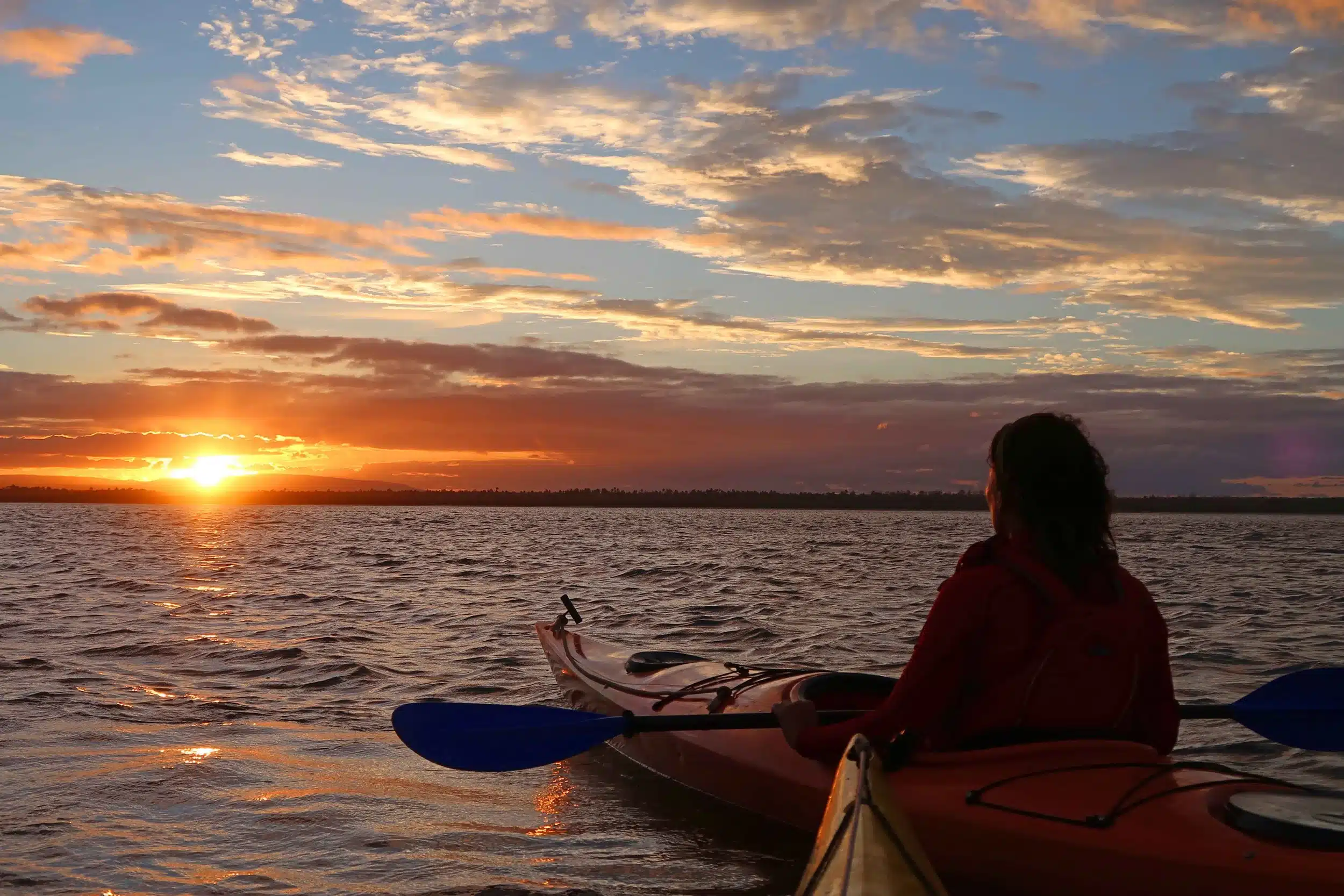 Mida Creek
 Mida Creek Kayaking and Birding
A globally significant wintering population of crab plover, alongside greater and lesser flamingo and African darter, make Mida Creek's tidal mudflats and mangrove channels one of Kenya's finest birding and kayaking environments.

Arabuko Sokoke Forest Endemics
Africa's largest remaining coastal dry forest fragment protects the globally Endangered Clarke's weaver, Sokoke scops owl, Sokoke pipit, and Rondo green barbet, species found nowhere else on Earth.

Whale Shark Season
Between roughly November and March, whale sharks move through the plankton rich deep water channel beyond the reef, encountered in the water through responsible approach protocols with Watamu's dive operators.

Big Game Fishing
Watamu's position on the coast's primary deep water current corridor makes it one of East Africa's premier sport fishing destinations, sailfish and black marlin from January through April, yellowfin tuna through the dry season, and wahoo year round.
How You'll Spend Your Days
Snorkelling and Marine Park Visits
The standard excursion departs the village beach by glass bottomed boat, covering the main reef sections before anchoring at Green Turtle Point where resident turtles are reliably encountered. Guided snorkelling from anchor positions reaches the coral garden areas and the reef edge drop off. An early morning departure, around 07:00, gives the calmest water and the best turtle odds.
Diving
Certified divers reach wall dives on the outer reef drop off and channel dives where larger pelagic species move through the tidal current. Watamu Shark Point regularly produces white tip and black tip reef shark sightings, and the area holds some of Kenya’s largest Napoleon wrasse. PADI instruction is available locally for guests who are not yet certified.
Mida Creek Exploration
Low tide wading and birding from the creek head boardwalk covers the exposed mudflat’s crab plover and wader community, while mid to high tide kayaking through the mangrove channels brings kingfisher and heron species into close range.
Arabuko Sokoke Forest Birding
A dedicated morning targeting the Sokoke scops owl, best found on a spotlight night visit, Clarke’s weaver at forest edge reed beds, and Fischer’s turaco in the forest interior produces species lists of 80 to 100 or more for a prepared birder, about ten minutes by road from Watamu.
Cultural Experiences
Early morning dhow fishing alongside Watamu’s local fishermen offers a genuine cultural encounter and a marine perspective at sunrise, and the Gede ruins, a medieval Swahili trading town abandoned in the seventeenth century, add historical depth for guests with an interest in coastal history.
Two Excellent Windows, Different Reasons to Visit
Watamu's two strongest windows trade reef clarity and turtle nesting against whale sharks and the finest fishing conditions of the year.
Peak Season
Jul to Oct (Dry)
The southeast trade winds bring the clearest conditions for snorkelling and diving, the peak of the turtle nesting season, and Mida Creek birding at its best with the crab plover population at its highest. This is our primary recommendation for most guests.
Secondary Season
Jan to Mar
The northeast monsoon brings warm, calm water around 28 to 29 degrees Celsius, the whale shark season in the offshore channel, and Kenya’s best sport fishing conditions. Arabuko Sokoke birding is excellent throughout, with Palearctic migrants supplementing the resident endemic community.
Getting to Watamu
Malindi Airport, about 15 km north, receives daily scheduled domestic flights from Wilson Airport in Nairobi, around one hour, and from Mombasa’s Moi International Airport, around 30 minutes, on Fly540, AirKenya, and Safarilink. Charter flights connect Watamu directly to Nairobi, Mombasa, the Maasai Mara, and Amboseli.
- Malindi AirportPrimary access point, about 15 km north of Watamu
From Mombasa, allow around two hours north on the A7 coastal highway, crossing Kilifi Creek by ferry or bridge before continuing to Watamu, generally good road quality throughout. From Nairobi, flying to Malindi is faster than the six to seven hour drive via Mombasa.
“A trading town abandoned in the seventeenth century still stands four kilometres inland, one of the most significant records of the coastal civilisation that shaped this shoreline for a thousand years.”On the Swahili Coast and the Gede Ruins
Watamu’s coastal community belongs to the Swahili tradition that has shaped the East African coast for more than a thousand years, a culture built from the sustained meeting of indigenous Bantu speaking coastal peoples with Arab, Persian, and Indian traders who followed the monsoon sailing routes between Arabia and East Africa.
The Gede ruins, four kilometres inland from Watamu, preserve one of the most significant archaeological records of that civilisation, a medieval Swahili trading town occupied between the thirteenth and seventeenth centuries before it was abandoned, its ruins now standing within the forest that has grown up around them since. A visit gives real historical depth to a stay that might otherwise stay entirely at the waterline.
Five Decades of Protection, and It Shows
Watamu Marine National Park has been under Kenya Wildlife Service protection since 1968, one of Africa’s earliest marine park designations, and the reef’s condition today is a direct result of that long history combined with visitor numbers well below those of Mombasa’s closer, more heavily used marine parks.
The Local Ocean Trust’s community sea turtle programme, running since 1997, has produced substantial increases in nesting frequency through direct community ranger involvement, and is widely cited as a model for community led marine conservation elsewhere in East Africa. RYDER Signature builds this conservation work directly into our Watamu itineraries, not as an add on excursion but as a genuine part of why the destination is worth visiting at all.
Duration and Combinations
Two to three nights gives an optimal programme, two marine park snorkelling excursions, a Mida Creek kayaking and birding session, an Arabuko Sokoke forest morning, a Gede ruins visit, and relaxed beach time in between.
Watamu + Malindi
The natural coastal combination, adding Malindi's Swahili heritage and marine activities a short drive north.
Watamu + Tsavo East or West
A rewarding safari to coast combination accessible without a domestic flight, Tsavo's proximity to the coast road makes a direct road connection practical.
Watamu + Maasai Mara + Amboseli
The complete Kenya safari and coast programme, connecting the country's premier wildlife destinations with its finest marine environment via Malindi Airport or Mombasa.
Travellers Watamu Rewards
Marine Wildlife Enthusiasts
Turtle encounters, whale shark snorkelling, reef diving, and Mida Creek birdwatching make Watamu the Kenya coast's most ecologically rewarding destination.
Birding Specialists
The combination of Arabuko Sokoke's forest endemics and Mida Creek's wader concentrations creates a coastal birding experience with no real parallel elsewhere in Kenya.
Conservation Minded Travellers
The Local Ocean Trust turtle programme and Arabuko Sokoke's community forest management give conservation minded travellers genuine depth to engage with.
What to Pack
Reef and Water
- Reef safe sunscreen, essential for all marine park activities, standard chemical sunscreens damage coral
- Your own snorkel mask and fins, for a better fit than rental gear on extended reef sessions
Optics
- Binoculars, essential for Mida Creek wader birding and Arabuko Sokoke forest species
Health
- DEET based insect repellent and antimalarial prophylaxis, the Kenya coast carries a year round malaria risk
Watamu FAQ
The dry season, July through October, gives the clearest reef snorkelling conditions and the peak of turtle nesting. January through March brings whale sharks and Kenya’s best game fishing. Both windows are excellent for different experiences.
Yes, roughly between November and March, in the offshore channel beyond the reef. Snorkelling excursions are arranged through local dive operators following responsible approach guidelines.
Watamu is less resort developed and built around marine wildlife, its reef, turtles, Mida Creek, and forest birding. Diani offers more beach infrastructure and activity variety. Watamu suits guests prioritising marine ecology, Diani suits those prioritising beach comfort.
Yes, especially for birders. Clarke’s weaver, Sokoke scops owl, and Sokoke pipit are globally significant endemic species found only in this forest and a handful of others nearby. A combined Arabuko Sokoke and Mida Creek day ranks among Kenya’s finest coastal birding experiences.
Yes, year round. Antimalarial prophylaxis is strongly recommended alongside DEET based insect repellent.
By road, around two hours north on the A7 coastal highway, or by air, flying Mombasa to Malindi Airport and then 15 km south by road.
Begin Planning Your Watamu Coast Extension
Every Watamu itinerary we design prioritises marine wildlife and turtle conservation alongside the beach relaxation that naturally comes with an Indian Ocean stay.