Africa's Equatorial
Summit
Standing on glacial ice at the precise line of the Equator, on a mountain the Kikuyu believe is God's own house, is a summit experience unlike anything else in Africa.
The Mountain Kenya Was Named For
Africa's second highest peak rises straight from the Equator, its glaciated twin summits visible from Nairobi on a clear day, its slopes holding the most complete altitudinal gradient of any equatorial mountain ecosystem on the continent.
Point Lenana at Sunrise
Reaching Point Lenana at dawn, with the equatorial plains extending below a cloud sea and glacial ice underfoot at the exact latitude of the Equator, is one of Africa's most conceptually strange and physically rewarding summit moments.
Technical Climbing on Batian and Nelion
Batian and Nelion, joined by the famous Gate of the Mists ridge, offer a genuine Grade IV multi pitch rock climb on solid volcanic rock for guests with real technical experience.
Afro Alpine Moorland Found Nowhere Else
Giant groundsel, giant lobelia, and everlasting flowers, some reaching four to six metres, create a landscape of genuinely alien botanical character found nowhere else on Earth outside a handful of equatorial African mountains.
Four Zones From Forest Floor to Glacier
Every route up Mount Kenya climbs through the same sequence of ecological zones, each with its own character and its own reason to slow down.
Wildlife on the Approach
The lower montane forest holds elephant, buffalo, giant forest hog, and the extremely rare bongo, turning the approach into a genuine wildlife encounter before the climb properly begins.
The Damp Transition Belt
A damp, dense transition belt of bamboo and Hagenia trees links the forest to the open moorland above.
Alpine Tarns and Giant Groundsel
Glacially formed tarns reflect the jagged summit peaks, surrounded by giant groundsel and lobelia that give this zone its unmistakable, otherworldly character.
Glacier and Bare Rock
Bare volcanic rock, permanent snow, and Mount Kenya's diminishing glaciers define the final stretch to Point Lenana and the technical peaks beyond.
What Sets Mount Kenya Apart

Point Lenana Summit
At 4,985 metres, the sky turning pink behind the jagged silhouettes of Batian and Nelion, the equatorial plains extending below a cloud sea in every direction, this is the objective of the vast majority of Mount Kenya trekking expeditions and a moment of real personal significance for nearly everyone who reaches it.

Batian and Nelion
For guests with genuine rock climbing experience, the Batian Nelion traverse is one of East Africa's finest technical climbs, a Grade IV multi pitch route on solid volcanic rock with extraordinary exposure, joined by the aptly named Gate of the Mists ridge.
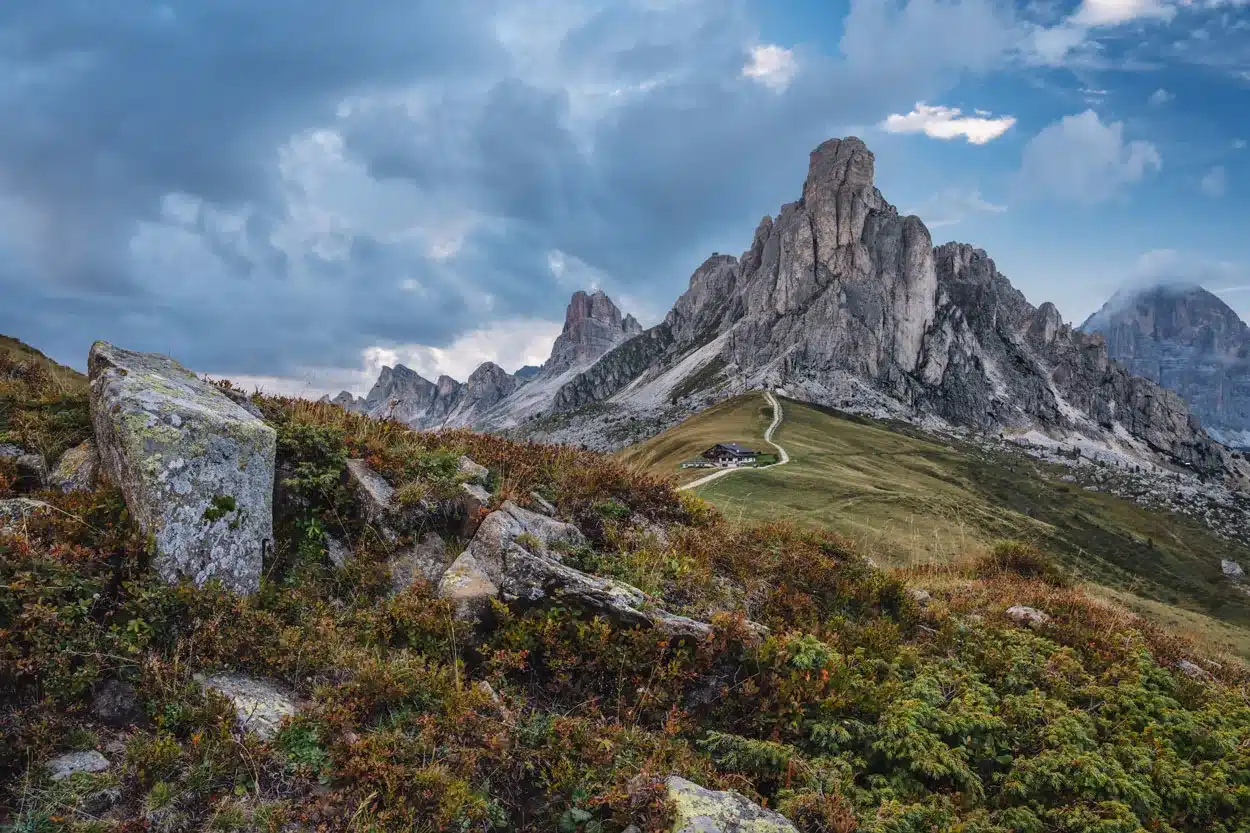 Alpine Tarn
 Hall Tarns and the Alpine Lakes
The Lewis, Hausberg, Kami, and Hall Tarns sit among the mountain's most dramatically positioned camp sites, small, dark glacial lakes reflecting the summit peaks directly above them.

Buffalo and Elephant in the Forest Zone
Elephant, buffalo, giant forest hog, and the extremely rare bongo inhabit the lower forest on the Naro Moru and Sirimon approaches, a genuine wildlife safari built into the mountain's opening stage.

Equatorial Snow and Ice
Standing on permanent ice at the precise latitude of the Equator carries a conceptual strangeness that amplifies the physical achievement, a wonder Kilimanjaro, sitting south of the line, cannot quite produce.
How the Climb Unfolds
Trekking to Point Lenana
Every RYDER Signature Mount Kenya expedition runs as a fully private, expert guided climb, whichever of the four established routes suits your fitness and available time.
Technical Climbing
For guests with genuine Grade IV or higher rock climbing experience, our qualified high altitude climbing guides lead the Batian Nelion traverse, a serious mountaineering objective rather than a trekking extension.
Forest Zone Wildlife
The forest zone on the Naro Moru and Sirimon approaches holds elephant, buffalo, giant forest hog, and colobus monkey, a genuine wildlife safari built into the mountain’s first day.
Kikuyu Cultural Visits
A visit to Kikuyu communities on the mountain’s lower slopes, arranged before the trek begins, gives context on the spiritual significance the mountain still holds as Ngai’s dwelling place.
Photography
Glacial tarns reflecting the summit peaks, giant groundsel silhouettes at dusk, and the approach to the Gorges Valley on the Chogoria route all reward photographers willing to adjust pace around the light.
A True Year Round Mountain
Sitting on the Equator, Mount Kenya has almost no seasonal daylight variation and can genuinely be climbed in any month, though two dry windows give the most reliable summit weather.
Primary Dry Season
Jan to Mar
The window between the short rains and the long rains gives the most reliably clear summit conditions and the most stable weather across the upper zones. January and February are our preferred months, clear views, minimal rain, and low visitor numbers relative to the July and August peak.
Secondary Dry Season
Jun to Oct
Good climbing conditions and clear summit weather, though June through August can be genuinely cold at altitude and see the most trekkers on the mountain, August especially. September and October ease the crowding while keeping the good conditions.
Four Routes to Point Lenana
Each route has a distinct character, acclimatisation profile, and level of crowding, from the most direct and busiest path to the most scenic traverse across the entire mountain.
Naro Moru Route
The most direct and most popular route, including the famous Vertical Bog, but with the most compressed acclimatisation profile of the four.
Success Rate: High
Sirimon Route
RYDER Signature's recommended route, the best overall combination of acclimatisation, scenic moorland, and lower crowding.
Success Rate: Very High
Chogoria Route
The most scenically dramatic approach, passing Lake Michaelson and the Gorges Valley, with the best acclimatisation of any single route.
Success Rate: High
Sirimon to Chogoria Traverse
Our premium recommendation, ascending via Sirimon and descending via Chogoria for the most comprehensive scenic coverage of the mountain.
Success Rate: Very High
Getting to Mount Kenya
Small charter aircraft serve Nanyuki’s Meru Mulika Airport from Wilson Airport in Nairobi, around 30 minutes, a useful option for guests on a tight schedule.
Nanyuki, the trailhead for the Sirimon and Naro Moru routes, sits around two and a half hours from Nairobi by road. Chogoria, the trailhead for the Chogoria route, is around three hours. We manage all road transfers and gate day logistics as part of the expedition.
Fairmont Mount Kenya Safari Club – High-End Luxury in Mount Kenya, Kenya
Fairmont Mount Kenya Safari Club: 120+ rooms in the legendary colonial-era club founded by William Holden in 1959, with golf, equestrian, spa, trout fishing, and the Mountain Bongo conservation programme.Fairmont Mount Kenya Safari Club: 120+ rooms in the legendary colonial-era club founded by William Holden in 1959, with golf, equestrian, spa, trout fishing, and the Mountain Bongo conservation programme.
View Property →Glamping Mt Kenya Lodge – Luxury in Mount Kenya, Kenya
Glamping Mt Kenya Lodge: stylish luxury glamping tents and lodge rooms at the foot of Mount Kenya in Nanyuki, with a pool, spa, and easy access to Ol Pejeta Conservancy and Laikipia.
View Property →Maiyan Luxury Resort – Mount Kenya, Kenya
Maiyan Villas: spacious private luxury villas in Nanyuki on the equator, with private pools, a spa, conference facilities, and an ideal base for Ol Pejeta game drives and Mount Kenya trekking.
View Property →“Traditional Kikuyu homesteads were built with their entrances facing this mountain, a practice that outlasted the conversion of most Kikuyu families to Christianity.”On Kirinyaga, the Kikuyu's Sacred Mountain
Mount Kenya is the sacred mountain of the Kikuyu, Kenya’s largest ethnic group, whose traditional homeland surrounds it across the Central Highlands. In Kikuyu belief, Ngai resides on the summit when visiting the Earth, and traditional homesteads were built with their entrances oriented toward the mountain, a practice that persisted long after most Kikuyu families had converted to Christianity. The mountain’s name, Kirinyaga, is usually translated as place of brightness or mountain of whiteness, a reference to its summit glaciers, and gave both the surrounding province and eventually the country its name.
The Embu and Meru communities on the mountain’s eastern slopes hold similar spiritual significance under different names. Guests can add a cultural visit to communities on the lower slopes before the trek begins, giving the ascent genuine context rather than treating the mountain as scenery alone.
A Retreating Glacier and a Working Forest Boundary
Mount Kenya’s UNESCO designation recognises both its ecological completeness, the most intact altitudinal gradient of equatorial mountain ecosystems in Africa, and its glacial features, which like Kilimanjaro’s have retreated dramatically over the past century. The Lewis Glacier and the mountain’s other permanent ice bodies have diminished significantly, and current projections point toward the loss of summit glaciation within decades.
The surrounding forest reserve faces steady pressure from the agricultural communities of the Central Highlands, forest clearance, water abstraction from the mountain’s rivers, and encroachment at the forest farm boundary remain ongoing management challenges. Kenya Forest Service and KWS work through community forest associations that give local communities a direct economic incentive to protect the forest rather than clear it.
Duration and Combinations
Most guests take the five day Sirimon route, our standard recommendation, or the six day Sirimon Chogoria traverse for a more complete experience of the mountain. Guests with genuine Grade IV or higher rock climbing experience can attempt Batian and Nelion over three to four days with our technical climbing guides.
Mount Kenya + Maasai Mara
A premium Kenya combination pairing the mountain achievement with the Mara's predator intensity.
Mount Kenya + Samburu
Combining the equatorial mountain with northern Kenya's arid wildlife creates one of the country's most geographically complete itineraries.
Mount Kenya + Kilimanjaro
Climbing Africa's highest peak in Tanzania and its second highest in Kenya in a single expedition, the ultimate East Africa mountain journey.
Climbers Mount Kenya Rewards
Active Trekkers
Guests with some high altitude experience seeking a technically accessible but physically demanding summit find Point Lenana genuinely rewarding.
Technical Climbers
Batian and Nelion give qualified rock climbers a serious Grade IV objective rarely matched elsewhere in East Africa.
Wildlife Enthusiasts
The forest zone's elephant, buffalo, and bongo give this climb a wildlife dimension no purely mountain focused trek can offer.
Kikuyu Culture Enthusiasts
The mountain's extraordinary spiritual significance to the Kikuyu people adds a cultural depth Kilimanjaro does not carry.
What to Pack
Summit Layer System
- A down jacket, fleece mid layer, thermal base layers, and a waterproof shell for the summit push
- A headlamp for the summit night start, and trekking poles for descent stability
Footwear and Hydration
- Waterproof trekking boots, broken in before the climb
- Water capacity of at least 3 litres per person
Sun and Health
- Strong sun protection, equatorial UV at altitude is intense even in cool conditions
- Altitude medication after medical consultation, and antimalarial prophylaxis for the lower trailhead sections
Mount Kenya Climb FAQ
Point Lenana at 4,985 metres sits lower than Kilimanjaro’s Uhuru Peak at 5,895, but the approach routes here are steeper and rougher, with faster altitude gain. Overall physical demand is comparable for non technical trekkers, Kilimanjaro’s greater altitude makes its summit push harder, but its terrain is more straightforward.
Reaching Point Lenana needs no technical climbing skill or ropes, just good fitness and preparation for rugged terrain. Batian and Nelion are a different matter entirely, Grade IV rock climbs requiring genuine roped climbing experience and technical maneuvering on steep rock faces.
We recommend the five day Sirimon Route for most first time climbers, a gradual ascent through alpine meadows and rock formations that acclimatises well. The six day Sirimon Chogoria traverse combines both routes’ best features for guests with the extra time, rainforest to alpine zone in one continuous crossing.
January through March, the primary dry season, gives the clearest skies and least rainfall, with quieter trails than later in the year. June through October, the secondary dry season, also offers good conditions with somewhat higher visitor numbers, August busiest of all.
The lower forest zones carry some malaria risk, above 2,500 metres the risk becomes negligible. We advise antimalarial prophylaxis for the lower trailhead sections regardless.
Begin Planning Your Mount Kenya Climb
Every Mount Kenya expedition we design matches the route to your fitness and timeline, whether that's Point Lenana on foot or Batian and Nelion on rope.