Kenya's Red Soil
Wilderness
A vast, flat wilderness where an iron rich landscape leaves its mark on everything living in it, most strikingly on the largest elephant population in Kenya, and where the Galana River is the only permanent water for miles in any direction.
A Landscape of Scale and Solitude
This is a park you notice through colour before anything else. Dust settles into every crease of every animal that passes through it, turning grey hide to rust and giving Tsavo East a visual signature no other Kenyan park shares.
Red Elephants of Tsavo
An estimated 12,000 individuals, Kenya's largest population, recovered from fewer than 6,000 after the ivory poaching crisis of the 1970s and 1980s.
The Galana River
A permanent water source in an otherwise arid landscape, drawing elephant, buffalo, hippo, crocodile, and plains game to its margins in a steady daily rhythm.
Wilderness Scale and Solitude
One of Kenya's largest protected areas, with visitor density low enough that extended hours of driving can pass without encountering another vehicle.
Three Access Points, Three Different Parks
Established in 1948, Tsavo East covers 13,747 square kilometres of flat, arid savannah east of the Nairobi to Mombasa highway, together with Tsavo West forming one of Africa's largest protected areas.
The Accessible South
The most visited sector, closest to the Nairobi to Mombasa highway, with the widest choice of camps and the easiest logistics for a first time visit.
The Quiet Centre
Reached mainly by charter flight, hours of driving without another vehicle in sight, rewarding patience over pace.
The Tsavo West Connection
Bordering Tsavo West and the private conservancies to the north, the natural link for guests combining both Tsavo parks in one itinerary.
Moments Defined by This Landscape
 Galana River
 Red Elephants of Tsavo
An estimated 12,000 elephants, Kenya's largest population, their grey skin stained red by the park's iron rich volcanic soil, encountered in large family groups along the Galana River.

Galana River Game Viewing
A permanent water source in a landscape where seasonal surface water is scarce for much of the year. Crocodile are abundant, hippo pods occupy the deeper pools, and plains game water at the margins daily.
 Mudanda Rock
 Mudanda Rock
A 1.6 kilometre inselberg rising from the flat plain, holding a natural water catchment that draws a steady stream of elephant, buffalo, and zebra in the late afternoon.
 Yatta Plateau
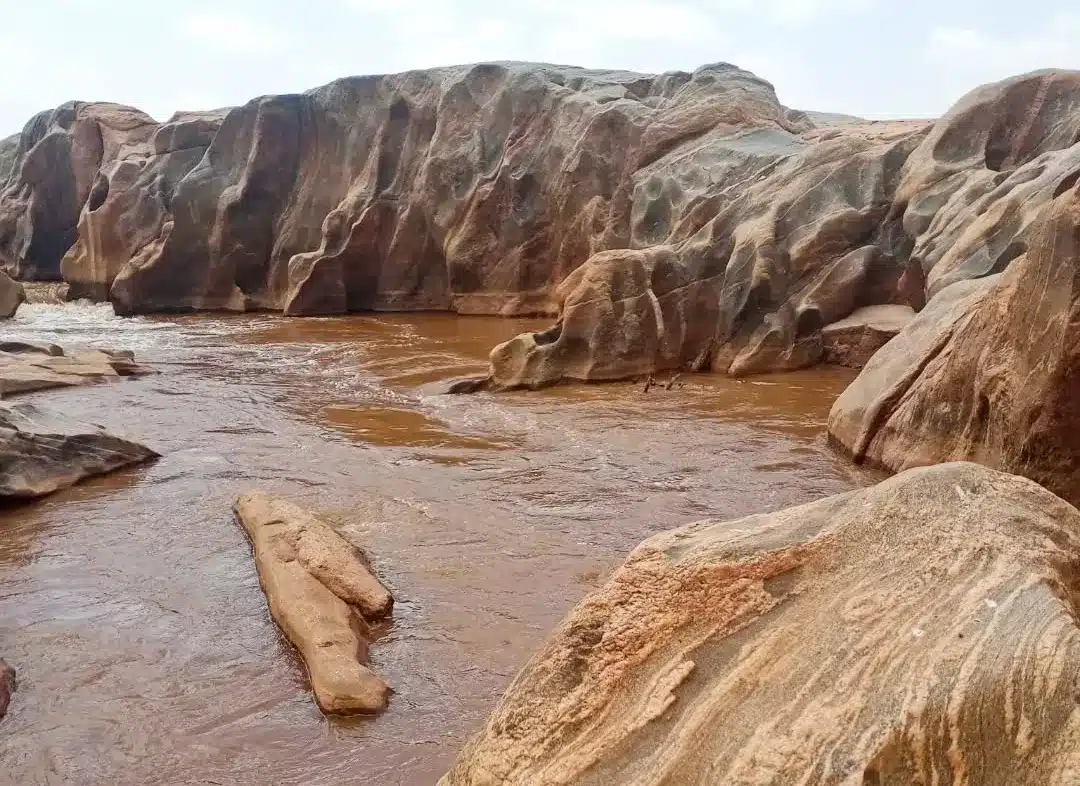
 Yatta Plateau
The world's longest lava flow, over 290 kilometres, forms a dramatic flat topped basalt escarpment on the park's western boundary.
 The Open Road
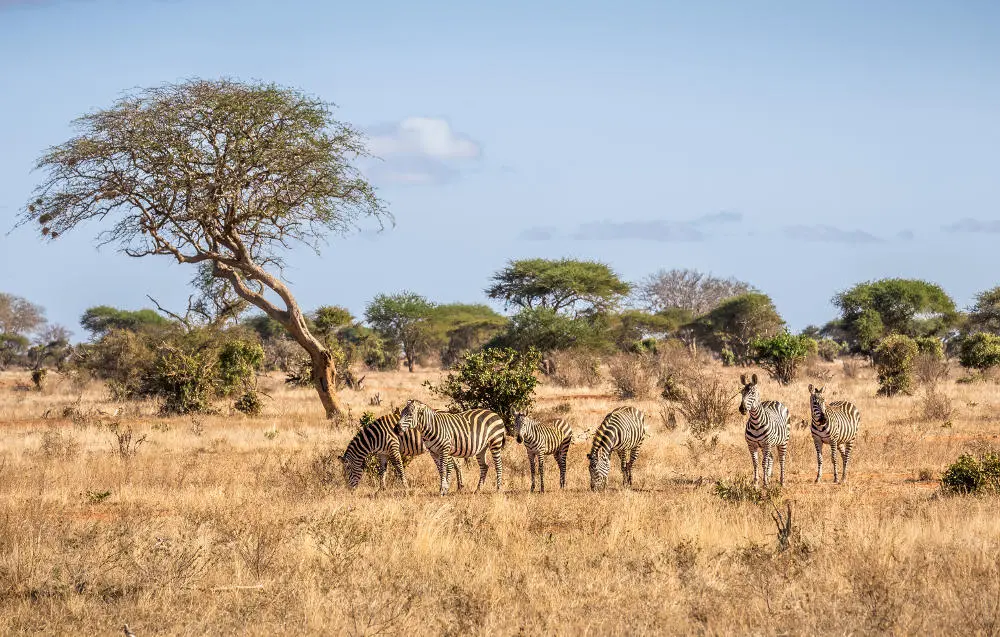
 Wilderness Solitude
The near absence of other tourist vehicles across the park's extensive road network creates a game drive atmosphere of genuine bush solitude, hours of driving through red savannah without encountering another car.
How You'll Spend Your Days
Game Drives
Game drives focus on the Galana River circuit, the Mudanda Rock area, and Aruba Dam, a man made waterhole supporting exceptional dry season concentrations. The flat terrain and open thornbush provide long sightlines, and the red volcanic soil creates a visual environment unlike any other park in Kenya. Wildlife here is present but dispersed, rewarding patient, methodical coverage over a reactive approach.
Walking Safaris
The park itself does not permit walking within its boundaries, but selected properties operating concessions outside it, along with the Galana Ranch, provide excellent walking environments that extend the Tsavo East experience beyond vehicle game drives.
Bird Watching
The park’s 500 plus species reflect its position as a transition zone between highland and coastal bird communities. The Galana’s riverine forest supports golden breasted starling and violet backed starling, while the open thornbush adds dry country specialists including Somali bee-eater and, in season, colonies of carmine bee-eater along the riverbanks.
Photography Opportunities
Red soil elephant encounters, the Galana River’s dramatic golden hour light, the vast flat landscape at sunrise, and the Mudanda Rock wildlife congregation create subject matter and lighting unavailable elsewhere in Kenya.
Dry Season Peaks, Green Season Birding
Peak Season
Dry Season, June to October
Wildlife concentrates along the Galana River and Aruba Dam, road conditions are excellent, and thinning vegetation improves sightlines across the thornbush. July through September is optimal.
Green Season
November to May
Beautiful landscapes and exceptional birdwatching, the carmine bee-eater colonies on the Galana’s banks are most active in October and November. Heavy rains in April and May can make some tracks difficult, but the park remains rewarding throughout.
Getting to Tsavo East
Voi Airstrip and Aruba Airstrip within the park are served by charter flights from Nairobi’s Wilson Airport, approximately one hour, and from the Kenyan coast at Malindi, approximately 30 minutes. Scheduled services are limited, charter access is coordinated for all fly in itineraries.
The drive from Nairobi to the main Voi Gate takes approximately five to six hours on the A109 Mombasa highway, well maintained tarmac throughout, passing through the Athi Plains and the Tsavo West corridor. From Mombasa, the Buchuma Gate is approximately two hours, making Tsavo East a natural extension of coastal itineraries.
Satao Camp – Luxury Safari Camp in Tsavo East, Kenya
Satao Camp: 20 en-suite tents around a permanently lit waterhole in Tsavo East attracting up to 1,000 of Tsavo’s famous red elephants daily, operated by Southern Cross Safaris for 30+ years.
View Property →Man Eaters Camp – Luxury in Tsavo, Kenya
Man Eaters Camp: 25 luxury tented suites on the Tsavo River at the site of the 1898 man-eating lions story, with a museum, hippo pool, spa, and access to both Tsavo East and Tsavo West.
View Property →“Two maneless male lions killed an estimated 135 railway workers during the construction of the Uganda Railway in 1898, a story that became one of the defining adventure narratives of the colonial era.”The Man Eaters of Tsavo
The episode was documented by Lieutenant Colonel John Henry Patterson in his 1907 account The Man Eaters of Tsavo, and became the subject of multiple films and documentaries, including The Ghost and the Darkness. The Maasai, Orma, and Taita communities have maintained traditional territorial relationships with the broader Tsavo landscape for centuries, and RYDER Signature coordinates community visits and cultural programs in the buffer zones surrounding the park as part of selected itineraries.
A Recovery Built From Crisis
Tsavo East’s conservation story was shaped by a catastrophic ivory poaching crisis in the 1970s and 1980s that reduced the park’s elephant population from an estimated 35,000 to fewer than 6,000. The recovery, from that nadir to today’s 12,000 plus, represents one of Africa’s most significant conservation achievements, driven by effective KWS anti poaching operations and international conservation funding.
The broader Tsavo ecosystem, encompassing Tsavo East, Tsavo West, Chyulu Hills, and the surrounding community and private conservancies, represents approximately 42,000 square kilometres of connected wildlife habitat, one of Africa’s most significant intact large mammal conservation landscapes.
Duration and Combinations
Two to three nights is sufficient for multiple Galana River drives, a Mudanda Rock afternoon, and drives into the park's more remote interior sectors. Combining Tsavo East with Tsavo West as a single Tsavo itinerary, two nights in each, creates an exceptionally rewarding southern Kenya safari of complete character.
Tsavo East + Tsavo West
The natural Tsavo combination, pairing the red soil flatlands of the east with the volcanic hills and Mzima Springs of the west.
Tsavo + Amboseli
A Kilimanjaro centric combination, adding Amboseli's famous mountain backdrop to Tsavo's vastness.
Tsavo + Kenya Coast
Tsavo's proximity to the Kenyan coast, two hours from Mombasa, makes it the natural safari beach combination for coastal visitors.
Travellers Tsavo East Rewards
Experienced Safari Travellers
Genuine wilderness character and solitude over crowd free game viewing.
Elephant Enthusiasts
Tsavo East's red elephants are among Africa's most iconic wildlife subjects.
Coast and Safari Combiners
Proximity to Mombasa, Diani, and Watamu makes it the most practical safari addition for coastal visitors.
What to Pack
Clothing
- Neutral bush clothing in khaki, olive, or tan
- Wide brimmed hat and sunglasses
- Closed toe shoes or light hiking boots for conservancy walks
Health and Field Essentials
- High SPF sunscreen, Tsavo's heat is intense and constant
- Insect repellent, malaria risk is present year round
- Antimalarial medication, prescribed in advance
- Binoculars for long distance viewing across open terrain
Tsavo East FAQ
Tsavo East supports elephant, Kenya’s largest population, lion, leopard, cheetah, wild dog, buffalo, hippopotamus, Nile crocodile, lesser kudu, gerenuk, zebra, giraffe, and 500 plus bird species including the spectacular carmine bee-eater colonies.
The elephants dust themselves with Tsavo’s iron rich red volcanic soil, a behaviour that provides insect protection and thermal regulation, producing the characteristic red staining of their grey skin.
July through September, when the dry season concentrates wildlife along the Galana River and Aruba Dam and thinning vegetation opens up sightlines. October still delivers strong viewing and adds the carmine bee-eater colonies along the riverbanks.
Yes, Tsavo East’s low visitor density, accessible wildlife, and open landscape make it suitable and rewarding for families with children of appropriate safari age.
Yes, year round. Antimalarial prophylaxis is recommended.
The Mara offers denser, more predictable wildlife in a smaller area. Tsavo East offers scale, genuine solitude, and Kenya’s largest elephant population, better suited to travellers who value space and quiet over guaranteed sightings on every drive.
Begin Planning Your Tsavo East Safari
Every Tsavo East itinerary we design respects the scale of this landscape, placing you where the red elephants gather and the solitude is real.