Kenya's Greatest
Wildlife Spectacle
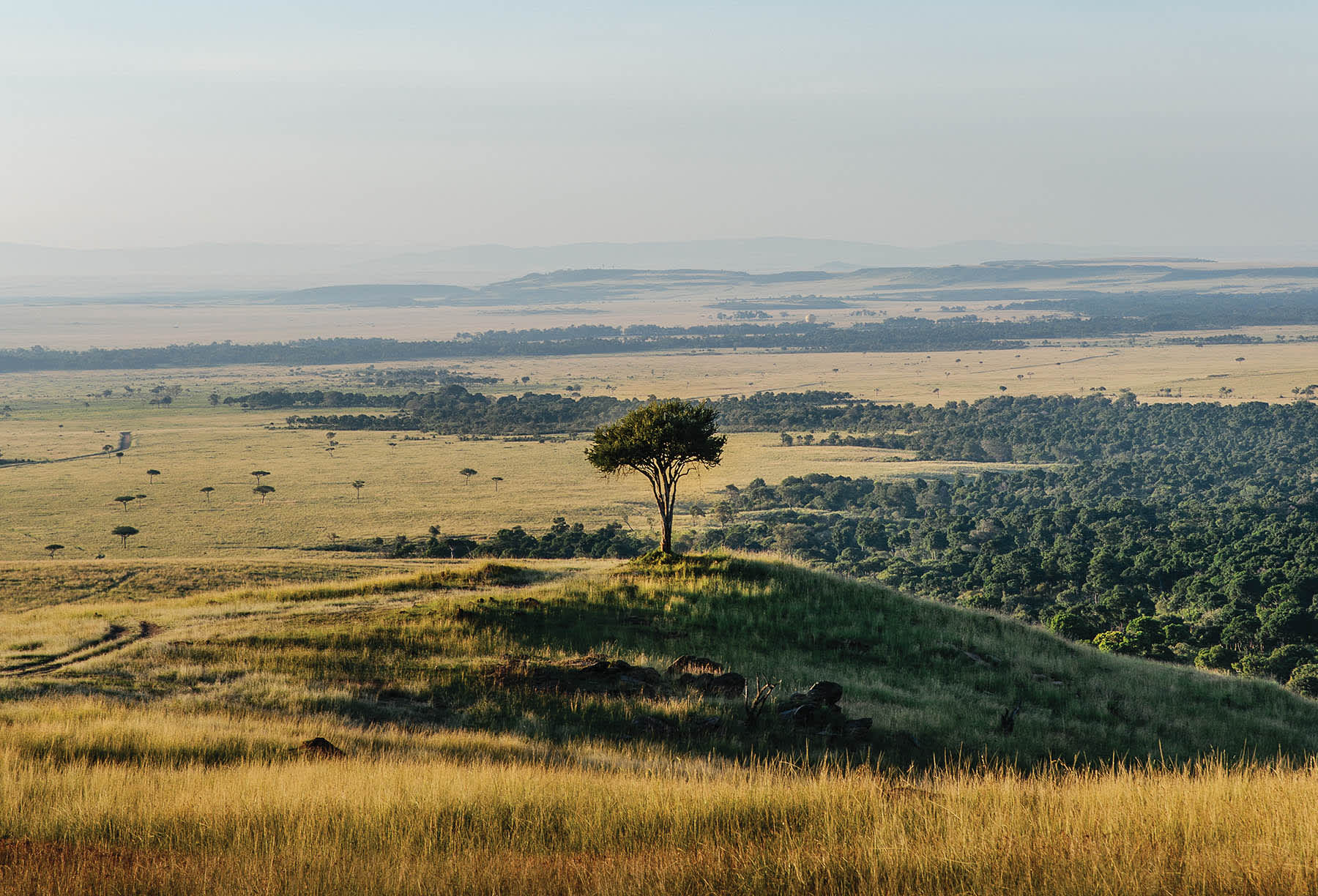
The most storied savannah in Africa, open grass where lion prides hold court in daylight, and where, for four months a year, more than a million wildebeest arrive to cross a single river.
The Most Primal Spectacle on Earth
Wildebeest gather at a river they clearly do not want to cross. Nothing happens for a long stretch, then one animal steps in, and the rest follow in a rush that looks less like migration and more like panic. Predators and crocodile are already waiting. Nowhere else stages this exact drama at this scale.
The Great Migration
Roughly 1.5 million wildebeest and hundreds of thousands of zebra pass through the Mara between July and October, moving north from the Serengeti and back again, crossing the Mara River in both directions.
East Africa's Densest Predator Population
Well over 800 lions live across the reserve and its conservancies in prides settled enough that a single morning drive can turn up three or four distinct family groups.
Private Conservancies
Land leased directly from Maasai communities surrounds the reserve, capped at a handful of vehicles per block, and permits walking and night drives the reserve itself does not allow.
The Reserve and Its Conservancies
The national reserve connects directly to Tanzania's Serengeti to the south, an unfenced ecosystem of roughly 25,000 square kilometres, while a network of private conservancies on its northern, eastern, and western boundaries adds several thousand square kilometres more.
The Core Protected Area
Managed by Narok County Council, open to any permitted vehicle, with the highest visitor numbers and the most established track network in the ecosystem.
A Different Set of Rules
A patchwork of community owned land bordering the reserve, governed separately from it and by different rules entirely, which is what makes the experience inside them so different.
The Crossing Grounds
The physical boundary the migration has to cross twice a year, its depth and crocodile population turning geography into the reserve's single most dramatic obstacle.
Moments Defined by This Landscape

The Great Migration and Mara River Crossings
No one can predict the exact morning it happens. Wildebeest mass at a crossing point, hesitate for what can be hours, then commit all at once into water that already holds crocodile waiting for exactly this moment.
 Year Round
 Year Round Lion Population
Multiple prides hold fixed territory across the reserve and conservancies year round, in numbers dense enough that guides here talk about individual lions the way most people talk about neighbours.
 Open Plains
 Cheetah Sightings
The Mara's open ground suits a cheetah's hunting style better than almost anywhere else in Africa, and watching a full sprint, not just a sighting, is a realistic outcome of a dry season morning drive.

Private Conservancy Game Viewing
Vehicle numbers are capped low enough in the conservancies that a sighting feels private rather than shared, and only here can a vehicle leave the track to follow an animal, or a guide take guests out on foot or after dark.

Hot Air Balloon Safaris
A dawn balloon flight puts elephant and giraffe beneath you rather than beside you, and typically ends with a champagne breakfast set up in the bush below.
 Maasai Community
 Maasai Cultural Encounters
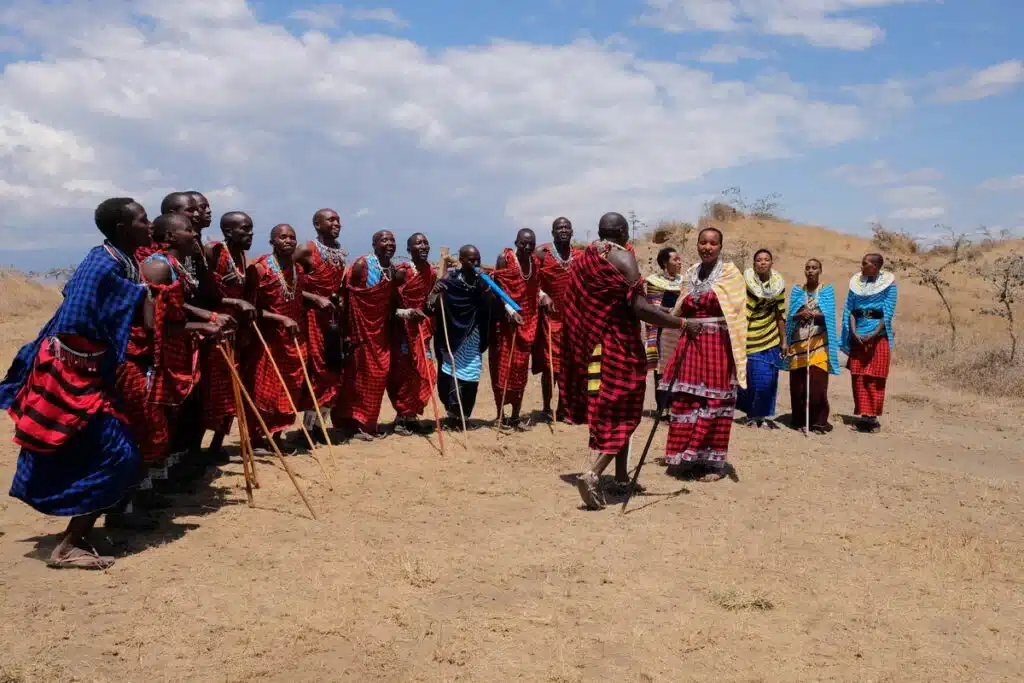
Community partners lead these visits on their own terms rather than as a staged stop on a tour route, covering pastoral life, cattle culture, and the long relationship between the Maasai and the wildlife around them.
How You'll Spend Your Days
Game Drives
Within the reserve, established tracks provide access to the main wildlife areas, but off road driving is prohibited and vehicle density can be significant at peak season. In the private conservancies, drives run in fully private vehicles with off road capability that allows precise positioning for photography and behaviour observation. Morning drives before sunrise consistently deliver the best predator activity and finest light.
Walking Safaris in the Conservancies
Available exclusively in the private conservancies, since the national reserve does not permit walking activities. Licensed walking guides and armed Maasai rangers lead routes through conservancy grassland and riverine forest for ground level wildlife engagement and tracking skills.
Hot Air Balloon Safaris
Dawn launches provide approximately one hour of flight over the plains and river, followed by a champagne breakfast in the open bush. Coordinated as a standard add on for itineraries of two nights or more.
Night Game Drives
Reveal the Mara’s nocturnal community, spring hare, bat eared fox, aardvark, and the ambient sound of lion and hyena across the plains, with the Milky Way at full display above the escarpment. Available only in the private conservancies.
Bird Watching
The Mara’s 570 plus recorded species span raptors on the open plains, African fish eagle and kingfishers along the river corridors, and a rich acacia woodland community, with Palearctic migrants adding to the list between November and March.
Maasai Cultural Visits
Coordinated in partnership with community representatives whose primary goal is authentic cultural engagement, covering traditional homestead architecture, the role of cattle in Maasai social structure, and the contemporary relationship between pastoral culture and conservation.
When the Herds Arrive, and When to Have the Mara to Yourself
The migration is in Kenya from approximately July through October. This is where the herds and the game viewing typically stand each month.

Peak Season
Migration Season, July to October
Visitor numbers peak in August, when the reserve’s game drive tracks can be crowded at major sighting points. Private conservancy properties, with capped visitor numbers, maintain the quality of the experience even during the migration peak.
Quiet Peak
Dry Season, January to March
Excellent wildlife viewing with significantly fewer visitors. Calf season begins in January and February, stimulating predator hunting activity, and reduced vehicle numbers in the conservancies create near total exclusivity, our recommended window for the Mara’s finest game viewing without peak season crowds.
| Month | Weather | Migration Location | Wildlife Highlight |
|---|---|---|---|
| January | Dry, warm | Calving in the Serengeti | Lion and cheetah hunting |
| February | Dry, warm | Peak calving, southern Serengeti | Best predator action |
| March | Long rains begin | Herds in the Serengeti | Excellent, uncrowded |
| April | Long rains | Herds in the Serengeti | Lush landscapes, birding |
| May | Rains easing | Herds moving, still south | Green season birding |
| June | Dry season begins | Migration beginning to move north | Build up, excellent game |
| July | Dry, cool | First herds crossing into the Mara | First river crossings |
| August | Dry, clear | Peak migration in the Mara | River crossings, peak |
| September | Dry, warm | Migration remains strong in the Mara | Crossings, fewer crowds |
| October | Rains approaching | Return south begins | Late crossings, quiet |
| November | Short rains | Herds back in the Serengeti | Excellent resident game |
| December | Dry | Herds in the Serengeti | Quiet, superb conditions |
Getting to the Maasai Mara
Scheduled services from Safarilink, AirKenya, and Fly540 connect Wilson Airport with the Mara’s primary airstrips on multiple daily departures, approximately 45 to 60 minutes. Charter flights offer direct routing to any of the reserve’s or conservancies’ airstrips.
- Keekorok AirstripMain reserve strip, central and eastern reserve
- Ol Kiombo AirstripEastern reserve, near the Talek River
- Mara North Conservancy AirstripNorthern conservancy access
- Olare Orok AirstripOlare Motorogi Conservancy access
- Angama AirstripNorthern escarpment properties
The drive from Nairobi takes approximately four to five hours on tarmac and gravel roads, passing through the Rift Valley escarpment with excellent views of the valley before descending to the Mara plain. Practical for guests combining a Nairobi city stay with a Mara visit, or for shorter itineraries.
Angama Mara – Kenya
Angama Mara: 30 glass-fronted Tented Suites 1,000ft above the Maasai Mara, with a 12m rim-flow pool, Maasai Beading Studio, photography studio, and full-board game drives in the Mara Triangle.
View Property →Olonana Lodge,an A&K Sanctuary – Kenya
Olonana Lodge, an A&K Sanctuary: 14 glass and adobe river suites in Maasai Mara, with farm-to-table cuisine, the Geoffrey Kent Suite’s private infinity pool, and hippos wallowing below the dining terrace.
View Property →Sala’s Camp – Kenya
Sala's Camp: 11 tents with private plunge pools on the Sand River, first in the Mara to witness the Great Migration, with open-fire cuisine, bush bubble baths, and The Safari Collection service.
View Property →The reserve takes its name from the Maasai, whose cattle herding and seasonal grazing patterns have shaped this land for generations, alongside its wildlife rather than against it. Maasai custom historically treated wild game as something apart from their own herds rather than a resource to hunt, and that restraint is often cited as one reason the ecosystem kept its wildlife populations through the colonial era when so much of East Africa lost theirs.
Today that relationship has a formal economic shape. Conservancy land leased from Maasai owners returns tourism revenue directly to the families who hold it, tying conservation outcomes to household income rather than goodwill alone, an arrangement widely studied as one of the continent’s more successful models for community aligned conservation.
The Conservancy Model at Work
The Maasai Mara ecosystem faces mounting conservation pressure despite its protected status and global fame. Agricultural encroachment from the north and east reduces the seasonal dispersal areas that support the Mara’s wildlife when the reserve’s grassland alone cannot sustain the population. The private conservancy model, where Maasai communities receive direct economic benefit from wildlife based tourism, has proven the most effective tool for maintaining habitat connectivity outside the reserve’s boundaries.
RYDER Signature actively prioritises conservancy based operations in our Mara program, directing guest spending toward the community lease payment model that makes it economically rational for Maasai families to maintain their land as wildlife habitat rather than converting to small scale agriculture.
Duration and Circuit Options
We recommend a minimum of three nights, enough for five to six game drives, a balloon safari, and a Maasai cultural visit. Four nights is preferred, adding a full walking safari morning and a more relaxed pace. For migration visitors, five nights in August maximises the chance of multiple river crossing encounters.
Maasai Mara + Amboseli
Kenya's most celebrated wildlife combination, pairing the Mara's migration and predator drama with Amboseli's iconic Kilimanjaro backdrop and elephant encounters.
Maasai Mara + Samburu
Combines the southern savannah with the northern semi arid ecosystem, adding Grevy's zebra, reticulated giraffe, and gerenuk to the Mara's lion and migration experience.
Maasai Mara + Serengeti
The ultimate migration combination, following the herds across the international boundary by connecting the Mara, July to October, with Tanzania's Serengeti, November to June.
Travellers the Mara Rewards
First Time East Africa Visitors
Open plains, exceptional predator visibility, and the iconic migration deliver the archetypal African safari experience.
Migration Pilgrims
August is the most reliable month for the Mara River crossing experience specifically.
Photographers
Open light, exceptional predators, and conservancy private access create some of Africa's finest wildlife photography conditions.
Families
Accessible wildlife density and a variety of activities, game drives, balloon, cultural visits, work well for children.
What to Pack
Clothing
- A layering system, Mara mornings can be 10 to 15 degrees C at dawn in the dry season, midday reaches 30 degrees C
- Neutral safari colours, khaki, olive, tan
- Avoid blue, black, and white, which attract tsetse flies and disturb wildlife
Field Essentials
- Very high SPF sunscreen, wide brimmed hat, UV sunglasses
- Binoculars for long range identification on the open plains
- Camera with 300mm plus telephoto capability for migration and predator photography
Maasai Mara FAQ
The migration is in Kenya from approximately July through October. The most reliable Mara River crossing activity occurs in August, with excellent crossings also available in July and September. We recommend August for peak crossing probability and September for excellent crossings with somewhat fewer vehicles.
The national reserve is managed by Narok County Council and open to all permitted vehicles. Private conservancies surrounding the reserve are owned by Maasai communities, strictly cap daily visitor numbers, and allow activities, walking, night drives, off road driving, prohibited in the reserve. We use conservancy camps for the superior exclusivity and activity range they provide.
Yes, lion, leopard, elephant, buffalo, and black rhinoceros are all present in the Mara ecosystem. Rhino are present in small numbers following conservation reintroduction, the other four are abundant and reliably encountered.
By scheduled or charter flight from Wilson Airport in Nairobi to any of the Mara’s airstrips, approximately 45 to 60 minutes. By road from Nairobi, approximately four to five hours.
Yes, the Mara is one of East Africa’s most rewarding first safari destinations. Its open plains, exceptional wildlife density, and accessible logistics provide an ideal introduction to African wildlife.
Yes. Kenya’s major tourism destinations are safe and well managed. RYDER Signature monitors safety conditions and guides all aspects of the itinerary.
Begin Planning Your Maasai Mara Safari
Every Mara itinerary we design is private, expert led, and built around the specific season, guest interest, and conservation values that define our approach to East African travel.