Activities

2 to 3 hours · From $45 per person
Glass Bottom Boat Tours
Glass bottom boats provide the classic introduction to Watamu Marine National Park, watching the coral gardens and fish pass beneath a viewing panel while staying dry and seated above. It suits everyone regardless of swimming ability, which makes it a natural choice for families and for travellers who would rather observe than get in the water.
Kenya Wildlife Service markets Watamu’s waters around what it calls the Marine Big Five: sea turtles, whale sharks, dolphins, whales and billfish. A glass bottom outing will not guarantee all five, but the coral gardens alone make the trip worthwhile.
Coral gardens: drift over table corals, brain corals and dense fields of soft coral, part of the roughly 150 species recorded within the park.
Tropical fish: watch parrotfish, angelfish, butterflyfish and dozens of others move through the coral, part of a system that holds over 600 recorded species.
Turtles: green and hawksbill turtles are frequently visible gliding beneath the boat.
Dolphins and whales: October to March is the best window for dolphin sightings, while humpback whales pass offshore roughly August through September.
Guide commentary: operators explain what you are seeing and why the no take status of the park keeps it this healthy.
Visibility and comfort both improve at low tide and in the calmer morning hours, before onshore winds pick up.
We select the best maintained boats with the clearest viewing panels and time departures to avoid the busiest midday period, when several boats can crowd the same stretch of reef. October through March sailings are timed with a chance at dolphins.
Boat, guide, marine park entrance fee
3 to 4 hours · From $60 per person
Reef Exploration and Snorkelling Tours
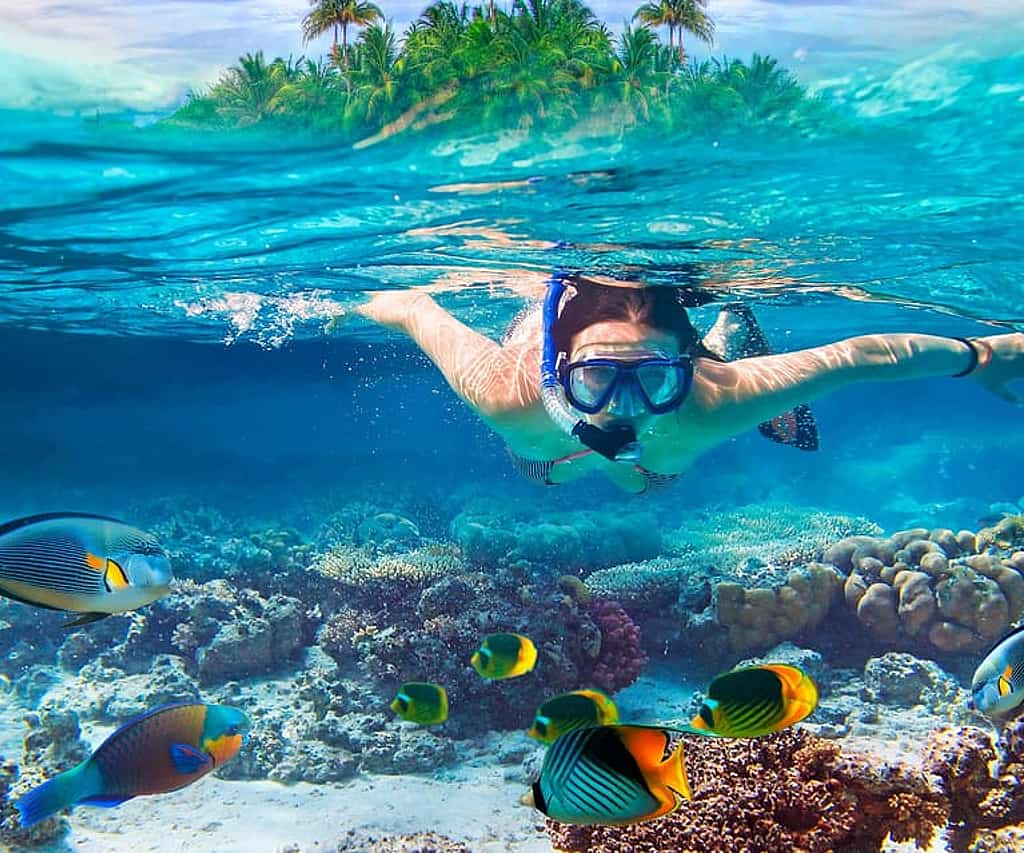
For closer engagement, reef exploration tours combine boat transport with snorkelling stops at several of the park’s strongest sites. Multiple stops reveal the reef’s range, shallow coral gardens close to shore, deeper slopes further out, and pockets where specific marine life tends to gather.
Multiple snorkelling sites: visit two to three distinct reef areas in a single outing, each with a different character and community of fish.
Guide assistance: experienced guides lead you to the most productive spots and support less confident swimmers.
Extended water time: considerably more time in the water than a standard glass bottom outing.
Marine life focus: guides know where turtles and rays tend to congregate, improving the odds of a close sighting.
Swimming ability is required. Reef safe sunscreen protects the coral you have come to see.
We brief every guest on the park’s no take rules before entering the water and route toward the sites least crowded that morning, so the reef feels like yours rather than shared with a dozen other boats.
Boat, guide, snorkelling equipment, marine park entrance fee

2 to 3 hours · From $55 per person
Turtle Bank Excursions
Specific areas within the marine park host regular concentrations of green and hawksbill turtles, present in Watamu’s waters year round and monitored by Kenya Wildlife Service as part of the park’s nesting and feeding ground protections. Dedicated turtle focused excursions target these locations directly, which improves the odds of extended, close observation compared with a general reef tour.
Feeding grounds: guides know the seagrass beds where green turtles feed most reliably.
Resting sites: hawksbill turtles favour specific coral ledges, revisited on calmer days.
Respectful viewing: operators maintain distance guidelines so turtles are observed without being disturbed or chased.
Turtle activity varies with tide and time of day, so departure times are set with that in mind rather than fixed to a set schedule.
We work with guides trained in respectful turtle viewing distances, so encounters stay close without adding stress to animals that are already carefully monitored and protected here.
Boat, guide, marine park entrance fee