Activities

2 to 4 hours · From $70 per person including kayak, guide and safety equipment
Mangrove and Channel Kayaking
The Lamu Archipelago holds more than sixty percent of Kenya’s entire mangrove forest cover, and kayaking is the best way to actually get inside it. Routes wind through narrow tidal channels shaded by mangrove canopy, opening out occasionally into wider water with views back toward Shela and the channel.
Paddling here suits both a gentle, guided mangrove exploration and, for more confident paddlers, longer open channel routes between the islands.
Mangrove tunnels: paddle through narrow, shaded channels lined with root systems, a completely different perspective from a motorboat or dhow.
Birdlife: herons, kingfishers and wading birds are common in the quieter channels, particularly early in the morning.
Open channel paddling: for stronger paddlers, routes extend into the open water between Lamu, Manda and Shela.
Guided ecology: guides point out how the mangrove system supports fish nurseries and protects the shoreline, adding context beyond the paddling itself.
Insects can be persistent in the stiller mangrove channels around dawn and dusk; repellent is worth packing.
We route mangrove trips around the tide, since some channels are only paddleable within a few hours either side of high water, and time departures for the cooler, quieter early morning light.
Kayak, paddle, life jacket and a guide for mangrove routes.
1 to 2 hours · From $70 per person for a one hour session
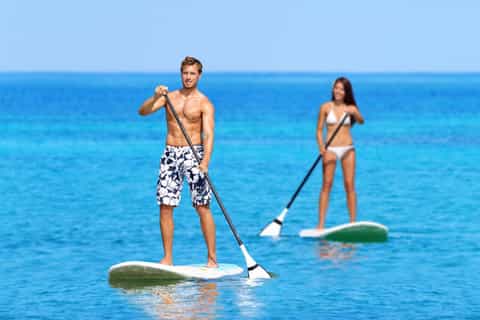
Stand Up Paddleboarding
Shela’s calm morning water, before the sea breeze builds through the day, makes for straightforward, low pressure paddleboarding suited to complete beginners as well as more experienced paddlers looking for a gentle session. Boards are available through operators based in Shela village, generally the same outfits that run the kayaking and windsurfing here.
It is an easy activity to fit around a beach day: an hour on the water before breakfast, or a calm evening session as the light softens.
Calm water paddling: flat morning conditions along the Shela shoreline suit both first timers and experienced paddlers.
Elevated views: standing gives a clearer view down into the water than kayaking or swimming, useful for spotting rays and fish beneath the board.
Low impact exercise: a gentle full body workout that fits easily around a beach day.
Conditions are calmest early in the day, before the afternoon sea breeze builds; this also tends to be the quietest time on the water.
We book paddleboard sessions for the calm early window whenever possible, since conditions shift quickly once the trade wind builds through the late morning.
Paddleboard, paddle and basic instruction for first timers.

2 hour introductory lessons; longer sessions for experienced riders · From $90 per person for an introductory lesson
Kitesurfing and Windsurfing
Shela’s beach and steady trade winds have made it one of East Africa’s more highly regarded, if still relatively undiscovered, kitesurfing and windsurfing spots. The Kaskazi monsoon, from around December through April, brings the most consistent wind, typically in the 15 to 25 knot range, while the Kusi season from June to September brings a stronger but less steady southeasterly.
Established local kite schools based in Shela offer lessons for complete beginners through to independent sessions for experienced riders, taking advantage of a wide, sandy launch area with a sandy bottom and comparatively little crowding.
Consistent trade winds: steady wind for a large part of the year, with the Kaskazi season from December to April considered the most reliable.
Wide, uncrowded beach: Shela’s long stretch of sand gives plenty of room to launch and land, with far fewer riders than more established kite destinations.
Flat water close to shore: beginner friendly conditions near the beach, with choppier water further out for more experienced riders.
Qualified instruction: lessons run through established local kite schools based in Shela.
Wind is genuinely seasonal; travellers with kitesurfing or windsurfing as a priority should plan their visit around the Kaskazi season for the most reliable conditions.
We connect guests with established, safety focused kite schools in Shela rather than informal operators, particularly important for anyone learning for the first time.
Equipment hire and qualified instruction for lessons; equipment hire only for experienced riders on request.