Detailed profiles of the mammals, reptiles, and other wildlife you will encounter across Tanzania and Kenya, organized so you can identify what you are looking at and understand why it behaves the way it does.
A Field Reference, Not Just a Checklist
Understanding What You Are Seeing
This guide organizes East Africa's wildlife by ecological grouping rather than alphabetically, so you can see how species relate to each other and to their habitats. Each profile covers size, behavior, diet, where to find the species, and its current conservation status.
Our naturalist guides use this same body of knowledge in the field every day. A sighting becomes far more memorable once you understand the social structure behind a lion pride, the reason a leopard drags its kill into a tree, or why a wildebeest herd moves the way it does.
Africa's Most Sought After Sightings
The Big Five
Lion, leopard, elephant, buffalo, and rhinoceros earned their collective name from nineteenth century hunting terminology, referring to the five animals considered most dangerous to hunt on foot. Today the term describes safari's most desired sightings, though each is a far more interesting animal than its marketing prominence alone suggests.
African Lion
Panthera leo
Size and Appearance
Males weigh 180 to 250 kg (400 to 550 lbs), females 120 to 180 kg (265 to 400 lbs). Males display manes ranging from blonde to black, with darker manes generally associated with maturity and higher testosterone. Their tawny coats provide effective camouflage in savanna grassland.
Behavior and Social Structure
Lions live in prides of roughly 3 to 20 related females, their dependent offspring, and a coalition of 1 to 4 adult males. Females do most of the cooperative hunting, while males defend territory and protect cubs from rival males. Pride composition shifts continually as young males disperse and new coalitions challenge residents.
Hunting and Diet
Lions hunt mainly at night and during cooler hours, targeting prey from impala to buffalo. Coordinated group hunting lets females take down animals no individual could manage alone, and lions scavenge opportunistically when the chance arises.
Conservation Status
IUCN Red List: Vulnerable. Lion numbers have declined by roughly 43 percent over the past three lion generations (about 21 years), driven by habitat loss, human wildlife conflict, and prey depletion. Community partnerships and anti poaching investment are producing real gains in well managed protected areas.
"Lions rest through midday heat, so dawn and dusk are best for active behavior. Following vultures often leads to a kill, and listening at night helps locate territories, since a male's roar carries up to 8 kilometers."
Best ViewingSerengeti, Ngorongoro Crater, Maasai Mara, Ruaha, Katavi
African Leopard
Panthera pardus
Size and Appearance
Males weigh 60 to 90 kg (130 to 200 lbs), females 35 to 60 kg (75 to 130 lbs). Rosette patterned coats provide exceptional camouflage. Melanistic individuals, sometimes called black panthers, occur rarely, mostly in forest habitats.
Behavior and Social Structure
Leopards are solitary outside of mating and maternal care, holding territories of roughly 10 to 40 square kilometers depending on prey density. They mark territory through scent, scraping, and a distinctive sawing vocalization, and their largely nocturnal habits make sightings especially prized.
Hunting and Diet
Leopards are remarkably adaptable hunters, taking prey from beetles to young giraffe. Exceptional climbing ability lets them store kills in trees, out of reach of scavengers, and a powerful build allows dragging prey heavier than themselves vertically into branches.
Conservation Status
IUCN Red List: Vulnerable. Leopards remain more numerous than lions overall but face growing pressure from habitat loss and conflict with people, and their secretive nature makes population monitoring difficult.
"Kopjes and riverine trees are prime leopard territory. Fresh tracks in early morning dust suggest recent presence, and alarm calls from baboons and impala often signal a leopard nearby."
Best ViewingSerengeti kopjes, Tarangire, Ruaha, Samburu, Maasai Mara
African Elephant
Loxodonta africana
Size and Appearance
Males weigh 4,000 to 7,000 kg (8,800 to 15,400 lbs), females 2,200 to 3,500 kg (4,850 to 7,700 lbs), making them the largest land animals on Earth. Bulls can reach 4 meters at the shoulder, and both sexes grow tusks, though males typically grow larger ivory.
Behavior and Social Structure
Elephant society centers on matriarchal family units of related females and their offspring, led by an experienced matriarch. Males leave the family group at adolescence to live alone or in loose bachelor groups. Family bonds are extraordinarily strong, with relatives maintaining relationships across decades and showing clear signs of grief for dead family members.
Diet and Feeding
Elephants eat 150 to 300 kg of vegetation daily and spend 16 to 18 hours a day feeding. Their browsing and grazing shapes entire ecosystems, opening up areas that benefit many other species.
Conservation Status
IUCN Red List: Endangered. Ivory poaching remains a serious threat despite international trade bans, human wildlife conflict is intensifying as populations expand into elephant range, and climate driven water scarcity adds further pressure.
"Elephants communicate through infrasound below human hearing, so much of their interaction is invisible to us. A matriarch's memory of distant water sources, built over decades, becomes crucial during drought."
Best ViewingTarangire (dry season), Amboseli, Tsavo, Ruaha, Serengeti
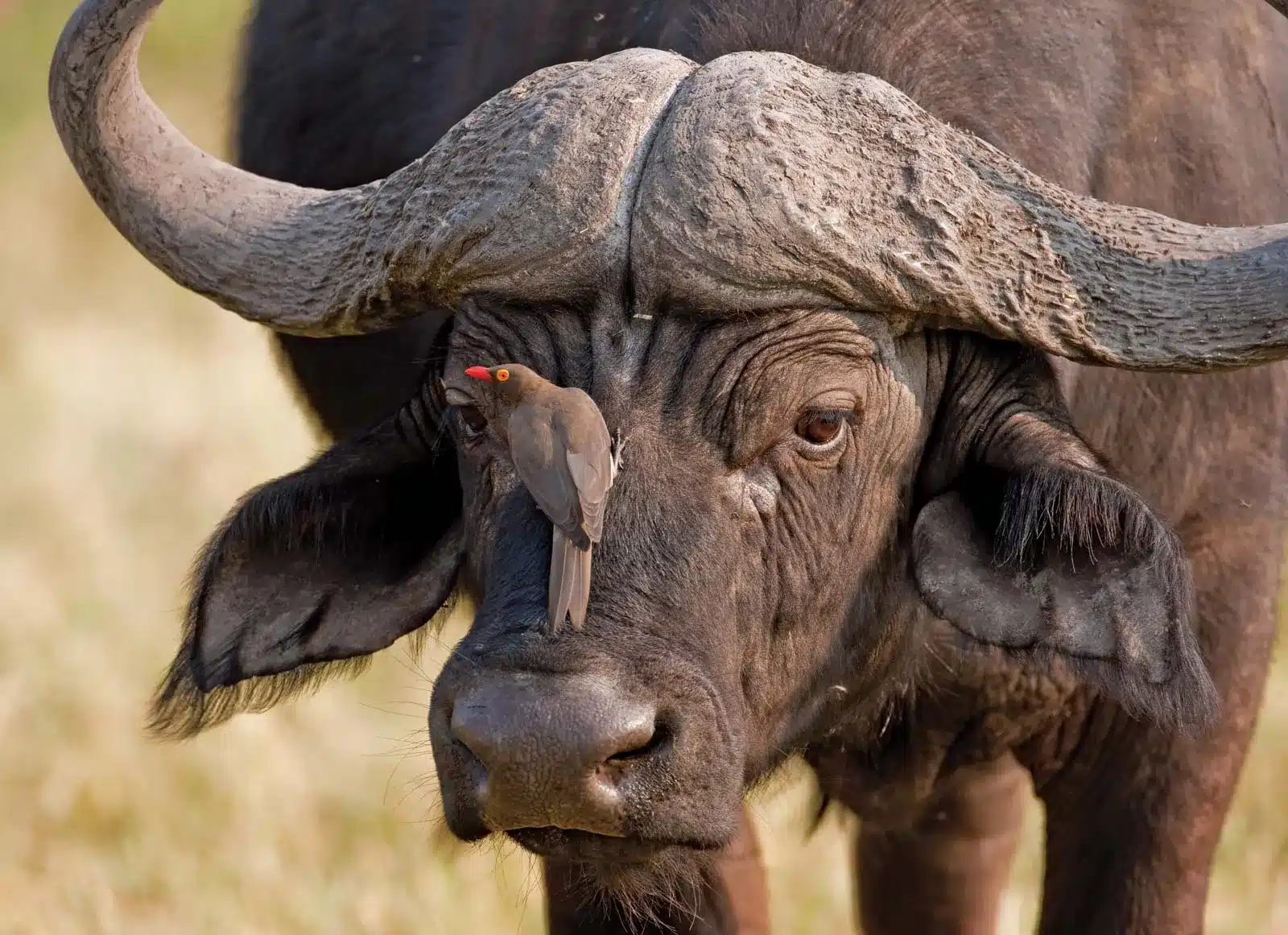
African Buffalo
Syncerus caffer
Size and Appearance
Males weigh 600 to 900 kg (1,320 to 1,980 lbs), females 500 to 650 kg (1,100 to 1,430 lbs). Both sexes carry curved horns meeting in a central boss on mature males, and coat color ranges from dark brown to black, lightening with age.
Behavior and Social Structure
Buffalo live in herds from a few dozen to several thousand individuals. Older males often leave the herd to become solitary, earning a reputation for unpredictable aggression among guides, who refer to them locally as "dagga boys."
Diet and Ecology
Buffalo graze primarily on grasses and need substantial daily water intake. They represent an important prey species for lion prides, and areas with large buffalo populations often support notably healthy lion numbers as a result.
Conservation Status
IUCN Red List: Near Threatened. Buffalo remain relatively numerous inside protected areas but face disease threats including bovine tuberculosis, along with range loss from expanding human settlement.
"Watching a herd defend against a lion attack reveals just how formidable buffalo really are. Respect for a solitary male's temperament is simply part of safe observation."
Best ViewingSerengeti, Katavi, Maasai Mara, Tarangire, Ruaha
Rhinoceros: Black and White
Diceros bicornis and Ceratotherium simum
Black Rhinoceros
Smaller and hook lipped, weighing 800 to 1,400 kg. Black rhinos browse woody plants and leaves using a prehensile upper lip, and tend to be solitary and territorial, sometimes aggressively so.
White Rhinoceros
Larger and square lipped, weighing 1,800 to 2,500 kg, adapted for grazing short grass at ground level. White rhinos are more social than black rhinos and often occur in small groups.
Conservation Status
IUCN Red List: Black rhino, Critically Endangered. White rhino, Near Threatened for the southern subspecies. The northern white rhino subspecies is functionally extinct, with only two known individuals remaining, both female, living under armed protection at Ol Pejeta Conservancy in Kenya.
"Every rhino sighting is a genuine conservation story. Ngorongoro Crater offers East Africa's most reliable black rhino encounters, and supporting rhino protection through responsible tourism helps these animals survive for future generations."
Best Black Rhino ViewingNgorongoro Crater, Serengeti
Best White Rhino ViewingOl Pejeta Conservancy
Beyond the Big Five
Predators and Carnivores
East Africa's carnivore diversity extends well beyond lions and leopards. Understanding these species enriches every safari and reveals the ecological relationships that hold these ecosystems together.
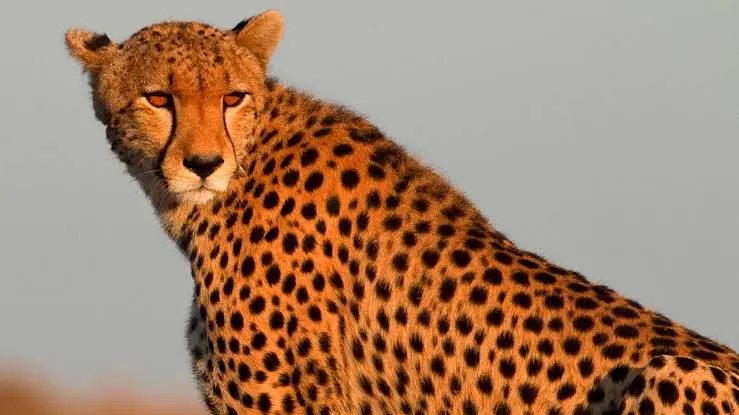
Cheetah
Acinonyx jubatus
Size and Appearance
Cheetahs weigh 55 to 75 kg (120 to 165 lbs) and have slender builds, long legs, and distinctive black "tear marks" running from the eyes to the mouth. Their coats carry solid black spots, unlike the rosettes of a leopard.
Hunting and Speed
Cheetahs are the fastest land animal, capable of speeds widely cited between 95 and 120 km/h in short bursts, though the most rigorously measured figures using GPS collars and radar timing sit closer to 95 to 100 km/h. Their acceleration, reaching around 100 km/h in under three seconds, is often the more impressive statistic. They hunt mainly by day, using excellent vision to spot prey before stalking and sprinting.
Behavior
Cheetahs purr but cannot roar. Females are largely solitary except when raising cubs, while males often form coalitions of two to three brothers. Their light build makes them vulnerable to larger predators stealing a kill.
Conservation Status
IUCN Red List: Vulnerable. Cheetah numbers have declined significantly due to habitat loss and human wildlife conflict, and low genetic diversity leaves populations vulnerable to disease.
Best ViewingSerengeti plains, Ngorongoro Crater, Maasai Mara, Samburu
African Wild Dog
Lycaon pictus
Size and Appearance
Wild dogs weigh 18 to 36 kg (40 to 80 lbs) and have uniquely mottled coats, with no two individuals sharing an identical pattern. Large rounded ears and white tipped tails distinguish them from other canids.
Hunting and Social Behavior
Wild dogs hunt cooperatively in packs of 6 to 20 individuals. Estimates of hunting success vary a good deal by study method, but cooperative hunts are commonly cited at 60 to 90 percent, among the highest rates of Africa's large predators. Pack hierarchy is remarkably egalitarian, with all adults helping feed pups and injured pack members.
Distribution and Rarity
Wild dogs are among Africa's most endangered large carnivores. Ruaha and Nyerere (formerly Selous) protect Tanzania's largest populations, and sightings remain genuinely rare, which makes them especially prized.
Conservation Status
IUCN Red List: Endangered. Wild dogs need vast territories, making them vulnerable to habitat fragmentation, and disease transmitted from domestic dogs poses an ongoing threat.
Best ViewingRuaha, Nyerere (Selous), southern Serengeti (seasonal)
Spotted Hyena
Crocuta crocuta
Size and Appearance
Spotted hyenas weigh 55 to 85 kg (120 to 190 lbs), with powerful builds, sloping backs, and spotted coats. Females are larger than males and dominate clan hierarchies.
Hunting and Scavenging
Contrary to their reputation, hyenas kill most of their own food through cooperative hunting. Powerful jaws capable of crushing bone let them consume an entire carcass, including bones and horns.
Social Structure
Clans of 40 to 80 individuals defend shared territories against neighboring clans. Rank passes from mother to daughter in these female led hierarchies, and communal den sites serve as social centers where cubs from different females grow up together.
Conservation Status
IUCN Red List: Least Concern, though numbers are declining outside protected areas.
Best ViewingSerengeti, Ngorongoro Crater, Maasai Mara, Tarangire
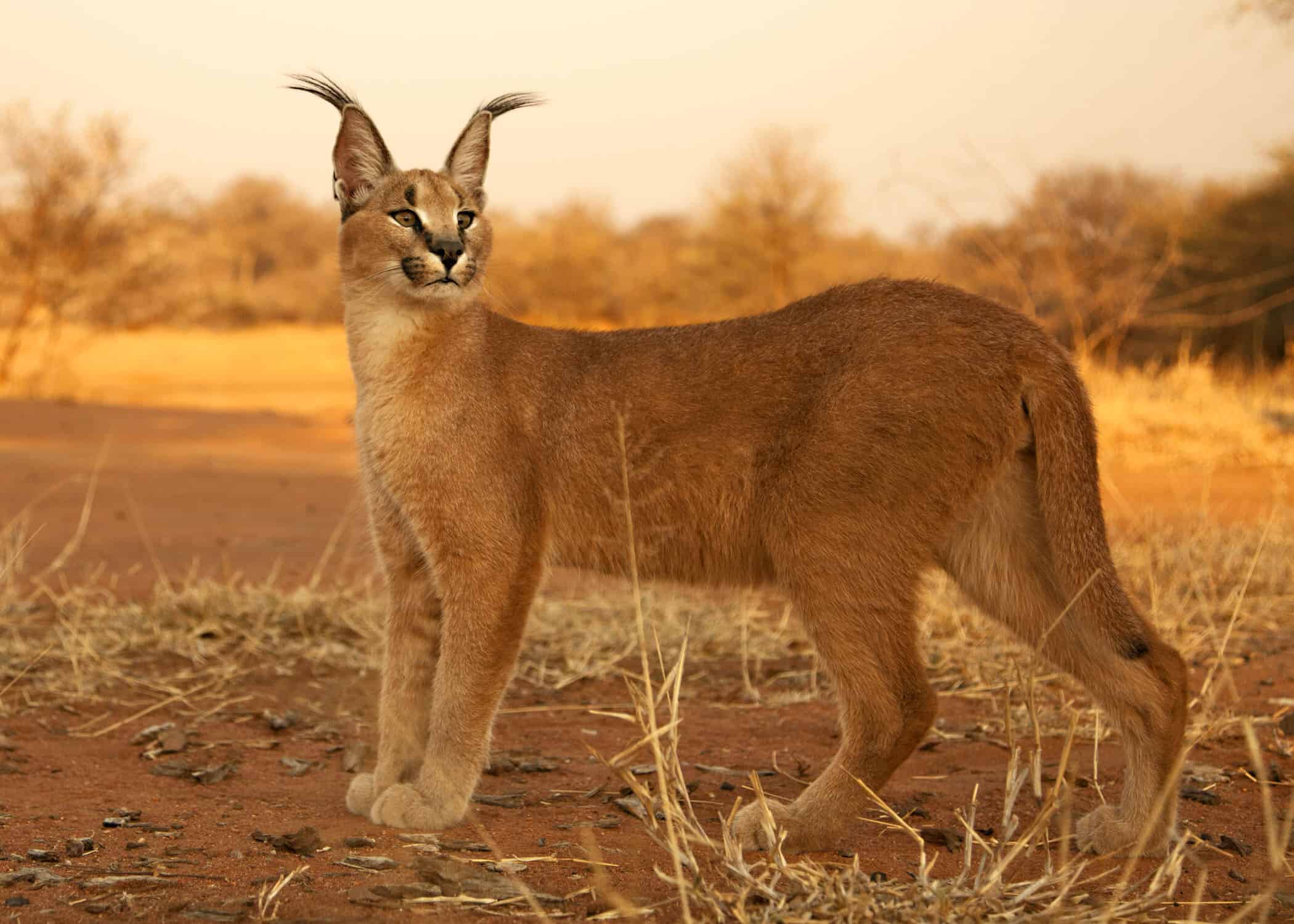
Caracal
Caracal caracal
Size and Appearance
8 to 20 kg (18 to 44 lbs), with a reddish brown coat and long, black tufted ears that give the species its name (from a Turkish word meaning "black ear"). Powerful, elongated hind legs set it apart from other small cats.
Behavior and Diet
Caracals are largely solitary and nocturnal, spending daylight hours resting in dense cover. They are exceptional jumpers, capable of leaping several meters vertically to knock birds out of the air, and also take rodents, hyrax, and young antelope. Adaptable across savanna, scrubland, and semi arid habitat, they are far more widespread than sightings suggest.
Conservation Status
IUCN Red List: Least Concern, though numbers are difficult to assess given the species' secretive habits.
Best ViewingSerengeti, Samburu (sightings uncommon but possible)
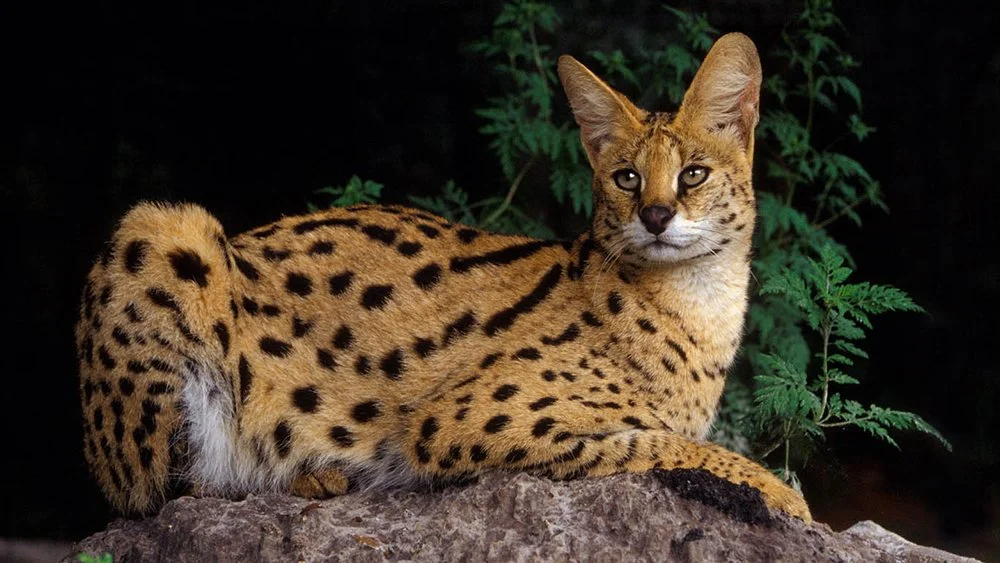
Serval
Leptailurus serval
Size and Appearance
8 to 18 kg (18 to 40 lbs), with a golden yellow coat marked with black spots and stripes. The serval has the longest legs and largest ears relative to body size of any cat, and its appearance is often mistaken for a small cheetah, despite the two being unrelated.
Behavior and Diet
Servals hunt mainly rodents, using exceptional hearing to pinpoint prey moving through tall grass before a high, pouncing leap. Long legs also let them jump well over a meter into the air to catch flushing birds. They are most active around dawn, dusk, and through the night, and favor tall grassland and marsh edges over open plains.
Conservation Status
IUCN Red List: Least Concern.
Best ViewingSerengeti, Ngorongoro Crater, Maasai Mara, especially wet season grasslands
Bat Eared Fox
Otocyon megalotis
Size and Appearance
3 to 5 kg (7 to 11 lbs), with oversized ears, a bushy tail, and a grayish coat. The ears are the giveaway feature, both for identification and for how the animal finds its food.
Behavior and Diet
Bat eared foxes are largely insectivorous, feeding mainly on harvester termites and beetles located by sound alone, an unusual diet among African canids. They live in monogamous pairs or small family groups, often foraging together with parents and older offspring helping raise younger pups, and are most active at dawn, dusk, and overnight during the dry season.
Conservation Status
IUCN Red List: Least Concern.
Best ViewingSerengeti short grass plains, Tarangire
The Species Forming Prey Populations
Herbivores: Grazers and Browsers
East Africa's spectacular predator populations depend on abundant herbivores. This diversity of grazers and browsers creates the biomass that supports entire ecosystems.
Giraffe
Giraffa spp.
Size and Appearance
Males weigh 1,100 to 1,930 kg (2,420 to 4,250 lbs) and stand up to 5.7 meters tall, making giraffe the tallest land animal on Earth. Coat patterns vary by subspecies, with Maasai giraffe showing irregular, vine like markings.
Behavior and Ecology
Giraffe browse tree foliage out of reach of other herbivores using a 45 cm prehensile tongue. Their height provides exceptional predator detection, and despite an awkward appearance, they gallop effectively and can deliver a kick strong enough to injure or kill a lion.
Conservation Status
IUCN Red List: Vulnerable to Endangered depending on subspecies.
Best ViewingSerengeti, Tarangire, Maasai Mara, Samburu, Arusha National Park
Plains Zebra
Equus quagga
Size and Appearance
350 to 450 kg (770 to 990 lbs). The black and white stripe pattern is unique to each individual and is thought to serve multiple functions, including predator confusion and thermoregulation.
Behavior and Migration Role
Zebras live in family groups led by a stallion, which often aggregate into much larger herds during migration. Around 250,000 zebras take part in the Serengeti Mara migration, and zebra frequently associate with wildebeest, since each species offers different predator detection strengths.
Best ViewingSerengeti, Ngorongoro Crater, Maasai Mara, Tarangire
Blue Wildebeest
Connochaetes taurinus
Size and Appearance
180 to 290 kg (400 to 640 lbs), with dark grey coats, bearded faces, and curved horns on both sexes.
The Great Migration
Over 1.5 million wildebeest take part in the annual migration across the Serengeti Mara ecosystem. Synchronized calving produces roughly 500,000 calves over a two to three week window in February and March, the largest terrestrial mammal migration on Earth.
Behavior
Wildebeest live in massive herds that offer protection through sheer numbers, relying on constant vigilance and explosive running ability to evade predators.
Best ViewingSerengeti year round, Maasai Mara (July to October), Ngorongoro Crater
Hippopotamus
Hippopotamus amphibius
Size and Appearance
Males weigh 1,500 to 3,200 kg (3,300 to 7,050 lbs), making hippos the third largest land mammal after elephant and white rhino.
Behavior and Ecology
Hippos spend the day in water and emerge at night to graze, consuming 35 to 40 kg of grass and traveling several kilometers from water in the process. Despite their herbivorous diet, hippos are responsible for more human fatalities annually than any other large African animal, almost entirely through territorial aggression rather than predation.
Conservation Status
IUCN Red List: Vulnerable, declining due to habitat loss and hunting.
Best ViewingSerengeti hippo pools, Ngorongoro Crater, Lake Manyara, Ruaha, Katavi
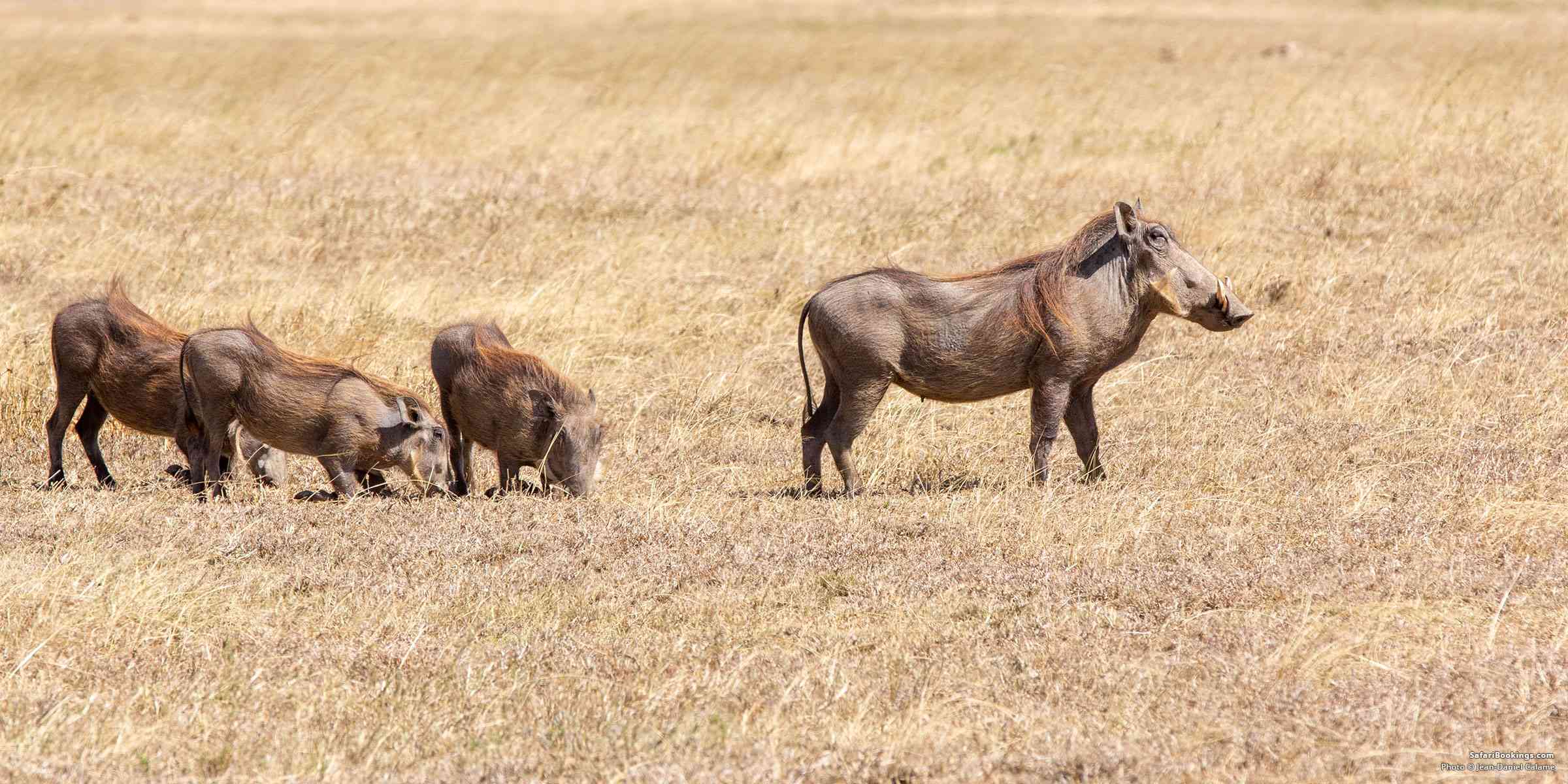
Common Warthog
Phacochoerus africanus
Size and Appearance
50 to 150 kg (110 to 330 lbs), with distinctive facial "warts" (protective pads rather than true growths) and upward curving tusks.
Behavior
Warthogs graze grasses while kneeling on their front knees, and retreat backward into burrows when threatened, defending the entrance with their tusks. Despite a somewhat ungainly appearance, they run swiftly when pursued.
Best ViewingWidespread across most parks and reserves
Antelope Diversity
East Africa's antelope range from the massive eland to the tiny dik dik, demonstrating remarkable adaptation to varied ecological niches.
The entries below are a quick reference rather than full profiles, useful for identification in the field. Ask your guide for more on any species that catches your interest.
ElandEast Africa's largest antelope at 400 to 1,000 kg, with a heavy, ox like build and a pronounced dewlap. Both sexes carry tightly spiraled horns and live in loose, wide ranging herds across open woodland and plains.
Greater KuduA large, striped grey antelope best known for the male's magnificent spiraled horns, among the longest of any antelope. Shy and mostly found alone or in small groups in dense bush, more often heard crashing away than seen clearly.
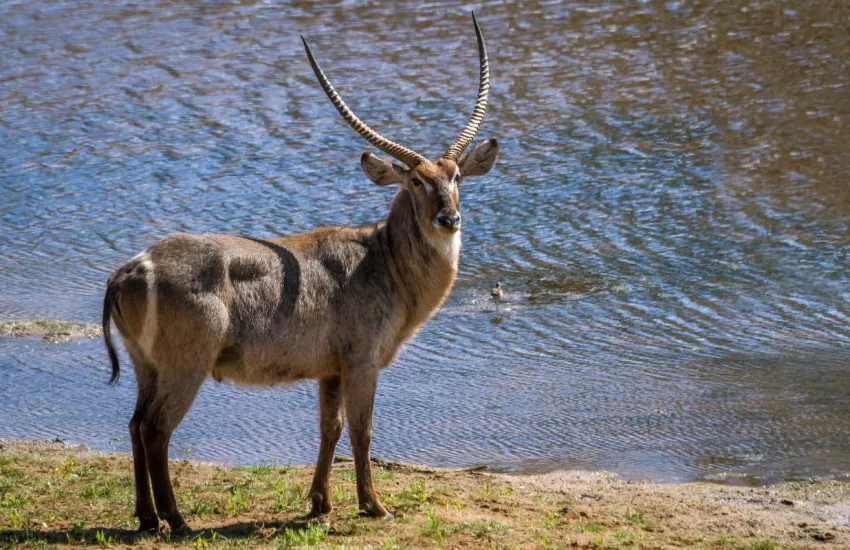
Common WaterbuckA shaggy coated antelope with a distinctive white ring around the rump, rarely found far from water. Males carry long, forward curving horns, and the species' skin produces an oily secretion thought to deter predators.
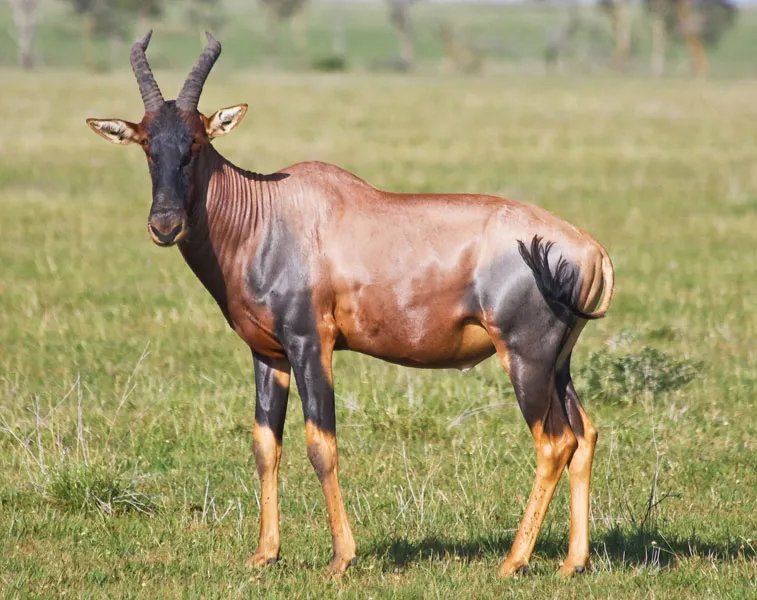
TopiA rich reddish brown antelope with dark patches on the upper legs, often seen standing sentinel on termite mounds to scan for predators. Among the fastest antelope in the region, with strong herding behavior on open plains.
Coke's HartebeestRecognizable by an elongated, narrow face and an unusually upright, alert posture. Herds move with a distinctive stiff gait and tend to favor open grassland, often mixing with zebra and wildebeest for shared predator vigilance.
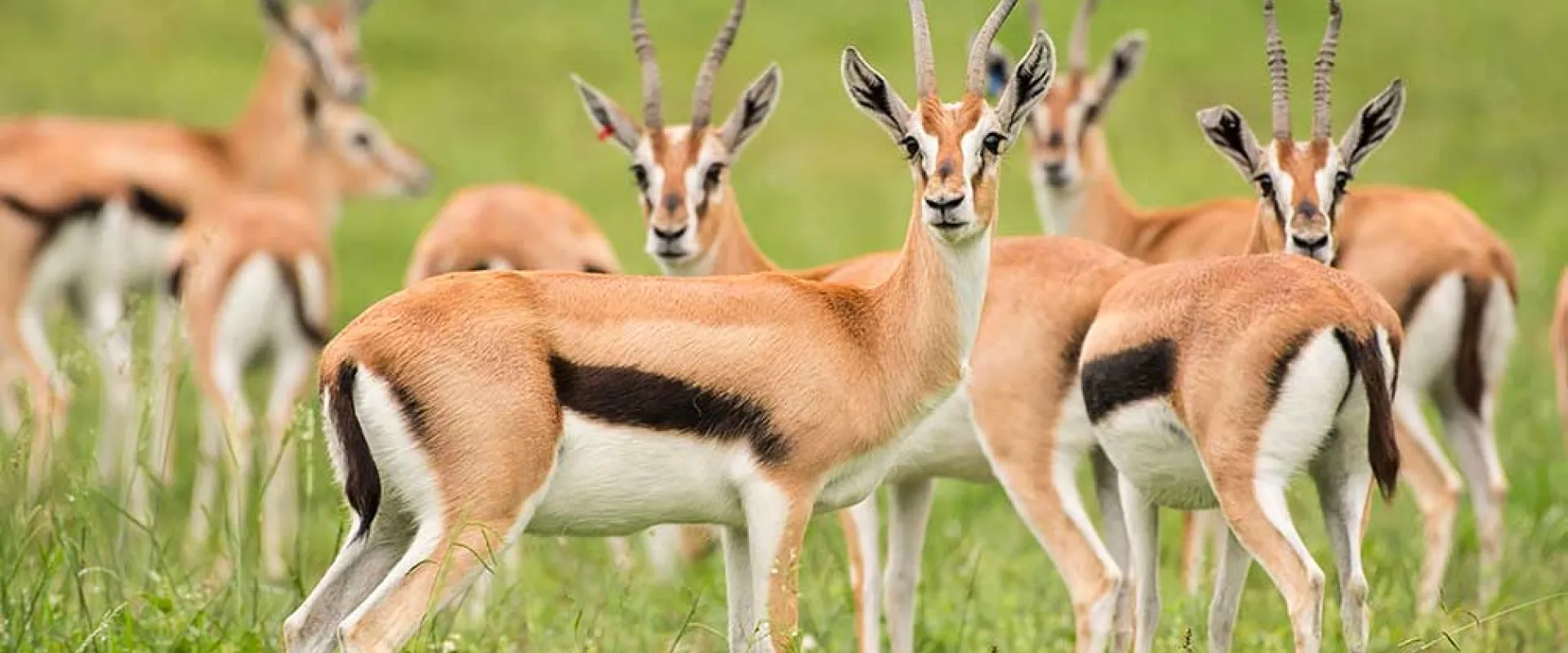
Grant's GazelleLarger than Thomson's gazelle, with a white rump patch and long, ridged horns reaching 40 to 80 cm. More tolerant of dry conditions than most grazers, and often the last gazelle left on the plains late in the dry season.
Thomson's GazelleSmaller and more numerous than Grant's gazelle, identified by a bold black side stripe. Known for stotting, a stiff legged bounding display that signals fitness to predators, and a key prey species for cheetah.
ImpalaA reddish brown, medium sized antelope, with males carrying elegant lyre shaped horns. Highly social, forming large mixed herds, and capable of jumps exceeding 3 meters high and 9 meters long when startled.
Kirk's Dik DikOne of the smallest antelope in Africa at just 3 to 6 kg, forming lifelong monogamous pairs defended within a small territory. Named for the alarm call it gives when startled, and easily overlooked in dense scrub.
GerenukAn unusually long necked antelope that stands on its hind legs, bracing against a branch, to browse foliage other antelope cannot reach. Found in dry bush country rather than open plains, and rarely needs to drink water directly.
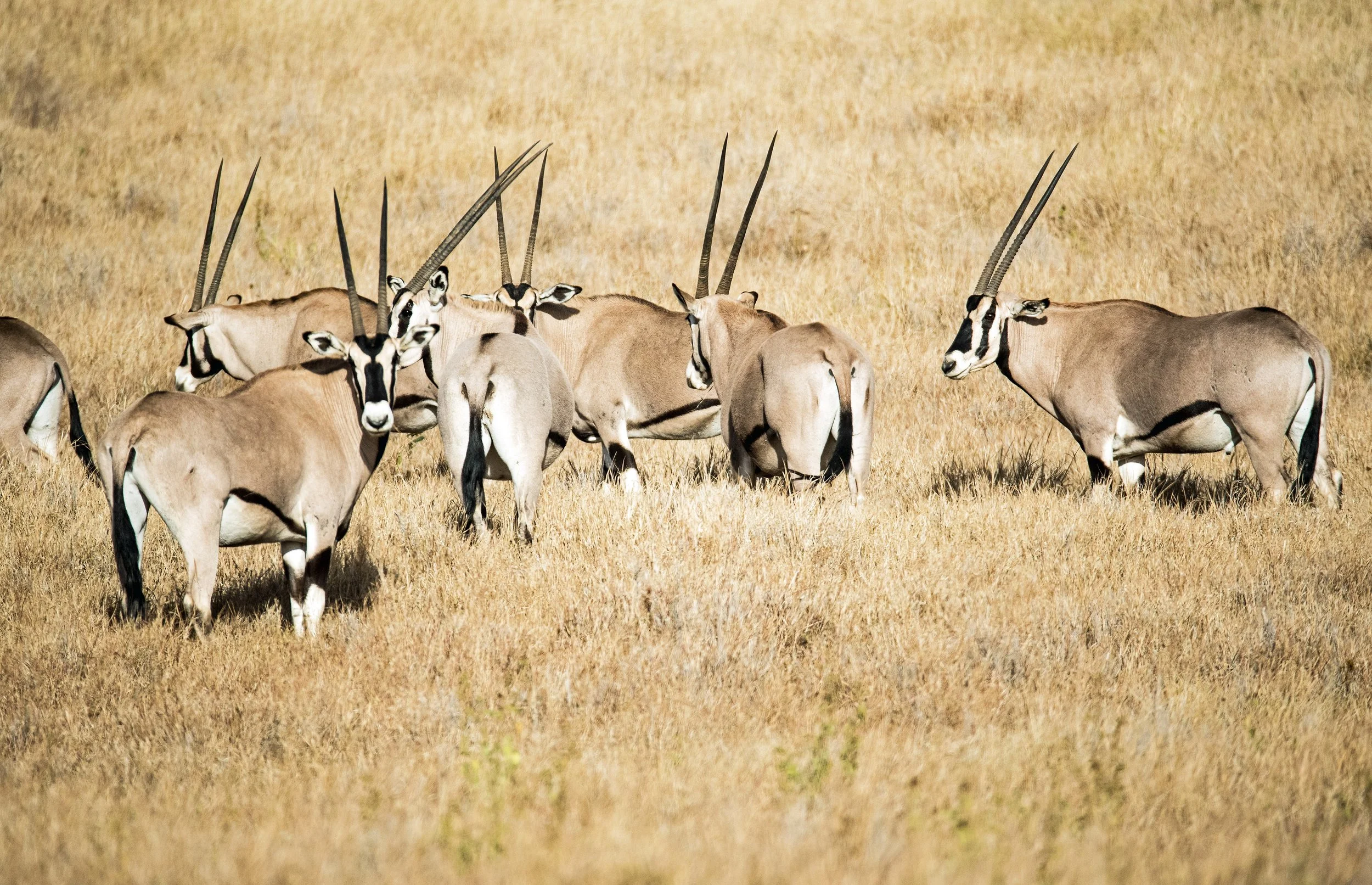
OryxA striking, pale antelope with straight, rapier like horns that can exceed a meter in length. Adapted to arid and semi desert habitat, with physiological tolerances that let it go long periods with minimal water.
Sable AntelopeA striking antelope with a glossy black coat in mature males, a white underbelly and face markings, and long, backward curving horns. Found in miombo woodland habitat rather than open grassland, and less commonly seen than most Big Five adjacent species.
Roan AntelopeA large, horse like antelope with a greyish coat and short, backward curving horns on both sexes. Genuinely rare across Tanzania and Kenya, living in small herds in remote woodland and grassland areas away from heavy tourist traffic.
From Great Apes to Small Monkeys
Primates
East Africa's primates offer intimate wildlife encounters that reveal complex social behavior and genuine intelligence.
Chimpanzee
Pan troglodytes
Size and Appearance
40 to 70 kg (88 to 154 lbs), with black hair and powerful builds.
Behavior and Intelligence
Chimpanzees use tools, solve problems, and maintain complex social relationships. Habituated communities at Mahale and Gombe allow a closeness of observation not possible with wild populations elsewhere, and witnessing wild chimpanzees is among the most moving wildlife experiences East Africa offers.
Social Structure
Communities of 20 to 150 individuals, with hierarchies, alliances, and politics that genuinely rival human social complexity.
Conservation Status
IUCN Red List: Endangered, declining due to habitat loss, disease, and bushmeat hunting.
Best ViewingMahale Mountains National Park, Gombe Stream National Park
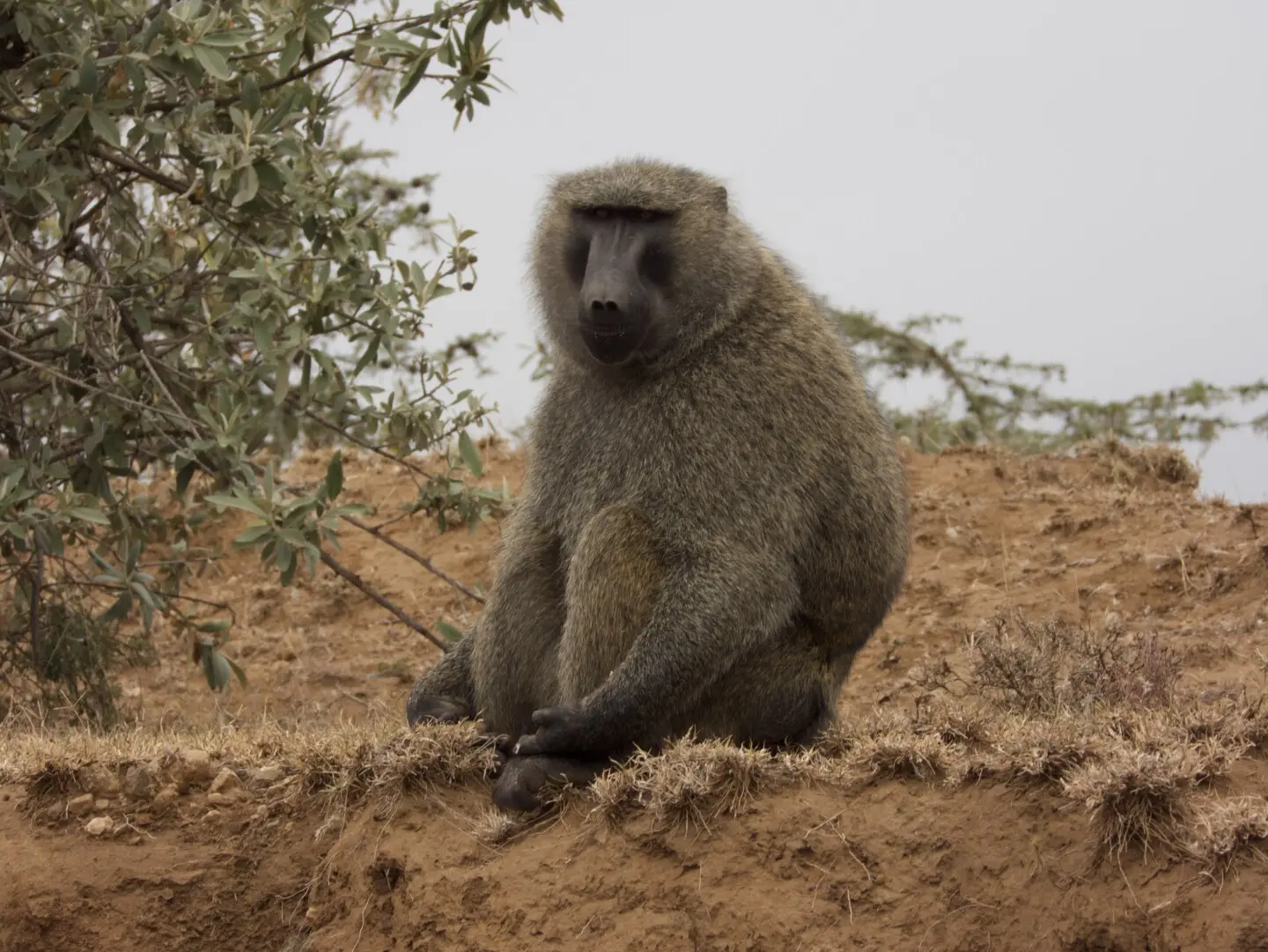
Olive Baboon
Papio anubis
Size and Appearance
Males weigh 20 to 35 kg (44 to 77 lbs), females 10 to 15 kg (22 to 33 lbs), with olive brown coats and dog like faces.
Behavior
Large troops of 20 to 150 individuals maintain complex hierarchies. Baboons are highly adaptable, occurring from savanna to forest edge, and their omnivorous diet ranges from grass seeds to small antelope.
Best ViewingWidespread throughout Tanzania and Kenya
Black and White Colobus
Colobus guereza
Size and Appearance
9 to 23 kg (20 to 51 lbs), with striking black coats and flowing white mantles that make this species unmistakable.
Behavior
An arboreal, leaf eating primate living in the forest canopy. A specialized digestive system allows colobus monkeys to process leaves that are toxic to most other animals, and their leaps between trees show remarkable agility.
Best ViewingArusha National Park, Aberdare National Park, scattered forest patches
Vervet Monkey
Chlorocebus pygerythrus
Size and Appearance
3.5 to 8 kg (8 to 18 lbs), with grey brown coats, black faces, and a white belly fringe.
Behavior
Adaptable omnivores living in troops near water, with sophisticated alarm calls that differ for each major predator type, including leopard, eagle, and snake.
Best ViewingWidespread in wooded habitats throughout East Africa
Beyond Mammals
Reptiles and Other Wildlife
East Africa's wildlife extends well beyond mammals, with an impressive diversity of reptiles including the iconic Nile crocodile.
Nile Crocodile
Crocodylus niloticus
Size and Appearance
Large males exceed 5 meters and 750 kg, ranking among the largest reptile predators on Earth.
Behavior and Ecology
Crocodiles ambush prey from water, including wildebeest during migration river crossings. They show surprising parental care, with females guarding nests and assisting hatchlings into the water, and bask on riverbanks to regulate body temperature.
Conservation Status
IUCN Red List: Least Concern, though locally threatened by hunting and habitat loss.
Best ViewingGrumeti and Mara Rivers during migration crossings, Rufiji River
Rock Python
Python sebae
Size and Appearance
Africa's largest snake, with confirmed lengths of 6 meters or more. Thick bodied and patterned in irregular brown and tan blotches that provide effective camouflage in leaf litter and dry grass.
Behavior and Diet
A non venomous constrictor that ambushes prey near water sources and game trails, including small antelope, warthog, and occasionally larger animals. Rock pythons can go long stretches between meals after a large kill, and despite a wide distribution across both countries, encounters remain uncommon simply because the species is so well camouflaged and inactive between hunts.
Conservation Status
IUCN Red List: Least Concern, though locally persecuted out of fear in some areas.
Best ViewingWidespread, sightings uncommon and largely a matter of chance
Black Mamba
Dendroaspis polylepis
Size and Appearance
Africa's longest venomous snake, reaching up to 4 meters, with a slender build and a coffin shaped head. The name refers to the ink black interior of the mouth, displayed as a threat gesture, rather than the skin color, which is actually grey to olive brown.
Behavior
Black mambas are fast moving and highly alert, among the quickest snakes in the world over open ground, and prefer to flee rather than confront a person. Their venom is a fast acting neurotoxin, medically significant enough that experienced guides treat every sighting with real respect, though bites to visitors are rare and almost always the result of a snake being cornered or accidentally stepped on.
Conservation Status
IUCN Red List: Least Concern.
Best ViewingWidespread, most often seen by chance rather than sought out
Nile Monitor
Varanus niloticus
Size and Appearance
A large, powerfully built lizard reaching over 2 meters in length, dark in color with yellow banding that fades somewhat with age.
Behavior and Diet
Nile monitors are strong swimmers and capable climbers, equally at home raiding a crocodile nest for eggs as they are hunting fish, crabs, and small mammals along a riverbank. Their sharp claws and muscular tail make them formidable when cornered, and their dinosaur like appearance and confident movement tend to fascinate first time observers.
Conservation Status
IUCN Red List: Least Concern.
Best ViewingRiverbanks and lake edges throughout both countries
Where to Find Specific Species
Species by Habitat
Understanding habitat associations helps predict where a particular species is likely to occur, which is useful when planning a safari around priority animals.
Open Plains
Serengeti, Maasai Mara, Ngorongoro Crater
Wildebeest (massive herds)
Thomson's and Grant's gazelle
Cheetah
Ostrich, secretary bird, kori bustard
Woodland and Bush
Tarangire, Ruaha, Tsavo
Elephant (Tarangire dry season)
Greater kudu, gerenuk, fringe eared oryx
Python
Leopard (riverine forest)
Wetland
Lake Manyara, Ngorongoro Crater, Amboseli
Hippo, crocodile, waterbuck
Sitatunga
Hundreds of water bird species
Flamingo (Manyara, Nakuru)
Forest
Mahale, Gombe, Arusha National Park, Aberdare
Chimpanzee (western Tanzania)
Black and white colobus, red colobus
Bushbuck, duiker species
Mountain
Kilimanjaro, Mount Kenya, Aberdare
Montane eland populations
Mountain reedbuck, klipspringer
Thick tailed bushbaby
Montane bird species
Species Requiring Special Effort
Rare and Special Species
Some species require dedicated effort due to rarity, habitat specificity, or nocturnal behavior. Our guides' field experience meaningfully improves the odds for these harder sightings.
African Wild Dog
Ruaha, Nyerere (Selous), southern Serengeti
Challenge
Wide ranging, small populations
Strategy
Extended time in key areas, dawn and dusk drives
Black Rhinoceros
Ngorongoro Crater (best odds), Serengeti
Challenge
Critically low numbers, thick bush
Strategy
Early morning drives in known territories
Pangolin
Tarangire, Ruaha
Challenge
Nocturnal, solitary, limited night drive areas
Strategy
Night drives where permitted, a good deal of luck
Aardvark
Various parks
Challenge
Strictly nocturnal, underground by day
Strategy
Night drives, burrow monitoring
Honey Badger
Various parks
Challenge
Wide ranging, primarily nocturnal
Strategy
Night drives, persistence
Striped Hyena
Northern Tanzania, northern Kenya
Challenge
Extremely uncommon, nocturnal
Strategy
Night drives in specific known areas
Field Skills
Identification Tips
Antelope by Size
Very large (over 200 kg): eland, greater kudu, roan, sable
Large (100 to 200 kg): waterbuck, hartebeest, topi, wildebeest
Medium (40 to 100 kg): impala, Grant's gazelle, oryx
Small (under 40 kg): Thomson's gazelle, dik dik, duiker
Antelope by Horn Pattern
Straight: oryx, roan, sable
Spiraled: eland, greater kudu, sitatunga
Lyre shaped: impala, waterbuck
Curved backward: hartebeest, topi
Big Cat Differentiation
Lion versus leopard: lions live in social groups, have tawny unspotted coats, and males carry manes. Leopards are solitary, rosette patterned, and sleeker built, with a habit of climbing trees.
Leopard versus cheetah: leopards have rosette spots, a stockier build, and no tear marks. Cheetahs have solid spots, distinct tear marks, a slender build, and a notably small head.
Zebra versus Wildebeest
Distant animals sometimes confuse first time visitors. Zebras show black and white stripes, no horns, and a horse like build. Wildebeest are grey brown, bearded, and horned in both sexes.
Understanding Behavior Deepens Every Sighting
Behavioral Insights
Predator Hunting Behaviors
Ambush hunters (leopard, caracal) rely on patient stalking and an explosive final rush. Coursing hunters (cheetah, wild dog) rely on speed based pursuit. Cooperative hunters (lion, wild dog, spotted hyena) rely on group coordination. Watch for intent staring, a low crouching posture, and forward pointed, alert ears as signs a hunt may be starting.
Herbivore Anti Predator Behaviors
Head up scanning while feeding, alarm snorts from wildebeest and impala, and stotting or pronking displays in gazelle all signal vigilance. Group protection strategies include nursery groups among buffalo and elephant, circular defense formations, and collective mobbing of a predator.
Communication Signals
Visual signals include elephant ear spreading as a threat display, lion tail posture as a mood indicator, and a hippo's yawn, which signals threat rather than tiredness. Vocal signals include lion roars for territorial advertising, elephant rumbling through infrasound, and hyena whooping to assemble the clan.
Understanding the Threats These Species Face
Conservation Status Overview
Critically Endangered
Northern white rhinoceros (functionally extinct), mountain gorilla (though numbers are increasing), African wild dog and black rhinoceros in many areas.
Endangered
Chimpanzee, African elephant (recently uplisted), black rhinoceros, Grevy's zebra.
Vulnerable
Lion, leopard, cheetah, hippopotamus, and most giraffe subspecies.
Threats Across Species
Habitat loss from agricultural expansion and settlement, human wildlife conflict, poaching for ivory, rhino horn, and bushmeat, disease transmitted from domestic animals, and climate driven changes in rainfall and habitat quality.
Conservation Successes
Intensive protection has increased the black rhino population in Ngorongoro Crater. Anti poaching investment has helped stabilize elephant numbers in well managed areas. Community conservancies are creating genuine buffer zones that support both wildlife and people, and compensation schemes are reducing retaliatory killing of predators.
Best destinations: Ngorongoro Crater (all five possible in a single day), Maasai Mara, Serengeti. Recommended duration: 6 to 8 days minimum. Optimal season: June through October, the dry season.
Predator Specialty Safaris
Best destinations: Serengeti, Maasai Mara, Ruaha, focused on lion, leopard, cheetah, and wild dog. Recommended duration: 8 to 10 days, since different seasons offer different advantages year round.
Rare Species Safaris
Best destinations: Ruaha for wild dog, Ngorongoro for black rhino, Mahale for chimpanzee. Recommended duration: 10 to 14 days, allowing enough time for genuinely challenging species.
Birding and Wildlife Combination
Best destinations: Lake Manyara, Tarangire, Serengeti. Recommended duration: 10 to 14 days. Optimal season: November through April, when migrant bird species are present.
Species Questions Answered
Frequently Asked Questions
How many species can we expect to see on a typical safari?
A typical 7 to 10 day safari across the Serengeti, Ngorongoro, and Tarangire produces roughly 40 to 60 mammal species and 150 to 250 bird species for an attentive observer. Species counts vary with season, luck, and effort, and our guides aim for encounter diversity rather than checklist obsession.
What are the chances of seeing all Big Five?
In prime parks such as Ngorongoro Crater, the Maasai Mara, or a multi park Serengeti safari, Big Five completion rates exceed 85 percent over safaris of 6 or more days. Leopard and rhino still require some luck even in the best locations, so a flexible itinerary with extra time in productive areas improves the odds meaningfully.
When is the best time for predator viewing?
Dry season (June through October) concentrates prey near water and generally makes predator encounters easier. Green season (November through May) trades some of that ease for birthing season activity and far fewer vehicles at each sighting. Both seasons offer strong predator viewing with different characteristics.
Can we request focusing on specific species?
Yes. We specialize in interest based safari design, whether the priority is predators, rare species, primates, or a specific ecological community. Sharing your priorities during planning lets us select destinations and brief guides accordingly.
How important are binoculars and field guides?
Quality binoculars meaningfully improve viewing, especially for distant or small animals. Field guides are a useful reference, though our guides' field knowledge generally exceeds what any book can offer, and we provide equipment recommendations during pre departure planning.
Do you offer photography focused wildlife safaris?
Yes. Our photography safaris build in longer sighting times, attention to lighting, and positioning for composition, with guides who understand camera settings and framing well enough to advise in the field.
Wildlife movement shifts from year to year. Subscribe for seasonal updates on migration timing, calving windows, and notable sightings across the parks we work in.
Whether your priority is completing the Big Five, tracking chimpanzees, or finding the rare species most visitors miss, we design an itinerary around your specific interests.
Let's Design Your Wildlife Safari
Tell us which species and ecosystems matter most to you, and we will build the itinerary around that priority.









 Common Waterbuck
 Topi
Topi


 Thomson's Gazelle


 Oryx
Oryx