A month by month guide to where the herds are, what is happening, and when to travel for calving season, river crossings, or general migration viewing across the Serengeti and Mara ecosystem.
Earth's Largest Overland Migration
Planning Around a Journey That Never Stops
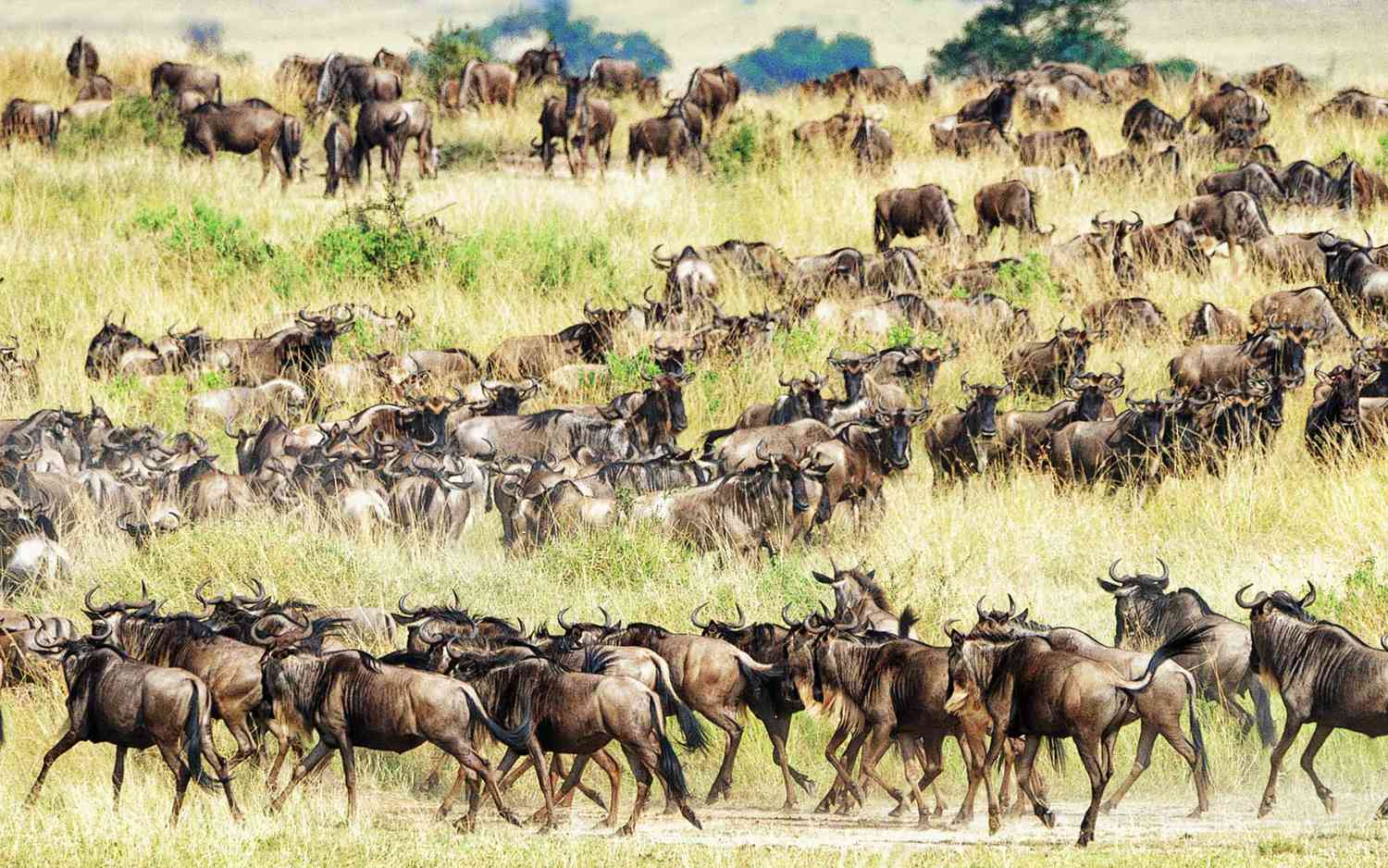
Roughly 1.5 million wildebeest, joined by around 250,000 to 300,000 zebra and several hundred thousand gazelle and other antelope, move in a continuous clockwise loop across more than 25,000 square kilometers of the Serengeti and Mara ecosystem, following the rain and the fresh grass it brings.
There is no single start or finish to this journey, and no single "best" month either. What changes from month to month is which phenomenon you are positioned for, calving, rutting, a river crossing, or simply vast concentrations of animals on open plains. This calendar walks through the year so you can match your travel dates to what actually matters to you.
No two years follow an identical script. Rainfall shifts timing and routes from one season to the next, so treat the months below as a strong general pattern rather than a fixed schedule, and lean on your guide's current, on the ground intelligence for exact positioning.
Why the Herds Move the Way They Do
Understanding the Migration Cycle
The migration is not a linear journey with a beginning and an end. It is a continuous response to rainfall, grass, and water, repeated every year in a broadly circular route.
Rainfall Patterns
Seasonal rain triggers grass growth, and the herds move toward it. The short rains (November and December) and the long rains (March through May) both drive major shifts in position.
Grass Nutrition
Wildebeest seek out the short, mineral rich grasses that grow on the volcanic soils of the southern plains, so they keep moving rather than settling anywhere indefinitely.
Water Requirements
Wildebeest can travel impressive distances from water, but accessibility still shapes the route, and the major river crossings occur precisely where migration paths intersect a river.
Predator Avoidance
Constant movement reduces the risk of repeated predator encounters compared with staying in one place, and synchronized calving overwhelms predators through sheer numbers rather than evasion.
Migration Numbers
1.5M+
Wildebeest, the core of the migration
250K to 300K
Zebra migrating alongside them
~500K
Calves born each year, mostly in February and March
250K+
Animals estimated to die annually from all causes combined
That last figure covers predation, drowning, thirst, hunger, and exhaustion together. Drowning specifically, the cause most associated with river crossing photographs, accounts for a much smaller share: researchers studying the Mara River estimate an average of around 6,250 wildebeest lost to mass drownings in a typical year.
Annual Cycle Overview
January to MarchSouthern Serengeti plains, calving season
April to MayLong rains, dispersal, approach to the Western Corridor
June to JulyWestern Corridor and Grumeti River crossings
July to SeptemberNorthern Serengeti and Maasai Mara, peak river crossings
October to NovemberShort rains trigger the return journey southward
DecemberBack on the southern plains, the cycle begins again
Twelve Months, Twelve Very Different Safaris
The Month by Month Calendar
Each entry below covers where the herds typically are, what is happening, and what a safari timed for that month actually looks like.
01
January
Southern Plains Concentrations
Vast herds concentrate on the southern Serengeti's short grass plains, drawn by the mineral rich grazing that pregnant females need ahead of calving. The flat, open terrain also makes it easy to spot approaching predators, an advantage that matters more as calving approaches.
Viewing Highlights
Massive herd concentrations, often hundreds of thousands of animals
Excellent predator viewing as lion, cheetah, and hyena numbers build
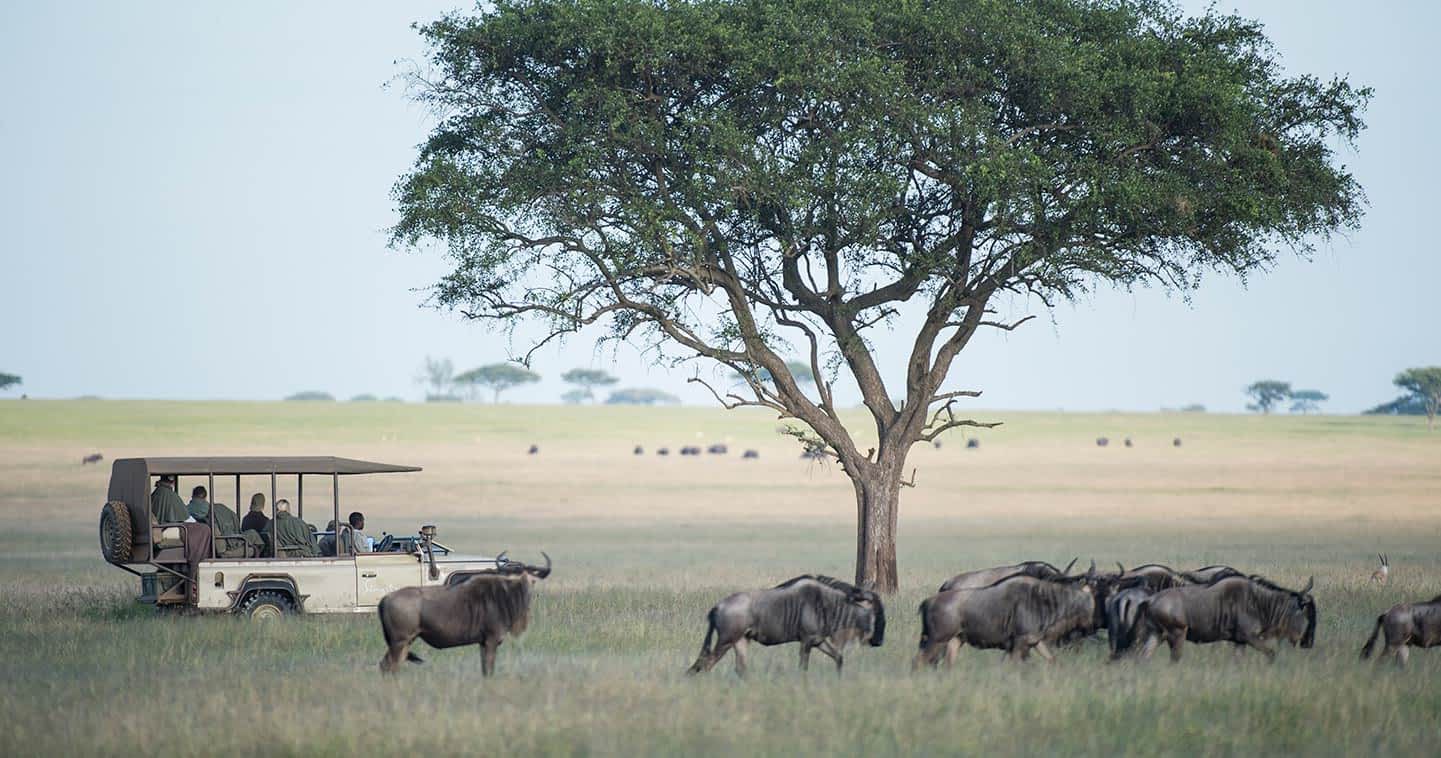
Dramatic open landscapes dotted with scattered acacia trees
Best AreasNdutu, southern Serengeti plains, northern Ngorongoro Conservation Area
WeatherShort rains ending, occasional storms
"January gives you the numbers without February's calving chaos. Predator densities are already building in anticipation, which makes for excellent viewing on its own."
02
February
Peak Calving Season
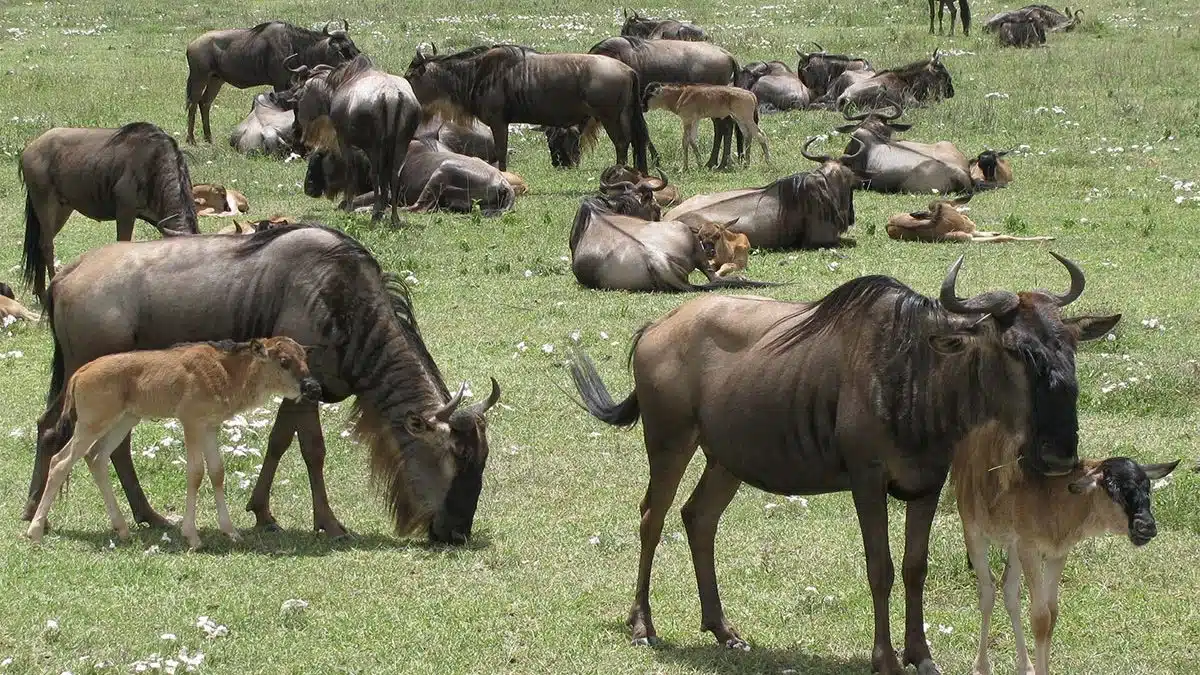
This is the calendar's most dramatic month. Synchronized births produce an estimated 8,000 calves a day during the peak weeks, a volume that satiates predators even as it exposes newborns to maximum risk. Calves stand and run within minutes of birth, and the plains fill with wobbly first steps and constant predator activity side by side.
Viewing Highlights
Continuous births through daylight hours, since wildebeest give birth by day
Maximum predator activity from lion, hyena, cheetah, jackal, and eagle
Newborns standing and running within minutes of birth
Best AreasNdutu (the epicenter), southern Serengeti
WeatherVariable, with occasional rain showers
"February is safari's most intense wildlife drama. Predators hunt constantly, yet barely dent overall calf numbers, which is exactly the point of synchronized birth in overwhelming volume."
03
March
Post Calving Dispersal
Calving continues at reduced intensity as the long rains approach and the herds begin to disperse. Males start rutting, establishing and defending temporary territories through head butting and chasing, while young calves old enough to keep up now travel alongside the main herd.
Viewing Highlights
Rutting behavior, with males notably territorial and aggressive
Young calves visibly learning survival skills within the herd
The first signs of northward movement
Best AreasSouthern Serengeti, transitioning toward central Serengeti
WeatherLong rains beginning, landscape greening
"March catches the tail end of calving and the start of rutting in the same visit. Early long rains push the herds north sooner; late rains extend their time on the southern plains."
04
April
Long Rains Peak
The long rains transform the Serengeti into a lush, green landscape, and widespread grazing lets the herds disperse across a much larger area than during the dry months. This is a low season for concentrated migration viewing, but it rewards travelers who value scenery, dramatic light, and fewer vehicles over sheer numbers of animals.
Viewing Highlights
Lush, dramatic landscapes ideal for photography
Widely dispersed herds rather than concentrated viewing
Excellent resident wildlife, including predators and birds
Notably fewer vehicles than peak season
Best AreasCentral Serengeti, with movement beginning toward the west
WeatherHeavy rains, with muddy conditions in some areas
"April suits travelers who value an exclusive experience and dramatic scenery over mass concentrations. Resident wildlife viewing stays excellent even as the migration itself disperses."
05
May
Western Corridor Arrival
As the long rains taper off, the herds continue pushing west, concentrating along the routes that lead toward the Grumeti River crossings. May is a transitional month, moving from the wide dispersal of the wet season toward the tighter concentrations of the dry season ahead.
Viewing Highlights
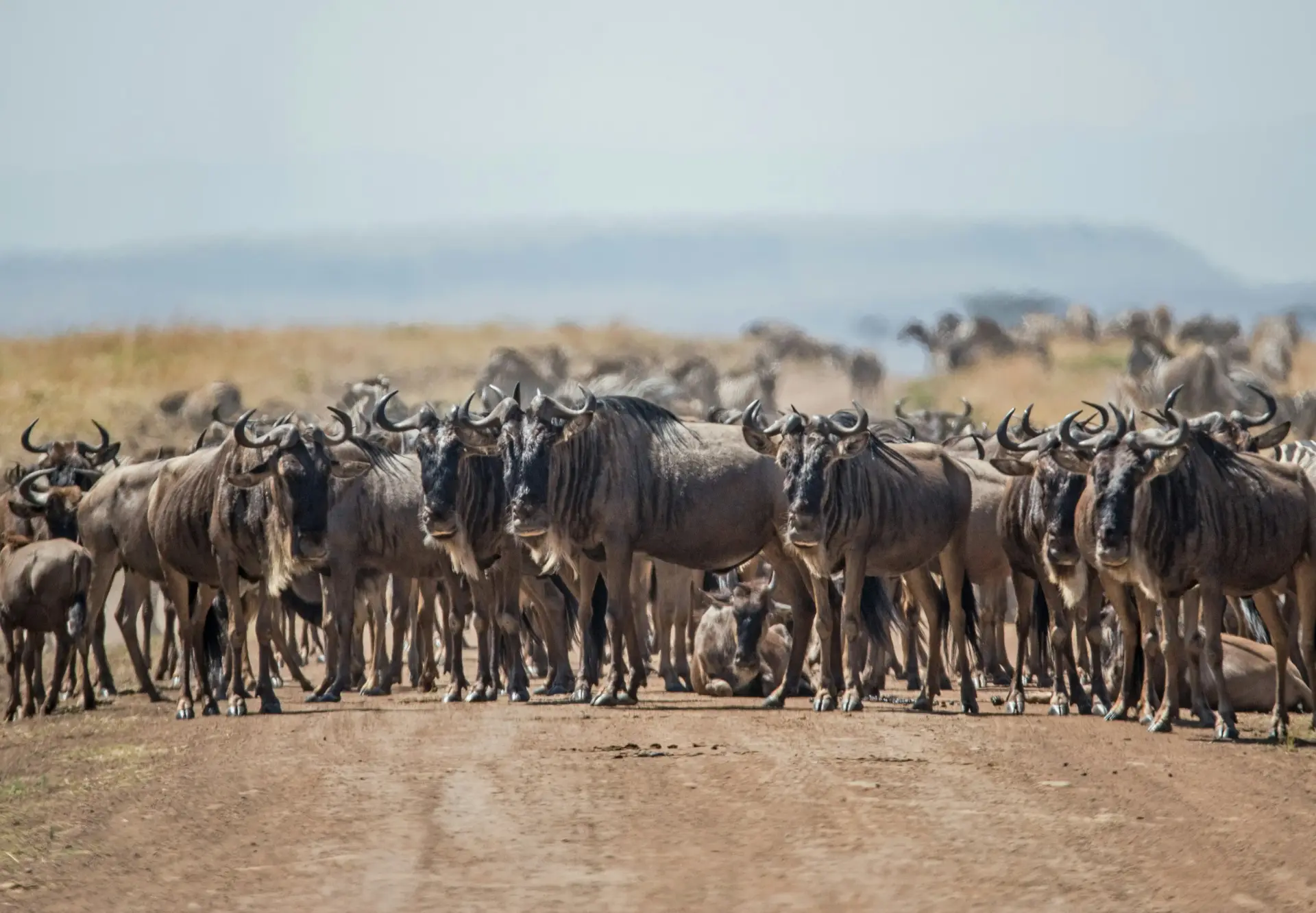
Long, columnar herd movements toward the western regions
Improving accessibility as the rains ease
A mix of migratory and resident wildlife
Best AreasWestern Corridor approach, Grumeti region
WeatherLong rains ending, conditions improving
"Late May positions you for early Grumeti activity while avoiding peak season crowds. Herds are already consolidating, which makes for better viewing than April's dispersal."
06
June
Grumeti River Crossings Begin
June brings the first major river crossing spectacle of the year. The Grumeti River is smaller than the Mara, but its resident crocodile population is substantial, and herds massing along its banks before plunging across in sudden, spectacular rushes make for genuinely dramatic viewing.
Viewing Highlights
Grumeti River crossings, less famous than the Mara but just as spectacular
Large crocodiles taking wildebeest during crossing attempts
Dry season conditions beginning, with excellent visibility
Best AreasWestern Corridor, the Grumeti region specifically
WeatherDry season beginning, excellent conditions
"June offers river crossing drama without the July through September crowds. Grumeti crossings feel intimate, with far fewer vehicles than the famous Mara crossings later in the year."
07
July
Northern Serengeti Arrival and First Mara Crossings
The migration's center of gravity shifts north in July, as leading groups reach the Mara River and the first crossing attempts begin. Crossing frequency and location vary daily based on herd movement and water conditions, so patience, and sometimes luck, matter as much as timing.
Viewing Highlights
The first spectacular Mara River crossings of the season
Large crocodiles, generally bigger than those in the Grumeti
Peak safari season getting underway on both sides of the border
Best AreasNorthern Serengeti near Kogatende, southern Maasai Mara
WeatherDry season, excellent conditions
"July captures the start of crossing season with somewhat lower crowds than August and September. Positioning on both the Serengeti and Mara sides keeps your options open."
08
August
Peak Mara River Crossings
August is the peak month for river crossing viewing. Massive concentrations occupy both sides of the border, creating near daily crossing opportunities at multiple sites, and this is also when visitor numbers peak, though a good guide still positions clients well despite the crowds.
Viewing Highlights
Near daily crossing opportunities, weather dependent
Dramatic crocodile predation at crossing points
Excellent general game viewing alongside the migration itself
Best AreasNorthern Serengeti (Tanzania side), Maasai Mara (Kenya side)
WeatherPeak dry season, minimal rain
"August offers the highest crossing frequency and the most reliable weather of the year. Strategic positioning and an experienced guide matter most here, since this is also peak season for vehicle numbers."
09
September
Continued Mara Dominance
Excellent crossing opportunities continue as animals move back and forth between the Tanzania and Kenya sides, following grazing and water availability. These bidirectional crossings, sometimes happening more than once for the same herd, keep viewing frequent even as it becomes less predictable.
Viewing Highlights
Continued strong crossing opportunities in both directions
Concentrated viewing in the Maasai Mara specifically
A gentle easing of crowds as the month progresses
Best AreasMaasai Mara, with continued activity in northern Serengeti
WeatherDry season continuing, excellent conditions
"September offers August's advantages with marginally lower crowds later in the month, even as herds start thinning out toward the end as the return migration begins."
10
October
Southward Return Begins
Short rains beginning late in the month trigger the start of the return journey, as herds begin dispersing from the Mara back toward the Serengeti. Viewing becomes less concentrated during this transitional period, but it remains rewarding for travelers who understand the pattern.
Viewing Highlights
Visible southward movement across northern Serengeti
Strong predator viewing as they follow the dispersing herds
Noticeably lower visitor numbers
Best AreasNorthern Serengeti, dispersing southward
WeatherShort rains beginning, variable conditions
"October suits travelers who prefer an exclusive experience over maximum concentrations. Short rains bring dramatic landscapes and excellent birding alongside the migration itself."
11
November
Eastern Serengeti Return
The southward return continues through November as the short rains peak, spreading animals widely across eastern and central Serengeti. Viewing is more dispersed than at other times of year, but the lush conditions and arriving Palearctic migrant birds make this a genuinely rewarding month for those who understand the pattern.
Viewing Highlights
Lush, green season landscapes
Dramatic storm lighting for photography
Strong bird migration as Palearctic species arrive
Best AreasEastern and central Serengeti
WeatherShort rains, with occasional storms
"November pairs migration viewing with green season advantages. Photographers in particular appreciate the storm lighting and lush scenery against the browns of the dry season."
12
December
Southern Plains Return
The annual cycle closes as herds return to the southern Serengeti plains. Short grass grazing on the volcanic soils becomes available again, drawing pregnant females back toward the calving grounds, and predator populations rebuild ahead of the concentrations that will peak again in January.
Viewing Highlights
Herds visibly returning to the southern plains
A clear, satisfying sense of the annual cycle completing
Holiday season safari availability
Best AreasSouthern Serengeti, the Ndutu region
WeatherShort rains ending, improving conditions
"December captures the migration's return while avoiding the January and February crowds. Watching the cycle complete gives useful context for understanding the whole annual pattern."
Matching Your Trip to Your Priority
Strategic Safari Timing
River Crossings
Best months: August for peak frequency, July and September for strong viewing with fewer crowds.
Advantages
Spectacular drama, peak season amenities, reliable weather.
Considerations
Maximum visitor numbers, higher costs, and crossing timing that cannot be guaranteed. Herds cross based on their own movement, water levels, and behavior, all of which are genuinely unpredictable, so even peak season requires patience and good positioning.
Recommended Duration
4 to 6 days in the northern Serengeti or Mara for reasonable crossing odds.
Calving Season
Best months: February for peak calving, with late January and early March as strong alternatives.
Advantages
Maximum predator activity, emotionally powerful birth scenes, and a genuinely underrated experience compared to river crossings.
Considerations
Weather can be variable, with a real chance of rain, though this also means fewer crowds and better shoulder season pricing.
Recommended Duration
3 to 5 days in the Ndutu region.
Shoulder Seasons
Best for budget conscious travelers, photographers, and anyone prioritizing an exclusive experience.
Advantages
Lower costs, far fewer vehicles, dramatic weather and lighting, and lush green landscapes during April through June and October through November.
Considerations
Herds are more dispersed, weather is more variable, and access to some areas can be more difficult after heavy rain.
Recommended Duration
6 to 8 days, allowing time for broader exploration of the Serengeti beyond the migration itself.
Multi Phase Safaris
Best for first time visitors, migration enthusiasts, and travelers with flexible schedules who want to see more than one phenomenon.
Recommended
Combining the southern plains for calving with the northern regions for crossings in a single extended trip provides a comprehensive understanding of the whole migration.
Recommended Duration
12 to 16 days, suited to travelers for whom this is a genuinely once in a lifetime trip.
Where to Base Yourself
Regional Variations and Viewing Areas
Different regions offer distinct advantages depending on the time of year, and combining locations within one trip often creates the most complete experience.
Southern Serengeti and Ndutu
Peak months: December to March
Ndutu is the epicenter of calving season. Mobile tented camps here can reposition to follow the herds directly, and the neighboring northern Ngorongoro Conservation Area adds a Maasai cultural dimension to the trip. Open plains and accessible terrain make this a dramatic and highly photogenic base.
Western Corridor and Grumeti
Peak months: May to July
The Western Corridor offers an alternative to the famous Mara crossings during June and July. Riverine forest habitat supports strong resident wildlife, including hippo, crocodile, and colobus monkey populations, and far fewer visitors make this a genuinely exclusive experience.
Northern Serengeti and Kogatende
Peak months: July to October
This is the Tanzania side of Mara River crossing viewing, with seasonal camps positioned directly along known crossing sites. Rolling hills and riverine habitat support excellent wildlife year round, so a visit here is worthwhile even outside migration season.
Maasai Mara
Peak months: July to October
The Kenya side offers concentrated herd viewing and exceptional predator densities. Conservancies bordering the main reserve provide exclusive, less crowded alternatives, and year round game viewing here justifies a visit well beyond the migration season alone.
Capturing the Spectacle
Migration Photography Tips
Equipment
Essential
A DSLR or mirrorless camera
A 100 to 400mm or 150 to 600mm telephoto lens
Spare batteries and memory cards
Highly Recommended
A 70 to 200mm lens for versatility
A wide angle lens for landscapes and environmental shots
A teleconverter to extend reach
A bean bag or gimbal head for stability inside the vehicle
Calving Season Photography
Best times: throughout the day, since wildebeest give birth in daylight. Focus on birth sequences, mother and calf bonding, and predators stalking the herd. Use fast shutter speeds of 1/1000 of a second or faster with continuous shooting, and mix environmental shots that show scale with tighter shots that capture emotion.
River Crossing Photography
Best times: morning through early afternoon, when crossings are most frequent. Focus on the anticipation building on the riverbank, the crossing itself, and crocodile activity in the water. Use very fast shutter speeds of 1/2000 of a second or faster with high speed continuous shooting, and combine wide shots of the overall chaos with telephoto shots for individual drama.
Crossing photography comes with real challenges: timing is unpredictable, with long waits followed by sudden action, dust and water spray need protecting against, many other photographers compete for position, and ethical positioning matters, since avoiding disturbance to the animals always comes first.
Lighting
Dawn and dusk provide the best light. Midday sun is harsh, so seek shade or work with silhouettes instead. Storms create dramatic opportunities with the right gear protection, and dust kicked up by the herd often creates atmospheric backlighting worth watching for.
Why This Journey Deserves Protection
Conservation Context
Ecological Importance
The migration shapes the entire Serengeti and Mara ecosystem. Grazing patterns influence grass composition, fire regimes, and nutrient cycling, and the concentrated prey the migration provides supports complete predator guilds that could not otherwise exist at this scale.
Threats to the Migration
Proposed road development that would bisect migration routes, expanding human settlement encroaching on dispersal areas, climate change altering rainfall and therefore timing and routes, and poaching, though significantly reduced from past levels, all remain real pressures.
Conservation Success
The migration persists thanks to a protected area network across the Serengeti and Mara ecosystem, sustained anti poaching effort, tourism revenue that directly funds conservation operations, community partnerships that create local incentives to protect wildlife, and ongoing research that informs management decisions.
How Safaris Support Conservation
Every migration safari contributes through park fees that fund protection and management, employment for local guides and staff, community revenue sharing programs, and support for sustainable tourism models that build a lasting constituency for conservation.
Migration Questions Answered
Frequently Asked Questions
When is the best time to see the Great Migration?
There is no single best time, since the right month depends on your priority. February offers calving season drama, August offers peak river crossings, and every other month has its own advantages. The migration moves year round, so rewarding viewing is possible in any month with the right positioning and expectations.
Are river crossings guaranteed during crossing season?
No. Herds cross based on their own grazing needs, water availability, and herd dynamics, none of which can be guaranteed, even during August and September. We build in enough time to maximize your odds without ever promising specific wildlife behavior.
How many days should we spend in migration areas?
A minimum of 3 to 4 days in a specific region gives reasonable odds for a crossing or solid calving viewing. 5 to 7 days meaningfully improves your chances while leaving room for weather or herd movement to shift. Combining regions, for example southern plains calving with northern Serengeti crossings, in a 10 to 14 day safari creates a genuinely comprehensive experience.
Can we see the migration year round?
Yes. The herds are always somewhere in the ecosystem, though concentrations vary a great deal, from massive southern plains gatherings in January through March to a much wider spread during the rains in April, May, and November. Every month offers migration viewing with the right location and realistic expectations.
How does weather affect the migration?
Rainfall timing directly drives the herds' movement. Early rains accelerate the migration, while late rains delay it, which is why exact timing varies from year to year. Our guides track current conditions and adjust positioning to match what the herds are actually doing during your safari.
Should we visit the Serengeti or the Maasai Mara for crossings?
Both offer excellent crossing viewing during peak season, July through September. The Serengeti provides a more varied safari beyond the migration itself, while the Mara offers concentrated viewing and strong conservancy options. A combined Tanzania and Kenya itinerary captures both sides and adds destination variety.
Exact timing shifts every year with the rains. Subscribe for current updates on herd positioning, crossing activity, and calving progress as the season develops.
Whether you dream of a dramatic river crossing, the intensity of calving season, or simply observing this natural wonder without the crowds, we design the itinerary around your travel dates and your priorities.
Let's Plan Your Migration Safari
Tell us your travel dates and whether crossings, calving, or general migration viewing matters most, and we will build the itinerary around it.