Seven days in the Serengeti is long enough to cover three zones properly, or two zones at an unhurried pace with room for a full rest day, and it is the length at which most experienced guides stop recommending internal flights as automatically necessary and start weighing them against road transfers that, at this length, no longer feel like a wasted day. It is also, practically, the point at which a Serengeti trip starts to overlap with a wider Northern Circuit itinerary, since seven days is enough to add the Ngorongoro Crater and Tarangire without turning the trip into a rushed checklist of parks.
What Seven Days Adds Over Five
The jump from five to seven days does not simply add two more game drives to the same structure; it changes what is realistically possible. A five day trip generally allows two zones with three nights in the primary one. Seven days allows either three zones at a brisker but still comfortable pace, or two zones with genuine time in each, commonly three or four nights per zone rather than the tighter two or three night splits a five day trip requires. It also creates room for a genuine rest day, something almost no three or five day itinerary can accommodate, which matters more than it might sound on a trip involving early starts, long game drives and, often, at least one internal flight.
Sample Seven Day Itinerary: Three Zones
A representative seven day structure opens with two nights in central Serengeti around Seronera, covering the Seronera Valley, the surrounding kopjes and the riverine woodland, before transferring to a second zone for two to three nights depending on season, most commonly the north around Kogatende for the July to October crossing season or Ndutu in the south for the December to March calving period. The final two to three nights are then spent either in the Western Corridor if timing allows, or, more commonly on itineraries that prioritise the Northern Circuit as a whole, at the Ngorongoro Crater, reached by road from central Serengeti in around three to four hours. This structure delivers genuinely varied landscapes, from open kopje strewn plains to riverine woodland to the enclosed crater floor, within a single week.
Sample Seven Day Itinerary: Two Zones, Unhurried
An alternative structure for travellers who would rather go deeper in fewer places spends the full seven days split between just two zones, typically three nights in central Serengeti and four in the active migration zone for that season. This version trades breadth for depth, allowing multiple full days in the migration zone rather than the two or three a five day trip permits, which matters considerably for anyone specifically chasing a river crossing, since crossings do not happen on a predictable schedule and more days on the ground materially improves the odds of witnessing one rather than simply visiting the general area where they occur.
December Through March: The Calving Season Version
For a seven day trip planned around December 2026 through the early months of 2027, the natural structure opens with two to three nights in central Serengeti before transferring south to Ndutu for the remainder of the stay. The short rains typically arrive in November, and the herds move south out of the north through this period, with the first calves usually appearing before Christmas and the main calving push building through January and February. A trip in December specifically catches the early part of this window, with predator activity building rather than at its absolute peak, trading a slightly lower intensity for meaningfully lower rates and crowds than the frantic booking pressure that surrounds the February high point. A full four or five nights at Ndutu on this structure allows repeated visits to the same active predator sightings across consecutive days, which is where much of the calving season’s most memorable wildlife behaviour, hunts, kills and the sheer density of newborn animals, actually plays out.

Adding Tarangire or Lake Manyara
Seven days also creates room to add a fourth destination for travellers driving the Northern Circuit by road rather than flying between Serengeti zones. Tarangire, roughly two hours from Arusha, is particularly strong for elephant herds and baobab studded scenery, and slotting a single night there either at the start or end of the trip adds meaningful variety without requiring an additional flight. Lake Manyara offers a different, more forested landscape and strong birdlife, though its wildlife density has been less predictable in recent years due to fluctuating lake levels, and most guides now recommend Tarangire over Manyara as the stronger single night addition unless birding specifically is a priority for the traveller.

Flying Versus Driving Between Zones on a Seven Day Trip
At seven days, the calculation between flying and driving between zones shifts compared with a shorter trip. On a three or five day itinerary, a six hour road transfer consumes a disproportionate share of the total time available, making flights the clear choice in most cases. Over seven days, a single long road transfer, say between central Serengeti and the Ngorongoro Crater, costs proportionally less of the total trip and can double as a wildlife viewing opportunity in its own right, since much of the drive passes through the park. Transfers to the far north around Kogatende remain impractical by road within a reasonable single day regardless of trip length, and flying is effectively mandatory for that specific leg no matter how many days the overall itinerary covers.
What Seven Days Realistically Delivers
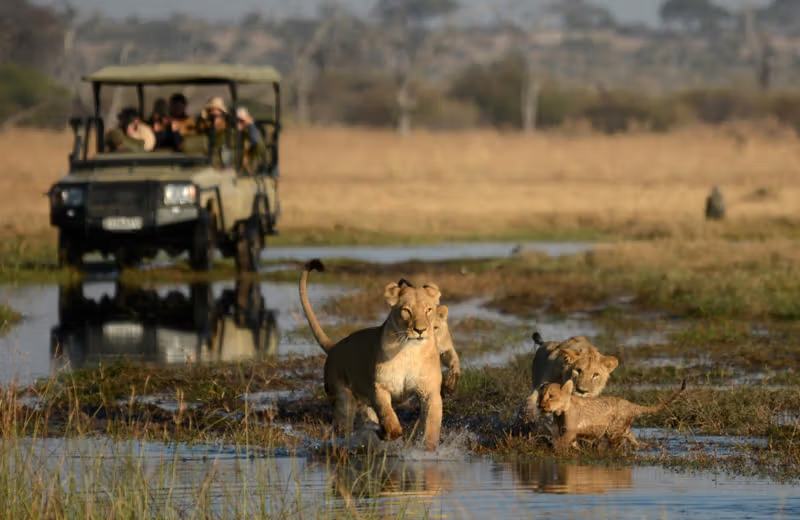
A well structured seven day trip covering two or three zones offers strong odds at four of the Big Five and, with enough nights in the correct migration zone for the season, a genuinely good chance at witnessing a specific event such as a river crossing rather than simply being in the right general area. Adding the Ngorongoro Crater to the itinerary, as many seven day trips do, substantially improves black rhino odds, since the crater holds a far more reliable and visible rhino population than any zone within the Serengeti itself. A seven day trip that stays entirely within the Serengeti, by contrast, still carries the same rhino limitation that shorter Serengeti only trips face, since Moru Kopjes remains the only realistic rhino location within the park and even there sightings are not guaranteed.
Cost of a Seven Day Serengeti Trip
Pricing for a seven day trip covering multiple zones typically starts around 3,800 US dollars per person for a mid range itinerary combining road and limited air transfers, rising to 8,000 US dollars or more per person for an all fly in trip using premium camps across three zones during peak crossing season, before international flights. Internal flights, where used, generally cost 150 to 300 US dollars per person each way, and a three zone itinerary with two internal flights adds a meaningful sum to the overall budget compared with a road based two zone trip. Ngorongoro Conservation Area fees, charged separately from Serengeti park fees, apply on top of standard park entry if the crater is included, and are worth confirming as a distinct line item rather than assumed within a single quoted park fee figure.
Booking Lead Times
Camps in the northern Serengeti for the August and September crossing season remain the tightest booking window regardless of overall trip length, typically requiring twelve to eighteen months lead time for the smaller, better positioned properties. Ndutu camps for peak calving season need roughly six to nine months. Central Serengeti and Ngorongoro Crater camps are generally more flexible, often bookable within three to six months even during shoulder periods, which gives a seven day itinerary more scheduling flexibility overall than a trip built entirely around a single high demand zone.
What to Pack for a Seven Day, Multi Zone Trip
A seven day trip covering three zones and at least one internal flight still operates under the fifteen kilogram soft sided baggage limit typical of Tanzania’s light aircraft charters, which is worth planning around from the outset rather than packing for a week long trip and discovering the constraint at the airstrip. Because seven days often spans a wider range of altitudes and microclimates than a shorter trip, from the relative warmth of Tarangire or central Serengeti to the notably cooler nights on the Ngorongoro Crater rim, layering matters more here than on a single zone visit. A fleece or light down layer for crater mornings, which can drop into single digits Celsius even outside the coldest months, is worth including even for travellers who found central Serengeti’s nights comfortably mild earlier in the same trip.
Guiding Continuity Across a Multi Zone Trip
One practical detail that catches first time multi zone travellers off guard is that the guide and vehicle typically change at each zone transfer, particularly on itineraries that mix flying and driving. A guide based in central Serengeti who knows the Seronera prides individually will not be the same guide waiting at Kogatende or Ndutu, and each new guide needs a short period to establish current sightings in their own area from scratch. This is simply how the logistics of a multi camp trip work, rather than a shortcoming of any individual operator, but it is worth setting expectations accordingly rather than assuming the same driver guide will carry local knowledge across the whole week.
Who a Seven Day Trip Suits Best
This length works well for travellers on a genuine holiday of ten days or more once international flights are included, who want the Serengeti to be the centrepiece of the trip rather than a brief stop within a wider circuit. It suits photographers and more experienced safari travellers who have already done a shorter trip and now want depth in a specific migration zone rather than a broad introduction, and it suits families or groups who want variety across the week, open plains, riverine woodland, the crater floor, rather than a single landscape for the full stay. It is less well suited to travellers with a hard seven day ceiling on total holiday time who also want to include Zanzibar or another major beach extension, since that combination is better served by either a shorter Serengeti segment or a longer trip overall.
Is Seven Days the Right Length?
Seven days suits travellers who want either genuine breadth across the Northern Circuit or real depth within the Serengeti’s migration zones, without the compression that a three or five day trip inevitably involves. It is a strong choice for a first major Africa trip where the traveller wants to see both the open plains and the crater’s contained wildlife density in a single visit, and it is the shortest itinerary length at which chasing a specific event, rather than simply visiting the region where it happens, becomes genuinely realistic. It remains, even at seven days, too short to properly cover the full Northern Circuit at a leisurely pace alongside a beach extension in the same trip; travellers wanting Zanzibar or the Kenyan coast as well should treat those as a separate addition either side of the seven days rather than folding them into the same week.