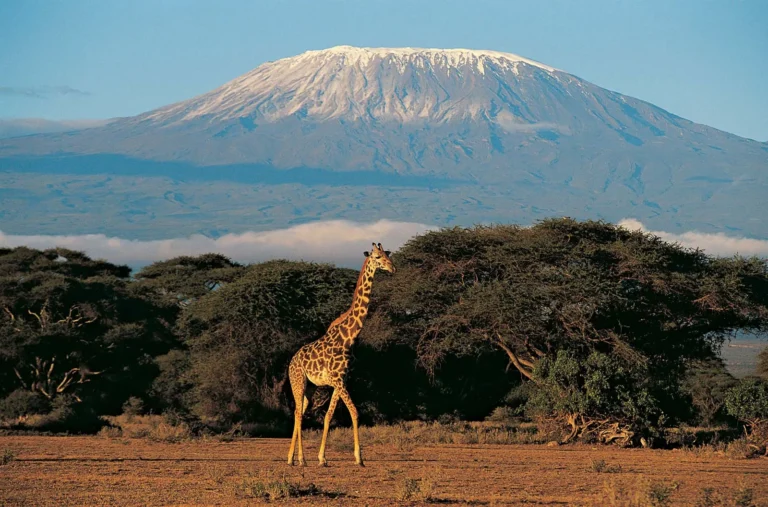
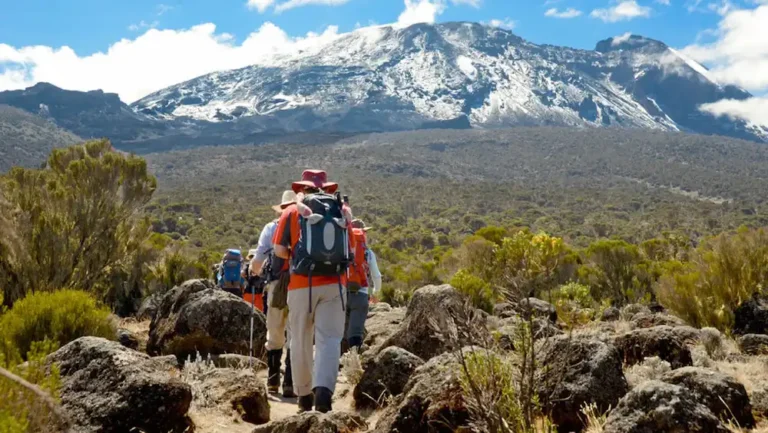
The Kilimanjaro packing question generates more anxiety than almost any other pre-climb concern, and most of it is misplaced. The mountain’s requirements are specific but not exotic: warm layers, waterproofing, traction, sun protection and a pair of well-broken-in boots. None of this requires specialist mountaineering equipment. The complications arise from the range of conditions on a single route equatorial forest at 2,000 metres, sub-zero arctic desert at 5,895 and from the weight constraints of charter flights and porter systems. This guide is structured around what you actually need, in what quantities, rather than an exhaustive list of everything that could be useful.
RYDER Signature provides clients with a detailed gear list as part of the pre-departure package. What follows reflects the principles behind that list.
The Soft-Bag Rule and Weight Limits
If your Kilimanjaro climb is combined with charter flights as most East Africa itineraries are the fifteen-kilogram soft-bag luggage limit applies from the moment you board the bush plane. Hard-sided suitcases cannot go in the hold of a Cessna Caravan; they must be left at the lodge or stored in Arusha. All kit for the mountain must fit in a single soft duffel. This is a design constraint that concentrates the mind usefully: everything that goes to base must justify its place.
The porter-carried load on Kilimanjaro is managed by operators and KPAP (Kilimanjaro Porters Assistance Project) weight standards. The porter’s assigned load is fifteen kilograms of your equipment plus five kilograms of their personal gear, totalling twenty kilograms. A responsible operator will not exceed this. This means your total mountain kit including sleeping bag, spare clothing, and all the items below should not exceed approximately fifteen kilograms. Most well-organised climbers fit within ten to twelve.

Footwear: The Most Important Decision
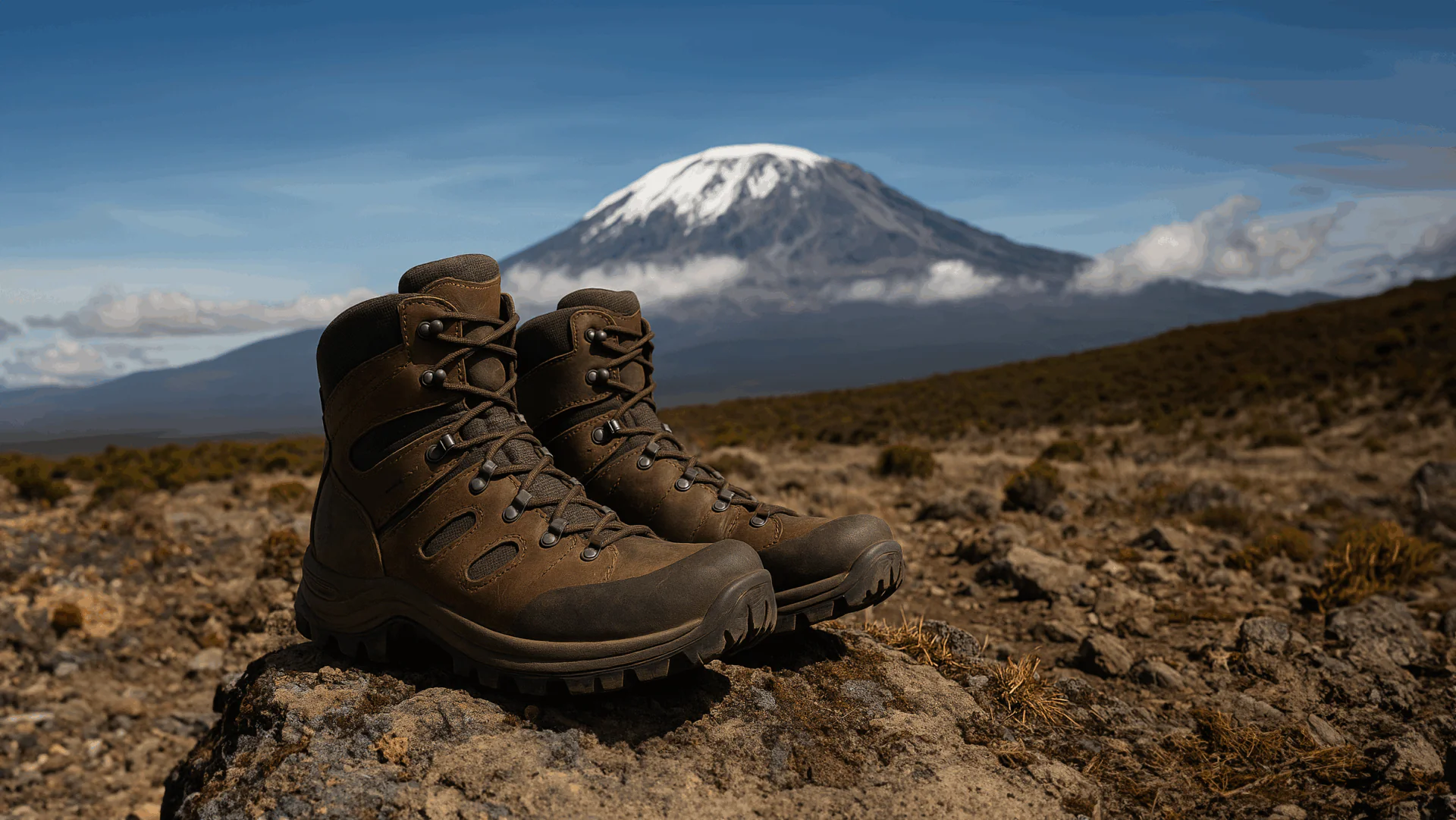
Kilimanjaro does not require mountaineering boots with crampon compatibility on the standard routes. What it requires is a sturdy, waterproof, ankle-supporting hiking boot that has been broken in over at least fifty to sixty hours of hiking before the climb. Blisters from unbroken boots are one of the most common preventable problems on the mountain, and they are entirely avoidable.
The specific requirements: waterproof membrane (Gore-Tex or equivalent), full ankle support rather than a low-cut shoe, a stiff midsole that provides support on rocky terrain, and an aggressive outsole for the scree sections above Barafu. Brands that regularly appear on the mountain include Scarpa, Lowa, Salomon and Merrell; the specific model matters less than the fit and break-in status.
Test footwear on long training hikes with the same socks you will use on the mountain. A blister discovered on training hike four is a problem; one discovered on day three of the climb, with summit day three days away, is a serious difficulty. The investment in proper testing is trivial compared to the cost of managing a blister at 4,500 metres.
Gaiters are useful on Kilimanjaro for the scree sections, where loose volcanic gravel enters boots from above. Lightweight trail gaiters are sufficient full mountain gaiters are unnecessary on the standard routes. Many climbers manage without them but those who have used them appreciate the comfort on the Barafu to summit section.
The Layering System: Three Layers, Specific Purpose
Kilimanjaro’s temperature range from base to summit spans roughly forty degrees Celsius. The forest gate sits at around eighteen to twenty-two degrees during the day; the summit at night can reach minus fifteen with wind chill. The layering system that manages this range has three components.
Base layer: Moisture-wicking synthetic or merino wool. Do not use cotton it retains moisture and loses insulation value when wet. Two base layer tops and two base layer bottoms are sufficient; the camp laundry service provided by most operators means you can wash one while wearing the other.
Mid layer: Fleece or softshell jacket for warmth during the day and early morning departures. A 200-weight fleece is the standard recommendation warm enough for most conditions above the forest, light enough to pack small. Fleece trousers are useful for summit night but many climbers manage with heavyweight thermal leggings under a softshell shell pant instead.
Outer layer (shell): Waterproof and windproof jacket and trousers. Goretex or equivalent. This is the highest cost item on the gear list and the most important for summit night. The outer shell must block wind effectively windchill at the summit crater rim in July can push the effective temperature well below minus twenty and must be waterproof for the forest stages. Do not compromise on the shell; it is the last defence against hypothermia on summit night.
Insulation: The Summit Night Layer
Above the standard three layers, summit night requires an additional insulation layer a down or synthetic insulated jacket worn between the mid layer and the shell. A down jacket with 600-fill power or above provides the warmth-to-weight ratio required. Many climbers already own a quality down jacket suitable for cold weather travel; if not, this is a justified purchase that will see use well beyond Kilimanjaro.
Down insulation is vulnerable to moisture: a wet down jacket loses most of its insulating capacity. In wet conditions or when sweating heavily during the summit approach, synthetic insulation (Primaloft or equivalent) performs more reliably. For the dry summit night conditions of the main Kilimanjaro season, down is the preferred choice. For wet season climbs, synthetic insulation is the more reliable option.
Head, Hands and Face: The Often-Overlooked Details
Summit night cold is most commonly underestimated at the extremities. Hands and face are the first areas to lose heat when the wind picks up at Stella Point, and inadequate hand protection is one of the most common reasons that summit experiences are cut short not by altitude but by cold-induced loss of dexterity.
Gloves for Kilimanjaro should be layered: a lightweight liner glove worn under a waterproof and windproof outer glove or mitten. The outer should be large enough to fit over the liner. Many climbers start the summit night approach with liners only and add the outer above 5,000 metres. Mittens are warmer than gloves for the coldest section but reduce dexterity for camera use a genuine tradeoff worth considering in advance.
A warm balaclava or neck gaiter plus hat combination is essential. The ears are the most cold-sensitive facial area; a hat that covers them and can be worn under a hood is more important than it may appear during the planning phase. A lightweight balaclava that covers the nose and cheeks completely is useful for summit night the wind off the crater rim is direct and unimpeded.
Sleeping Bag
A sleeping bag rated to minus ten degrees Celsius comfort rating (not limit rating) is the appropriate specification for Kilimanjaro. Most reputable operators include sleeping bags in their equipment provision; confirm this when booking. If you are bringing your own, a down sleeping bag in the 600-fill range or a synthetic equivalent provides adequate warmth for all camp conditions. A sleeping bag liner adds two to four degrees of warmth and is useful for the colder high camps.
The specific camps and their altitudes determine the demand: Barranco at 3,900m is manageable with a modest bag; Barafu at 4,600m and particularly the Crater Camp option on the Northern Circuit require a proper cold-weather rating. Check which camps your itinerary includes against the operator’s equipment provision to identify any gap.

Sun Protection
UV exposure at altitude is significantly higher than at sea level. At 5,000 metres, UV index can exceed ten even in overcast conditions; the direct sunshine on the upper mountain is intense. Sunburn at altitude heals more slowly than at sea level and significantly affects comfort on subsequent days.
Sunscreen of SPF 50 or above for face and hands, applied every two hours above the forest zone. Sunglasses with UV400 protection and side coverage glacier glasses or wraparound frames for the upper mountain where reflection off snow and ice adds to direct UV exposure. A wide-brim hat for the daytime stages. Lip balm with sun protection for the high altitude stages where lip cracking is common.
Trekking Poles
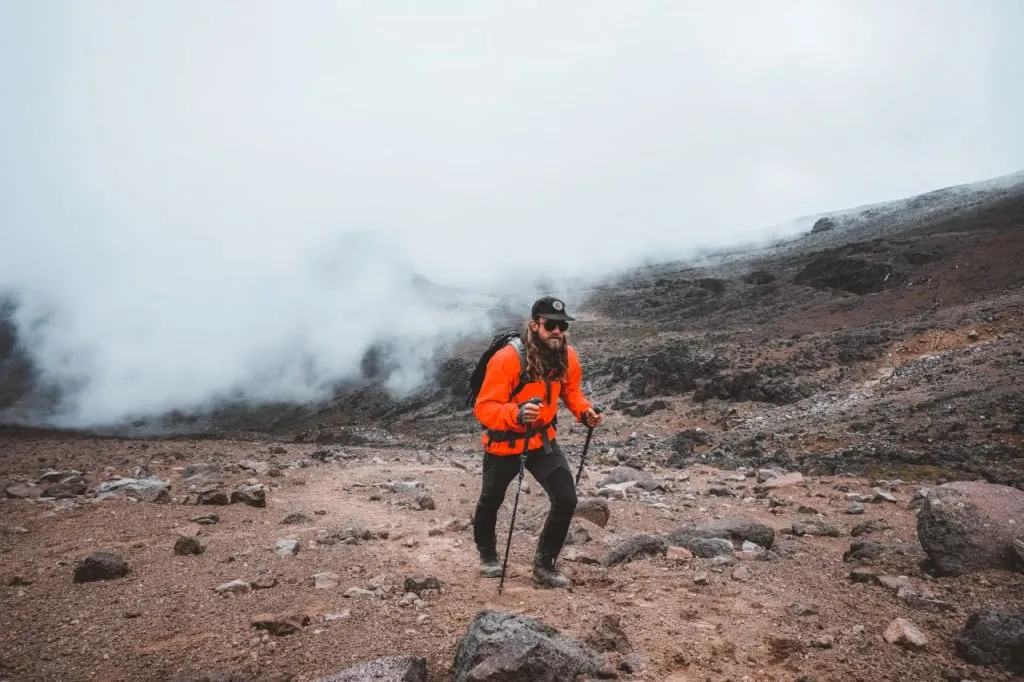
Trekking poles are strongly recommended for Kilimanjaro. They reduce knee loading on descent by a demonstrated twenty to twenty-five per cent, provide balance on the Barranco Wall scramble, and give an additional contact point for energy conservation on summit night. Lightweight aluminium or carbon fibre telescopic poles are the standard choice. Practise with them on training hikes before the climb effective pole technique takes thirty minutes to learn and several hours to internalise.
What the Operator Provides
A responsible Kilimanjaro operator provides tents, cooking equipment, a mess tent with table and chairs, a toilet tent, and typically sleeping pads. Confirm what is included before finalising your packing list there is no value in carrying a sleeping pad for seven days if the operator provides one. The specific list varies by operator; request it explicitly at booking.
How RYDER Signature Approaches Gear Guidance
Every RYDER Signature Kilimanjaro client receives a personalised gear review call two to three months before departure. We go through each category specifically not a generic list and account for the individual’s existing equipment, the specific route and season, and any relevant physical considerations. We identify genuinely necessary items versus nice-to-haves, and we advise on rental options in Arusha for equipment that is worth using but not necessarily worth buying for a single climb.
Can I rent equipment in Moshi?
Yes. Moshi has a well-developed equipment rental market serving the Kilimanjaro industry. Sleeping bags, trekking poles, gaiters, waterproof shells and other items are available for rental at reasonable rates. Quality varies between rental shops; your operator will have specific recommendations for reliable providers. Renting heavy items like sleeping bags is practical and reduces luggage weight for the flight. Personal items boots, base layers, gloves are better purchased and broken in in advance than rented, for hygiene and fit reasons.
Do I need crampons for Kilimanjaro?
No. The standard routes Machame, Lemosho, Rongai, Marangu do not require crampons. The Western Breach approach does encounter ice and hard snow on the crater floor and some operators require micro-spikes for this section, but it is not a standard route for most leisure climbers. If your itinerary includes the Western Breach, your operator will specify the requirement. For all other routes, boot grip is the only traction required.
How much water do I need to carry?
Two to three litres per day walking capacity is the standard recommendation; the operator provides filtered or treated water at camps. A two-litre reservoir bladder inside a day pack, supplemented with a one-litre bottle for easy access, covers most climbing days. On summit night, water freezes in reservoirs and bottles exposed to the cold; carry water in an insulated holder inside your pack rather than in external pockets on summit approach.
What camera equipment is worth bringing?
The summit conditions cold, wind, potential moisture are hard on camera equipment. A smartphone with a good camera, kept warm inside a jacket pocket, produces excellent results with minimal bulk. A mirrorless camera with a wide-angle and medium zoom lens provides better image quality for those who prioritise photography. Cold weather battery performance drops significantly; carry a spare battery inside a warm layer and swap it at Stella Point before the final approach. Memory cards, lens cloths and a weather-resistant camera bag complete the kit.
Clothing Quantity: Less Than You Think
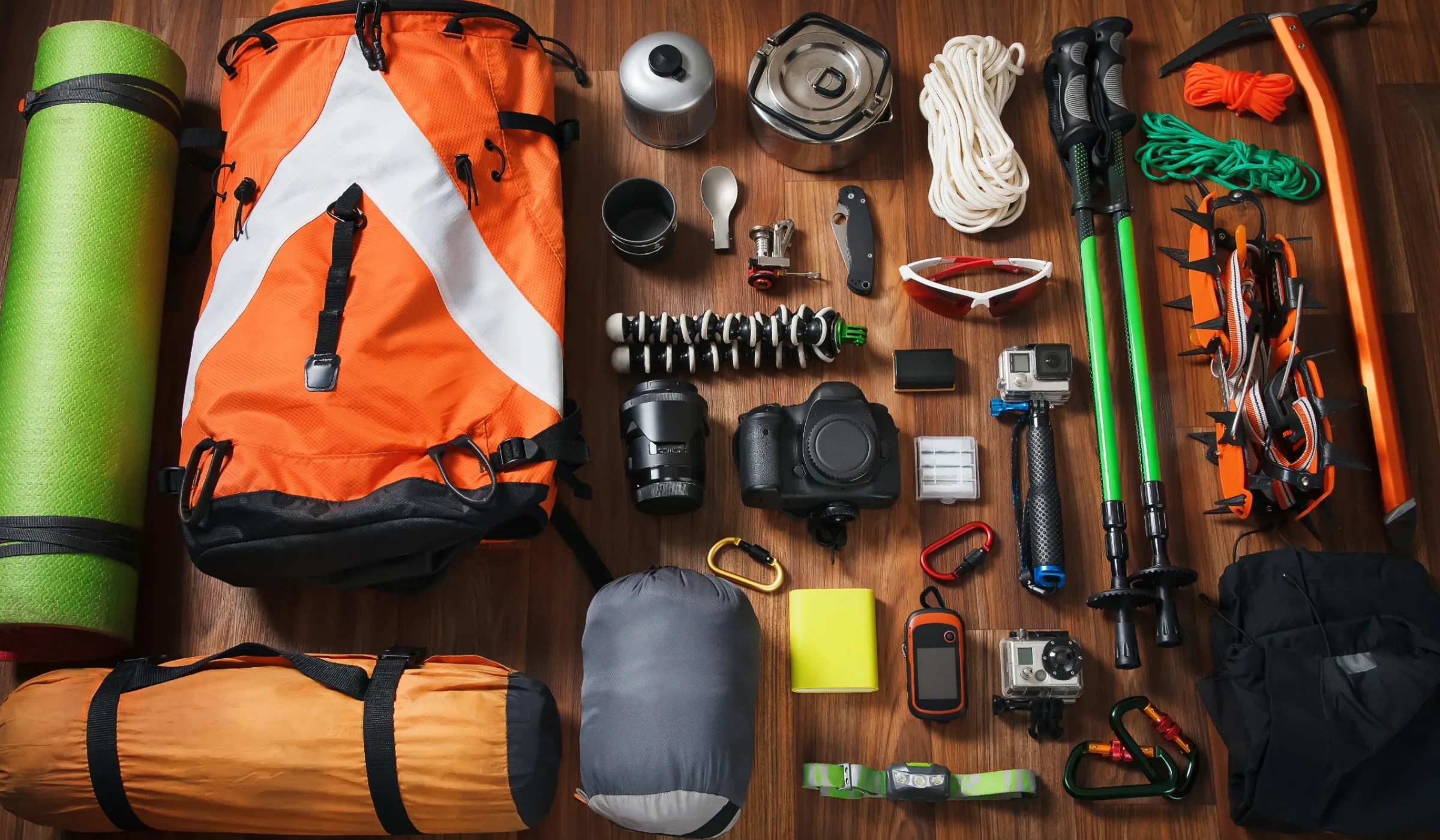
A common packing error on Kilimanjaro is bringing too many clothing items under the assumption that seven days requires seven changes of everything. It does not. The mountain is cold enough above 3,000 metres that base layers do not accumulate odour at the rate they do in warm weather, and most operators include a basic laundry service at camps. A practical clothing allowance: two base layer tops, two base layer bottoms, three pairs of hiking socks, one mid-layer fleece, one insulated jacket, one shell jacket, one shell trouser, one pair of hiking trousers, one pair of lightweight camp trousers, two pairs of liner gloves, one pair of outer gloves or mittens, two hats (one lightweight for day, one warmer for summit), one balaclava, one neck gaiter. This fits in a fifty to sixty-litre duffel with room for other items.
The items that are consistently under-packed: summit gloves (people bring ones that are not warm enough), warm camp trousers (the evening temperature at Barafu is cold enough to require insulation after the day’s exertion), and dry base layers reserved specifically for summit night. Many climbers arrive at Barafu for the pre-summit rest wearing base layers that are damp from the day’s effort; having a dry set designated for summit night is worth the packing space.
Day Pack vs Porter-Carried Bag
The day pack carried by the climber throughout the walking day and the large duffel carried by a porter serve different functions and should be packed accordingly. The day pack should contain everything needed for the walking day: water, layers for immediate access, rain gear, snacks, camera, first aid basics, headtorch, sunscreen and lip balm. The duffel contains everything else: sleeping bag, spare clothes, porter-carried emergency kit. The goal is a day pack of five to eight kilograms light enough to carry all day, heavy enough to be prepared for any condition change.
A thirty to thirty-five-litre day pack is the right size for Kilimanjaro. Larger packs encourage over-packing and excess weight; smaller ones force compromises on emergency layers. The pack should have a hip belt that transfers weight effectively to the hips rather than the shoulders this matters over a six-hour walking day in a way it does not on a short hike.
Electronics and Accessories
Battery performance drops significantly in the cold. At summit altitude in July, temperatures can freeze the battery of a smartphone left in an external pocket within twenty minutes. Keep electronics phone, camera, battery packs inside a warm layer close to the body when not in use. A small insulated pouch for the summit section is worth carrying.
A headtorch is essential the midnight summit departure requires two to three hours of reliable light. Carry spare batteries. Many climbers use rechargeable headtorches with USB charging; confirm whether charging is available at high camps (most quality operators provide solar or battery charging at Barafu) or whether disposable batteries are the more reliable option for summit night.
A personal first aid kit should include: blister treatment (moleskin, zinc oxide tape), standard analgesics (paracetamol and ibuprofen for headache management), any prescription medications, anti-nausea medication, and throat lozenges for the dry air above 4,000 metres. The operator’s guide kit includes more comprehensive supplies; the personal kit covers the small daily needs that would otherwise require asking the guide for routine items.
Food and Snacks
Camp meals on a quality Kilimanjaro operation are substantial and well-managed porridge and eggs for breakfast, hot lunch, cooked dinner. Between meals, and particularly on summit night when camp food is not available for eight to ten hours, personal snacks are important. High-energy, easily digestible items that do not freeze solid work best: energy gels, chocolate (which becomes brittle at summit temperature but does not freeze solid), dried fruit and nuts, hard-boiled sweets for energy and moisture. Avoid items that require significant chewing effort at altitude when the jaw and teeth are already cold; smooth-texture options gels, soft bars are more reliable above 5,000 metres.
Appetite suppression from altitude is real. Many climbers find they need to force food intake above 4,000 metres even when the body’s energy demand is at its highest. Familiar foods that remain palatable when nauseated plain biscuits, plain crackers, mild chocolate are worth including specifically for the summit approach days.
The Pre-Departure Gear Review
The gear review two to three weeks before departure is the most efficient quality control step available for Kilimanjaro preparation. Lay out everything intended for the climb, item by item, and test it together: put on the boot and sock combination and assess the fit under load, layer the clothing system and identify any gap in coverage, test the headtorch with fresh batteries, confirm the sleeping bag temperature rating against the route’s coldest camp. Items that fail this test at home are better identified now than at Barafu Camp.
Specific items to test together that are often not tested in combination: the outer shell over the insulated jacket do the cuffs overlap or gap? The glove layers do the outer gloves fit over the liner gloves without restricting circulation? The balaclava under the hat does the combination cover all exposed face area? The headtorch beam is it sufficiently bright for the descent in darkness? These are the details that experienced Kilimanjaro guides notice at the first camp and that new climbers discover on summit night, which is the least convenient moment for discovery.
How RYDER Signature Approaches Gear for Clients
The RYDER Signature gear review call includes specific questions about each category above and identifies items where rental in Arusha is more practical than purchasing at home. For clients who have not hiked at altitude before, we discuss the layering system in detail and explain why each layer matters rather than providing a list. For clients combining Kilimanjaro with a safari, we reconcile the gear requirements of both activities the bush plane luggage limits, the overlap between safari and mountain clothing, and the logistics of storing equipment not needed on the mountain at an Arusha hotel. The integration of these requirements is one of the planning elements where a specialist operator adds genuine value over booking each component independently.
Do I need to buy all new gear for Kilimanjaro?
Not necessarily. Many items that work for other cold-weather activities skiing, alpine hiking, winter camping translate directly to Kilimanjaro. The key purchase for most people who do not already have it is the outer shell (waterproof and windproof jacket and trousers) and summit-appropriate hand protection. Boots should always be purchased and broken in specifically for the climb rather than borrowed or rented for fit and hygiene reasons. Everything else can typically be sourced from existing kit, borrowed from a well-equipped friend, or rented in Arusha.
What is the single most important item to get right?
Boots, without question. Ill-fitting or unbroken-in boots cause blisters that affect every walking day and can prevent a summit attempt. The correct boots, properly fitted and broken in over fifty or more hours of hiking before the climb, remove one of the most common preventable causes of a failed or miserable Kilimanjaro experience. Buy them four months before the climb, not four weeks.
Can I share gear with a climbing companion?
Items like trekking poles, some electronics accessories and certain camp items can be shared. Personal items boots, base layers, gloves, sleeping bag should not be shared for fit and hygiene reasons. The weight savings from sharing are modest; the risk of gear failure affecting both people in a shared item is real. Share judiciously and only for items where failure affects comfort rather than safety.
Is a down jacket enough for summit night or do I need something heavier?
A quality down jacket of 600-fill or above, layered over a fleece mid-layer and under a windproof shell, is sufficient for summit night in the main dry seasons of July to October and January to March. In December and the colder parts of the year, an 800-fill down jacket or a heavier synthetic insulated layer provides a more comfortable margin. The shell layer over the insulation is as important as the insulation itself wind protection determines effective temperature at the summit more than raw insulation weight does.