The phrase “luxury Kilimanjaro” is used more often than it is genuinely understood. Most operators apply it loosely better tents, a slightly wider menu, a private guide without engaging seriously with what luxury on a high-altitude mountain actually means or what it legitimately provides. The result is a category that is partly marketing and partly real, and distinguishing between the two requires looking past the thread count of the sleeping bag liner.
Luxury on Kilimanjaro is real where it is grounded in specific, meaningful enhancements to the climbing experience. It is illusory where it is cosmetic pleasant touches that do not improve summit probability, safety, or the quality of the journey. RYDER Signature designs Kilimanjaro itineraries specifically around the distinction.
What Luxury Cannot Change on Kilimanjaro
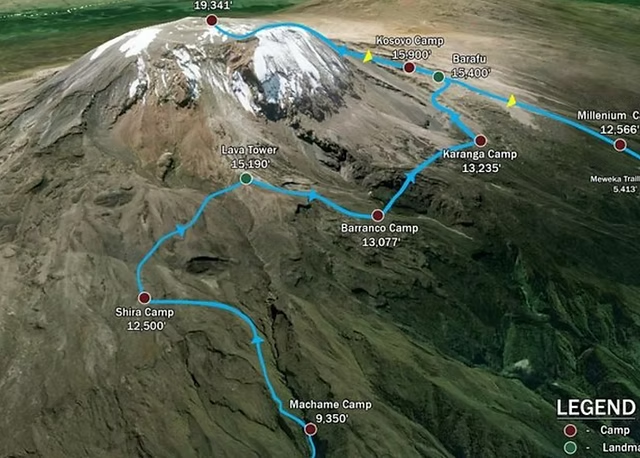
Before examining what luxury legitimately provides, it is worth being direct about what it does not and cannot change. The altitude is the same on a luxury climb as on a budget one. The cold on summit night is identical. The scree slope from Barafu to Stella Point does not shorten for a client whose camp has better furniture. The altitude sickness risk is not reduced by the quality of the mess tent. No amount of premium pricing eliminates the fundamental physical challenge of ascending to 5,895 metres.
This matters because the luxury positioning in some operator marketing implicitly suggests an easier or more comfortable summit experience, which misrepresents what the category genuinely provides. A luxury Kilimanjaro climb should be honestly understood as a higher-quality experience of the same physical challenge not a softened version of it.
Where Luxury Makes a Genuine Difference: Guide Quality
The single most significant differentiator in a luxury Kilimanjaro experience is access to the most experienced and qualified guide team available. On a budget climb, guides may be adequate but not exceptional licensed, functional, competent at the procedural requirements of the mountain. On a genuine luxury climb, the lead guide is typically someone with fifteen or twenty years of Kilimanjaro experience, advanced wilderness medicine training, deep ecological knowledge, and the accumulated observational capacity that comes from thousands of days on this specific mountain.
The difference between these two guide types is not procedural. It is experiential, educational, and in the event of a medical situation clinical. The experienced guide reads altitude sickness progression earlier, makes descent decisions with more confidence and better timing, and manages the emotional dynamics of a difficult summit night with a quality of calm authority that is earned over years. For a climber investing significantly in a Kilimanjaro attempt, securing this calibre of guide is the best return available on the premium paid.
Camp Quality: What Actually Improves the Experience
Camp quality on a genuine luxury Kilimanjaro operation differs from a standard operation in specific, meaningful ways. The sleeping tents are larger four-season double-walled tents with adequate headroom, providing genuine protection from the cold at Barafu rather than a canvas shell. The sleeping systems include self-inflating pads of adequate R-value for sub-zero camp conditions, sleeping bag liners, and supplemental blankets. The sleeping environment, which most climbers underestimate in importance, is a direct factor in energy recovery between stages a night of meaningful rest at 4,600 metres is worth considerably more than a miserable night of cold and thin camping.

The mess tent on a quality luxury operation has heated elements hot water bottles, thermal liners that make the evening gathering between game drive and sleep genuinely comfortable rather than merely tolerable. Meals are cooked from fresh ingredients as high as conditions allow, with a specific focus on caloric density and palatability at altitude. A camp cook who understands altitude-suppressed appetite and produces meals calibrated for it warm, easily digestible, calorie-dense without requiring significant chewing effort is doing nutritional management that affects summit day performance.
Private toilet tents are standard on all quality operations, luxury or otherwise; on a luxury operation, the facility is more carefully maintained, with better equipment and more frequent servicing. Summit accessories chemical hand warmers provided the night before summit, a hot drink available at the pre-dawn departure are the kind of operational details that experienced luxury operators include as standard and that can make a material difference in comfort on the coldest night of the climb.
Private Guide Ratios and Dedicated Attention
A luxury Kilimanjaro climb is almost always a private climb, with a guide ratio of one lead guide and one assistant guide per party regardless of size. For a solo climber, this means two trained professionals whose sole focus is the experience and safety of one person. For a couple, it means an unusually high level of individual attention. The daily briefings are personalised, the pace is set precisely around the specific party’s physiology, and the medical monitoring is rigorous rather than averaged across a group.
The private guide relationship also provides something less tangible but genuinely valuable: the quality of knowledge transfer that happens when an experienced guide is not managing multiple conversations and competing demands. A guide who has the luxury of focusing entirely on one party can share the ecological, geological and cultural knowledge of Kilimanjaro in depth the story of the ice field retreat, the ecology of the Afroalpine zone, the plant communities that change by altitude band, the history of early exploration. This dimension of the experience is one of the clearest differentials between luxury and standard offerings and one of the least discussed in marketing.
Medical Support and Emergency Infrastructure
On a true luxury Kilimanjaro operation, the medical infrastructure exceeds the adequate baseline of emergency oxygen and pulse oximeters. Supplemental oxygen is carried in quantities sufficient for extended use rather than emergency bridging. Portable altitude chambers Gamow bags are available from the operator’s base and can be reached within specific time windows from any camp. Satellite communication devices allow guides to request medical support or evacuation logistics without relying on park radio networks. Dexamethasone and other emergency medications are in the guide kit and the guide is trained in their administration protocols.
These provisions do not prevent altitude sickness, but they change the response capability when it occurs. The luxury operator’s emergency infrastructure is designed not just to identify a problem but to manage it through the descent to a point where ground transport and medical care are available. This distinction from identification to management is the most consequential difference between adequate and premium medical support on a high-altitude mountain.

Pre-Climb and Post-Climb Experience
A luxury Kilimanjaro operation extends beyond the mountain itself. Pre-climb, this means a briefing from the lead guide in person at a quality Arusha or Moshi property, a final gear review, and a detailed day-by-day walk-through of the itinerary including specific advice for that party’s composition. The night before departure should be well-slept, well-fed and calm qualities that a well-chosen pre-climb property provides and a rushed transit hotel does not.
Post-climb, a genuine luxury operation includes a recovery property where the physical aftermath of the descent muscle soreness, accumulated fatigue, the particular quality of exhaustion that follows extreme altitude is met with the facilities to manage it well. A quality room with a real bath, a meal that addresses the nutritional rebalancing the body needs, and ideally access to a pool or treatment room for the muscle work, turns the descent day from an ordeal into a satisfying conclusion.
Cost: What You Are Actually Paying For
A genuine luxury Kilimanjaro climb on a seven or eight-day Lemosho route costs between USD 3,500 and USD 5,000 per person, depending on the specific operator and the private party size. This premium over a quality standard climb of USD 2,000 to 2,800 reflects specific, quantifiable differences: the guide’s seniority and the premium that experience commands in the market; the camp equipment quality and the cost of maintaining it; the private guide ratio rather than shared guides; the medical infrastructure beyond the baseline; and the pre and post-climb property quality.
What it does not reflect: a meaningfully different mountain. The route, the weather, the altitude, the challenge are the same. The return on the luxury premium is a higher-quality experience of those elements better supported, better educated, better managed, better recovered from. Whether that return justifies the premium is genuinely individual, and an honest luxury operator will say so. The premium is real and specific; the decision to pay it should be equally specific.
How RYDER Signature Defines Luxury Kilimanjaro
RYDER Signature’s luxury Kilimanjaro offering is anchored in guide quality above all other elements. We identify the best individual guides working in Tanzania’s mountain guiding ecosystem and design our private climb programme around their availability. Camp quality, medical infrastructure and pre-post property selection follow from that anchor. The sequencing is deliberate: the guide is the experience; everything else supports it.
We are transparent with clients about what the luxury premium includes and what it does not. We do not promise an easier mountain. We do promise a better-supported, better-educated, more thoroughly managed experience of the mountain as it actually is and, by extension, a higher probability of reaching its summit in the best possible condition.
Is a luxury Kilimanjaro climb worth the premium over a quality standard climb?
For climbers for whom the journey matters as much as the destination who want depth of engagement with the mountain’s ecology, personalised guide attention, and the best possible recovery between stages the luxury premium consistently earns its cost in the quality of experience. For climbers whose primary goal is the summit and for whom the approach days are the cost of reaching it, a quality standard climb with a reputable operator on an appropriate itinerary delivers the same summit at a lower price. The honest answer is that it depends on what you want from the climb.
Does a luxury climb have better summit success rates?
The factors most reliably associated with summit success itinerary length, route design, guide quality and pacing discipline are all present in a properly designed luxury climb. The guide seniority in particular has a demonstrated relationship with summit outcomes: experienced guides make better pacing decisions and better altitude illness management decisions. Whether this difference is large enough to justify the premium on summit probability grounds alone depends on the comparison: a luxury climb versus a well-run standard climb is a modest difference; a luxury climb versus a budget operation is more significant.
What is the best luxury Kilimanjaro option for a solo traveller?
A private solo climb with a dedicated guide and assistant guide, on a seven or eight-day Lemosho, combining the climb with a pre-climb night at a quality Arusha or Moshi property and a post-climb recovery stay. The social dimension of solo climbing which is one reason many solo travellers consider group options is partially addressed by the depth of the guide relationship on a private climb. Many solo travellers describe their guide as the most engaging conversational companion of their trip. This is not an accident of personality; it is a function of genuine expertise and the full attention that a private engagement provides.
Can luxury camp standards be maintained above 4,000 metres?
Partly. Above 4,200 metres, the logistical constraints of porter-carried equipment set limits on what is physically achievable. Heated sleeping systems, quality tents and a hot meal remain entirely achievable at Barafu and above; running water, private bathroom facilities and the amenity range of a high-end lodge do not. The best luxury operators are explicit about where the amenity level is limited by altitude logistics and what the genuine high-camp experience will include and they design the experience to maximise comfort within those constraints rather than overpromising.
The Luxury Operator’s Relationship with the Mountain
One of the least-discussed aspects of luxury Kilimanjaro operations is their relationship with the ecosystems they operate in. The most credible luxury operators have been working on Kilimanjaro for twenty or more years. Their guides have watched the ice fields retreat over careers that span the modern era of climate measurement. Their relationships with TANAPA, with the Kilimanjaro Porters Assistance Project and with the local communities whose livelihoods depend on the mountain’s tourism economy are deep, complex and consequential.
This history is not peripheral to the luxury offering it is part of what makes it genuinely valuable. An operator who has been on this mountain for two decades has made mistakes, learned from them, and built operational standards that reflect accumulated knowledge. The camp positions they choose, the pacing decisions their guides default to, the emergency protocols they have refined these are the product of experience that no amount of premium equipment can substitute for.
For a climber considering a luxury Kilimanjaro climb, the question of how long a specific operator has been working on the mountain, and what their relationship with the wider conservation and community ecosystem looks like, is among the most revealing you can ask. An operator who has earned genuine respect from TANAPA officials, from KPAP and from the guide community that exists independently of any single operator is demonstrating something about their standards that marketing copy alone cannot convey.
Combining Luxury Kilimanjaro with an East Africa Safari
The most natural framing for a luxury Kilimanjaro experience is as the physical centrepiece of a broader East Africa journey preceded by a few days in the northern Tanzania parks and followed by a beach extension in Zanzibar or a post-summit recovery stay. This sequencing safari, then summit, then beach has a logical arc: the safari acclimates the traveller to the East African context, the summit provides the physical peak of the journey, and the beach offers recovery and contrast.
For this combination, private climbing is the only format that allows the date flexibility needed to sequence the components properly around flight connections and camp availability. Group departures constrain the whole itinerary around the departure date; private climbs flex around the rest of the journey. The luxury Kilimanjaro premium, viewed in this context, also purchases the logistical freedom that makes the full combined journey possible without compromise.

Luxury Summit Night: What Changes and What Does Not
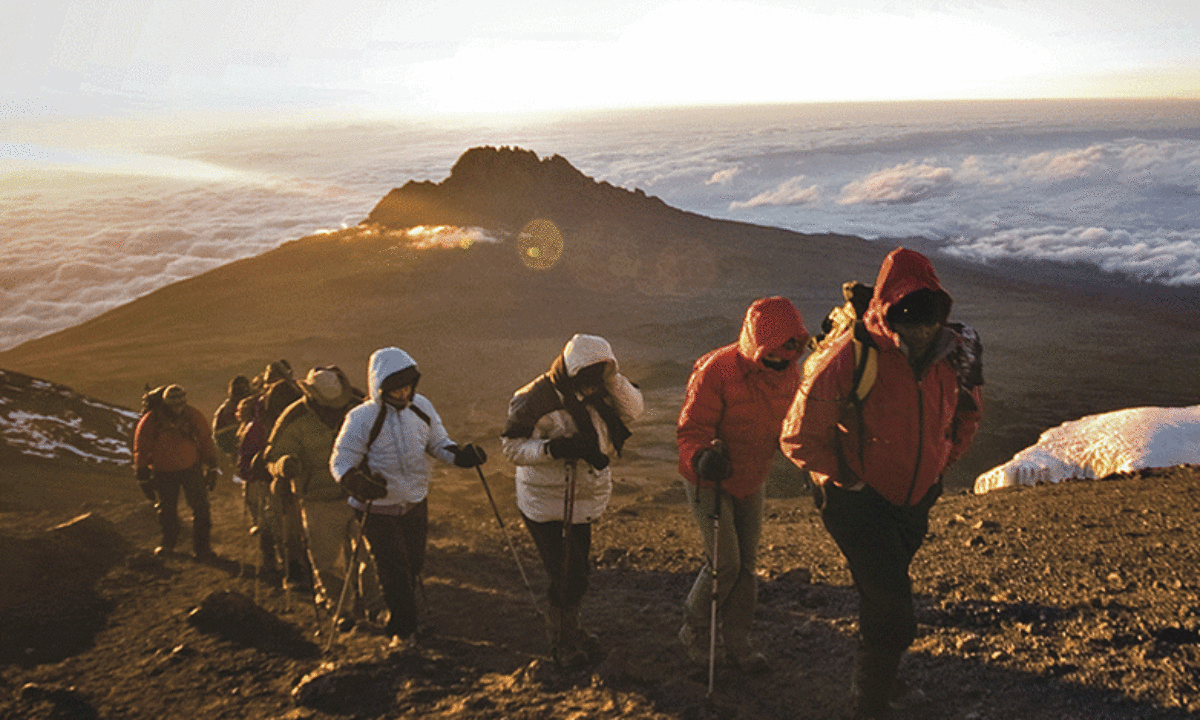
Summit night remains the great leveller on any Kilimanjaro operation, luxury or otherwise. No premium can warm the pre-dawn air at Stella Point. No camp upgrade eliminates the altitude-induced fatigue of the final scree approach. What luxury provides on summit night is specific and limited: a guide whose experience managing altitude responses at this exact point on this exact mountain is deep and trustworthy; a pre-summit kit that includes chemical handwarmers, a thermos of hot liquid for the first hours, and the confidence of a guide who has watched for signs of deterioration for six days and knows the specific party’s physiology; and a communication device that allows emergency coordination if the situation deteriorates beyond the guide’s management capacity.
These are real advantages. They shift the probability distribution of summit night outcomes in measurable ways. They do not transform the experience into something easy. The mountain at 5,700 metres in January at two in the morning is the same mountain for every climber, and the physical and psychological demands of those final hours are irreducible. What luxury provides is the best possible support structure for meeting those demands not a substitute for meeting them. That honest framing is, ultimately, what distinguishes a genuine luxury Kilimanjaro offering from a premium-priced standard one.