Altitude sickness the umbrella term for the range of physiological responses to reduced oxygen at elevation affects the majority of Kilimanjaro climbers to some degree. Understanding what it is, how it presents, how to prevent it, and what to do when it occurs is not optional knowledge for anyone attempting a mountain of this altitude. It is the most safety-relevant information in any Kilimanjaro pre-departure briefing, and the guides who manage it best are those whose clients understand their own role in the process.
RYDER Signature covers altitude physiology in every pre-climb briefing because informed climbers make better decisions on the mountain. This guide covers the essential framework.
What Altitude Does to the Body
At 5,895 metres, the atmosphere contains the same percentage of oxygen as at sea level roughly twenty-one per cent but the air pressure is approximately forty-seven per cent of sea level pressure. This means each breath delivers less oxygen to the lungs, and less oxygen is transferred to the bloodstream with each breath cycle. The body responds immediately by breathing more rapidly and increasing heart rate. Over days and weeks, it produces more red blood cells and increases the concentration of haemoglobin. This adaptive process acclimatisation takes time that the Kilimanjaro ascent schedule does not fully provide.
The result is that most climbers arrive at the higher elevations in a state of partial acclimatisation better than they would be on day one but not as well-adapted as someone who had spent several weeks at altitude. This gap between the oxygen environment and the body’s adaptation to it is the physiological source of all altitude illness.
Acute Mountain Sickness: The Common Form
Acute mountain sickness (AMS) is the most prevalent form of altitude illness on Kilimanjaro. It is diagnosed using the Lake Louise Score, a standard clinical tool, which assesses five symptoms: headache, gastrointestinal symptoms (nausea, vomiting, loss of appetite), fatigue or weakness, dizziness or light-headedness, and difficulty sleeping. A headache plus any one other symptom, appearing within hours of arrival at a new altitude, constitutes mild to moderate AMS.
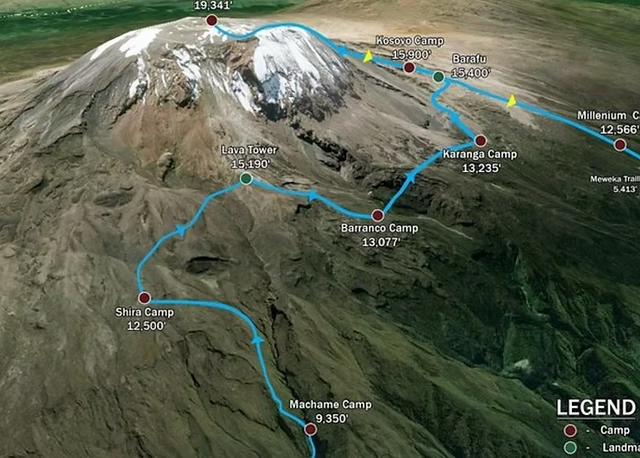
Mild AMS is extremely common on Kilimanjaro and does not require descent. The appropriate response is to stop ascending, rest, maintain hydration and nutrition, and allow the body to acclimatise before moving higher. This is why rest days built into the itinerary the Lava Tower acclimatisation day on Machame and Lemosho routes are important enough to be non-negotiable. Moving to higher altitude when experiencing AMS symptoms accelerates the condition and increases the risk of progression to serious illness.
Moderate AMS persistent headache unresponsive to standard analgesics, significant vomiting, marked fatigue preventing normal activity requires assessment by the guide, rest at the current altitude, and consideration of descent if no improvement over twenty-four hours. The guide’s experience in managing this decision is one of the most important skills on any Kilimanjaro operation.
High Altitude Cerebral Oedema: The Serious Complication
High altitude cerebral oedema (HACE) is a progression of severe AMS in which fluid accumulates in the brain. It is rare on Kilimanjaro but not unknown, and it is a genuine medical emergency. Symptoms include severe headache unresponsive to medication, progressive confusion, difficulty walking in a straight line (ataxia), and in advanced cases, altered consciousness. HACE requires immediate descent of at least 500 to 1,000 metres combined with supplemental oxygen and, where available, administration of dexamethasone.
The key principle: anyone who develops ataxia at altitude must descend immediately. Ataxia the inability to walk heel-to-toe in a straight line is the clearest single indicator that the condition has progressed beyond AMS to HACE. No camp is too high, no summit is too close to justify continuing when ataxia is present. Guides who are properly trained recognise this and have the authority and responsibility to organise immediate descent regardless of client preference.
High Altitude Pulmonary Oedema: The Other Serious Complication
High altitude pulmonary oedema (HAPE) involves fluid accumulation in the lungs and is the most common cause of altitude-related death worldwide. It does not necessarily follow severe AMS and can develop in people who showed only mild symptoms. Early signs include unexplained breathlessness at rest or with minimal exertion, a persistent dry cough, and reduced exercise tolerance out of proportion to the altitude gain. Later signs include a bubbling sound in the chest, pink or bloody frothy sputum and severe respiratory distress.
HAPE requires immediate descent, supplemental oxygen and rapid medical attention. It can progress very quickly a person who appears mildly unwell in the afternoon can be in serious respiratory distress by midnight. Guide training specifically includes HAPE recognition and descent initiation protocols; emergency supplemental oxygen buys time for the descent to reach a safe altitude.
Prevention: The Practical Toolkit
The most effective prevention strategies for altitude illness are well-established and consistently supported by the altitude medicine literature.
Ascent rate: The core principle is gradual ascent, particularly above 3,000 metres. The general guideline is not to increase sleeping altitude by more than 300 to 500 metres per day above 3,000 metres, with a rest day every three to four days. The Lava Tower day on Kilimanjaro is designed around this principle.
Hydration: Dehydration exacerbates altitude sickness. Three to four litres of fluid per day is the standard recommendation at altitude. Climbers who maintain high fluid intake consistently show better AMS outcomes than those who drink to thirst.
Pacing: Ascending slowly pole pole reduces the cardiovascular and respiratory stress at each altitude band, giving the body more opportunity to adapt before the next stage. This is not simply about physical fatigue; the slower pace reduces the oxygen debt that triggers AMS symptoms.
Diamox (acetazolamide): Diamox is a carbonic anhydrase inhibitor that accelerates the acclimatisation process by stimulating faster breathing, which increases blood oxygen levels. The prophylactic dose is 125 to 250 milligrams twice daily, beginning one to two days before the ascent. Side effects include tingling in the extremities, increased urination and altered taste for carbonated drinks. It is contraindicated in people with sulpha allergies and requires a prescription. The evidence for its effectiveness in reducing AMS incidence and severity on Kilimanjaro is good; many experienced guides use it routinely themselves.
The Climb-High Sleep-Low Principle
The most reliable practical acclimatisation strategy on Kilimanjaro is exploiting the route’s natural altitude profile. The Lava Tower day on Machame and Lemosho routes ascends to 4,600 metres during the day and descends to sleep at Barranco Camp at 3,900 metres. This “climb high, sleep low” pattern exposing the body to higher altitude for a period and then descending to a lower sleeping altitude stimulates acclimatisation responses more efficiently than simply sleeping at progressively higher elevations.
Understanding this principle helps climbers value the acclimatisation days as the most important days of the climb, not as inconvenient delays. The few hours spent at Lava Tower, uncomfortable as they often are, are doing physiological work that directly affects performance on summit night. Rushing through this day, or choosing a route that does not include a comparable acclimatisation profile, is a direct reduction in summit probability.
What to Tell Your Guide
The most important behaviour on a Kilimanjaro climb, from an altitude safety perspective, is honest communication with your guide about symptoms. Experienced guides will conduct daily checks pulse oximeter readings morning and evening, visual assessment, direct questions about symptom status but they cannot know what they are not told. Minimising symptoms in conversation with the guide because you do not want to be turned around is the decision-making pattern most commonly associated with serious altitude illness outcomes.
The guide’s role includes making descent recommendations that override client preference when medical safety requires it. A responsible operator’s guides are trained and empowered to make this call. Respecting that authority understanding that a forced descent at 4,600 metres is not a failure but a safety management decision is part of what it means to climb responsibly on a mountain of this altitude.
How RYDER Signature Manages Altitude Risk
Every RYDER Signature Kilimanjaro climb includes pulse oximeter monitoring at the end of each day, supplemental oxygen in the guide kit, clear protocols for AMS assessment and descent initiation, and pre-departure client briefings that cover all of the above. Our guide partners are trained in wilderness first aid and altitude illness management, and our operators carry dexamethasone in their medical kits. We design itineraries specifically to maximise acclimatisation time and we do not offer route or duration combinations that we consider inadequately acclimatised for the altitude profile.
How do I know if I am susceptible to altitude sickness?
There is no reliable physiological predictor of altitude sickness susceptibility. Previous altitude experience is the most informative indicator if you have been to 3,500 metres without symptoms, you are likely to manage Kilimanjaro’s lower stages well. Fitness is not a predictor; highly fit people experience AMS just as commonly as less fit ones. Genetics plays a role that cannot be assessed in advance. The honest answer is that your response to altitude is not knowable until you experience it, which is one reason why choosing a longer itinerary which provides more recovery time if you do respond poorly is the conservative and responsible choice.
Should I take Diamox even if I have never had altitude sickness?
This is a medical decision for your doctor, not a universal recommendation either way. The argument for taking it prophylactically is that the cost of AMS on Kilimanjaro is high potentially a failed summit or a dangerous situation and Diamox reduces that risk at manageable side-effect cost. The argument against is that some people prefer to climb without medication and that the side effects, while minor, are bothersome. Many very experienced Kilimanjaro guides take it themselves as a matter of course. Discuss it with your doctor eight to twelve weeks before the climb, when there is time for a test dose to assess your tolerance.
What should I do if I feel unwell on the mountain?
Tell your guide immediately and accurately. Describe the specific symptoms headache location and intensity, nausea, any breathlessness, any confusion. Do not minimise or attempt to push through without communicating. The guide will assess the situation, take your pulse oximeter reading, and advise on the appropriate response which may be rest, medication, a slower pace or, in serious cases, immediate descent. Acting on that advice promptly, rather than negotiating to continue ascending, is the decision that keeps situations manageable.
Is it possible to recover from AMS on the mountain without descending?
Mild to moderate AMS can resolve at the same altitude with adequate rest, hydration and time. If symptoms are present at arrival at a camp and improve over twelve to twenty-four hours without further ascent, it is often appropriate to continue when the improvement is confirmed. The test is whether the improvement is genuine and sustained, not whether the climber wants to continue. Severe AMS persistent unresponsive headache, vomiting, ataxia does not resolve without descent. Attempting to wait out severe AMS at the same altitude while hoping for improvement is the error most associated with serious outcomes.
Monitoring and Daily Assessment on the Mountain
The system by which altitude illness is managed on a well-run Kilimanjaro operation is not left to chance or to client self-reporting alone. A responsible operator establishes a monitoring routine at the end of each day: the guide takes every climber’s oxygen saturation reading using a pulse oximeter, records it alongside heart rate, and asks a structured set of symptom questions. This data is compared against the previous day’s readings and assessed against altitude-specific benchmarks.
Normal oxygen saturation at sea level is ninety-five to one hundred per cent. At 3,900 metres (Barranco Camp), expected saturation for an acclimatising climber is typically eighty-five to ninety-two per cent. At Barafu (4,600m), readings in the high seventies to mid-eighties are common and expected. What the guide is looking for is not a specific number but the trend: a reading that is significantly below the group average at that altitude, or a reading that drops dramatically overnight rather than stabilising, indicates a climber who is not acclimatising normally and who requires closer attention on the following day.
Climbers should understand this monitoring system and engage with it honestly. Trying to “pass” the daily check by controlling breathing or minimising symptom responses defeats its purpose. The information the guide collects is safety data, not a judgement on the climber’s fitness or determination. Providing it accurately gives the guide the information they need to manage the ascent responsibly.
Descent: The Most Important Management Tool
Descent is the definitive treatment for altitude illness at every severity level. While supplemental oxygen provides temporary relief and Diamox assists with mild AMS, the only intervention that reliably resolves all forms of altitude illness mild, moderate, severe is getting lower. Even a descent of 300 to 500 metres produces rapid physiological improvement in most AMS cases; a descent of 1,000 metres or more resolves the majority of serious cases within hours.
The decision to descend is the guide’s clinical call, made on the basis of symptom assessment, pulse oximeter data and their own direct observation. Climbers who push back against a descent recommendation from a qualified guide are risking their health without the information or training to make that risk assessment competently. The guide has seen altitude illness in many forms across many climbers; most clients have not.
Descent routes on Kilimanjaro are clearly established. From Barafu, the Mweka route provides an efficient descent to lower elevation. From higher camps, guides know the fastest safe descent line. An operator who includes a stretcher or wheeled rescue chair in their equipment as the most responsible ones do is prepared for the rare scenario where a climber cannot walk. RYDER Signature’s operator partners carry this equipment as standard.
Recognising Symptoms in Others
One of the most practically valuable skills on a group Kilimanjaro climb is the ability to recognise altitude illness in your companions, who may minimise their own symptoms. Signs to watch for: a companion who is disproportionately slow and fatigued beyond what their fitness level suggests; persistent headache that does not respond to analgesics; unusual irritability or confusion; difficulty with balance or coordination when walking; a cough that worsens overnight; any breathing irregularity. If you notice these signs in a climbing companion, report them to the guide directly. The guide may already be aware; if not, your observation may prompt an assessment that prevents a serious outcome.
The culture of a responsible climbing party is one where everyone takes some responsibility for monitoring the group, not just themselves. This is particularly important in larger parties where the guide cannot maintain constant one-to-one observation. Climbers who report concerns about a companion early, rather than waiting to see if the situation resolves itself, are contributing to the safety management that makes Kilimanjaro a manageable challenge rather than a dangerous one.
The Day After Summit
Altitude illness risk does not end at the summit. The descent on summit day and the day following covers 2,000 or more vertical metres, typically over nine to twelve hours, and the body’s transition from high altitude back to sea-level-equivalent conditions produces its own physiological effects: headache and fatigue that persist for twelve to twenty-four hours after descent, significant muscle soreness from the downhill, and in some climbers a euphoric or slightly disoriented quality to the first day back at lower altitude. These are normal sequelae of the altitude experience and resolve with rest, hydration and food.
The first night at a Moshi or Arusha hotel after a Kilimanjaro summit is invariably one of the best sleeps many clients report in years the combination of physical exhaustion and return to sea-level oxygen produces a sleep quality that altitude nights never approach. This is the altitude experience completing its arc, and it is one of the less-discussed pleasures of the descent day.
Altitude illness after descent symptoms that persist for more than forty-eight hours at low elevation is rare but possible and should be assessed by a doctor. Any chest symptoms, persistent neurological symptoms or visual disturbances following descent warrant medical review. RYDER Signature provides post-climb check-in with all clients and can facilitate medical consultation in Arusha for any client concerned about persistent symptoms.