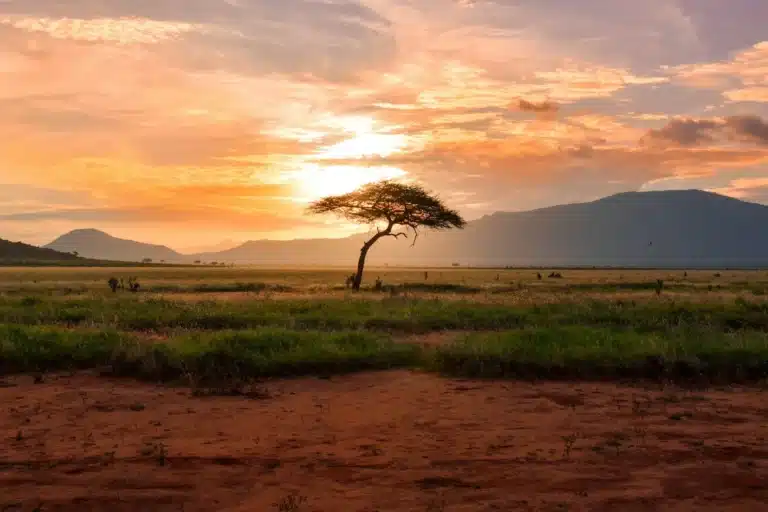
Olmoti Crater is the shorter, gentler of the two walking routes in the Ngorongoro Highlands, a shallow grass covered caldera reached by a thirty minute walk from the ranger post at Nainokanoka village, with the Munge Waterfall as its main reward. Where its neighbour Empakaai involves a genuinely demanding descent and climb, Olmoti is accessible to most visitors with only a basic level of fitness, making it a natural first stop for anyone wanting to add walking to an otherwise vehicle based Ngorongoro itinerary without committing to a full day of hiking.
What Olmoti actually is
Olmoti takes its name from the Maasai word for cooking pot, a reference to the crater’s round, shallow, bowl like shape. At 3,088 metres above sea level, it is an extinct volcano formed by the same Gregory Rift volcanism responsible for the wider Crater Highlands chain, and it sits within the Nainokanoka ward of the Ngorongoro Conservation Area, roughly five kilometres north east of the main Ngorongoro Crater. Unlike the main crater, whose steep walls enclose a dense concentration of resident wildlife on its floor, Olmoti is open on one side, drained by the Munge River, which begins on the crater floor and eventually flows down into Lake Magadi on the main Ngorongoro crater floor below.
The hike itself
The walk into Olmoti begins at the ranger post in Nainokanoka village, itself roughly a thirty to forty five minute drive from the crater rim lodges by four wheel drive vehicle. From the ranger post, the trail covers around one and a half kilometres each way, roughly three kilometres round trip, with a total elevation gain of around three hundred metres, and can typically be completed in about ninety minutes including time spent at the rim and crater floor. Given the altitude, already above 2,700 metres at the start and rising further along the trail, some visitors notice shortness of breath even on this comparatively short and gentle walk, though the trail itself is not technically difficult and requires no special equipment beyond sturdy footwear.

The Munge Waterfall
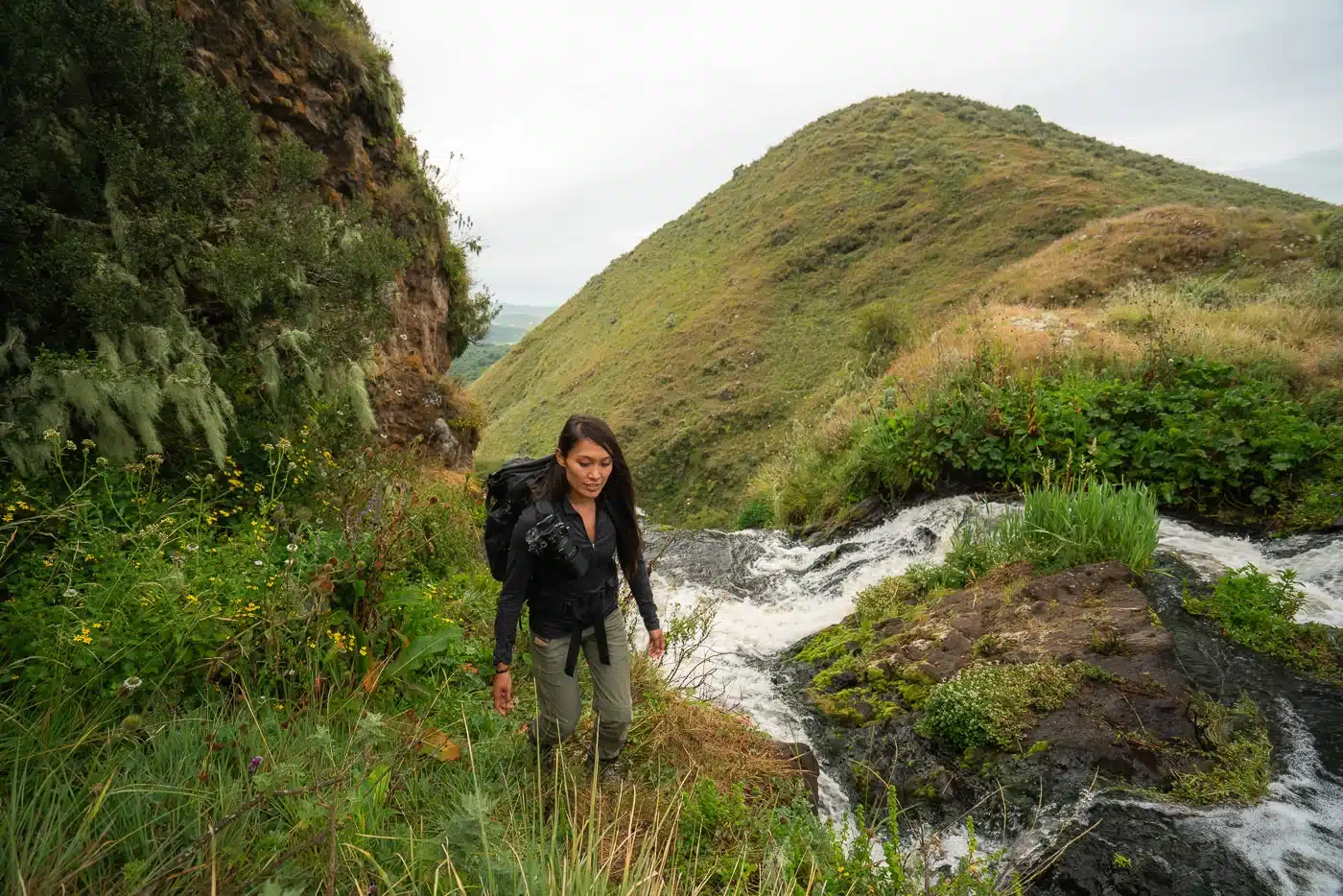
The crater’s main landmark is the Munge Waterfall, where the Munge River pours out over the crater’s broken eastern rim on its way down towards the main Ngorongoro Crater floor. The falls are visible from several points along the trail and from the road between Ngorongoro and Nainokanoka, though reaching a close view involves walking to the edge of the crater’s rim rather than approaching the falls directly, since the terrain around them is steep and the area is treated cautiously by rangers. The crater floor itself, a marshy, grass covered basin fed by the same river system, supports a small resident population of grazing animals including elephant, buffalo, waterbuck, and eland, drawn by the year round water source in an otherwise seasonally dry highland environment.
How Olmoti compares with Empakaai
Visitors deciding between the two nearby craters, or wondering whether to attempt both in a single day, should understand that they offer genuinely different experiences rather than a shorter and longer version of the same walk. Olmoti has no lake and a much gentler descent, making it accessible to a wider range of fitness levels and a better option for visitors short on time or travelling with less experienced walkers. Empakaai, by contrast, involves a considerably steeper descent to a dramatic soda lake ringed by forest, and is generally considered the more visually striking of the two, but demands more time, more fitness, and a longer round trip. Many itineraries combine both in a single day, walking Olmoti first as a shorter warm up before continuing on to the more demanding Empakaai trail in the same afternoon.
Wildlife along the route
Because Olmoti’s crater floor holds water year round via the Munge River, it draws a modest but consistent population of grazing animals even in the dry season, when much of the surrounding highland grassland browns off. Elephant, buffalo, waterbuck, eland, and antelope are the animals most regularly reported by visitors and guides, along with a reasonable range of birdlife around the marshy sections of the crater floor. Predator sightings are rare here, since the crater’s small size and open aspect on one side offer little of the cover that draws lion and other large predators to the main Ngorongoro Crater, and visitors expecting a scaled down version of that experience should adjust their expectations accordingly; Olmoti’s appeal lies in the walk, the waterfall, and the highland scenery rather than in dense predator viewing.

When to visit
Olmoti can be walked at any time of year, though the trail and the marshy crater floor are noticeably firmer during the drier months from roughly July through December, when road access to Nainokanoka is also more reliable. The hike can be started as early as 8:30am and as late as early afternoon, and does not require the pre dawn starts associated with game drives elsewhere in the conservation area, making it a comparatively flexible addition to a day that also includes crater floor game viewing. Visitors planning to combine Olmoti with a full crater game drive on the same day should budget realistically for driving time between the crater floor, the rim, and Nainokanoka, since the geography of the conservation area means these are not adjacent stops.
Permits, rangers, and cost
As with all walking in the Ngorongoro Highlands, a visit to Olmoti requires an armed ranger from the Ngorongoro Conservation Area Authority, booked through a licensed operator, along with a separate walking permit fee on top of the standard conservation area entry and transit charges. A privately arranged vehicle also requires its own permit. Most visitors arrange this as part of a broader itinerary through their safari operator, who handles the ranger booking and associated paperwork in advance, rather than attempting to arrange it independently once already inside the conservation area, since ranger availability is not guaranteed without advance notice.
Why it is worth adding to an itinerary
Olmoti’s real value lies in how little it costs an itinerary in time and effort relative to what it offers: a genuine highland walk, a waterfall, resident wildlife away from the crowds of the crater floor, and sweeping views over the surrounding highlands, all achievable in roughly two hours including transfers. For visitors who want to stretch their legs after several days of vehicle based game drives, or who are curious about the wider Crater Highlands beyond the famous crater itself, Olmoti offers a low commitment, low risk way to do exactly that, without requiring the extra day, higher fitness demands, or additional cost of the longer highland treks further afield.