The best photography spots in the Serengeti are not evenly spread across the park, and which one delivers results depends heavily on what a photographer is trying to capture and when they are travelling. The Moru Kopjes reward patient portrait work on resident lions against dramatic rock backdrops. The Mara River at Kogatende delivers the migration’s most chaotic action during crossing season. The Gol Kopjes in the eastern plains offer wide, uncrowded scenes built around the park’s densest cheetah population. Knowing which location suits which subject, rather than treating the Serengeti as one interchangeable backdrop, is what separates a strong photography trip from a frustrating one.
Moru Kopjes: Portraits Against Rock
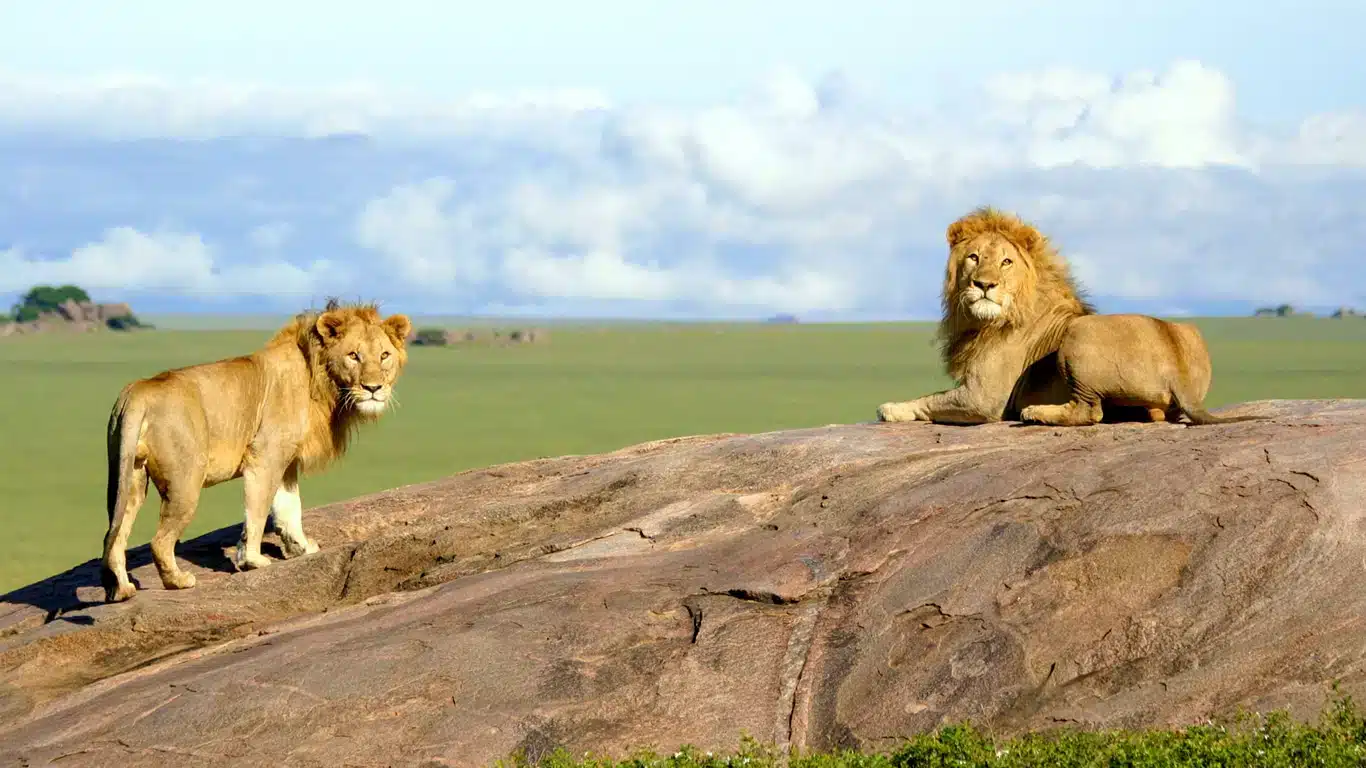
The Moru Kopjes, a cluster of ancient granite outcrops in the south-central Serengeti, are one of the most reliable locations in the park for photographing lions in a setting more visually interesting than open grass. Several resident prides use the kopjes for shade and vantage, and the granite’s warm tones under early or late light provide a natural backdrop that separates a subject from the flat plains behind it in a way open grassland cannot. The area also holds ancient Maasai rock paintings and a stone gong once used for community gatherings, giving photographers working on a broader Serengeti story additional subject matter within the same area as the wildlife.
Because the kopjes are away from the park’s busiest central circuit, vehicle density around a sighting here tends to be lower than at comparable sightings near Seronera, which in practice means more flexibility to position a vehicle for the best light and angle without competing for space. Early morning, when low sun rakes across the rock faces, is the strongest light window here, though the kopjes also work well for silhouette compositions against a setting sun.

Kogatende and the Mara River: Migration Drama
Northern Serengeti’s Kogatende area, roughly July through October depending on herd movement in a given year, is the location for photographing the wildebeest migration’s most visually dramatic moment: a river crossing. Herds gather in tension on the riverbank, sometimes for hours, before a crossing begins, and the resulting scenes of animals plunging into the water, crocodiles working the crossing point, and dust rising off the herd’s movement produce the kind of high-impact, high-motion images the Serengeti is best known for internationally. The terrain around Kogatende itself, hillier and more textured than the flat central and southern plains, adds landscape interest even outside active crossing moments.
Positioning matters more here than almost anywhere else in the park, since a crossing can begin and end within minutes and a vehicle on the wrong bank or too far from the actual crossing point will miss the moment entirely. Guides with genuine local experience reading herd behaviour, rather than simply parking at a popular viewpoint and waiting, make a measurable difference to a photographer’s results in this specific location. A longer telephoto lens, in the 400mm to 600mm range, is more useful here than almost anywhere else in the Serengeti given the distances often involved across a wide river channel.

Gol Kopjes and the Eastern Plains: Cheetah and Open Space
The eastern Serengeti’s short grass plains, anchored around the Gol Kopjes, hold one of the highest cheetah densities in the park and offer a fundamentally different photographic character to the busier central and northern areas: wide open horizons, minimal vehicle traffic, and cats that hunt in full daylight rather than at dawn and dusk. Because cheetahs rely on speed and sight rather than the low light favoured by nocturnal hunters, hunts here often unfold in workable midday light that would be far too harsh for photographing lion or leopard activity elsewhere in the park.
This area suits photographers who have already spent time in the Serengeti’s more visited zones and specifically want the kind of solitude that lets a vehicle sit alone at a sighting for an extended period, repositioning freely for the best angle without other vehicles crowding the same scene. The area is at its most productive from roughly December through March, when the migration’s calving herds are within reach on the adjacent southern plains and cheetah hunting activity around the newborn calves increases correspondingly.
Seronera and the Central Serengeti: Reliable Year-Round Access
Central Serengeti‘s Seronera area holds the park’s highest year-round concentration of large predators, thanks to the permanent water of the Seronera River drawing resident wildlife regardless of season. For a photographer with limited time who cannot build a trip around a specific migration window, Seronera is the most dependable single area in the park for leopard sightings along the river’s fig trees, plus consistent access to lion, elephant, giraffe and a wide range of plains game against a mix of woodland, river and open grassland backdrops within a compact area.
The tradeoff is that Seronera is also the Serengeti’s busiest zone, meaning popular sightings frequently draw multiple vehicles, and photographers wanting a completely unobstructed frame need patience or an early arrival at a sighting before other vehicles gather. For anyone travelling outside the peak June to October and December to March windows and still wanting migration-adjacent drama, Seronera’s reliability makes it the safer choice over a seasonal location that may or may not deliver depending on where the herds happen to be that particular week.

Grumeti River and the Western Corridor: Water, Forest and Mood
The Western Corridor, following the Grumeti River toward Lake Victoria, offers a photographic character closer to riverine forest than open savanna, with reflections, dappled light through tree canopy, and some of the Serengeti’s largest crocodiles concentrated at points along the river. The migration passes through here roughly May through July on its westward and northward movement, producing crossing scenes on a smaller and often less crowded scale than the more famous Mara River crossings further north.
This corridor rewards photographers interested in mood and light over pure action, since the forest canopy and water reflections create compositions unavailable on the open plains elsewhere in the park. It is also one of the quieter areas of the Serengeti outside its own migration window, making it worth considering for anyone who has already photographed the busier central and northern zones on a previous trip and wants a genuinely different visual register from the same broader ecosystem.
Ndutu and the Southern Plains: Newborn Calves and Predator Action
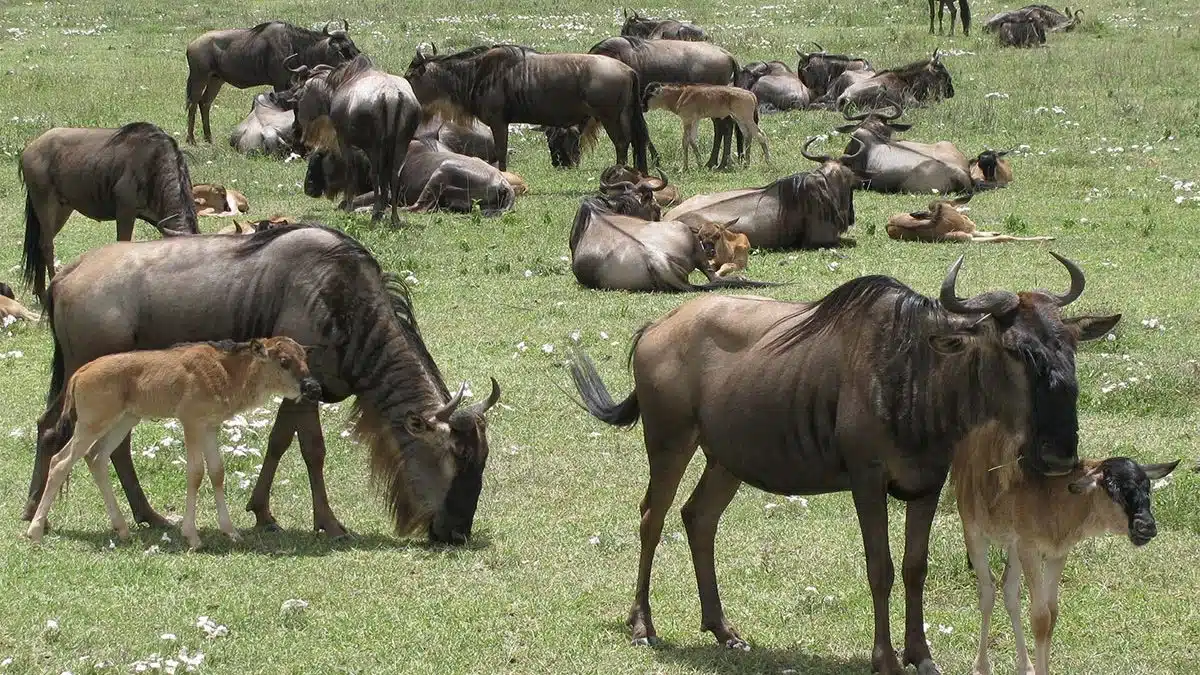
Technically split between the Serengeti and the adjoining Ngorongoro Conservation Area, the Ndutu area’s short grass plains are the calving grounds for the majority of the migration’s wildebeest, typically from late January through March. The sheer concentration of newborn calves across open, largely treeless plains draws predators in numbers that make this one of the most productive locations in East Africa for action photography during that specific window, with lion, cheetah and hyena all hunting visibly across the open ground rather than from concealment.
The flat, low-lying terrain and minimal vegetation mean subjects are rarely obscured, and the wide horizons support strong environmental portrait work alongside the predator action itself. Light here can be harsh at midday given the almost complete absence of shade or cover, so the strongest results tend to cluster around the first two and last two hours of daylight, with the middle of the day better used for repositioning ahead of an anticipated afternoon hunt than for active shooting.
Getting the Best Out of Any Location
Across all of these areas, the single factor photographers consistently underestimate is how much a guide’s positioning decisions shape the final images, more than lens choice or camera settings. A guide who understands light direction, anticipates animal movement, and is willing to wait rather than move on after a few frames will produce dramatically better results than one simply driving between known sighting locations. Requesting a guide with specific photography experience, rather than a general safari guide, is worth doing explicitly when booking a trip built primarily around photography rather than general wildlife viewing.
Vehicle rules also affect what is achievable at any given location. Off-road driving is prohibited across the Serengeti’s public areas, meaning positioning is limited to existing tracks, which makes choosing camps with easy access to a target area more valuable than trying to compensate for distance with a longer lens alone. Private conservancies bordering some sections of the wider ecosystem permit off-road access and night drives, and are worth considering as an add on to a Serengeti trip for photographers who have exhausted what the park’s own track network allows.

Matching Location to the Time of Year
None of these locations perform equally well year round, and choosing where to spend limited photography time depends directly on travel dates. December through March favours the southern Ndutu and eastern Gol Kopjes areas for calving season action and cheetah hunts on open plains. June through October favours the Western Corridor early in that window and Kogatende later in it, tracking the migration’s westward and then northern movement. Seronera performs consistently across the entire calendar and is the strongest single choice for a trip that does not align with a specific migration phase. Planning a Serengeti photography trip around December 2026 or the 2027 migration season benefits from fixing the primary target location first and then choosing camps and routing around that decision, rather than the reverse. A trip built first around available camps and only afterward around what those camps happen to be near will often miss the specific window a location needs to perform, whereas working backward from Ndutu in February, Kogatende in August, or Seronera at any point in the year gives the itinerary a clear photographic purpose from the outset rather than treating location choice as an afterthought to accommodation booking.
Spreading a longer trip across two or three of these areas, rather than committing every night to a single location, is usually the stronger approach for a photographer with eight days or more available, since each area rewards a genuinely different kind of image and no single part of the Serengeti covers the full range on its own. A shorter trip of four or five days is better served by choosing one primary location matched precisely to the travel dates and accepting that the remaining areas will need a future visit rather than trying to compress too much movement into too little time.
The distances involved also deserve honest weighing before an itinerary is finalised. Seronera to Kogatende alone can run several hours by road, so combining two distant locations within a single trip usually means flying between them rather than driving, which affects both cost and how much time on the ground is actually available for photography once transfer days are accounted for. A realistic itinerary treats travel time between these areas as a genuine cost against actual shooting time on the ground, not as a minor logistical detail to be resolved later once camps are already booked.


