Ngorongoro Crater in May sits at the tail end of the long rains, a transitional window that combines the last of the wet season’s greenery with the emptiest crater floor of the entire year. Rates at rim lodges remain at their lowest point of the calendar, vehicle numbers at the gate thin out further than even April, and the crater’s resident wildlife carries on exactly as it does every other month, since none of it depends on the season to be present.
Weather on the Floor and the Rim
May marks the point where the long rains begin to ease rather than end outright, and while occasional heavy showers remain a real possibility through the first half of the month, daily rainfall totals drop noticeably compared with April’s saturating downpours. Long term averages for the wider conservation area put May’s rainfall at roughly half of April’s, with the number of genuinely wet days falling from the high teens down toward single figures by the final week. Daytime temperatures on the crater floor typically sit around 19°C, while overnight temperatures on the rim regularly drop below 10°C and can edge toward single figures on a clear night, since May is the point in the calendar where cooler nights become the norm rather than the exception. Mist still forms over the rim on many mornings, though it tends to clear earlier in the day than during the peak of the long rains in March and April.
Wildlife on the Crater Floor
The crater’s resident population of roughly 25,000 large mammals continues its usual pattern through May, unaffected by the easing rains, and lion, buffalo and the endangered black rhino, of which around 30 individuals call the crater home, remain as reliably present as at any other point in the year. Grass across the floor is still relatively tall following the heavier rains of March and April, which can make spotting cheetah and serval somewhat harder than during the drier months later in the year, though the resident lion prides holding territory near Lake Magadi are rarely difficult to locate given their long standing familiarity with the same stretches of grassland. Elephant, including breeding herds rather than only solitary bulls, continue to favour the Lerai Forest during May, drawn by fresh growth left over from the rains.

The Quietest Month of the Year
May and April together form the quietest stretch of the entire year for tourism across the whole northern circuit, not only at the crater itself, and May frequently edges out April as the single quietest month once the heaviest of the rains has passed and fewer travellers are deterred by lingering weather concerns. Wildflowers are a genuine feature of May specifically, blooming across sections of the crater floor and the highlands above the rim in a way that is largely absent by the time the dry season sets in during June. This combination of solitude and colour makes May a favourite among repeat visitors and photographers who have already experienced the crater during its busier months and are looking for something different from the familiar dry season image of the caldera.
Water Levels and Vegetation
Lake Magadi typically still holds a substantial amount of water in May, a legacy of the rains earlier in the season, though levels begin their gradual decline as the dry months approach. The Gorigor Swamp remains waterlogged for most of the month, and the smaller seasonal pools scattered across the grassland, which will disappear entirely by the middle of the dry season, are often still present into the first two or three weeks of May. Grazing herds remain more dispersed across the floor than they will be later in the year, since the abundance of standing water means animals are not yet forced to concentrate around the handful of permanent sources that dominate dry season sightings from June onward.
Crowds and Rates
May sits within the same lowest pricing band as April at rim lodges, commonly 20 to 30 percent below the July to September peak, and the crater gate records some of its lowest daily vehicle counts of the year during this month. Properties such as Ngorongoro Serena, Sopa Lodge and Lemala Ngorongoro typically offer their most accessible rates of the year during May, and rooms that would require booking many months ahead during the July to September peak are often available with only a few weeks’ notice. A number of smaller camps across the wider northern circuit that reduce staffing or close briefly during April remain closed into early May, so confirming that a specific property is fully operational is worth doing before booking, particularly for a stay earlier in the month rather than later.
Guides and Local Knowledge
Because the crater’s grazing herds are more widely dispersed across the floor in May than during the concentrated dry season months, the quality of a specific guide matters more than usual for a satisfying day of sightings. Experienced driver guides rely on radio contact with other vehicles already on the floor and on their own accumulated knowledge of which stretches tend to hold the best activity once animals have spread out following the rains, rather than simply heading for the handful of predictable dry season hotspots. Travellers booking through an operator with a strong local reputation and long standing crater guides tend to notice this difference most clearly during quieter, more dispersed months like May, when local knowledge counts for considerably more than it does once herds are naturally concentrated around shrinking water sources later in the year.
Road Conditions and Practical Notes
The Seneto descent road and the Lerai ascent road are generally in better condition during May than during the height of the long rains, though soft, muddy sections remain common through the first half of the month, particularly after a heavy overnight shower. By the final week of May, road conditions typically improve markedly as the rains ease, and delays caused by a slow moving vehicle negotiating a difficult section become less frequent than earlier in the season. Malaria prevention remains necessary throughout May, as it does year round in this region, and travellers should note that standing water left over from the rains can still support mosquito activity around some lodge grounds.
Getting to the Crater in May
Most visitors reach the Ngorongoro Crater rim by road from Arusha, a drive of roughly three to four hours that passes through Mto wa Mbu and climbs the Rift Valley escarpment before reaching the Ngorongoro Conservation Area gate. This route remains fully passable in May, though the final stretch of unpaved road along the rim itself can turn soft after a heavy overnight shower, and a 4×4 vehicle with an experienced driver is essential rather than optional at this point in the year. Travellers connecting by air typically fly into the Lake Manyara airstrip and continue by road from there, a transfer that adds an hour or so to the overall journey but avoids the longer drive from Arusha directly. Fewer scheduled flights operate during May compared with the July to September peak, so confirming flight timings well ahead of a fly in itinerary is sensible for this particular month.
Birdlife in May
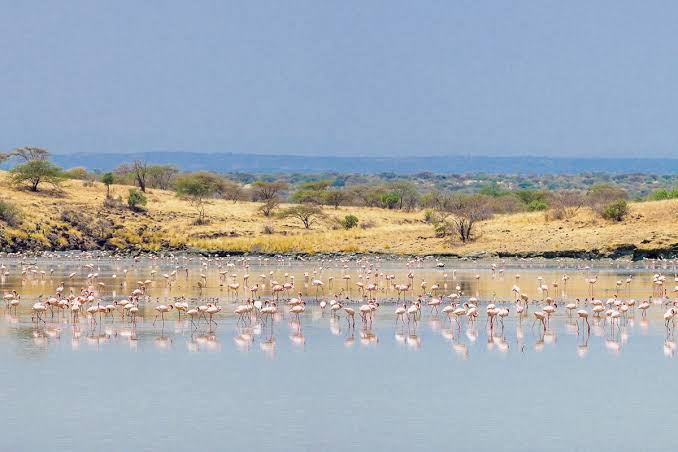
May offers strong birdwatching conditions as the tail end of the rains continues to support elevated water levels at Lake Magadi and the Gorigor Swamp, contributing to sightings across the crater’s recorded list of over 500 species. Resident waterbirds remain abundant, and the lush vegetation left over from April supports strong insect activity that in turn draws a wide range of species across the floor and the forested slopes of the crater rim, including several migratory species still passing through the wider conservation area before continuing further south.
How May Compares to April and June
April and May sit close together on the calendar, but May consistently offers drier, more settled conditions than the sustained heavy rain typical of April, without yet reaching the fully dry, dusty conditions that define June and the months that follow. A traveller who wants the lowest possible rates and the emptiest crater floor, while still accepting some chance of rain, is generally better served by May than April, since the wettest weather has usually passed by the time May begins. June, immediately following, marks a clear shift toward the dry season, with noticeably less rainfall, clearer skies and the first meaningful uptick in visitor numbers as the year’s high season begins to approach.
Combining a May Visit With the Rest of the Northern Circuit
May itineraries tend to favour the same quiet, lower cost approach found elsewhere across the northern circuit during this month, with the Serengeti’s central Seronera area offering reliable resident wildlife and Tarangire or Lake Manyara serving as a practical stop on the route from Arusha. Because low season conditions apply across the whole region rather than only at the crater, travellers building a longer multi park trip in May often find availability easier to secure at shorter notice than during the busier months that follow, which can suit travellers without a rigid planning timeline.
Photography in May
May rewards photographers willing to work around occasional showers with a landscape that combines lingering green grass, wildflowers and dramatic skies, without the sustained downpours that can limit shooting windows in April. Lighting conditions immediately after a shower are often exceptional, with clear, dust free air and strong contrast between dark storm clouds and sunlit grassland. Flexibility within the day remains useful, since a passing shower can still interrupt a game drive briefly even as the overall likelihood of rain continues to fall through the month.
What to Pack for a May Visit
A waterproof outer layer remains worth packing for May, alongside warm layers for rim mornings that can feel surprisingly cold given the altitude and the clearer skies that allow heat to escape more readily overnight. Given that road conditions can still be soft in places, a spare pair of dry shoes for the evening is a sensible addition, and waterproof protection for camera equipment remains useful given the chance of a shower during a game drive.
Who Should Choose May
May suits travellers who want the value and solitude of the long rains without committing to April’s heaviest weather, and who are drawn to a landscape that still carries the green, wildflower dotted character of the wet season while offering noticeably more settled conditions than earlier in the year. It is a strong choice for repeat visitors seeking a different version of the crater from the one they have seen during the dry season, and for anyone who prioritises a quiet, uncrowded experience over guaranteed clear rim views on any given morning.
Looking Ahead to May 2027
May’s position as a transitional month between the long rains and the dry season is set by the same seasonal pattern each year, so the guidance above applies as reliably to a May 2027 booking as to any recent year, even though the exact timing of the rains easing can vary somewhat from one season to the next. Travellers planning for the 2026 to 2027 travel year who want the lowest rates combined with genuinely improving weather compared with April will generally find May delivers exactly that, provided they retain some flexibility for an occasional wet morning early in the month.


