Africa's Premier
Rhino Sanctuary
East Africa's largest black rhino population, the world's last two northern white rhinos, and Kenya's only chimpanzee sanctuary, all inside one compact, meticulously managed conservancy.
Not Just a Safari Destination
A 364 square kilometre not for profit conservancy between the Aberdare Mountains and Mount Kenya, Ol Pejeta manages East Africa's largest black rhino population, the world's last two northern white rhinos, and a full Big Five safari in one of the most closely run wildlife programs anywhere on the continent.
East Africa's Largest Black Rhino Population
More than 130 individuals, the highest concentration in East Africa, tracked and monitored daily in genuinely wild, unfenced habitat.
The World's Last Northern White Rhinos
Najin and Fatu, a mother and daughter pair and the only two northern white rhinos left on Earth, live here under round the clock protection while scientists pursue an assisted reproduction program to save the subspecies.
Kenya's Only Chimpanzee Sanctuary
The Sweetwaters Chimpanzee Sanctuary is Kenya's only facility for rescued chimpanzees, home to around forty individuals living in semi wild forested enclosures.
A Compact Conservancy With Real Habitat Variety
Ol Pejeta's highland grassland, woodland, and river corridor sit close enough together that a single day's drive can cover all three.
Where the Rhino Range
The conservancy's most active rhino monitoring areas, most rewarding in the morning when overnight movement is freshest.
Leopard and Buffalo Country
Open highland grassland to the west holds the conservancy's leopard population and large buffalo herds, most active in the afternoon.
Water at the Conservancy's Edge
The Ewaso Ngiro and Ewaso Narok rivers cut through riverine forest, where elephant and hippo concentrate at the water's edge.
What Sets Ol Pejeta Apart
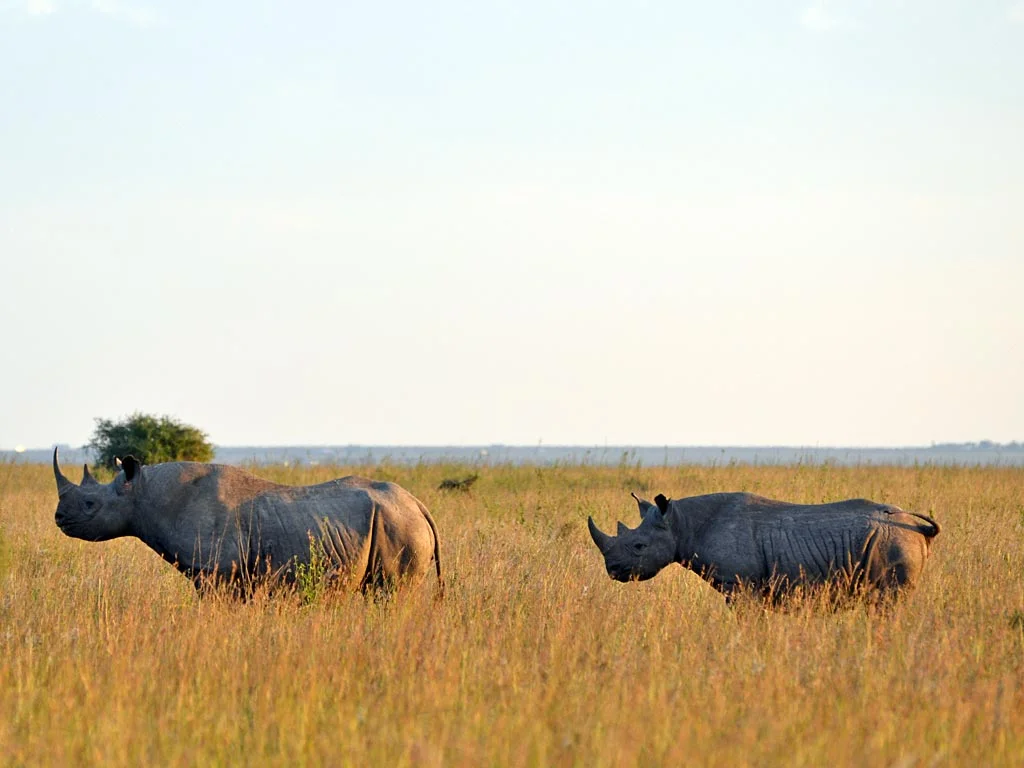 Black Rhino
 Black Rhino Encounters
Ol Pejeta's monitoring team tracks individual animals daily, giving guides reliable, close range sightings of this naturally secretive, nocturnal species in genuinely wild, unfenced habitat.

The Northern White Rhino Enclosure
Najin and Fatu, mother and daughter and the only two northern white rhinos alive, live here under permanent armed guard. Neither can carry a pregnancy naturally, so the BioRescue consortium continues attempting embryo transfers into southern white rhino surrogates, an ongoing, unresolved scientific effort to save the subspecies from outright extinction.

Sweetwaters Chimpanzee Sanctuary
Home to around forty rescued chimpanzees recovered from illegal trade, abuse, or habitat loss across West and Central Africa, living in social groups in semi wild forested enclosures.
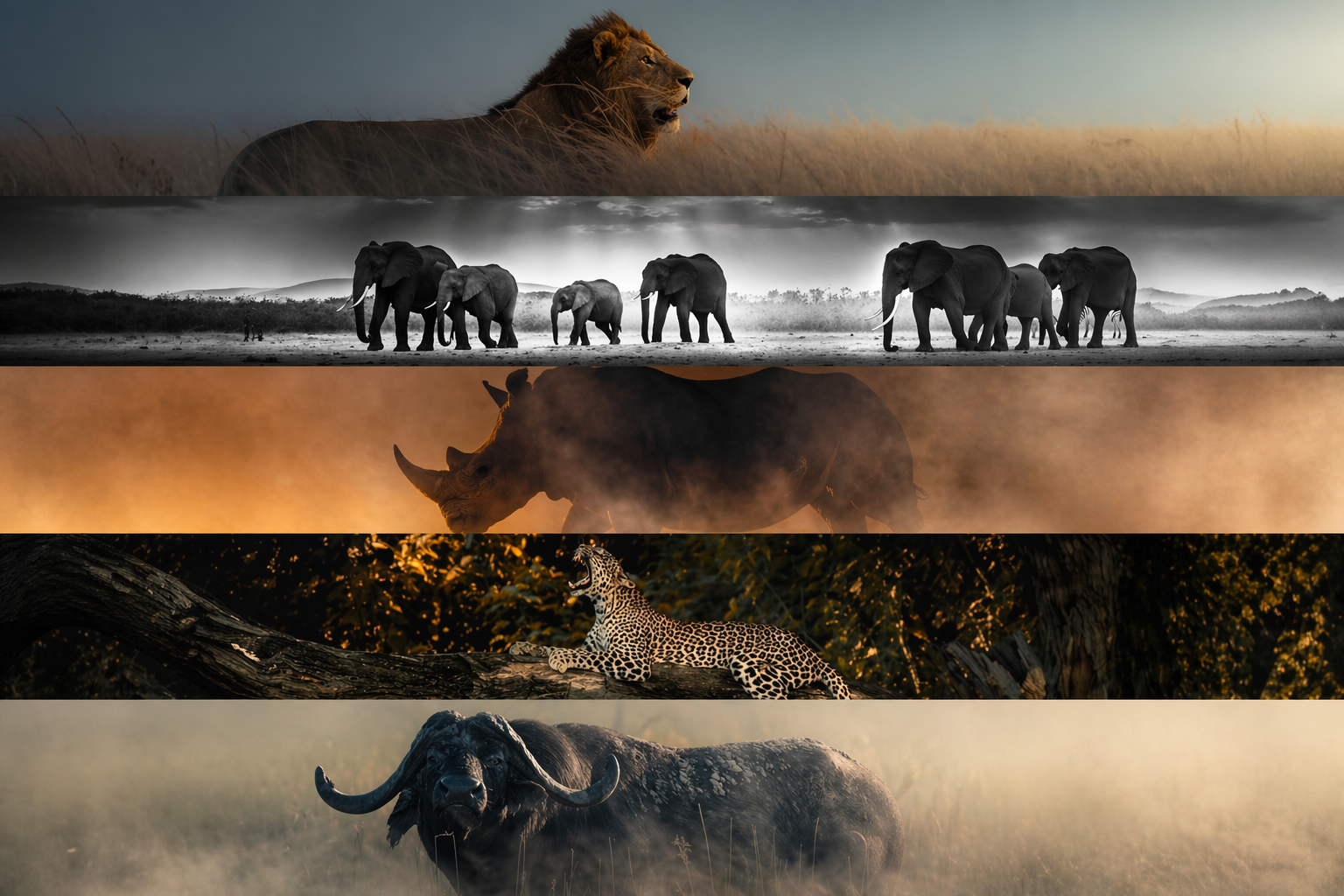 Big Five
 Complete Big Five in a Compact Area
Lion, leopard, elephant, buffalo, and the highest rhino density in the region are all accessible within a standard game drive, without the multi park logistics the Big Five usually requires elsewhere in Kenya.

African Wild Dog
A resident pack of one of Kenya's rarest large carnivores gives guests sighting opportunities unavailable in most other Kenya safari destinations.

The Grazing Coexistence Model
Controlled livestock grazing integrated into habitat management demonstrates that cattle and wildlife can share the same landscape with mutual benefit, a finding with real significance for conservation across Kenya's wider livestock dominated rangelands.
How You'll Spend Your Days
Game Drives
Off road driving is permitted across most of the conservancy, allowing genuine positioning for both wildlife proximity and photography. Morning drives favour the northern and eastern rhino sectors, afternoons cover the western grassland and the Ewaso Ngiro river corridor.
Rhino Tracking on Foot
Guided on foot rhino tracking with an armed ranger and conservancy monitor approaches black rhino in their natural habitat at walking pace, a viscerally different encounter with a 1,400 kilogram animal than any vehicle drive offers. Available for physically fit guests by request.
Northern White Rhino Visit
A conservancy guide accompanies groups of up to six to the monitored enclosure for a forty five minute visit with a ranger who has worked directly with Najin and Fatu, standard on every Ol Pejeta itinerary.
Chimpanzee Sanctuary Visit
Sanctuary staff guide visits to the rescued chimpanzee population, with interpretation on each individual’s history and the wider illegal wildlife trade context, available in morning and afternoon sessions.
Night Game Drives
Permitted across the conservancy after dark, night drives reveal spring hare, African wildcat, serval, porcupine, genet, and rhino at their most active, with sightings at artificial waterholes particularly rewarding.
One of Kenya's Most Comfortable Year Round Destinations
Ol Pejeta's highland altitude keeps the climate moderate year round, rhino and lion are present in every season, so timing comes down mostly to preference.
Dry Seasons
Jul to Sep & Jan to Mar
Rhino are most reliably found on open grassland, lion and cheetah hunting activity concentrates around permanent water, and the conservancy’s track network is in its best condition throughout both windows.
Green Seasons
Apr to Jun & Oct to Nov
Rain brings lush, striking highland landscapes and excellent birdwatching, though certain tracks can turn muddy, rainfall here runs heavier and more sustained than at Kenya’s lower lying southern parks. Rhino and lion sightings remain excellent throughout.
Getting to Ol Pejeta
Nanyuki Airstrip, about 15 km from the main gate, receives daily scheduled flights from Wilson Airport in Nairobi, around 45 minutes, with Safarilink and other operators. Charter flights connect directly to Samburu, around 30 minutes, and other Laikipia destinations.
- Nanyuki AirstripPrimary access point, about 15 km from the main gate
Nairobi to Nanyuki takes around three to three and a half hours on the well maintained A2 highway north through Thika and Nyeri, with the conservancy’s main gate a further 15 km west on tarmac. The route is practical enough that self drive guests doing a central Kenya circuit use it regularly.
Kicheche Laikipia Camp –Kenya
Kicheche Laikipia: 6 eco-gold tents in Ol Pejeta Conservancy, home of the last two northern white rhinos, with canoeing, lion tracking, mountain biking, and 25% of revenue to conservation.
View Property →Ol Pejeta House – Luxury Safari House in Ol Pejeta, Kenya
Ol Pejeta House: an exclusive-use private safari house in Ol Pejeta Conservancy with a pool, dedicated guide and chef, and access to the last two northern white rhinos and chimpanzee sanctuary.
View Property →Ol Pejeta Bush Camp – Luxury Safari Camp in Ol Pejeta, Kenya
Ol Pejeta Bush Camp by Asilia Africa: an intimate tented camp in the Ol Pejeta Conservancy with access to the last two northern white rhinos, black rhino sanctuary, chimps, and lion tracking.
View Property →“When Sudan died in 2018, the last male of his subspecies, the world's attention turned to two females left to carry an entire lineage forward or not at all.”On Sudan, Najin, Fatu, and a Race Against Extinction
Ol Pejeta’s transformation from cattle ranch to conservancy began in the late 1980s, supported initially by Fauna and Flora International. In December 2009, four northern white rhinos, two males and two females, were flown from Dvůr Králové Zoo in the Czech Republic to Ol Pejeta in a final attempt to encourage natural breeding in something closer to their native habitat. It did not work. Suni, one of the two males, died in 2014. Sudan, the last male of the subspecies anywhere on Earth, died in March 2018 at 45, watched over by armed guards to the end, leaving only his daughter Najin and granddaughter Fatu.
Neither female can safely carry a pregnancy to term, Fatu due to uterine complications, Najin due to hind leg problems that make pregnancy risky at her age. The BioRescue consortium, working with Kenya Wildlife Service and Ol Pejeta, has produced 38 viable northern white rhino embryos through in vitro fertilisation using harvested eggs and preserved sperm from deceased males, intended for transfer into southern white rhino surrogates. Embryo transfers in 2024 and 2025 have not yet produced a successful pregnancy. Whether this becomes the first successful genetic rescue of a functionally extinct large mammal, or a well documented account of a subspecies’ final years, remains genuinely unresolved.
Every Dollar Reinvested in Conservation
As a not for profit conservancy, Ol Pejeta channels all tourism income directly into conservation and community programs, the black rhino monitoring and anti poaching team, the northern white rhino assisted reproduction program, the Sweetwaters Chimpanzee Sanctuary, and a community development program spanning education, healthcare, and livelihoods for the populations surrounding the conservancy.
The conservancy’s grazing coexistence model, integrating controlled livestock grazing into habitat management, offers one of the more successful demonstrations anywhere in Kenya that cattle and wildlife can share a landscape without one displacing the other, a finding with real significance given how much of Kenya’s conservation future depends on resolving exactly that tension.
Duration and Combinations
Two to three nights gives enough time for the northern white rhino visit, the chimpanzee sanctuary, multiple game drives including a night drive, and on foot rhino tracking. Three nights is our preferred recommendation, a more relaxed pace with room to properly engage with the conservancy's conservation programming.
Ol Pejeta + Samburu
The definitive central north Kenya combination, Ol Pejeta's conservation depth paired with Samburu's northern specials and riverine wildlife, accessible by charter or road via Isiolo.
Ol Pejeta + Mount Kenya
Pairing the conservancy's wildlife program with a Mount Kenya trek creates a central Kenya circuit running from savannah rhino to alpine moorland in one itinerary.
Ol Pejeta + Maasai Mara + Amboseli
A comprehensive Kenya circuit combining Laikipia's conservation focus with the Mara's predator spectacle and Amboseli's elephant photography.
Travellers Ol Pejeta Rewards
Conservation Motivated Travellers
The northern white rhino encounter and the conservancy's model programs make Ol Pejeta one of the world's most meaningful destinations for guests whose travel is shaped by conservation values.
Big Five Completers
All Big Five species in a single, compact, well managed destination make Ol Pejeta one of Kenya's most reliable options for completing the list.
Rhino Specialists
East Africa's largest black rhino population and the world's last northern white rhinos make this conservancy irreplaceable for anyone with a specific interest in rhinoceros.
Families
The chimpanzee sanctuary, educational programming, and the northern white rhino story give families with children one of Kenya's most genuinely engaging destinations.
Ol Pejeta FAQ
Yes. Najin and Fatu, the world’s only two northern white rhinos, live in a specially monitored enclosure. Guided visits are available to all guests with conservation interpretation from an experienced ranger, and are included in every Ol Pejeta itinerary we design.
Ol Pejeta manages East Africa’s largest black rhino population, more than 130 individuals, in genuinely wild, unfenced habitat. This is the result of more than two decades of intensive conservation management and a substantial recovery from the critically low numbers of the 1990s.
Yes, guided on foot rhino tracking is available under armed ranger accompaniment. This is one of the most extraordinary wildlife encounters in Kenya and is arranged by prior request.
The Sweetwaters Chimpanzee Sanctuary is Kenya’s only chimpanzee rescue facility, housing around forty rescued individuals in semi wild forested enclosures. Visits are available to all guests with guided interpretation from sanctuary staff.
Yes, resident lion prides and a healthy leopard population provide reliable predator encounters, and night drives meaningfully improve leopard viewing odds.
By scheduled or charter flight from Wilson Airport in Nairobi to Nanyuki Airstrip, around 45 minutes. By road from Nairobi, around three to three and a half hours.
Begin Planning Your Ol Pejeta Safari
Every Ol Pejeta itinerary we design puts you in front of a conservation story that is still genuinely being written, not just a tour of its outcome.