Where Jane Goodall Made
History
Tanzania's smallest national park holds the world's longest running wildlife study, a chimpanzee community that changed how science defines humanity, and a lake below the forest that few visitors ever reach.
A Small Park With an Outsized Legacy
At just 52 square kilometres, Gombe is Tanzania's smallest national park, and one of Africa's most scientifically significant, home to the chimpanzee research Jane Goodall began here in 1960 and never really stopped.
The World's Longest Running Wildlife Study
Observed continuously since 1960, the Kasekela community are among the most thoroughly habituated wild chimpanzees anywhere on Earth.
Lake Tanganyika at the Forest's Edge
Water clarity exceeding twenty metres and hundreds of endemic cichlid species make the shore below the forest one of the world's finest freshwater snorkelling settings.
Genuine Remoteness
The genuine logistical effort required to reach Gombe keeps visitor numbers extremely low, a rare and complete kind of authenticity.
Steep Valleys Between Ridge and Lake
Gombe's small footprint packs in a real range of terrain, from lakeshore beach to steep valley forest to exposed ridge woodland, all within a short walk of each other.
Where the Chimpanzees Usually Are
Dense lowland evergreen forest fills the park's steep stream valleys, where the Kasekela community spends much of its time and where most treks unfold.
The Harder Days
More open woodland and grassland cover the exposed ridge tops, harder walking and a longer trek on days the community has moved uphill.
Beach, Research Station, and Camp
A narrow strip of beach at the forest base holds the research station and Gombe's handful of camps, the starting and ending point of every trek.
What Sets Gombe Apart
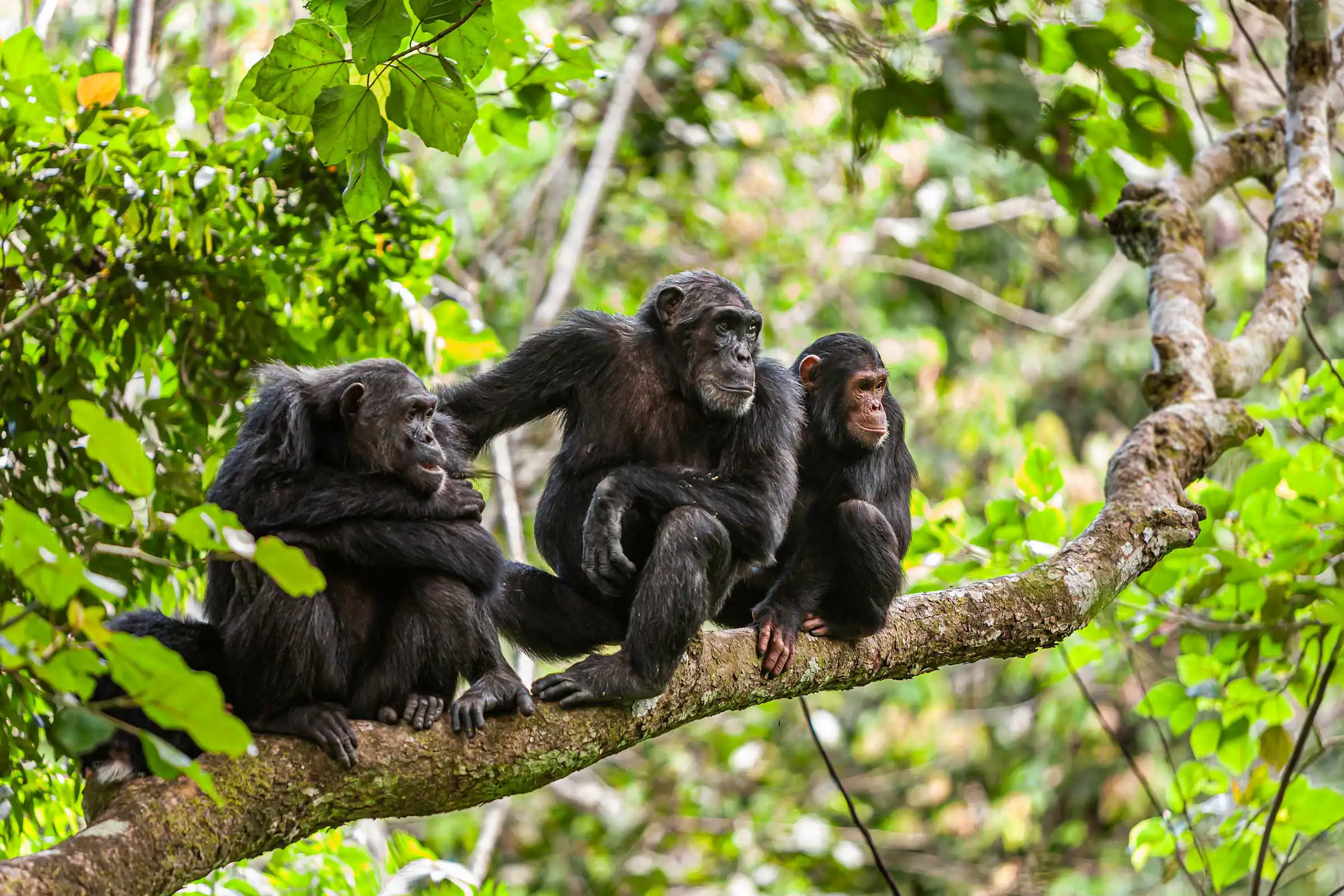 Chimpanzee Trek
 Wild Chimpanzee Trekking
Following trained rangers to the Kasekela community, whose members have been individually known to researchers since the 1960s, then spending an hour observing individuals utterly indifferent to human presence, is among the most emotionally powerful wildlife encounters anywhere.

Jane Goodall Institute Research Station
Established by Jane Goodall in 1965 and still operational, the station occasionally allows guests, arranged in advance, to engage with current resident researchers on the ongoing science of the world's most famous chimpanzee study.

Lake Tanganyika Snorkelling
Visibility exceeding twenty metres and hundreds of brilliantly coloured, largely endemic cichlid species turn an afternoon swim into one of Tanzania's finest freshwater wildlife encounters.

Red Colobus Monkey Encounters
This forest primate maintains a complex, closely studied predator and prey relationship with Gombe's chimpanzees, troops in the canopy above the valley trails a frequent and compelling secondary encounter.

Forest Bird Watching
African broadbill, long tailed hawk, bar tailed trogon, and numerous Afrotropical warblers and sunbirds reward a dedicated morning session in the valley forest.

Sunrise on Lake Tanganyika
Gold light on the lake as the sun clears the eastern escarpment, dhow fishing boats moving in the middle distance, and the forest's morning chorus of primate calls above the beach, a scene guests consistently rate among their most memorable in Tanzania.
How You'll Spend Your Days
Chimpanzee Trekking
Treks depart the research station beach at dawn behind trained TANAPA trackers and rangers who track the Kasekela community’s overnight movements. Difficulty ranges from a short level valley walk to a steep, multi hour ridge climb, and the observation itself runs a strict one hour, no closer than ten metres, no flash photography.
Lake Tanganyika Activities
The lake’s clarity and cichlid diversity make snorkelling from Gombe’s shoreline one of Tanzania’s finest freshwater experiences, and early morning kayaking, when the water is glassy and the escarpment forest catches the first light, is available from selected camps.
Forest Walks and Birding
Beyond the formal chimp trek, guided walks on the valley trail network bring red colobus, olive baboon, and serious birding within reach, afternoon walks tend to be more relaxed once the chimp community has settled for the day.
Kigoma Cultural Visits
Kigoma, the regional capital and gateway to Gombe, holds real history, its former Arab and German colonial trading harbour and the Ujiji site where Henry Morton Stanley famously greeted David Livingstone in 1871, alongside the Jane Goodall Institute’s Tacare community conservation programs.
Chimp Trekking Runs Year Round
Gombe rewards a visit at any time of year, the season mainly affects trail conditions and how far the chimp community tends to range.
Dry Season
Jun to Oct
Drier, more navigable trails and a chimp community that tends to stay in the lower valley forest reduce the physical demands of the trek and improve the odds of a prompt encounter. Lake water is at its most comfortable for swimming, and August and September bring the clearest water of the year.
Green Season
Nov to May
Rain brings genuinely muddy, slippery trails on the steeper sections, but the forest turns vividly green and bird activity peaks as breeding season approaches. The lake runs warmer but can turn choppy in the afternoon wind. Chimpanzee encounters remain available throughout.
Getting to Gombe
Kigoma Airport receives scheduled domestic flights from Dar es Salaam, around two hours, on Air Tanzania and Precision Air, with connections available via Dar es Salaam from Arusha. Charter flights to Kigoma from either city are available for guests who prefer a direct, flexible connection.
There is no road access to Gombe, the park is reachable only by water from Kigoma. A speedboat water taxi takes around 45 to 60 minutes from the Kigoma jetty to the park’s beach landing. The historic MV Liemba lake ferry also stops near Gombe on its weekly circuit, a slower, more atmospheric option of several hours, better suited to guests with a particular interest in the lake’s transport history than as a practical primary route.
Mbali Mbali Gombe Lodge – Luxury in Gombe Stream National Park, Tanzania
Mbali Mbali Gombe Lodge: 7 forest tents named after Jane Goodall’s chimpanzees, on Lake Tanganyika shores in Gombe Stream National Park, accessible only by boat, with daily chimp trekking and kayaking.
View Property →Kigoma Hilltop Hotel – Mid-Range Hotel in Kigoma, Tanzania
Kigoma Hilltop Hotel: 30 cottage rooms overlooking Lake Tanganyika in Kigoma town, the gateway to Gombe and Mahale chimp parks, with a flower-shaped pool, private beach, and two restaurants.
View Property →“A chimpanzee fashioning a grass stem to extract termites, observed here in 1960, forced science to rewrite its own definition of what makes us human.”On Jane Goodall's Research and Its Living Legacy
In 1960, a twenty six year old Jane Goodall arrived at this patch of forest, encouraged by paleoanthropologist Louis Leakey, who believed studying our closest relatives would illuminate human evolution itself. Her observations, chimpanzees fashioning grass stems to extract termites, complex social bonds, grieving behaviour, and inter community conflict, forced a fundamental revision of where science drew the line between humans and other animals.
The Jane Goodall Institute, founded in 1977, still runs the Gombe research programme today, and has expanded its work through Tacare, a community conservation and development initiative across thirty three villages in the Kigoma Region that has become a global model for linking conservation success directly to community economic benefit rather than treating the two as separate concerns.
Too Small to Survive Alone
Gombe faces a conservation challenge unlike any other Tanzanian park, protecting a small, isolated forest fragment surrounded by a fast growing human population that places real pressure on its resources. At 52 square kilometres, the park cannot sustain a fully viable chimpanzee population in isolation, the Kasekela community’s long term survival depends on maintaining forest connectivity with the surrounding landscape.
The Jane Goodall Institute’s Tacare programme addresses this directly, working with thirty three villages across the Kigoma Region on sustainable livelihoods, degraded forest corridor restoration, and community managed conservation areas connecting Gombe to the wider Lake Tanganyika basin forest system. RYDER Signature directs a portion of our Gombe guest fees to Tacare aligned community programs, and treats the conservation context as a genuine part of the visit rather than a footnote.
Duration and Combinations
Two nights is our recommendation, enough for two chimpanzee treks, lake snorkelling, and a forest afternoon walk. A single night is logistically tight, the Kigoma boat transfer eats into both the arrival and departure days, and doesn't leave enough time to properly settle into the park's rhythm.
Gombe + Mahale Mountains
The classic Western Circuit primate pairing, Gombe's habituated Kasekela community alongside Mahale's M-group in a dramatically different forest setting, connected by boat or charter along Lake Tanganyika.
Western Circuit + Northern Circuit
A full Tanzania journey connecting Gombe and Mahale with the Serengeti and Ngorongoro Crater, using Dar es Salaam or Kigoma as the logistical hub, one of the most comprehensive itineraries the country offers.
Gombe + Katavi
Pairing Gombe's intimate chimp encounters with Katavi's extraordinary dry season wilderness creates a western Tanzania circuit of real contrast.
Travellers Gombe Rewards
Primate Enthusiasts
For guests whose primary wildlife interest is chimpanzee observation, Gombe is genuinely irreplaceable, among the finest such encounters anywhere on Earth.
Conservation Minded Travellers
Jane Goodall's living research legacy and the ongoing Tacare community programme give conservation minded guests exceptional depth to engage with.
Off the Beaten Path Adventurers
The genuine logistical effort required to reach Gombe rewards guests with a destination very few international travellers ever visit.
What to Pack
Trekking Footwear and Clothing
- Sturdy, waterproof boots with ankle support for steep, occasionally muddy forest trails, gaiters help in the wet season
- Long trousers and long sleeved shirts in neutral colours, bright colours can disturb the chimpanzees
Health and Protocol
- A face mask, required within ten metres of chimpanzees under TANAPA protocol to protect the community from human transmitted respiratory disease
- DEET based insect repellent and long sleeves for evenings, Kigoma and the lakeshore carry a malaria risk
Lake and Sun
- High SPF sunscreen and UV sunglasses for lake swimming and snorkelling
Gombe FAQ
The Kasekela community ranks among the most thoroughly habituated wild chimpanzee groups anywhere, continuously observed since 1960. They are entirely at ease around visitors following TANAPA protocols and carry on their natural behaviour without modification around small, quiet groups.
It varies from easy, when the community is in the lower valley forest, to strenuous, when they have moved to the upper ridge woodland. Expect two to four hours of walking on steep, uneven terrain, and we brief every guest on fitness expectations before the expedition.
All visitors must wear a face mask within ten metres of chimpanzees, protecting the habituated community from human respiratory disease, to which they have very limited immunity. We provide masks and enforce this protocol strictly, without exception.
By domestic flight from Dar es Salaam to Kigoma, around two hours, then by speedboat from Kigoma to the park’s beach landing, around 45 to 60 minutes. We manage all transfer logistics.
Begin Planning Your Gombe Expedition
Every Gombe itinerary we design handles the boat transfers and permits so you can focus entirely on the hour that matters.