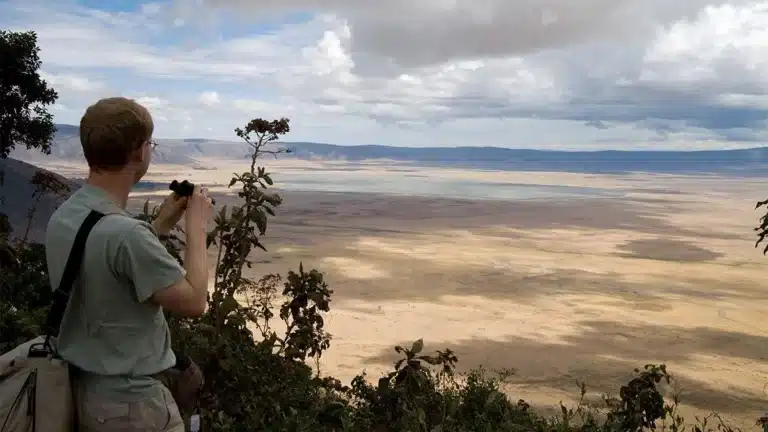
Seronera Serengeti is the name attached to the park’s central valley, and it holds a reputation among guides that no other single area of the Serengeti quite matches: reliable big cat sightings in every month of the year, regardless of where the wildebeest happen to be. That reliability is the entire reason this section exists as its own distinct part of a Serengeti trip rather than simply somewhere vehicles pass through on the way to the migration.
What Makes Seronera Different From the Rest of the Park
The Serengeti’s wildlife elsewhere in the park moves with the seasons, following rain and fresh grazing, which means the plains that are packed with animals in February can be nearly empty by July. Seronera does not follow this pattern in the same way, because the Seronera River, along with the Ngare Nanyuki tributary that feeds it, holds water throughout the year even in the driest months. Permanent water draws permanent residents: lion prides that hold the same territories year after year, leopards that use the riverine forest and the kopjes as denning and resting sites, and herds of elephant, buffalo and giraffe that never need to leave. This is the practical reason Seronera earns its description as a year-round wildlife hub rather than a seasonal one.
The Kopjes and Why Predators Use Them
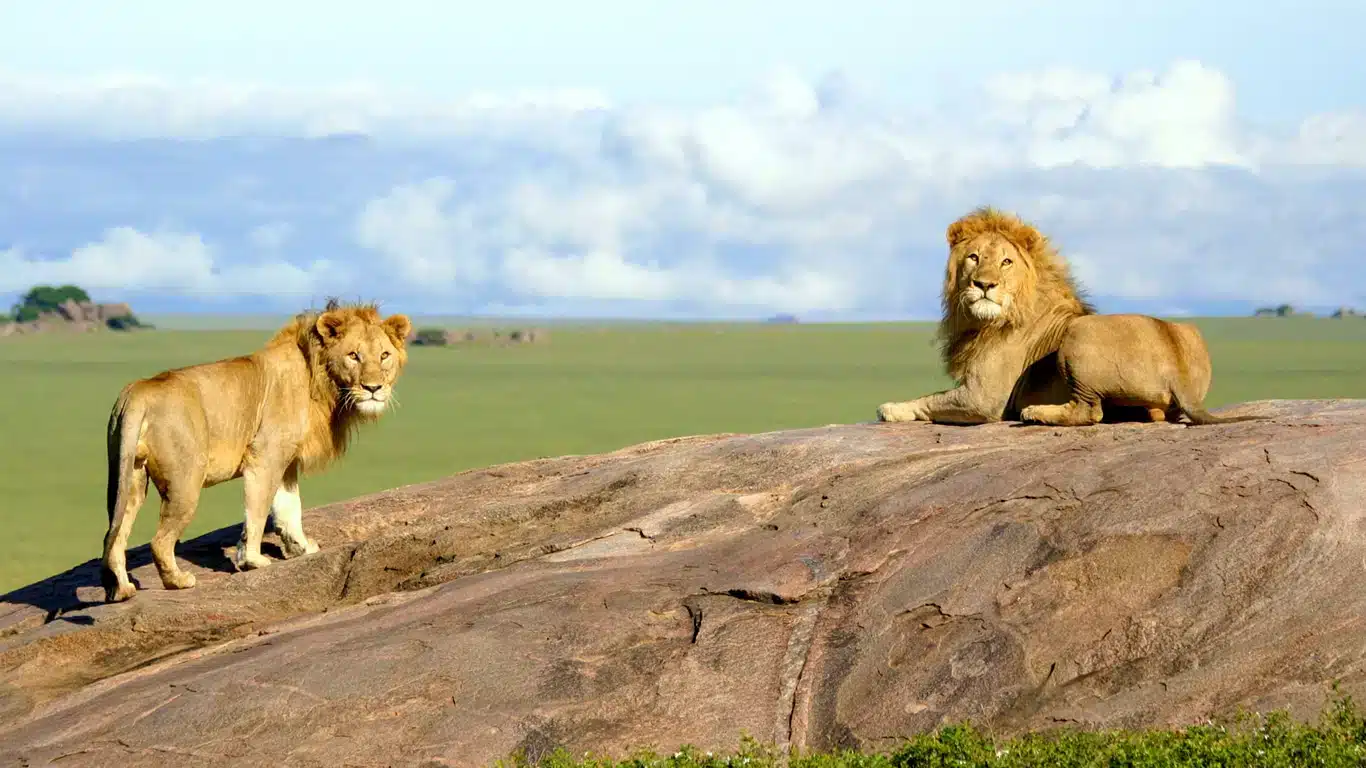
Central Serengeti’s granite outcrops, known as kopjes, are the area’s defining geological feature and its most productive wildlife habitat. Moru Kopjes, in the southern part of the central zone, is the best known and holds one of the Serengeti’s very few resident black rhino populations, alongside resident lion, leopard and even the occasional serval or caracal. Simba Kopjes, closer to the main road between Naabi Hill and Seronera, take their name from the Swahili word for lion, and lion sightings resting on the rocks here are common enough that the name has stuck in guide vocabulary. These rock formations, cooled from ancient volcanic lava millions of years ago, give predators an elevated vantage point over the surrounding grass, along with crevices that leopards use to stash kills safely away from scavenging hyenas.
Lion, Leopard and Cheetah in the Seronera Valley
The Seronera Valley holds some of the highest lion density anywhere in the Serengeti, with the park’s overall population estimated at around 3,000 individuals, a meaningful share of them denned in prides that use the central valley as core territory. Leopard sightings are, if anything, the area’s stronger claim to fame: the riverine forest along the Seronera River, thick with sausage trees and acacia, gives leopards the cover and elevated resting spots they favour, and guides working this area consistently rate it among the best leopard-viewing locations on the continent. Cheetah are less associated with Seronera itself, favouring the more open ground toward the eastern plains and the Gol Kopjes, though sightings within the central valley are far from rare, particularly on the shorter grass sections nearer Naabi Hill.

How the Migration Passes Through Without Making Seronera
Central Serengeti is not a primary migration destination, but the herds do not entirely avoid it either. As the wildebeest move north from the southern calving grounds toward the western corridor and beyond, typically through April and May, a portion of the migration passes directly through the central valley, and the reverse happens on the southward journey in November as the short rains pull the herds back down. This means Seronera occasionally offers a hybrid experience: resident predators plus a passing slice of the migration, without the crowds that gather at the dedicated crossing points further north or south. It is not the reason to choose Seronera, but it is a genuine bonus for anyone whose dates happen to align with these transitional weeks.
Access and Why This Is the Easiest Part of the Serengeti to Reach
Seronera sits closest to Naabi Hill Gate, the Serengeti’s main southern entrance and the natural continuation of the road route from Ngorongoro and Arusha, a drive of around five to six hours from Arusha including the stop at the Ngorongoro Conservation Area boundary. This makes it the only part of the Serengeti realistically reachable by road within a single travel day, and the reason most itineraries built around three or four days in the Serengeti default to a central base. Seronera Airstrip also handles more daily scheduled flights than any other airstrip in the park, connecting to Arusha, the Ngorongoro area, and other Serengeti zones including Kogatende and the Grumeti region, which makes central Serengeti a practical hub even for visitors who intend to fly onward to the northern or western sections later in their trip.
Accommodation Density and What That Means for Crowds
Because of its year-round reliability and easy access, Seronera holds the highest concentration of lodges and camps anywhere in the Serengeti, ranging from the government-run Seronera Wildlife Lodge, built directly into the surrounding rock formations, through to high-end properties positioned on raised platforms over the kopjes. This density is a double-edged fact. It means Seronera is the most dependable part of the park to book on short notice, at almost any time of year, without gambling on migration timing. It also means the area sees the highest vehicle traffic in the Serengeti, particularly around the most reliable predator territories in the middle of the day, when vehicles from multiple camps converge on the same sighting. Guides who know the valley well tend to counter this by running earlier morning drives, reaching known territories before the bulk of day visitors arrive from Naabi Hill.

Seronera Across the Seasons
Wildlife viewing in Seronera holds up in every month, but the character of a visit shifts with the calendar. The dry season, from roughly June through October, concentrates animals more tightly around the permanent river and waterholes as the surrounding bush dries out, producing some of the most consistent sightings of the year, though this period overlaps with the park’s general high season and correspondingly busier roads. The wetter months from November through May bring green, lush scenery and excellent birdlife, with migratory species arriving alongside residents, and while the grass grows taller in places, making some cat sightings marginally harder, the valley’s permanent water and dense predator population mean sightings remain strong throughout.
How Long a Stay Actually Delivers on Seronera’s Reputation
Two nights is enough to see the headline predators in central Serengeti more often than not, given the density of resident wildlife around the river and kopjes, but three nights gives a meaningfully better chance of finding a specific hunt, a leopard descending from a tree at dusk, or a full pride interaction rather than a single distant sighting. Visitors treating Seronera purely as a one-night stop between the airport and a more remote camp elsewhere in the park do see wildlife, but they are the group most likely to leave feeling they only sampled the valley rather than experienced it properly.
Choosing Seronera for a December 2026 or Early 2027 Trip
For travel in December 2026 or the opening months of 2027, Seronera works well as either a standalone base or as one leg of a longer circuit. December sits within the short rains, meaning green landscapes and active birdlife, and while the bulk of the migration will be moving south toward Ndutu and the southern plains during this period, central Serengeti’s resident lion and leopard population is unaffected by that movement. Visitors who want to add a taste of the southward migration without committing an entire itinerary to the southern plains sometimes use Seronera as a base with a day excursion toward the boundary of the Ngorongoro Conservation Area, where the earliest arriving herds are often visible by late December.
Named Camps and What They Sit Near
The spread of accommodation across central Serengeti reflects the different micro-habitats within the valley itself. Camps positioned in the Soit Le Motonyi area, on the central-eastern plains, sit closest to resident lion and leopard territory along the Ngare Nanyuki River, while properties nearer Moru Kopjes in the south trade a little distance from the main road for proximity to the black rhino sanctuary and its resident predator population. Lodges built directly onto the kopjes themselves, on raised platforms among the granite boulders, are positioned specifically for the view over the surrounding plains and the waterholes that draw elephant herds into sight of the dining areas. This spread means the choice of camp within Seronera is not simply about price or style; it genuinely changes which specific predator territories a guide can reach fastest each morning.
Birdlife Around the Seronera River
The valley’s permanent water supports birdlife on a scale that surprises visitors who arrive expecting only mammals. Fish eagles perch along the Seronera River itself, while the surrounding acacia woodland and riverine forest hold species from the vividly coloured lilac-breasted roller, the country’s national bird, through to secretary birds hunting on foot across the open grass. The wetter months bring the additional layer of migratory species arriving from Europe and further afield, overlapping with resident populations to push species counts noticeably higher between November and April than during the drier months.
Walking Safaris and Balloon Flights From a Central Base
Central Serengeti’s position as the park’s most developed hub also makes it the most practical base for activities beyond standard game drives. Guided walking safaris in the areas surrounding several central camps, conducted with armed rangers and focused on tracking, birdlife and smaller species easy to miss from a vehicle, are more widely available here than in the more remote northern and western sections. Hot air balloon flights, launching at first light from sites near Seronera, are also concentrated in this part of the park, giving an aerial view over the kopjes and the plains before the day’s heat sets in, and the density of operators based centrally means these flights run with more schedule reliability here than from the more seasonal camps further afield.

Who Seronera Suits Best
Central Serengeti is not the place to promise a river crossing or a mass calving spectacle; those events belong to the northern and southern zones respectively, at their specific times of year. What Seronera offers instead is dependability: strong Big Five odds excluding rhino in every season, the shortest and cheapest access route into the park, and the widest range of accommodation styles and price points. It suits first-time Serengeti visitors on shorter trips, travellers whose dates do not line up with a specific migration event, and anyone building a multi-zone itinerary who needs a reliable central base to work outward from. For a traveller with limited days and a genuine wish to see lion, leopard and elephant without gambling everything on a single seasonal event, the Seronera Valley remains the most consistent single answer the Serengeti offers, a place where the guides themselves tend to know each resident pride by name rather than by chance encounter.