The Serengeti holds all five Big Five species, lion, leopard, elephant, buffalo and black rhino, but they are not evenly distributed, and four of the five are considerably easier to find than the fifth. Lion, elephant and buffalo are seen on the great majority of multi day visits regardless of which zone a trip is based in. Leopard requires a bit more patience and the right habitat. Black rhino is the genuine outlier, confined almost entirely to a single small area of the park, and travellers who assume a general Serengeti safari will deliver a rhino sighting the way it delivers a lion sighting are usually disappointed. This guide sets out where and when each of the five is actually found within the park, rather than repeating the general term as if sightings were interchangeable across zones.
Lion: Reliable Almost Everywhere
The Serengeti holds one of the largest lion populations in Africa, with the ecosystem wide total estimated at around 3,000 individuals across the park and adjoining conservation areas. Central Serengeti, and specifically the Seronera Valley and the riverine woodland that follows the Seronera River, is the single most consistently productive area, holding multiple resident prides whose territories overlap the valley’s permanent water and dense prey base. The granite kopjes scattered across the central and southern Serengeti, most famously the Moru Kopjes and the Simba Kopjes, are favourite lion resting spots, used as elevated vantage points to scan for prey and as shaded refuges during the hottest hours of the day. The northern Serengeti around Kogatende also supports strong resident and migration linked prides, particularly during the July to October period when the concentration of wildebeest and zebra along the Mara River draws correspondingly high predator activity. Lion sightings on a well guided multi day trip in almost any zone of the Serengeti are close to a certainty rather than a matter of luck.

Leopard: Present but More Deliberate to Find
Leopards are considerably more solitary and less visible than lions by nature, spending much of the day resting in trees rather than moving across open ground, which makes finding one substantially more dependent on a guide’s local knowledge than on simply covering distance. The Seronera Valley remains the single best area within the Serengeti for leopard sightings, thanks to the dense riverine vegetation and fig trees along the Seronera River, where leopards commonly drape themselves along branches, often with a kill hoisted out of reach of hyenas and lions. Leopards are also regularly found along the tree lines of the Grumeti and Mara rivers in the west and north respectively, though sightings there tend to be more incidental than the more concentrated, well known individual leopards that guides in central Serengeti can often identify by name or territory. A multi day stay in or near Seronera specifically improves leopard odds considerably compared with a shorter visit or one based entirely in a more open, tree sparse zone.

Elephant: Concentrated Near Water and Woodland
Serengeti’s elephant population, estimated at more than 5,000 individuals, tends to concentrate around permanent water sources and woodland rather than spreading evenly across the open plains, since elephants rely on both browse and consistent water access in a way that grazing species on the short grass plains do not. The area around Moru Kopjes and the Seronera River corridor holds strong elephant numbers year round, and the Grumeti River in the Western Corridor is another consistently reliable area, particularly during the dry season when elephants concentrate more tightly around remaining water. Sightings are typically of breeding herds, matriarchs leading related females and their young, with older bulls more often encountered singly or in small bachelor groups away from the main herd. Elephant sightings, like lion, are close to guaranteed on any multi day trip that includes time in these central and western areas.

Buffalo: Abundant in Large Herds
Cape buffalo are the most numerous of the Big Five within the Serengeti, with herds sometimes running into the thousands, particularly on the more open grassland of the central and southern plains. Buffalo herds move in large, loosely organised groups and are regularly encountered on virtually any game drive that covers open grassland, making them the single easiest of the five to see reliably regardless of zone or season. Their unpredictable temperament, particularly among solitary older bulls pushed out of the main herd, makes them one of the more genuinely dangerous of the Big Five despite how commonly they are seen, and guides generally maintain more caution around buffalo than their frequency of sighting might suggest is necessary.

Black Rhino: The Genuine Exception
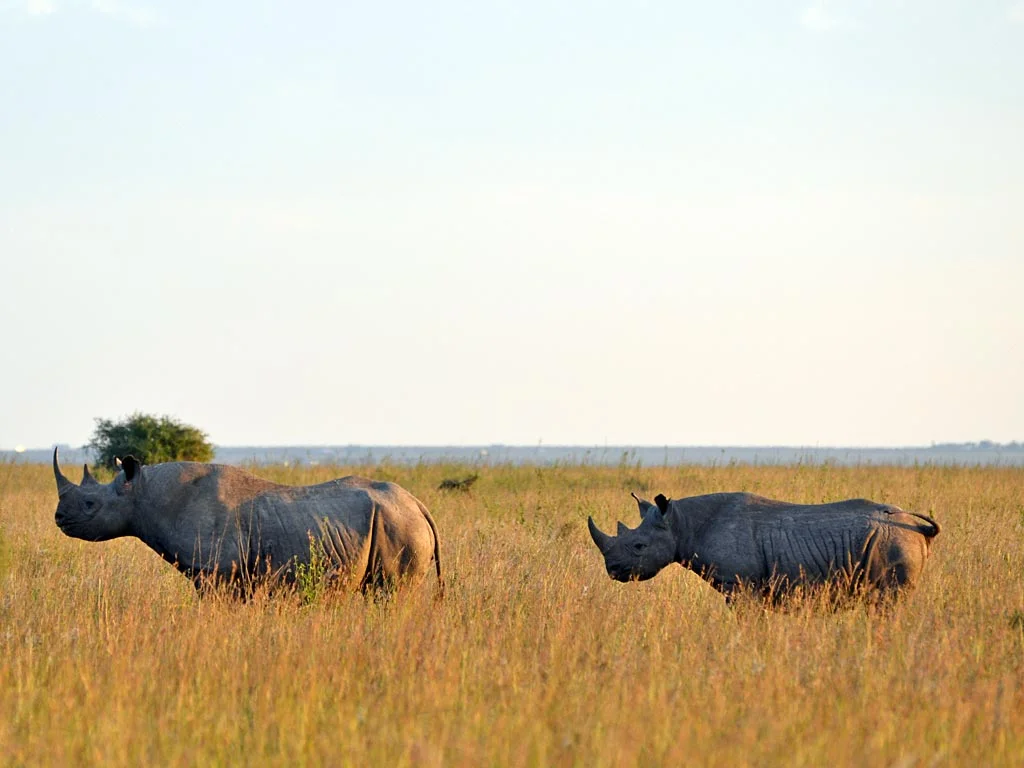
Black rhino numbers within the Serengeti are estimated at roughly 160 individuals, a population that has slowly recovered from severe poaching pressure through past decades but remains a fraction of what the park once held. Sightings are concentrated almost entirely around the Moru Kopjes in the south central Serengeti, an area with dedicated ranger patrols specifically monitoring the remaining rhino population, and even there sightings are genuinely uncertain rather than routine, since black rhino are solitary, shy and browse in thick bush rather than moving across open, easily scanned terrain. Outside Moru Kopjes, rhino sightings elsewhere in the Serengeti, including occasional reports from the northern Lobo area, are rare enough that no operator should reasonably promise them as part of a standard itinerary. Travellers whose priority is genuinely completing the Big Five, rather than simply visiting the Serengeti generally, should be clear with their operator that a dedicated excursion to Moru Kopjes needs to be built into the itinerary, and should understand that even this specific effort does not guarantee a sighting.
Why the Ngorongoro Crater Is Often Added for Rhino
Given how uncertain rhino sightings remain even with a dedicated Moru Kopjes excursion, many operators recommend adding the Ngorongoro Crater to a Big Five focused itinerary rather than relying on the Serengeti alone. The crater’s contained floor and higher rhino density make sightings there considerably more reliable than anywhere within the Serengeti, and since the crater sits directly on the road route between Arusha and the Serengeti, adding it does not require a significant detour for travellers already planning a Northern Circuit trip. This is a genuinely practical planning point rather than a marketing angle: an honest Big Five itinerary within the Serengeti alone carries real uncertainty on one of the five, and travellers deserve to know that before booking rather than discovering it on the ground.
Best Zones for Each Species at a Glance
Central Serengeti around Seronera is the strongest all round zone, offering good odds at lion, leopard, elephant and buffalo within a compact area, though not rhino. The Western Corridor near the Grumeti River adds strong elephant and buffalo alongside seasonal migration viewing from May into July. The northern Serengeti around Kogatende delivers excellent lion sightings alongside the July to October river crossings, though leopard density there is somewhat lower than in the woodland further south. Moru Kopjes remains the only realistic rhino location within the park, with a secondary benefit of good lion and leopard habitat in the same rocky outcrops.
How Many Days Are Needed for a Genuine Big Five Attempt
Lion, elephant and buffalo are realistic within a single well guided day almost anywhere in central, western or northern Serengeti. Leopard typically needs at least two full days in or near Seronera to give a guide enough time to work known territories and check regular resting trees. Rhino is the variable that changes the calculation entirely: a dedicated half day or full day excursion specifically to Moru Kopjes, on top of whatever time is spent viewing the other four species elsewhere, is the minimum realistic requirement, and even then the outcome is genuinely uncertain rather than a matter of simply showing up. A five to seven day itinerary that includes both central Serengeti and a Moru Kopjes excursion, or that adds the Ngorongoro Crater specifically for rhino, gives considerably better odds at a full Big Five than a shorter trip focused on a single zone.
Best Time of Day for Each Species
Timing within a single day matters almost as much as which zone a game drive covers. Lions are most active in the cooler hours around dawn and again from late afternoon into dusk, often resting through the middle of the day in shade, which is why guides push for early departures and evening drives rather than midday game drives when hunting for prides on the move. Leopards follow a similar pattern but are additionally more likely to be found actively hunting or moving between resting trees in the low light of early morning and dusk, whereas a leopard spotted resting in a tree at midday will often stay in that same spot for hours, making a specific known tree worth revisiting later in the day rather than assumed to be a one time sighting. Elephants and buffalo are less strictly bound to dawn and dusk activity and are commonly seen feeding or moving throughout the day, particularly near water, though the heat of midday often pushes elephants specifically into denser shade where they are somewhat harder to spot from a vehicle.
Big Five Odds by Season
Season affects Big Five odds primarily through vegetation density and water distribution rather than through the presence or absence of the animals themselves, all five species are resident year round rather than migratory in the way wildebeest and zebra are. During the dry season from June through October, animals concentrate more predictably around remaining water sources and vegetation thins out, generally improving visibility for all five species including the more elusive leopard and rhino. During the long rains from March through May, thicker vegetation and more dispersed water can make sightings somewhat less predictable, particularly for rhino in the already dense bush around Moru Kopjes, though lion, elephant and buffalo sightings remain strong throughout the year regardless of rainfall. The short rains around November and into early December bring a similar, generally milder version of this effect, with the added advantage of lower visitor numbers than the peak dry season months.
Setting Realistic Expectations
Four of the Big Five are a near certainty on any reasonably planned multi day Serengeti safari, which is worth stating plainly rather than treating the whole term as equally uncertain. The fifth, black rhino, is where honest planning matters most: it requires a specific, deliberate excursion to a specific place, it is never guaranteed even then, and travellers who want a realistic shot at all five within a single trip are generally better served by pairing the Serengeti with the Ngorongoro Crater than by relying on the Serengeti’s own small and carefully protected rhino population alone. A guide who sets this expectation honestly before the trip begins, rather than leaving a guest to discover the rhino gap on the ground, is doing the more useful job, even if the honest version of the pitch is less tidy than simply promising all five.


