Morning vs Evening Game Drives in the Serengeti scheduling is not a minor logistical detail. It genuinely changes what a traveller is likely to see, how the light behaves and how the day feels, and most itineraries build in both because each window offers something the other does not. Understanding what actually differs between the two helps a traveller decide where to spend limited time, particularly on a short trip where every drive counts.
What a morning drive actually looks like
A typical Serengeti morning drive leaves camp between half past five and half past six, often before full sunrise, so that the first hour on the road coincides with first light rather than following it. Departing this early is deliberate. Predators that have hunted through the night, lions finishing a kill, hyenas returning from a scavenging run, leopards heading back toward a shaded tree, are still active and visible in these early hours before the heat of the day pushes them into cover. Herbivores are also at their most active, grazing steadily in the cool air rather than sheltering, which means the general density of visible movement across the plains is highest in this window. Drives typically run through to somewhere between nine and eleven in the morning, either returning to camp for a late breakfast or continuing with a bush breakfast taken at a scenic stop.
Why morning light suits photography particularly well
The angle of light in the first two hours after sunrise is soft, warm and low, which flatters wildlife photography in a way the harsher overhead light of midday does not. Dust, which becomes a genuine issue for photography later in the dry season as vehicles and wind stir up the plains, has usually settled overnight, giving cleaner air and better contrast for the first part of the morning before it builds up again. Guides who prioritise photography as a specific interest will often push further into the morning window specifically to exploit this light before conditions degrade.
What an evening drive actually looks like
Evening drives typically depart camp between half past three and half past four in the afternoon and run until close to sunset, since the Serengeti’s rule against night driving inside the national park means every vehicle must be back at camp, or through the gate if departing the park, by around half past six. This gives a shorter effective window than the morning, generally two to three hours rather than four or five, but it coincides with a different kind of activity. Herbivores that rested through the hottest part of the midday return to grazing as temperatures drop, predators that have been sheltering begin to stir and reposition, and the transition from day active to night active behaviour becomes visible in a way the morning drive, which catches the tail end of night activity rather than its beginning, does not show as clearly.

The light and atmosphere of the evening drive
Where the morning offers clean, soft light, the evening offers colour. The last hour before sunset produces the warm, saturated tones most travellers associate with classic safari photography, golden grass, long shadows and dramatic skies, and this is also when most camps schedule the sundowner stop, a brief pause with drinks at a scenic viewpoint as the sun sets. For travellers who value atmosphere and the ritual of the day’s end as much as the wildlife itself, the evening drive tends to be the more memorable of the two, even when the actual sightings are comparable.
Predator behaviour differs in a genuinely useful way between the two windows
Lions found on a morning drive are often at the tail end of activity, finishing a kill, moving a cub, or settling down to rest, which can mean dramatic but brief sightings. Lions found on an evening drive are more often at the beginning of activity, waking from a day’s rest, grooming, beginning to patrol territory or gather before a hunt, which tends to produce longer, more unpredictable sightings since a guide genuinely does not know what the pride will do next. Cheetahs and wild dogs, both of which hunt preferentially in the cooler hours at either end of the day, can appear in both windows, but many guides report slightly better luck with active hunting behaviour in the very early morning specifically, before the day’s heat builds.
Neither window is objectively better for sightings
Guides across the Serengeti are broadly consistent that overall wildlife density and activity is comparable between a well-timed morning drive and a well-timed evening drive, and the common advice to do both across a multi-day stay reflects this rather than mere itinerary padding. What differs is the character of what is likely to be seen and the quality of light available to appreciate it, not the raw likelihood of an outstanding sighting.
Which traveller should prioritise which drive
A traveller on a tight schedule who can only fit in one drive during a stopover, rather than a genuine multi-night stay, gains slightly more from the morning, since the longer window and cleaner light give a marginally better statistical chance at an exceptional sighting, and the general activity level across the plains tends to be at its highest in the hour either side of sunrise. A traveller who values atmosphere, sundowners and the golden hour aesthetic as much as raw sightings, or who is not naturally an early riser and knows a five thirty start will affect their enjoyment of the rest of the trip, is generally better served leaning toward the evening drive without feeling they are missing anything essential by doing so.
Combining both across a multi-day stay
Most itineraries of three nights or more schedule both windows on most days, with a rest period at camp through the hottest midday hours, and this remains the soundest approach for any traveller with the time. The two drives are complementary rather than substitutes for each other, offering different behaviour, different light and, cumulatively, a far more complete picture of a single day in the Serengeti than either alone could provide.
How the season changes each window’s character
During the dry season, roughly June through October, the air is generally clearer at both ends of the day, but dust kicked up by vehicle traffic and wind tends to accumulate through the afternoon, meaning morning drives often have the cleaner air of the two windows by this point in the year. During the long rains, typically April and May, the pattern shifts. Afternoon storms are common, and a morning drive is far more likely to run in dry, settled conditions than an afternoon one, which can be interrupted or cut short by heavy rain moving in in the mid-afternoon. A traveller visiting during the wetter months who has to choose one window over the other is generally better served leaning toward the morning specifically for this reason, independent of the wildlife behaviour arguments that apply year round.
Family and group considerations
Families travelling with young children often find the early start of a morning drive, sometimes before half past five, is genuinely difficult to manage without disrupting a child’s sleep and general mood for the rest of the day. An evening drive, departing mid-afternoon after a proper rest, tends to fit more naturally around a young family’s rhythm, even though it offers a shorter window than the morning. Groups with mixed interests, some members keen on serious wildlife photography and others simply along for the experience, often find the evening drive’s more social atmosphere, including the sundowner stop, easier to enjoy collectively than the quieter, more focused mood a dedicated morning drive tends to have among photographers and wildlife enthusiasts.
How location within the Serengeti affects the choice
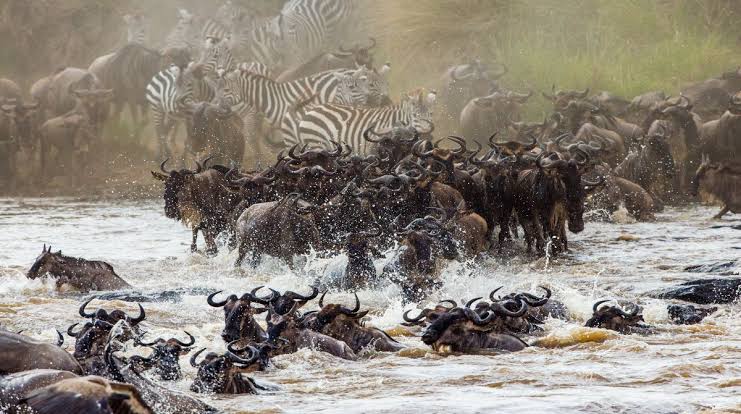
The character of both drives shifts depending on which sector of the park a camp sits in. Around Seronera, the resident lion prides tend to retreat into the shade of specific kopjes and riverine thickets through the middle of the day, re-emerging onto more open ground as the evening drive gets underway, which makes the evening a particularly reliable window for lion sightings in this specific area. In the northern sector near Kogatende, where the Mara River crossings occur during the migration months, guides often report the opposite pattern, with predators positioning themselves near likely crossing points from early morning, making the first drive of the day the stronger option for anyone specifically hoping to witness a crossing rather than simply see resident wildlife.
What to bring on each drive
A morning drive that departs before sunrise is genuinely cold for the first hour, with temperatures commonly between ten and fifteen degrees Celsius across much of the year, so a proper fleece or light jacket, a hat and gloves for those who feel the cold are worth having within reach rather than packed away in a duffel back at camp. An evening drive starts in the day’s remaining heat but cools quickly once the sun sets, so a light layer for the final half hour, along with a torch or headlamp for the return to camp in the dark, rounds out what each window specifically calls for beyond the general safari packing list.
Bird activity follows its own separate pattern
For travellers with a specific interest in birding, neither the classic morning nor evening window is automatically superior, since bird behaviour follows different cues to the mammal activity most game drives are built around. Raptors, including the martial eagle and various vulture species, tend to become active once thermals build later in the morning, well after the peak mammal window has passed, making the late morning a genuinely productive time to watch for soaring birds of prey even though it sits outside the classic dawn drive. Ground-dwelling species such as kori bustards and secretary birds are visible throughout the day, but are often easier to approach quietly during the calmer, cooler conditions of first light, before vehicle traffic across the plains picks up. A guide briefed in advance that birding is a specific priority will often adjust the pace and route of either drive accordingly, moving more slowly and stopping longer at likely habitat than a drive focused purely on mammals would.
How the choice interacts with where a camp actually sits
A camp based deep within a specific concession, some distance from the nearest park gate, effectively extends both windows slightly, since there is no fixed gate closing time to work around the way there is for a camp just inside the park boundary. Camps positioned right at the edge of the Serengeti, closer to Naabi Hill or another entrance, need to build gate timing into the evening drive more carefully, since a vehicle still needs to clear the gate or reach camp by the cutoff, which can shorten the practical evening window by a further twenty to thirty minutes compared with a camp positioned centrally within the park.