The budget vs luxury Serengeti safari question has a more precise answer than most first-time travellers expect, because every visitor entering the park pays the same TANAPA fee, drives on the same network of tracks and watches the same wildlife. A camper paying fifty dollars a night and a guest at an exclusive tented camp paying two thousand dollars a night can sit fifty metres from the same lion pride on the same morning. What separates the two experiences is not access to the Serengeti itself. It is accommodation, exclusivity, guiding quality and how much of each day is spent waiting rather than watching.
Park fees are identical whatever you spend
Every visitor, regardless of accommodation level, pays the same Serengeti National Park entry fee, valid for twenty four hours from the time of entry, set and collected by the Tanzania National Parks Authority. Camping fees inside the park add a further charge on top of the entry fee, currently around thirty five dollars a person per night at public campsites, and lodges and tented camps operating inside the park boundary pay TANAPA a concession fee per guest per night, typically in the range of fifty to seventy dollars plus value added tax, which is folded into the nightly rate a guest pays rather than charged separately at the gate. None of this changes with luxury level. A five star camp is not paying a discounted park fee, and a budget campsite is not paying a reduced one. The park’s own revenue is essentially flat per person per night across the spectrum, which means the price difference between budget and luxury is being spent entirely on things other than access to wildlife.
What the daily rate actually buys
A realistic 2026 budget for a Serengeti safari at the camping or basic lodge level runs roughly two hundred and fifty to three hundred and fifty dollars per person per day, covering a shared vehicle, a public campsite or simple lodge such as Seronera Wildlife Lodge, and full board meals prepared for a group rather than plated individually. Mid-range safaris, offering a private vehicle and guide, a well-appointed tented camp such as Kati Kati, and food cooked to order rather than served buffet style, generally sit between four hundred and seven hundred dollars per person per day. Luxury lodges and tented camps push into the eight hundred to fifteen hundred dollar range, and a small number of ultra-exclusive properties, the kind offering a private vehicle, a dedicated guide for the length of the stay, and sole use of a specific concession area away from other vehicles, charge fifteen hundred to two thousand five hundred dollars or more per person per night. The jump in price buys four things in roughly this order of importance: privacy of vehicle, quality and flexibility of guiding, quietness of the specific area a camp operates in, and physical comfort of the accommodation itself.
Shared vehicles versus private vehicles
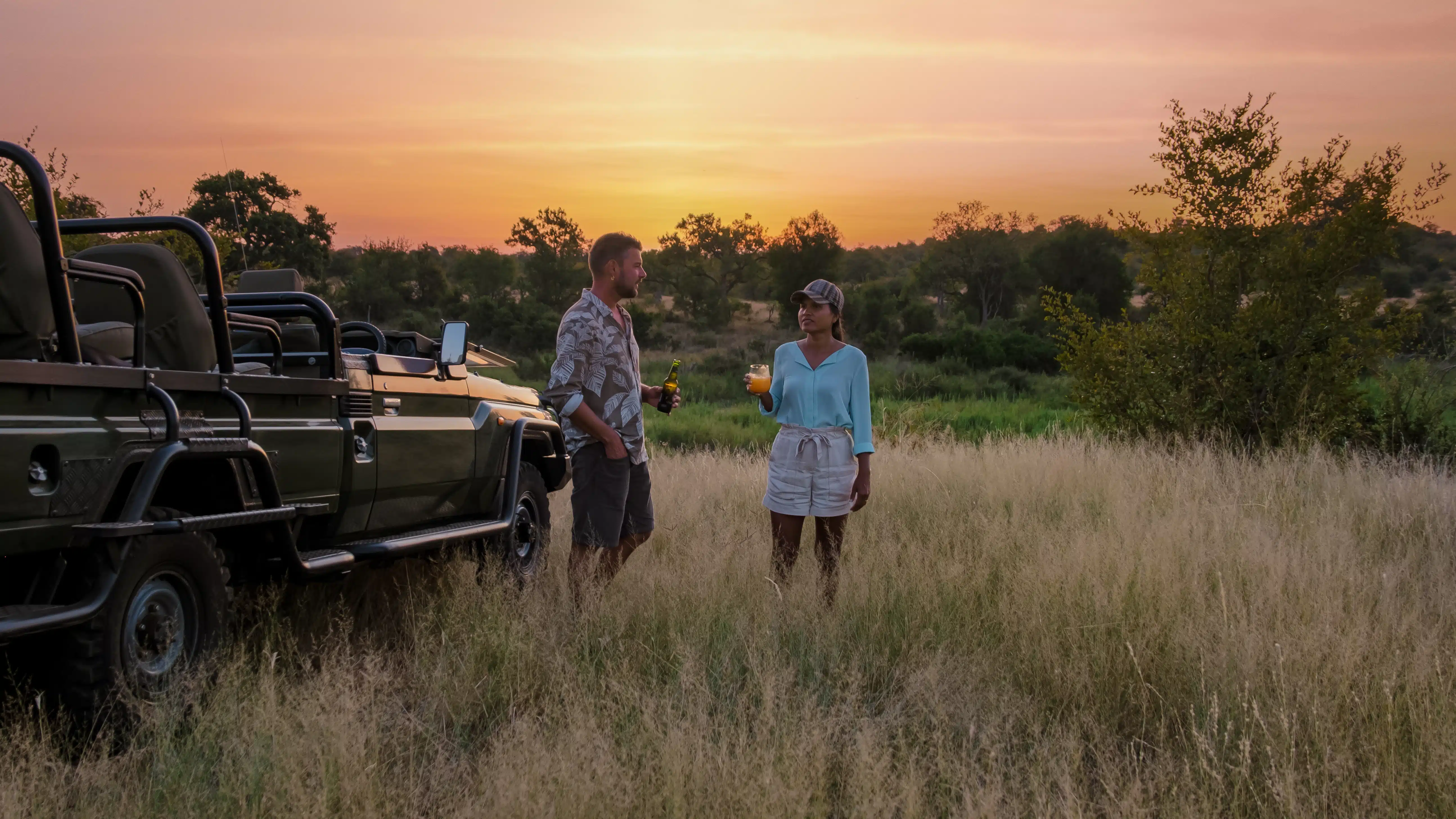
This is the single biggest functional difference between budget and luxury, and it matters more to most travellers’ actual experience than the thread count of the sheets. A shared vehicle safari puts six to eight travellers, often strangers booked through different agents, into one truck with one itinerary. If half the group wants to linger at a leopard sighting and the other half wants to push on toward a rumoured cheetah, the vehicle has to compromise, and it usually splits the difference badly for everyone. A private vehicle, standard from the mid-range tier upward, means the itinerary bends entirely around the people in it. A guide can hold position at a slow-developing hunt for forty minutes rather than the ten a shared vehicle’s patience allows, or abandon the planned route entirely to chase a radio report of wild dogs. Photographers in particular find this the difference that actually changes what they come home with, since a shared vehicle rarely tolerates the repositioning a serious photographer wants.
Guiding quality is not automatically tied to price, but it correlates
Budget operators do sometimes employ excellent guides, and it would be inaccurate to claim otherwise. But the economics push against it. A guide paid a flat daily rate by a volume operator running several vehicles a day has less incentive and less time to build the kind of intimate, current knowledge of a specific pride’s territory or a particular cheetah family’s movements that distinguishes an outstanding sighting from an adequate one. Luxury camps, particularly the smaller owner-operated properties, tend to retain guides for years at the same concession, and that guide’s accumulated knowledge of which kopje a specific leopard favours at midday, or which stretch of the Mbalageti River a resident pride crosses at dusk, becomes a genuine part of what the higher price is paying for. It is less a guarantee than a strong tendency, and travellers who have had an outstanding budget guide or a disappointing luxury one both exist.
Exclusivity of location, not just of vehicle
The Serengeti’s central Seronera area, the most accessible and wildlife-dense sector from Arusha by road, is also the most heavily used by vehicles from every price tier, since public campsites, budget lodges and mid-range camps cluster there alongside the luxury properties. A significant part of what a high-end camp in a private concession, such as those bordering Grumeti or operating under a Wildlife Management Area agreement further from Seronera, is charging for is genuinely fewer vehicles at each sighting. Ten vehicles around one lion pride is a materially different experience from two, independent of how comfortable anyone’s tent is. Travellers whose primary goal is solitude and a sense of having the bush to themselves are paying, in large part, for geography and vehicle density rather than for luxury in the conventional sense.

Where the money genuinely does not matter
Wildlife sightings themselves are not rationed by price. The Serengeti’s resident lion prides, transiting wildebeest herds and the leopards along the Seronera River do not check anyone’s accommodation tier before appearing. A budget traveller on a shared vehicle can have a better single day of sightings than a guest paying ten times as much, purely through timing and luck, and this happens often enough that it should factor into anyone’s decision making. What luxury reliably buys is consistency and control over the conditions of viewing, not the wildlife itself.
Comfort factors that matter more to some travellers than others
Ensuite bathrooms, reliable hot water, air conditioning or good ventilation, and food quality genuinely do scale with price, and for some travellers, particularly those on longer trips or travelling with family members less tolerant of camping-level conditions, these factors matter as much as the game viewing itself. A budget camping safari typically means shared ablution blocks, dome tents and simply prepared meals. A luxury tented camp means a private ensuite bathroom inside the tent, a proper bed rather than a camp mattress, and a kitchen capable of producing a genuinely good three course dinner. Neither is objectively correct. A traveller who has camped through several African countries already may find the luxury tier’s polish faintly unnecessary, while a first-time visitor unused to bush conditions may find the budget tier genuinely uncomfortable rather than characterfully rustic.
The honest recommendation
For a traveller whose priority is simply seeing the Serengeti’s wildlife and who is comfortable with basic conditions and a shared itinerary, the budget tier delivers most of what makes the Serengeti extraordinary at a fraction of the cost. For a traveller prioritising photography, a flexible itinerary, or a quieter, less vehicle-crowded experience, the mid-range to luxury tiers buy something real and not merely cosmetic. The mistake worth avoiding is assuming that a higher price buys better wildlife, since the wildlife itself is constant. What changes is how much control a traveller has over the conditions under which they see it, and how comfortable the hours between sightings are.
What meals and drinks actually include at each tier
Budget camping and basic lodge packages are usually full board, meaning breakfast, lunch and dinner are included, but drinks beyond tea, coffee and water typically cost extra, and the food itself is prepared for a group rather than tailored to individual preference. Mid-range camps generally include full board plus a house wine and local beer at dinner, with a kitchen able to accommodate straightforward dietary requirements given advance notice. Luxury camps typically include a genuinely open bar, spirits and imported wine included, a kitchen able to produce a proper multi-course tasting menu, and the flexibility to serve dinner privately away from other guests on request. Laundry, a small detail that adds up on a longer trip, is usually free and same-day at the luxury tier, chargeable or limited to specific days at mid-range, and often unavailable at all at the budget tier, which matters more than it sounds on a week-long trip in a hot, dusty climate.
Booking directly versus through an overseas agent
A meaningful part of the price difference between what a traveller pays and what a camp actually receives comes from how the trip is booked rather than from the camp itself. UK, US and European travel agents typically add twenty to thirty five percent margin on top of the rate a Tanzanian operator charges, a markup that applies at every price tier rather than only at the luxury end. Booking directly with a licensed Tanzanian tour operator, ideally one holding TATO membership with the Tanzania Association of Tour Operators, can bring the same camp and the same itinerary down in price without changing anything about the experience itself. This matters most at the mid-range and luxury tiers, where the absolute margin in dollar terms is largest, but it applies proportionally at the budget end too.
A practical way to decide
A traveller choosing between tiers is better served asking specific questions than simply picking a number. Does the itinerary rely on a shared vehicle whose other passengers might want a different pace, or is a private vehicle already included. Is the camp inside the busy Seronera corridor or in a quieter private concession further afield. Does the daily rate include drinks, laundry and park-adjacent activities such as a guided walk, or are these charged separately once on the ground. Answering these before comparing headline prices gives a far more accurate sense of what two superficially similar quotes actually deliver, since two safaris quoted at a similar nightly rate can differ enormously once vehicle sharing, location and inclusions are accounted for properly. Asking to see recent guest reviews specific to the exact camp and season, rather than relying on an operator’s general reputation, is also worth the extra few minutes, since a camp’s character can shift quite noticeably between a quiet, uncrowded shoulder month and the genuinely crowded peak of the July to October migration season.