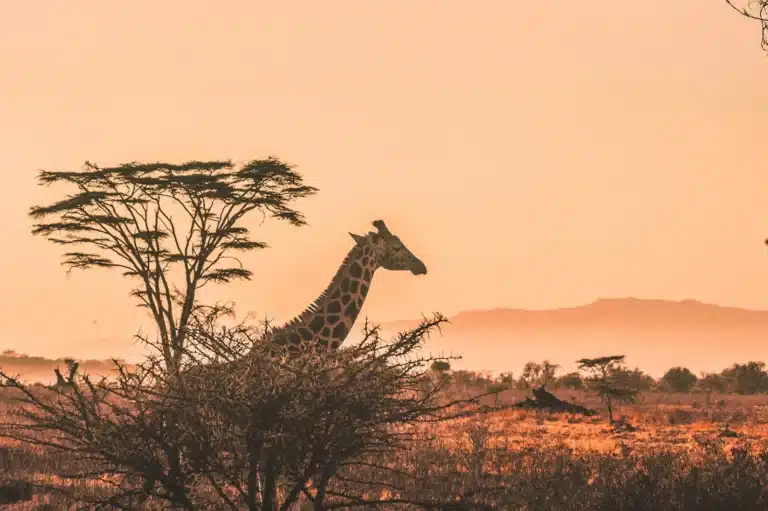
A Serengeti Lake Victoria combination is one of the least understood extensions available to travellers on Tanzania’s northern circuit, largely because the two names sit so far apart in most people’s mental map of the country that few visitors realise the Serengeti’s western boundary runs almost directly against the lake’s eastern shore. The park’s Western Corridor, drained by the Grumeti and Mbalangeti rivers, ends within a few kilometres of Speke Bay, one of Lake Victoria’s many gulfs. This proximity makes a lake extension one of the more logistically straightforward additions to a Serengeti itinerary, though it is a genuinely different kind of experience from anything else on the northern safari circuit and is worth understanding clearly before adding it to a trip.
Why the Serengeti and Lake Victoria sit so close together
Lake Victoria is the second largest freshwater lake in the world by surface area, after Lake Superior, and its south eastern shoreline in Tanzania lies directly against the Serengeti ecosystem’s western edge. The Western Corridor, the narrow arm of the park that reaches out toward the lake, exists precisely because the Grumeti and Mbalangeti rivers flow west and empty into Speke Bay. Until recently a narrow strip of land, in places barely three kilometres wide, separated the formal national park boundary from the lake itself, populated by fishing villages and farmland rather than protected habitat. That strip has increasingly been folded into the park’s administered area, tightening the practical link between the two.
The result is that a traveller finishing a Western Corridor safari, particularly around the Kirawira or Ndabaka areas, is often only a two to three hour drive from Mwanza, the regional city on the lake’s southern shore, and closer still to smaller lakeside lodges near the Ndabaka gate.

Rubondo Island: the main reason to add the lake
The principal draw within Tanzania’s portion of Lake Victoria is Rubondo Island National Park, the largest island national park in Africa. Rubondo combines lowland forest, grassland and roughly sixty kilometres of shoreline, and its character is entirely unlike the open plains most visitors have just left. Chimpanzees were introduced to the island in the 1960s and 1970s as part of a rehabilitation programme and now live wild there, though they are considerably shyer and harder to track than the habituated groups at Mahale or Gombe on Lake Tanganyika, and visitors should arrive with realistic expectations about sighting odds rather than treating it as a guaranteed primate encounter.
Birding is Rubondo’s stronger and more consistent draw. The island’s mix of forest edge, papyrus swamp and open water supports a genuinely different bird list from the Serengeti’s grassland species, including African fish eagle, palm nut vulture and a range of forest specialists rarely seen on the plains. The island is also one of the few places in northern Tanzania where a safari can be combined with a boat safari, walking with an armed ranger through forest rather than savannah, and simply time on open water, a change of pace that a straight game drive itinerary does not offer.

Getting between the two
Access to Rubondo is either by a two to three hour drive plus a short boat crossing from Mwanza, or by light aircraft charter directly to the island’s own airstrip, which is the more practical option for travellers who have just finished several days in the Serengeti and do not want to add another long road transfer. Coastal Aviation and other regional operators run charter connections between Serengeti airstrips such as Seronera or Kirawira and Rubondo, cutting what would otherwise be most of a day’s driving down to under an hour in the air.
Travellers who prefer to stay on the mainland shore rather than crossing to the island itself have a second, lower key option: lodges such as Speke Bay Lodge sit around fifteen kilometres from the Serengeti’s Ndabaka gate, directly on the lake’s southern shore, and function well as either a final overnight stop after the Western Corridor or a base for exploring the lake’s edge without committing to the island crossing. These properties tend to be modest rather than luxurious, built in traditional style with thatched roofs, and their appeal lies in the lake views, birdlife and boat trips rather than any pretence at big game density.
What a lake extension actually adds, and what it does not
It is important to be honest about what Lake Victoria contributes to a Tanzania itinerary, because it is not a wildlife density upgrade. Visitors expecting Serengeti-level game viewing on the lakeshore or on Rubondo will be disappointed; hippo, crocodile and healthy bird populations are present, but the open plains predator sightings that define the Serengeti do not exist here. What the lake extension does add is scale, culture and contrast. Lake Victoria supports major fishing and agricultural industries for the Sukuma and other communities living along its shore, and a lake stop offers a rare chance to see rural Tanzanian life away from the safari circuit entirely, including traditional dhow and canoe fishing, lakeside markets and a slower pace generally.
For travellers building a longer northern circuit trip, roughly nine to fourteen days combining Tarangire, Serengeti, Ngorongoro and the lake, a two to three night Lake Victoria or Rubondo addition works well as a decompression stop between the intensity of daily game drives and a return home or onward to Zanzibar. It works less well as a first stop or a rushed overnight, since the appeal depends on having enough time to slow down and appreciate a genuinely different landscape rather than ticking off another wildlife stop.
Best time to add a lake extension
Because the lake itself is not migration dependent, there is no equivalent to the Serengeti’s calving season or river crossing calendar governing when to visit. The main seasonal consideration is rainfall and road access into the Western Corridor rather than the lake itself; the long rains from March to May can make the corridor’s dirt roads difficult, which affects the drive to Ndabaka gate and Speke Bay more than it affects Rubondo, which is reached mostly by boat or air regardless of season. Visitors combining a December safari with a Lake Victoria extension, or planning ahead into the 2027 season, will find the shoulder months either side of the long rains, roughly June to October and again December to February, the most reliable windows for road access to the western gates, with air access to Rubondo itself workable year round.
Sample structure for a Serengeti and Lake Victoria combination
A typical structure runs three to four nights across the wider Serengeti ecosystem, including at least one or two nights in the Western Corridor itself to justify the westward routing, followed by either a fly in transfer to Rubondo for two nights of forest, boat and birding activity, or a single night at a lakeshore lodge near Ndabaka gate for travellers who want the geographic contrast without the extra flight cost and the more variable chimpanzee sighting odds. Either version then connects onward to Mwanza’s airport for a domestic flight back to Arusha or on to Zanzibar, avoiding the need to retrace the long drive back across the park.
Travellers planning this route should confirm airstrip schedules well in advance, since flights linking the Western Corridor, Mwanza and Rubondo run less frequently than the well trodden Seronera to Arusha corridor, and should budget an extra buffer day if connecting onward internationally, since light aircraft schedules in this part of the circuit are more exposed to weather delays than the busier eastern routes.
Who this combination suits
A Lake Victoria extension suits travellers who have already done a conventional Serengeti safari, or who are building a longer trip and specifically want a change of environment rather than more of the same wildlife categories. It suits birders particularly well, given the genuinely different species list on offer, and it suits anyone curious about the cultural and economic life around Africa’s largest lake, which the safari circuit otherwise bypasses entirely. It suits less well travellers on a first, shorter Tanzania trip who are prioritising Big Five density and migration timing above all else, for whom the extra days are usually better spent adding depth to the Serengeti or Ngorongoro itself rather than extending west toward the lake.
Where to stay: Rubondo Island Camp versus Speke Bay Lodge
Rubondo Island itself has a single option, Rubondo Island Camp, an eight cottage boutique property run by Asilia that sits directly on the island’s shoreline. Rates run from around 700 to 820 US dollars per person per night on a fully inclusive basis, covering meals, house drinks, boat safaris, forest walks, birding and the chimpanzee tracking experience, with a fly camping option available for guests who want a night under canvas deeper in the forest as part of the habituation programme. This is a genuinely different price bracket from a standard Serengeti tented camp, reflecting both the exclusivity of being the only lodge on an entire island and the cost of running a boutique property that depends on light aircraft or boat transfer for every supply run.
Speke Bay Lodge, by contrast, sits on the mainland shore roughly fifteen kilometres from Ndabaka gate and around 125 kilometres north of Mwanza, and represents the budget end of a lake extension. Its twelve tents and eight lakeside bungalows are simple rather than luxurious, built in a traditional thatched style with shared proximity to hot showers and toilets, and nightly rates sit well below anything on Rubondo itself. Travellers choosing Speke Bay over Rubondo are trading the chimpanzee tracking and deeper forest immersion for a lower cost, shorter transfer and a more modest but still genuinely lakeside experience, which suits a traveller who wants the geographic change of scenery without committing an extra flight and a premium nightly rate to reach it.
What a Rubondo activity programme actually includes
Guests staying on Rubondo typically move through a rotating programme of activities rather than a single fixed routine: boat based game viewing and birding along the shoreline, forest walks focused on tracking and smaller species, catch and release Nile perch fishing from one of the camp’s two hire boats, and the chimpanzee habituation experience itself, which allows guests to accompany researchers following a specific group of habituating chimpanzees through the forest rather than viewing fully habituated animals at close range the way a Mahale or Gombe visit would offer. Evenings commonly bring hippo grazing along the camp’s waterfront after dark, watched from the safety of the lodge rather than approached on foot. Children above the age of five are accepted at Rubondo Island Camp, which is worth noting for families weighing a lake extension against the stricter minimum ages some Serengeti walking safari concessions apply.
Rubondo Island National Park entry and permit costs
Rubondo carries its own separate national park entry fee, distinct from Serengeti or Ngorongoro permits, payable in addition to whatever safari fees a traveller has already budgeted for the mainland portion of the trip. Because the park is reached almost entirely by boat or light aircraft rather than road, most guests find this fee bundled into their camp’s all inclusive rate rather than paid separately at a gate, which is a meaningful practical difference from the pay as you enter model used at Naabi Hill or Ndabaka on the mainland. Confirming with an operator whether park fees are already included in a quoted Rubondo rate, rather than assuming they are, avoids an unwelcome surprise on the final invoice.
A brief note on the lake’s own history
Lake Victoria’s role in East African exploration history adds a layer of interest to a visit that many travellers do not expect. The lake takes its English name from the British explorer John Hanning Speke, who reached its shores in 1858 and correctly proposed it as the long sought source of the Nile, a claim disputed for years afterwards by fellow explorer Richard Burton before later expeditions confirmed it. Speke Bay, the gulf on which several of the lodges nearest the Serengeti now sit, is named directly after him. For travellers with an interest in the history of African exploration rather than wildlife alone, this stretch of shoreline carries genuine historical weight that the Serengeti’s own story, largely one of twentieth century conservation, does not offer in the same way.
Costs and accommodation standard on the lake compared with the Serengeti
One further practical point worth setting expectations around is cost and comfort level. Accommodation on Lake Victoria’s shore and on Rubondo Island is, with a small number of exceptions, considerably more modest than the luxury tented camps found inside the Serengeti itself. Most lakeshore lodges are simple, comfortable properties built for overland travellers and researchers rather than five star safari guests, and Rubondo’s own accommodation options are limited in number, meaning availability should be checked well in advance rather than assumed. Travellers used to the luxury end of the Serengeti’s camp market should adjust their expectations accordingly for this leg of the trip; the appeal here is genuinely about the setting, wildlife contrast and history rather than the standard of the room.
Park fees for Rubondo Island are set and collected separately from Serengeti National Park fees, since it falls under a different park administration despite being part of the same broader Tanzania National Parks Authority system, and travellers should confirm current rates with their operator rather than assume Serengeti pricing carries across, since the two parks are priced independently of one another.
A note on fishing and boat based activity
Beyond wildlife viewing, Lake Victoria supports one of Tanzania’s most significant Nile perch fisheries, and several lodges on the shore offer sport fishing trips as a specific activity alongside general boat safaris. This is a genuinely different addition to a trip built otherwise entirely around land based game viewing, and it appeals particularly to travellers who want an active, hands on element to a lake stop rather than simply sightseeing from a boat. Traditional dhow and canoe based fishing remains visible along much of the shoreline as well, offering a further look at how local communities use the lake day to day, separate from anything organised specifically for visitors.