The comparison between Mount Kenya and Mount Kilimanjaro is one of the most useful conversations in East Africa adventure planning, and one of the most poorly served by generic online advice. The two mountains are often presented as alternatives as if the choice of one excludes the other when in practice they offer different enough experiences that many climbers who have done both describe them as complementary rather than competing. Understanding the genuine differences clarifies the decision considerably.
The Mountains at a Glance
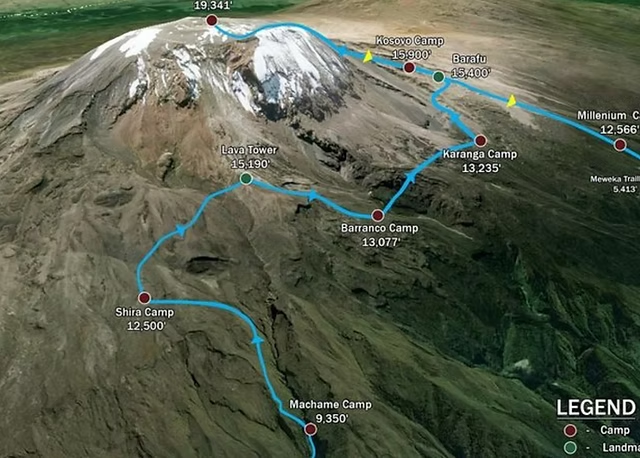
Kilimanjaro, at 5,895 metres, is Africa’s highest peak and the highest free-standing mountain in the world. It stands in northern Tanzania, visible on a clear day from the Amboseli plains in Kenya, and its snow-capped summit profile is one of the most recognisable images in African geography. It is a shield volcano, broadly symmetrical, with well-established trekking routes and a large, organised mountain guiding industry based in Moshi and Arusha.
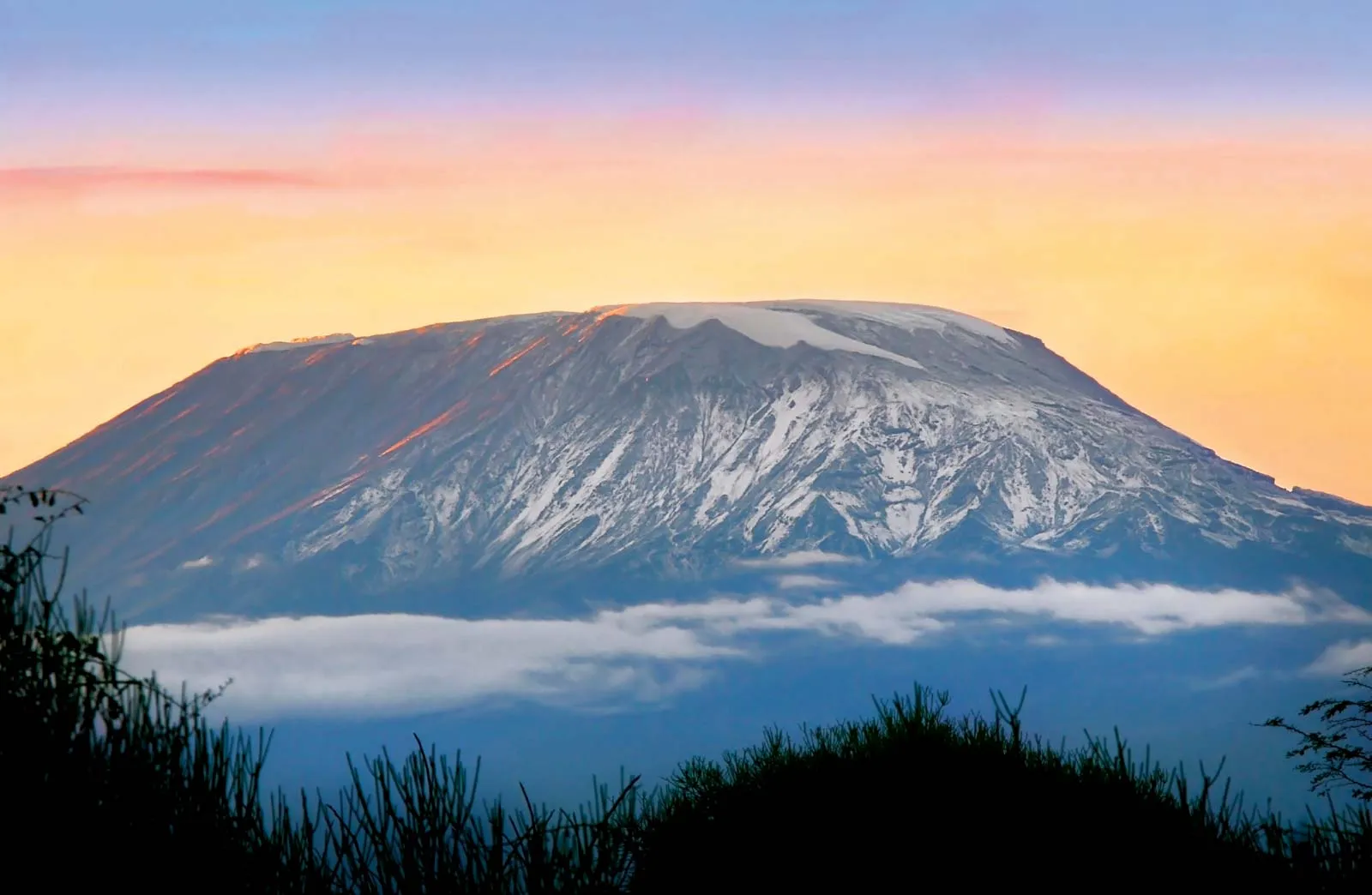
Mount Kenya, at 5,199 metres (Batian, the true summit) and 5,188 metres (Nelion), is Africa’s second-highest peak and Kenya’s highest mountain. It is a heavily eroded extinct volcano whose central peaks are jagged, technically demanding rock towers surrounded by glaciers and a high plateau of moorland and alpine lakes. The highest point accessible to non-technical trekkers is Point Lenana at 4,985 metres still an impressive summit at altitude but 910 metres below Kilimanjaro’s Uhuru Peak.

Technical Difficulty
This is the sharpest difference between the two mountains. Kilimanjaro is a walk a demanding, altitude-intensive walk, but one requiring no technical climbing skills, no ropes, no ice axes or crampons on the standard routes. Mount Kenya’s true summits Batian and Nelion are technical rock climbs of serious difficulty, requiring multi-pitch climbing experience, proper technical equipment, and ideally a professional guide with specific Mount Kenya technical experience. The approach to the standard summit for trekkers, Point Lenana, is non-technical but involves a glacier crossing that has historically required basic ice axe and crampon use, though the glaciers are now significantly reduced.
For the vast majority of trekkers those without technical climbing experience the accessible summit of Mount Kenya is Point Lenana. This is a superb achievement and a genuine high-altitude objective; the views from Lenana are outstanding and the route is interesting and varied. But it is meaningfully different from Kilimanjaro’s non-technical summit at 5,895 metres. Anyone seeking the highest possible non-technical summit in Africa should be clear that Kilimanjaro provides it and Mount Kenya does not.
Scenery and Landscape Character
Mount Kenya is, by most accounts, the more spectacular mountain in terms of immediate scenery. The central peaks the jagged rock towers of Batian, Nelion and the subsidiary summits are dramatically different from Kilimanjaro’s rounded volcanic cap. The high plateau around the peaks, at 4,000 to 4,500 metres, contains a series of tarns (alpine lakes) that mirror the peaks in calm conditions, afroalpine plant communities of extraordinary character including giant groundsel and giant lobelia, and a visual drama that the broader Kilimanjaro moorland does not replicate.
Kilimanjaro’s summit zone the area above 5,000 metres is spectacular in different ways: the ice fields, the vast crater, the extraordinary sense of elevation above the surrounding plains. The scenery on the approach routes to Kilimanjaro is varied and impressive, particularly on the Lemosho western approach through old-growth forest and across the Shira Plateau. But the specific dramatic quality of Mount Kenya’s core scenery the spired peaks, the glacial lakes, the unique plant life is a genuine differentiator for travellers who prioritise mountain aesthetics.
Altitude and Acclimatisation
Kilimanjaro’s summit at 5,895 metres is 910 metres higher than Point Lenana on Mount Kenya. This difference is physiologically significant the altitude challenge on Kilimanjaro is materially greater, and the preparation, itinerary design and acclimatisation management it requires are more demanding. Climbers who have found high altitude difficult on previous trips should note this difference when comparing the two objectives.
On Mount Kenya, the approach routes Sirimon, Chogoria and Naro Moru gain altitude over three to five days to reach the high plateau around 4,500 metres. The acclimatisation profile is reasonable but shorter than Kilimanjaro’s extended approach, partly because the ultimate objective (Point Lenana at 4,985m) is lower. The standard Mount Kenya itinerary of four to five days to Point Lenana is considered adequate for most acclimatised trekkers, though a day’s rest at a mid-altitude camp is always advisable for those without prior altitude experience.
Wildlife on the Approaches
Mount Kenya’s lower slopes are among the most wildlife-rich mountain approaches in Africa. The forests and moorland below 3,500 metres hold Cape buffalo, elephant, giant forest hog, black and white colobus monkey, and a remarkable range of bird species including Jackson’s francolin and Hartlaub’s turaco. The wildlife in the lower zones of the approach is genuine and sometimes surprising elephants on the forest trail are a real possibility, and the guides are trained and equipped accordingly.
Kilimanjaro’s lower forest zone also holds wildlife colobus monkeys are regularly seen on the Lemosho and Machame approaches but the elephant and buffalo density is lower than on Mount Kenya’s slopes, and the access into the forest zone is more structured around the main climbing routes. Mount Kenya wins on the wildlife-on-approach dimension, and for a traveller interested in combining mountain trekking with African wildlife observation, this is a material consideration.
Duration and Logistics
Kilimanjaro requires a minimum of six days and ideally seven to eight on the best routes. Mount Kenya to Point Lenana takes four to five days on the standard approach combinations. For travellers with limited time, Mount Kenya provides a more time-efficient high-altitude mountain experience, though the altitude achieved is lower.
Kilimanjaro is logistically straightforward: fly to Kilimanjaro International Airport, stay in Moshi or Arusha, depart for the gate. Mount Kenya’s logistics involve access to either the Sirimon Gate on the western side or the Chogoria Gate on the eastern side typically from Nairobi with the specific approach combination determining the starting point. The Mount Kenya trekking industry is smaller and less developed than the Kilimanjaro one, which has both advantages (quieter, more personal) and disadvantages (fewer high-quality operators, less standardised infrastructure).
Cost Comparison
Mount Kenya is less expensive than Kilimanjaro, primarily because it has a smaller trekking industry, lower park fees and shorter itineraries. A quality four to five-day Mount Kenya trekking package to Point Lenana typically costs USD 900 to USD 1,600 per person. A comparable quality Kilimanjaro package to Uhuru Peak on a seven-day route costs USD 1,800 to USD 2,800 per person. The lower Mount Kenya cost reflects both shorter duration and a smaller, less commercially developed mountain guiding sector rather than a difference in operator quality.
Combining Both Mountains
For travellers with sufficient time and energy, combining Mount Kenya and Kilimanjaro in a single East Africa trip is entirely possible and deeply rewarding. The standard combination is Mount Kenya first, allowing acclimatisation to take effect before the more demanding Kilimanjaro ascent. A twelve to sixteen day programme four days Mount Kenya, a few days safari or rest in between, seven days Kilimanjaro gives the body acclimatisation time accumulated on Mount Kenya that directly benefits the Kilimanjaro summit attempt. This combination represents what East Africa’s mountain offering actually is: two genuinely different experiences of high-altitude Africa, each excellent in its own right.
How RYDER Signature Approaches the Decision
Our starting question when a client asks about Mount Kenya versus Kilimanjaro is: what is the primary motivation? If it is the highest non-technical summit in Africa, Kilimanjaro is the answer and Mount Kenya is the acclimatisation option that precedes it. If it is spectacular mountain scenery with a shorter duration and more wildlife on the approach, Mount Kenya is the better first choice. If time and fitness allow, both in that order produce an East Africa mountain experience that most climbers describe as among the best of their travelling lives.
Is Mount Kenya harder than Kilimanjaro?
In terms of technical difficulty to the accessible trekking summit (Point Lenana), Mount Kenya is comparable to Kilimanjaro’s standard routes both are non-technical walks requiring good fitness but no climbing skills. In terms of altitude, Kilimanjaro is harder: Uhuru Peak is 910 metres above Lenana, and the physiological demands of extreme altitude are disproportionately greater above 5,000 metres. Scenically, Mount Kenya is more complex and dramatic in its central zone. “Harder” depends entirely on what is being measured.
Which is better for a first high-altitude climb?
Mount Kenya is the better first high-altitude objective for climbers who are genuinely uncertain about their altitude response and want to test it before committing to Kilimanjaro’s greater altitude. Point Lenana at 4,985 metres is high enough to produce meaningful acclimatisation data and a genuine altitude experience, at lower risk and cost than Kilimanjaro. Kilimanjaro is the better first high-altitude objective for climbers whose primary goal is the highest non-technical summit in Africa and who have adequate preparation time to train and plan the itinerary correctly.
How similar is the experience on the two mountains?
The zone-by-zone experience is broadly similar forest, moorland, afroalpine, high altitude but the specific character is different enough that one does not feel like a repetition of the other. Mount Kenya’s high plateau has a visual drama and intimacy that Kilimanjaro’s broader summit zone does not replicate. Kilimanjaro’s summit day at nearly 6,000 metres is a more intense altitude experience than Mount Kenya’s. The two mountains are comparable in category but distinct in character. Most climbers who have done both describe them as the best possible pairing of East Africa’s mountain objectives.
Can I climb both mountains on the same trip?
Yes, and doing so is a significant advantage physiologically as well as experientially. The acclimatisation developed on Mount Kenya which takes the body to just below 5,000 metres provides a meaningful head start for the Kilimanjaro ascent. A combined programme of twelve to sixteen days allows Mount Kenya (four to five days), a rest and logistics interval, and a full Kilimanjaro programme (seven to eight days). Budget and timing allowing, this is the itinerary we recommend for any climber with serious interest in East Africa’s mountain heritage.
The Cultural Dimension
Kilimanjaro and Mount Kenya occupy very different cultural positions in their respective national contexts. Kilimanjaro is Tanzania’s national symbol it appears on the country’s coat of arms and has an almost sacred status in Tanzanian national identity. The Chagga people who live on its southern slopes have a centuries-long relationship with the mountain, and the modern guiding and tourism industry is built on a foundation of generational knowledge. The relationship between the mountain and its communities is complex, economically significant, and genuinely part of the experience.
Mount Kenya is the most sacred mountain in Kikuyu traditional belief the home of Ngai, the supreme creator deity and this cultural dimension is less commercially integrated into the tourism experience but no less present. The mountain’s name gives Kenya its national name. The Kikuyu, Meru and Embu peoples who have lived on its slopes for centuries regard it with a reverence that the trekking industry, at its best, acknowledges and contextualises. A guide who understands and shares this cultural dimension adds something to the Mount Kenya experience that no amount of infrastructure improvement can replicate.
The cultural context of each mountain is worth understanding before you climb. Approaching either Kilimanjaro or Mount Kenya with awareness of what the mountain means to the communities who have lived alongside it for generations produces a qualitatively different experience from treating it purely as a physical objective. The guides who have grown up in the shadow of these mountains whose families have names for specific valleys and specific features that do not appear on any map are carrying knowledge that the climber who listens carefully will encounter nowhere else.
Conservation Status and Environmental Considerations
Both mountains are protected areas with formal conservation status. Kilimanjaro is a UNESCO World Heritage Site and a national park, with TANAPA managing access and usage. Mount Kenya is also a UNESCO World Heritage Site and a national park, managed by Kenya Wildlife Service. Both have seen significant environmental change in recent decades: the glaciers on both mountains are retreating at documented rates, and the vegetative communities in the afroalpine zones are under pressure from climate-related shifts in temperature and precipitation patterns.
Choosing operators who actively support the conservation bodies managing these mountains through TANAPA and KWS fee payment (which responsible operators handle transparently), through community employment policies, and through environmental management standards in the field is one of the most direct ways a climber can contribute to the long-term protection of these extraordinary environments. The mountains that future climbers will be able to access will depend in part on the revenue and respect that present-day operators and climbers bring to them.
Practical Planning: Key Differences at a Glance
For the traveller doing final planning research, the practical comparison reduces to a clear set of differences. Kilimanjaro requires seven to eight days minimum for a properly designed itinerary; Mount Kenya requires four to five. Kilimanjaro’s accessible summit is at 5,895 metres; Mount Kenya’s is at 4,985 metres. Kilimanjaro’s routes are well-established and heavily staffed; Mount Kenya’s trekking infrastructure is smaller and requires more careful operator selection. Kilimanjaro’s mountain guiding industry is larger, more standardised, and easier to evaluate independently; Mount Kenya’s requires more specific research to identify qualified operators. Both are extraordinary and both reward the investment of proper preparation and intelligent planning.
The decision between them should not be made on the basis of which is more impressive to describe both are genuinely impressive objectives that most non-climbing travellers never consider. It should be made on the basis of the specific experience each provides: the altitude, the character, the duration, the technical nature of the objective, and what the climber wants from the days on the mountain beyond the summit itself. An honest conversation with an operator who has guided both mountains recently is the most reliable input available for making this decision well.
The mountains of East Africa are not competing products in a travel catalogue. They are distinct and irreplaceable natural environments, each with its own altitude challenge, its own ecological character, and its own relationship with the communities and cultures that have lived alongside it for generations. The traveller who approaches either of them with that awareness curious, respectful, prepared will find both rewarding in ways that exceed the measurable metrics of summit altitude and itinerary duration. The climber who has stood on Uhuru Peak and on Point Lenana, in the same season or across multiple visits, has a relationship with this part of the world that no amount of game drives and beach days can replicate. Both mountains deserve your consideration. The question is only which one to start with.
At RYDER Signature, we have helped climbers with all levels of prior mountain experience work through this decision honestly. We have no preference between the mountains and no commercial incentive to recommend one over the other. What we have is operational experience on both, knowledge of the current conditions on both, and relationships with the guide teams we trust on both. Start that conversation with us when you are ready, and the right choice for your specific situation will become clear.