The choice between a private and a group Kilimanjaro climb is one of the most practically significant decisions in the booking process and one of the least clearly explained by most operators. The price difference between the two formats is substantial private climbs typically cost thirty to fifty per cent more per person than joining a scheduled group and the experience difference is equally substantial in ways that are not always obvious from marketing descriptions. This guide addresses both the cost and the experience dimensions honestly, without defaulting to a recommendation either way.
What a Group Kilimanjaro Climb Actually Is
A group Kilimanjaro climb typically involves four to twelve individual climbers who do not know each other beforehand, assembled by an operator into a single party for a scheduled departure. The departure date is fixed; the operator fills the available spaces with individual bookings until the minimum required for the trip to operate is reached, or up to a maximum party size. Guide and crew costs are shared across the group, which is the primary mechanism through which the lower per-person price is achieved.
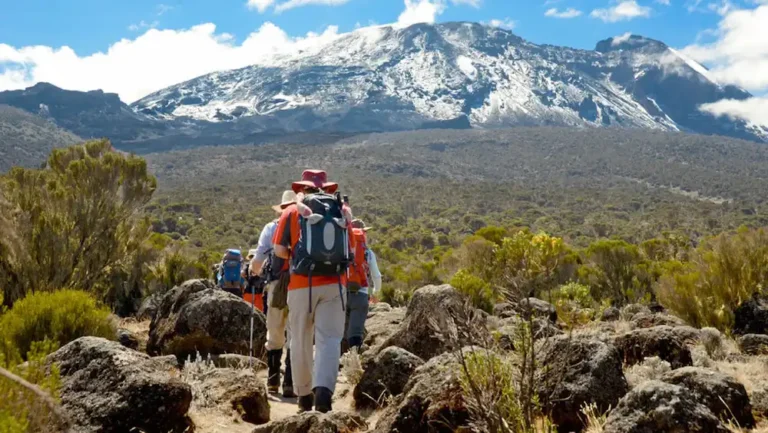
Most scheduled group departures are eight to twelve climbers, sharing a guide team of one lead guide and one or two assistants. The social composition is varied and unpredictable: group climbs regularly bring together retirees and twenty-somethings, solo travellers and couples who have booked independently, fast hikers and slower ones, the very fit and those who have significantly overestimated their capacity. This mix is sometimes one of the genuine pleasures of a group climb and sometimes one of its significant complications.
What a Private Kilimanjaro Climb Actually Is
A private Kilimanjaro climb is a party consisting of one person, a couple, a family or a group of friends who know each other and book together, with a guide and crew dedicated entirely to their party. The departure date is flexible; within reasonable lead time, a private party can depart on a day of their choosing. The pace, the daily schedule, the camp routine and the guide attention are calibrated entirely to the specific party rather than to the average of a mixed group.
Private does not mean small in terms of crew a solo climber on a private climb still requires a guide, assistant guide, cook and minimum three to four porters. The private premium reflects the guide time and the camp infrastructure being dedicated to one party rather than shared, not a reduction in crew size.
The Pace Question: The Most Important Difference
The most consequential practical difference between a private and a group climb is pace control. In a mixed group, the guide sets a pace that the median climber can sustain necessarily a compromise between the fastest and the slowest party members. A group with one very slow member is constrained by their pace; a group with one very fast, impatient member creates pressure on those behind them. Managing the range of fitness levels and altitude responses across a diverse group is one of the most demanding aspects of group mountain leadership.
On a private climb, the pace is set entirely around the specific party. If everyone is moving well, the guide can allow a slightly faster pace on a good section. If one person is struggling, the party stops and rests without affecting anyone else. The daily stage duration is calibrated to the party’s actual capacity rather than a statistical estimate of it. This pace control has a direct relationship with summit success: a climber who maintains an optimal pace for their specific physiology throughout the approach days arrives at Barafu in better condition than one who has been pushed beyond their optimal pace in a group context.
Schedule Flexibility
Group departures are fixed. If a scheduled group departs on the fourteenth of the month and your available dates are the fifteenth through the twenty-second, you either adjust your dates or look for a different group departure or book privately. For travellers with fixed departure windows constrained by school terms, work commitments or combined itineraries with flights the inflexibility of group departures is a genuine practical limitation.
Private climbs depart on your chosen date, subject to operator capacity and TANAPA permit allocation. This flexibility has particular value when the climb is one element of a larger East Africa itinerary combining Kilimanjaro with a specific safari window or a flight connection that determines the available climbing dates. RYDER Signature designs combined itineraries around private climbs specifically because the date flexibility allows the other components to be optimised without being constrained by available group departure slots.
Guide Attention and Quality
On a private climb, the lead guide’s attention is entirely on your party. The daily briefing, the medical assessment, the pacing decisions, the summit night management all are calibrated to the specific people the guide knows from the previous days. On a group climb, the guide distributes their attention across a larger party, and the individual relationship between guide and climber is necessarily more limited.
This is not a criticism of group guiding excellent guides manage larger parties very well. It is a description of the structural difference in attention allocation. For a climber with a specific health consideration, a particular anxiety about altitude, or a desire for deep engagement with the mountain’s ecology and geology, private guiding provides a quality of individual attention that group guiding cannot replicate.
The Social Dimension: Group as Advantage
The group climb’s most significant advantage over private is social. The shared experience of a challenging mountain climb, compressed into six or seven days with strangers who become intimate companions under pressure, produces a social intensity that many group climbers describe as one of their most memorable travel experiences. The camp evenings shared meals, the collective assessment of the day’s effort, the anticipation of the summit have a quality that a private camp with two people does not replicate.
Solo travellers, in particular, often find the group climb’s social dimension actively preferable to a private one. A solo private climb involves one person and a crew of ten to fifteen; the social experience is limited to client-guide interaction and the warmth of the camp team. A solo traveller in a group of eight has seven potential friends for the duration of the climb, and Kilimanjaro’s intensity means that these relationships typically develop faster and run deeper than they would in a conventional group travel context.
Cost: The Real Numbers
For two people climbing together, the private versus group cost comparison is approximately: group climb, USD 1,800 to 2,400 per person for a seven-day Lemosho with a mid-range operator; private climb, USD 2,600 to 3,500 per person for the equivalent route and duration. The private premium of USD 800 to 1,100 per person reflects the dedicated crew and flexibility rather than a materially different physical experience of the mountain.
For a solo climber, the private cost is fully borne by one person rather than shared across a group. A solo private Kilimanjaro climb is the most expensive per-person option typically USD 3,500 to 4,500 for a quality seven-day itinerary because the guide, cook and minimum porter crew are entirely dedicated to one climber. For solo travellers focused on cost, a scheduled group is the most economical option that still provides a quality experience with a reputable operator.
For groups of four or more who know each other and are booking together, the private versus group cost calculation narrows significantly: a private group of four shares the crew costs across four people, and the premium over a scheduled group is reduced to USD 200 to 400 per person. At this ratio, most groups of friends or families find the pace flexibility and schedule control of a private climb worth the modest additional cost.
When Each Format Makes Most Sense
A group climb makes most sense when: the climber is a solo traveller who values social experience; budget is a significant constraint; the fixed departure dates align with available travel time; the climber is of average to good fitness relative to typical group composition; and the social unpredictability of a mixed group is appealing rather than concerning.
A private climb makes most sense when: the party is two or more people who know each other; the climb is part of a larger East Africa itinerary requiring date flexibility; one or more party members has a specific health consideration or significant pace variation from the group average; the climbers are very experienced or very inexperienced relative to a typical group composition; or the party has specific goals detailed ecological learning, photography optimisation, particular dietary requirements that would benefit from individual calibration.
How RYDER Signature Structures Kilimanjaro Options
RYDER Signature offers both private and group Kilimanjaro arrangements, and our recommendation is always based on the specific client situation rather than a default preference. For couples and families, private is almost always our recommendation for the pace and schedule flexibility. For solo travellers, we typically discuss the social and cost dimensions and respect the client’s preference. For groups of three or more who are booking together, private is nearly always the better value and better experience combination once the per-person calculation is made correctly.
We do not offer group departures with operators whose group management standards do not meet our criteria for guide qualification and crew welfare. The group versus private decision should not involve a compromise on the baseline quality of operator, and the most important choice which operator applies to both formats equally.
Can I join a private climb if I am a solo traveller?
Yes, though the correct term for this is a private solo climb a single person with a dedicated crew. Some operators maintain a “join a group” model where they try to match solo travellers with compatible parties, which produces a hybrid between private and group at an intermediate cost. This can work well when the matching is done thoughtfully; it can produce mismatches in fitness level or pace expectation when it is not. If joining an existing private party, the agreement on pacing and schedule should be explicit before the climb.
Is the summit experience the same on private and group climbs?
Summit night is broadly the same experience regardless of format the departure, the altitude, the cold and the dawn arrival are universal on any well-managed Kilimanjaro attempt. The difference in the summit approach is in pace management: a private party can move at a pace precisely calibrated to the specific climbers involved, stopping when necessary without affecting others, continuing at the guide’s assessment of optimal speed. A group manages a pace compromise. The summit itself Uhuru Peak at dawn with Africa below is identical.
What happens if I do not get on with the other people in my group?
The honest answer is that social incompatibility in a group climb is real and occasionally problematic. In practice, the physical and emotional intensity of Kilimanjaro produces a levelling effect: shared difficulty tends to create temporary community even between people who would not otherwise have much in common. Genuinely serious interpersonal conflict on the mountain is rare, though mismatched fitness levels that affect group pace can create tension. If social risk is a significant concern, the private option resolves it definitively.
Do private climbers get better camps or positioned campsites?
Camp position within the established sites is not generally allocatable between operators; the available tent area at each camp is shared between all parties in that day’s group. Private parties are not able to claim specific tent positions in advance. What private parties do have is their own camp setup their own mess tent, their own kitchen, their own bathroom arrangement separate from the adjacent group camps. The intimacy of a private camp, even within a shared campsite zone, is meaningfully different from the communal atmosphere of a large group camp.
The Equipment Provision Comparison
Equipment quality on both private and group climbs is determined by the operator rather than the format. A responsible operator provides the same tent quality, sleeping pad specification and camp infrastructure to both group and private parties. An irresponsible operator may provide lower-grade equipment to group climbers to reduce costs, knowing that group climbers are less likely to have inspected the equipment in advance and more likely to accept what they find. This is a reason to vet the operator as carefully for a group booking as for a private one.
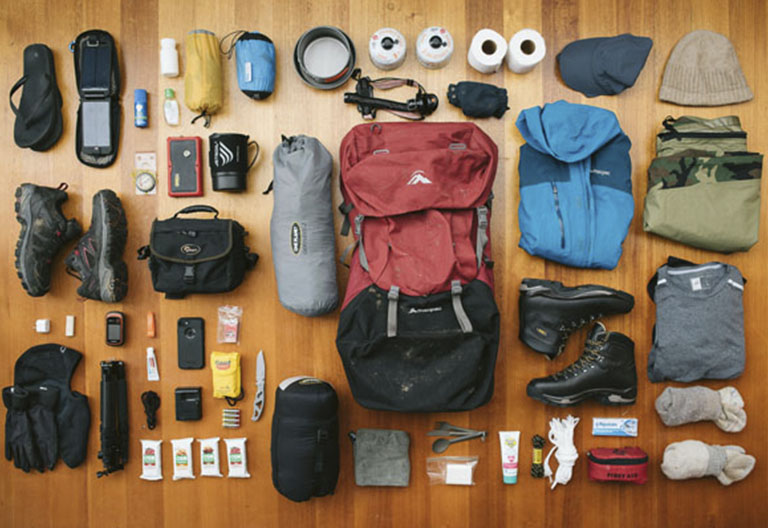
The specific equipment items to confirm for either format: tent specification and occupancy (confirm that group tents are not overcrowded beyond their designed capacity), sleeping bag provision or requirement (some operators include bags, others require the climber to bring their own), mess tent and chair provision (essential for group dining comfort), and toilet tent provision (a private toilet tent is the standard on any quality climb, private or group). The absence of any of these on a group climb is a flag for reduced operator standards, not an acceptable group compromise.
The Emotional Arc of Private vs Group
Experienced Kilimanjaro guides describe a predictable emotional arc on both private and group climbs. Day one and two: enthusiasm, energy, excitement at the landscape. Day three and four: the mountain reveals its altitude, energy drops, group or individual tensions emerge, and the psychological quality of the climb depends heavily on how the guide manages the mood. Summit night: the arc reaches its peak challenge and its peak reward simultaneously. Descent: relief, physical soreness, and a quality of retrospective pride that is remarkably consistent across climbers of all backgrounds.
Where private and group climbs diverge in this arc is day three and four. In a group, the guide must manage the mood of multiple people in varying states of altitude discomfort, some of whom may be affecting each other’s confidence and willingness. In a private party, the guide manages the specific emotional dynamics of two or four known people. The experienced guide handles both, but the private context provides more precise tools for doing so the guide who knows your specific concerns, your physical baseline and your psychological style from five days together can calibrate their support more precisely than one managing eight different people simultaneously.
This is, ultimately, the argument for private climbing that no cost comparison fully captures. The mountain is the same. The summit is the same. The shared experience with the crew that carries your equipment and cooks your food and guides you to the highest point in Africa is the same. What private climbing provides is the quality of individual attention from the guide who knows your name and your physiology and your particular point of difficulty that group climbing, by structural necessity, distributes across a larger party. Whether that attention is worth the premium is a personal calculation that depends entirely on what you want from the experience.
Both formats, chosen correctly, can produce an outstanding Kilimanjaro experience. The decision is not about which is better in absolute terms but about which serves your specific situation better. Make it honestly, with full information, and the mountain will do the rest.