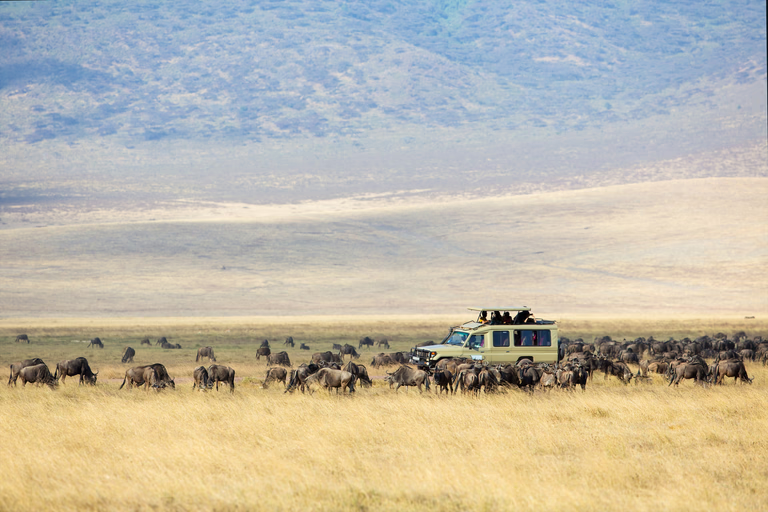
Ngorongoro Crater in April sits at the wettest point of the entire year across the wider conservation area, and any traveller considering this month needs to go in with realistic expectations about rainfall rather than treating it as simply a quieter, cheaper version of March. That said, April rewards those willing to accept the conditions with the lowest rates, the thinnest crowds and arguably the most vividly green landscape the crater produces at any point on the calendar.
Weather on the Floor and the Rim
Long term averages consistently place April as the single wettest month across the Ngorongoro Conservation Area, with monthly totals frequently exceeding 170mm and, in some records, considerably more. Rain in April tends to fall in longer, heavier spells than either the short rains of November and December or even the opening weeks of March, occasionally continuing for the better part of a day rather than clearing after an hour or two. Long term weather station data for the region records April rainy day counts among the highest of the year, commonly in the range of sixteen to eighteen days with some measurable rain across the month. Daytime temperatures on the crater floor remain mild, generally in the high teens Celsius, while the rim can feel genuinely cold and frequently sits under low cloud, with cold fronts occasionally pushing overnight temperatures down further than at almost any other point in the year.

Wildlife on the Crater Floor
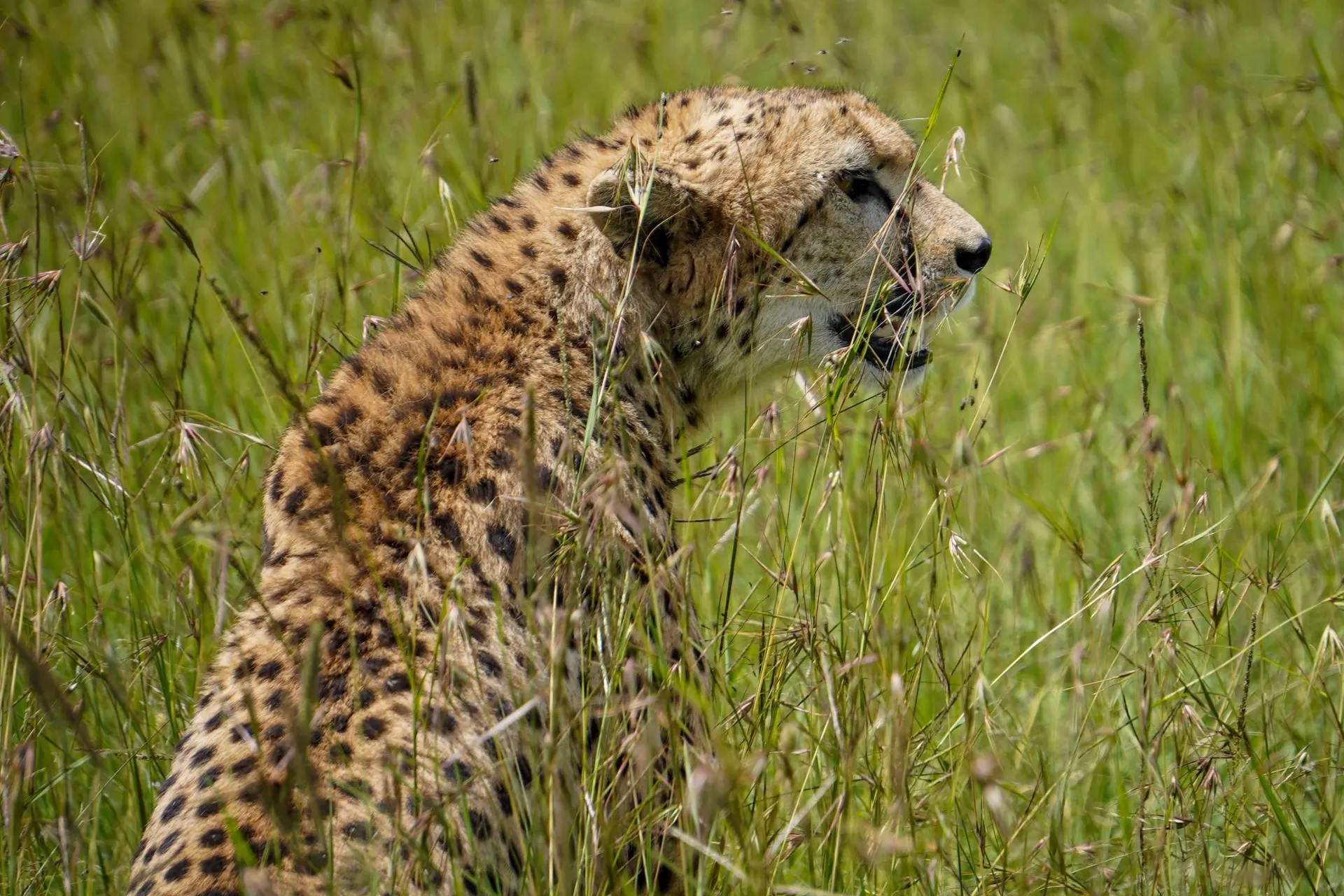
The crater’s resident population continues its usual pattern in April regardless of the heavier rain, since the enclosed caldera’s roughly 25,000 large mammals remain in place year round. Elephant herds, including breeding groups rather than only the solitary bulls more typical of the drier months, are among the species that favour April specifically, drawn to the abundant fresh growth around the Lerai Forest and across the floor generally. Buffalo, lion and the crater’s black rhino population all remain reliably present, though the taller grass that follows sustained rain can make spotting smaller or more distant animals, including cheetah and serval, noticeably harder than during the shorter grass of the dry season.Leopard remain difficult to find in April as in any month, and the denser cover produced by the rains if anything makes the crater’s small resident population even less visible than usual, while lion prides continue to hold their territories near Lake Magadi largely unaffected by the change in vegetation.

Peak Green Season
April is when the crater floor reaches its most saturated, deepest green state of the year, a landscape that many photographers and repeat visitors consider the single most striking version of the crater on offer, even accounting for the higher likelihood of a wet morning. Lake Magadi typically holds substantially more water in April than during the dry season, occasionally spreading well beyond its dry season shoreline, which brings a corresponding increase in the numbers of flamingo, pelican and other waterbirds using the lake and the adjoining Gorigor Swamp.
Water Levels and the Wider Ecosystem
April’s rainfall pushes water levels across every source on the crater floor to their annual maximum, with Lake Magadi at its largest extent of the year, the Gorigor Swamp fully waterlogged, and numerous smaller seasonal pools that remain dry for much of the second half of the year now holding water across a wide area of the grassland. This abundance changes grazing behaviour noticeably, since herds are no longer forced to concentrate around the handful of permanent water points that dominate their movement during the dry season, spreading out instead across a much larger area of the floor. Guides tend to compensate for this by relying more heavily on radio contact with other vehicles and on their own knowledge of which stretches of the floor typically hold the best sightings once the herds have spread out, so the quality of a specific guide matters somewhat more in April than in a season when animals are naturally concentrated for the visitor. Travellers booking through an operator with a strong local reputation and long standing driver guides tend to notice this difference most clearly during the quieter, more dispersed months like April, when local knowledge counts for more than it does when herds are already concentrated for anyone to find.
Crowds and Rates
April sits firmly within the lowest pricing band of the year at rim lodges, commonly 20 to 30 percent below the July to September peak, and the crater gate itself sees a fraction of the vehicle traffic recorded during the busiest months. Some smaller camps across the wider northern circuit close briefly for maintenance during April, taking advantage of the quiet period to carry out work that would otherwise disrupt guests, so confirming that a specific property is fully operational before booking remains sensible for this month in particular.
Road Conditions and Practical Notes
The Seneto descent road and the Lerai ascent road demand the most careful driving of the year in April, and delays of thirty minutes or more due to a slow moving convoy negotiating a soft section are a realistic possibility rather than a remote one. Rim mist and low cloud are at their most persistent in April, occasionally obscuring the view down into the crater from a lodge terrace for a good part of the morning even when the descent itself proceeds without major difficulty. Malaria prevention remains necessary throughout April as it does year round in this region, and travellers should factor in that heavier rain can increase standing water and, with it, mosquito activity around some lodge grounds.
Birdlife in April
April’s expanded water levels across Lake Magadi, the Gorigor Swamp and the numerous smaller seasonal pools scattered across the floor create some of the strongest birdwatching conditions of the year, contributing to sightings across the crater’s recorded list of over 500 species. The combination of abundant water, fresh insect activity and lush vegetation draws both resident species and a range of migratory birds passing through the wider conservation area during this part of the wet season.

How April Compares to March and May
March and April sit close together on the calendar but differ meaningfully in intensity. March introduces the long rains gradually, with genuine dry spells still common through the month, while April tends to bring more sustained, heavier rain with fewer extended dry breaks. May, immediately after April, generally marks the point where the rains begin to ease, producing a quieter transition back toward the dry season that follows. A traveller who wants the deepest possible green season landscape and the lowest possible rates, and who can tolerate the highest chance of disrupted plans in exchange, is best served choosing April specifically rather than March or May, both of which offer a somewhat gentler version of the same trade off.
Combining an April Visit With the Rest of the Northern Circuit
April itineraries tend to favour a similarly quiet, lower cost approach across the rest of the northern circuit, with the Serengeti’s central Seronera area offering reliable year round resident wildlife even without the drama of a river crossing, and Tarangire or Lake Manyara serving as a manageable stop on the approach from Arusha. Because April is quiet across the whole region rather than only at the crater, travellers building a longer multi park trip during this month typically find availability easier to secure at short notice than during any other point in the year, which can suit travellers with less rigid planning timelines.
Photography During the Wettest Month
April demands the most patience of any month for photography, since a genuinely overcast or rain affected morning can limit shooting windows more than at any other point in the year. The reward for that patience is often considerable, since the combination of saturated green grass, dramatic storm light and unusually clear air immediately after a downpour can produce images unlike those available during the drier, dustier months. Photographers travelling in April are well advised to plan around flexible timing within each day, working whenever a break in the weather opens up rather than expecting a fixed, predictable schedule.

What to Pack for an April Visit
A genuinely waterproof outer layer, rather than a light shower resistant jacket, is worth prioritising for an April visit, alongside warm layers for a rim that can feel markedly colder than the floor below it during this month specifically. Waterproof protection for camera equipment and any electronics carried on game drives is particularly important given the higher likelihood of sustained rain rather than a brief shower, and travellers should pack with the expectation that laundry and drying facilities at rim lodges may take longer to return items during a genuinely wet spell. A spare pair of dry shoes for the evening is a small addition that makes a noticeable difference after a day spent on a soft, occasionally muddy crater floor track.
Who Should Choose April
April suits travellers whose priority is value and solitude above almost everything else, who have flexible itineraries able to absorb a rain delayed or rerouted morning without knock on consequences elsewhere in the trip, and who are drawn to the crater at its greenest rather than concerned by the possibility of a genuinely wet day. It is a poor choice for travellers on a short, tightly scheduled visit with connecting flights booked close to the return from the crater, or for anyone whose primary goal is clear, expansive rim views rather than time spent on the floor itself. Travellers with young children or anyone particularly sensitive to cold, damp mornings should also weigh April carefully, since the combination of a chilly rim departure and a genuine chance of a wet, muddy return can make for a physically demanding day compared with the more forgiving conditions of the dry season.
Looking Ahead to April 2027
April’s position as the wettest month of the year is set by the same long rains pattern each season, so the guidance above holds as reliably for an April 2027 booking as for any recent year, even though the exact intensity and duration of the rains can vary somewhat from one season to the next. Travellers planning specifically for the lowest possible rates during the 2026 to 2027 travel year will generally find April delivers exactly that, provided they build enough flexibility into the itinerary to accommodate the realistic chance of a wet, occasionally cold day on the crater floor. Booking a rim lodge room with reliable heating or a wood burning stove, rather than assuming the whole property is set up for the warmer dry season months, is a small but genuinely useful detail to confirm ahead of an April stay specifically.