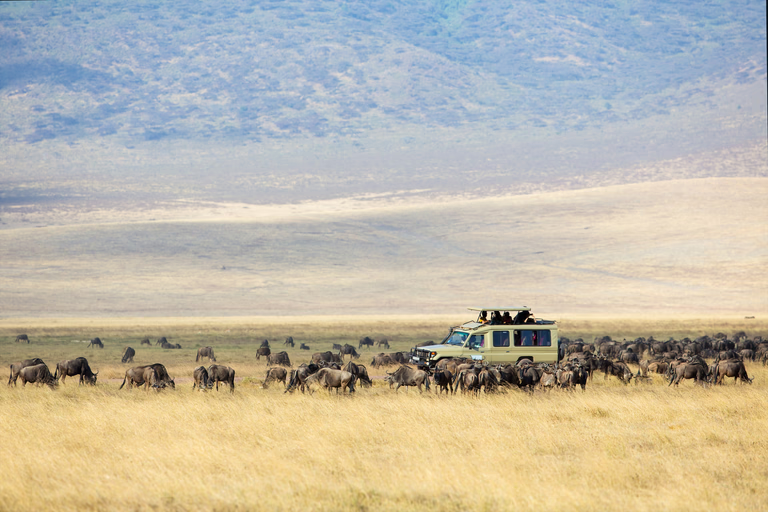
Full-Day Game Drives vs Half-day in the Serengeti itinerary are not simply the same drive stretched or shortened. They are genuinely different ways of covering the park, with different rhythms, different picnic arrangements and different trade-offs between distance covered and rest taken, and the right choice depends more on a traveller’s stamina and priorities than most itineraries acknowledge.
What a half-day drive actually involves
A half-day structure splits the day into two separate outings with a substantial break at camp in between. The morning session typically departs around half past six and returns to camp by nine or ten, in time for a proper breakfast and a rest through the hottest hours of late morning and early afternoon. The afternoon session then departs around half past three and runs until close to sunset. Both sessions are genuinely private drives in their own right, each with its own start and its own destination, rather than two halves of one continuous outing, and a guide can respond to the morning’s specific sightings when planning where the afternoon session heads.
What a full-day drive actually involves
A full-day drive departs early, typically between six and seven in the morning, and does not return to camp until late afternoon, often five or six in the evening, covering both the classic morning and evening activity windows within a single continuous outing. Lunch is taken in the bush rather than back at camp, packed the night before and eaten either at one of the park’s designated picnic spots, a requirement rather than a preference since eating anywhere along the roadside is discouraged for safety and hygiene reasons, or occasionally directly in the vehicle if the group is following a developing sighting such as a river crossing and does not want to lose position. Some operators serve this as a proper packed lunch with a table and chairs set up under an acacia’s shade, while others, particularly during the migration season when timing a crossing matters more than comfort, keep it simple and mobile.
Distance covered is the real difference
A half-day drive, constrained to a three to four hour window each session, generally stays within a single sector of the park, exploring the area around Seronera thoroughly, for example, without attempting to reach the western corridor or the Mara River region in the same day. A full-day drive, with eight to ten hours available, can genuinely cover ground between sectors, combining a morning spent around the Seronera kopjes with an afternoon pushing toward Moru or further afield, or following breaking news of a river crossing that might be an hour or more from camp. For travellers whose specific goal is reaching a particular event, a river crossing in progress, a pride reported moving toward a kill, or simply covering more of a large park’s variety within a single day, the full-day format is functionally necessary rather than a luxury.

Fatigue is the genuine cost of a full day out
Eight to ten hours in a moving vehicle, much of it on rough tracks, in heat that regularly exceeds thirty degrees Celsius at midday, is physically tiring in a way that is easy to underestimate from a comfortable planning stage at home. Younger children, older travellers, and anyone prone to motion discomfort on uneven roads tend to find a full day considerably harder than the itinerary description suggests, and a group with mixed tolerance for this can find the day becomes about endurance rather than enjoyment for at least some of its members. Half-day structures preserve a genuine rest period at camp, time to shower, nap or simply sit still, that a full day does not offer.
Midday wildlife activity is a real, if secondary, consideration
Between roughly eleven in the morning and three in the afternoon, most large mammals, particularly predators, rest in shade and are considerably less active and less visible than during the cooler hours at either end of the day. A full-day drive spends several hours in this quieter window, and while a good guide will use the time productively, birding, exploring a scenic area on foot at a designated stretch, or simply covering transit distance toward the next area of interest, the midday hours are genuinely the least productive part of any Serengeti day for large mammal sightings, regardless of drive format. This is one of the stronger arguments for the half-day structure, since it uses the rest period at camp to skip exactly the hours least likely to produce a memorable sighting.
Cost and logistics differences
For road safaris using a dedicated vehicle and guide for the length of a stay, a full-day drive does not usually carry an additional charge beyond the packed lunch itself, since the vehicle and guide are already committed for the day regardless of structure. For camps offering shared game drive vehicles as part of a fly-in package, a full-day option may need to be requested and agreed in advance, since the vehicle’s other passengers may be on a standard half-day schedule, and a private vehicle arrangement is generally necessary to genuinely customise the day’s length.
Which travellers should choose which format
Photographers and serious wildlife enthusiasts prioritising a specific event, area or species, families or groups without young children, and anyone on a short stay wanting to maximise ground covered are generally better served by the full-day format, accepting the physical cost for the sake of reach and flexibility. Families travelling with young children, older travellers who tire more easily, and anyone whose enjoyment depends on a predictable daily rhythm with genuine rest built in are usually better served by the half-day structure, even on a longer stay where the cumulative benefit of a rested traveller across several days can outweigh what any single full day might have added.
A practical middle path
Many experienced travellers alternate the two formats across a multi-night stay, using full days when a specific event such as a river crossing is realistically reachable or when exploring a new sector for the first time, and reverting to half-day structures on quieter days to recover. This flexibility is one of the genuine advantages of a private vehicle and guide over a fixed shared itinerary, since the choice between full-day and half-day need not be locked in before arrival and can instead respond to what each day in the Serengeti is actually offering.
Why migration season tilts the decision toward full days
During the months when the wildebeest migration is moving through a specific sector of the Serengeti, roughly July through October for the northern river crossings, the single most sought-after sighting, a Mara River crossing in progress, can develop and finish within an hour or two, often far from wherever a vehicle happens to be at the time. A half-day structure, with its shorter window and guaranteed return to camp for a midday break, meaningfully increases the chance of missing a crossing that begins just as the vehicle would otherwise be heading back. Guides working the northern sector during peak crossing season lean heavily toward full-day drives specifically for this reason, positioning near a likely crossing point for hours if necessary rather than working to a fixed schedule. Outside the migration months, when sightings are more evenly distributed and less time-critical, the case for a full day is generally weaker, and the half-day structure’s rest period carries less of a genuine cost in missed opportunities.
Booking a full day when the camp uses shared vehicles
Camps that provide game drive vehicles as part of a fly-in package, rather than a dedicated vehicle and guide booked independently for the length of a stay, often default every guest to the same half-day schedule for logistical simplicity, since coordinating a shared vehicle’s route around one guest’s request for a longer day complicates the plan for everyone else in that vehicle. A traveller wanting a full-day option at this kind of camp should ask about it specifically at the time of booking, not on arrival, since camps able to accommodate the request usually do so by allocating a private vehicle for that day rather than adjusting the shared one, which may carry an additional cost the standard rate does not include.
How the choice affects a multi-park itinerary
Travellers combining the Serengeti with Ngorongoro or Tarangire on a single circuit often use full-day drives specifically for the transit legs between parks, folding a genuine game drive into what would otherwise be a stretch of pure road transfer. A drive from central Serengeti toward Ngorongoro, for instance, can be routed through Naabi Hill and the southern plains at a pace that allows stops for sightings along the way, effectively turning a transfer day into a full-day drive without adding extra time to the overall itinerary. This approach works considerably less well with a half-day structure, since a half-day drive assumes a return to the same camp rather than a one-way journey toward the next destination.
What guides actually recommend for a first Serengeti visit
Most experienced guides suggest a first-time visitor start with the half-day structure for the first full day or two, allowing the traveller to adjust to the climate, the vehicle and the general rhythm of a game drive before committing to a longer day. Once a traveller has a feel for how they tolerate the heat, the dust and the hours in a moving vehicle, shifting to a full day for a specific goal, a particular sighting, a farther sector of the park, or simply the desire to make the most of a limited number of days, tends to work better than committing to full days from the very first morning, when fatigue and unfamiliarity with the experience can make the day feel longer than it needs to.
What to pack differently for a full day compared with a half day
A half-day drive rarely needs more than water, sunscreen and a camera, since a return to camp within a few hours means anything forgotten is only a short wait away. A full day away from camp calls for genuine self-sufficiency: enough water for the whole day rather than a single bottle, sun protection reapplied without access to a bathroom mirror, and a hat and layers covering both the cold start and the hot midday rather than a single set of clothing. Anyone prone to motion discomfort should carry medication proactively for a full day, since the option of returning early to camp, straightforward on a half-day structure, is considerably more disruptive to arrange once well into a full day’s route.
Toilet stops and practical realities of a longer day
The Serengeti has no facilities away from lodges, gates and a small number of designated rest points, and a full day inevitably means managing this away from any formal toilet for extended stretches. Guides are generally practised at finding a discreet, safe spot away from the vehicle when needed, and most travellers adjust to this within a day or two of arrival, but it is worth mentioning to anyone new to this kind of trip rather than leaving it as an unspoken surprise partway through a first full day out. A half-day structure, with its guaranteed return to proper facilities at camp within a few hours, avoids this consideration altogether, which is a genuine, if unglamorous, factor in some travellers’ preference for the shorter format.