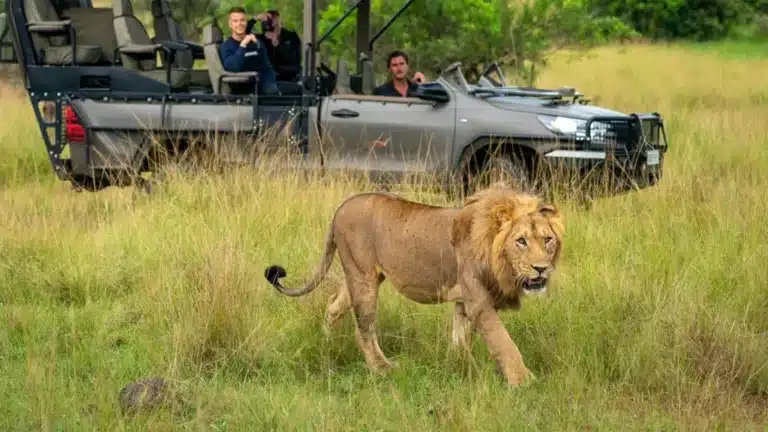
The Serengeti’s lions have been studied more continuously than any other lion population on earth, tracked by name, pride and generation since George Schaller began the work in the 1960s, continued for decades by Craig Packer and the Serengeti Lion Project, and monitored today by the Tanzania Wildlife Research Institute. That long record means the Serengeti’s roughly 3,000 lions are not simply a wildlife statistic; specific prides have documented histories, known territories and, in several cases, individual lions whose lives have been followed closely enough to be written about by name. This guide sets out how Serengeti pride life actually works, which named prides visitors are most likely to encounter, and where to find them.
How a Serengeti Pride Is Structured
A typical Serengeti pride consists of a core group of related females, mothers, daughters, sisters and cousins, who remain together for life and jointly raise cubs, alongside a coalition of one to four adult males who hold breeding rights over the pride’s territory, usually for a period of two to three years before being displaced by a stronger coalition. Pride sizes in the Serengeti commonly run from ten to twenty five individuals, though some of the better documented prides on the open plains have been recorded at considerably larger numbers during periods of high prey availability. Lions are the only truly social cat, and researchers studying the Serengeti population over multiple decades have linked this sociality to the demands of defending cubs against infanticide from rival males and the advantages of cooperative hunting against large, dangerous prey such as buffalo.
Named Prides Visitors Are Likely to Encounter
Long-term research in the Serengeti has identified more than twenty distinct, tracked prides across the ecosystem, including the Barafu, Vumbi, Simba East, Sametu, Kibumbu, Mukoma and Loliondo prides, among others. The Sametu pride, based around Sametu Marsh and Kopjes in the eastern Serengeti, has at times been recorded as the largest pride in the entire ecosystem, drawn to the marsh’s permanent water and the reliable prey it attracts even in dry years. The Vumbi and Simba East prides, whose territories sit amid the open plains and kopjes south of the Ngare Nanyuki River, became widely known through National Geographic’s long running coverage of a coalition of males known as C-Boy and Hildur, whose shifting control over these two prides was documented across several years. The Barafu pride is another long tracked group whose territory overlaps the Barafu Valley in the eastern Serengeti, an area also favoured by the Olmara marsh pride further north. Individual pride compositions shift constantly as cubs mature, males are displaced and territories are contested, so a pride encountered on a given safari will not necessarily match descriptions from even a year or two earlier, but the named territories themselves have remained recognisable landmarks in Serengeti lion research for decades.
Where to Find Lions: Central Serengeti and the Seronera Valley
The Seronera Valley and the woodland following the Seronera River hold the highest concentration of easily viewed lion prides anywhere in the park, a reputation that has made it a focal point for lion research since Schaller’s original study and remains true today. The valley’s permanent water and correspondingly dense, year round prey base support multiple resident prides whose territories overlap the main game viewing circuits, which is the primary reason central Serengeti delivers lion sightings on the overwhelming majority of multi day visits regardless of season. Guides working this area for years can often identify individual lionesses and their current cubs by sight, a level of familiarity that is simply not possible in less consistently visited zones of the park.
Where to Find Lions: The Kopjes
The granite outcrops scattered across the central and southern Serengeti, known as kopjes, are among the most reliable lion viewing locations in the park, used by prides as elevated vantage points to scan the surrounding plains for prey and as shaded, breeze cooled resting spots during the hottest hours of the day. The Moru Kopjes, Simba Kopjes and Sametu Kopjes are the most consistently productive of these formations, each associated with resident prides whose use of the rocks is a well established behavioural pattern rather than an occasional occurrence. A vehicle approaching a known kopje during the midday heat has a genuinely strong chance of finding lions resting in the shade of the rocks, one of the more dependable lion viewing opportunities the park offers outside the more active dawn and dusk hours.

Where to Find Lions: The Northern Serengeti
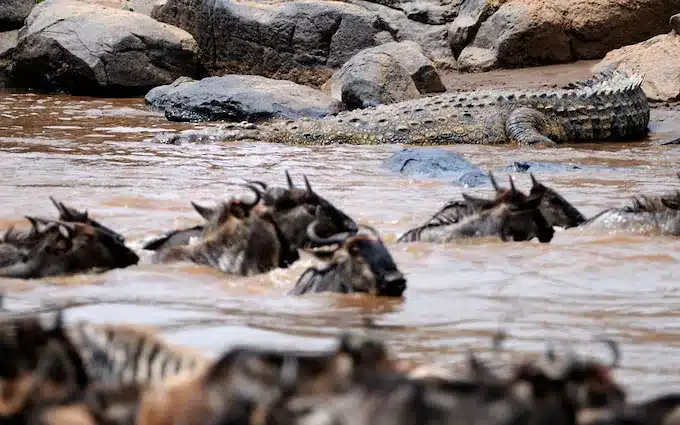
The northern Serengeti around Kogatende and the Lamai Wedge supports strong resident prides year round, with activity intensifying considerably during the July to October period when the concentration of migrating wildebeest and zebra along the Mara River draws correspondingly high predator interest. Prides in this zone are somewhat less continuously studied than the long tracked central Serengeti groups, given the area’s more remote location and shorter history of tourism infrastructure, but sightings during the crossing season are frequently outstanding, with lions positioned near known crossing points to take advantage of vulnerable animals during and immediately after a crossing attempt.

Pride Life and the Cost of Being Male
Male lions in the Serengeti face a genuinely precarious existence compared with the females of their pride. Young males are forced out of their natal pride at around two to three years of age, entering a nomadic period during which they must survive independently, often in loose coalitions with brothers or unrelated males, until they are strong enough to challenge an established coalition for control of a pride. Successful takeovers are frequently followed by infanticide, incoming males killing cubs sired by their predecessors in order to bring females back into oestrus more quickly, a brutal but well documented aspect of lion social behaviour that long-term Serengeti research has done more to establish scientifically than any other single population study. A male coalition’s average tenure holding a pride runs to only two or three years before being displaced in turn, meaning the same territory can see several complete changes of male leadership within a single decade of research observation.

Hunting Behaviour and Prey
Serengeti lions hunt cooperatively far more than solitary cats, with adult females doing the majority of hunting while males more often benefit from a kill than actively participate in bringing one down, particularly against smaller prey. Wildebeest and zebra rank as preferred prey during the rainy season when migratory herds are present in a pride’s territory, while resident prey such as buffalo, warthog and various antelope species sustain prides through the drier months or in territories the migration does not regularly pass through. Buffalo hunts are among the more dangerous undertakings a pride attempts, given the species’ size, strength and tendency to fight back collectively, and successful buffalo kills typically require the coordinated effort of several lionesses working together.
Best Time of Day and Season for Lion Viewing
Lions are most active during the cooler hours around dawn and again from late afternoon into dusk, resting through the heat of the middle of the day, which is why guides prioritise early morning and evening game drives when actively searching for prides on the move rather than simply resting. Season affects viewing primarily through visibility rather than presence, since resident prides remain in their territories year round regardless of rainfall. The dry season from June through October, when vegetation thins and animals concentrate more predictably around remaining water, generally offers the clearest sightlines, while the northern Serengeti’s July to October crossing season adds a further layer of dramatic hunting behaviour on top of already strong resident pride viewing.
Responsible Viewing Around Lions
Serengeti guides operate under clear behavioural guidelines when lions are encountered, remaining in the vehicle at all times, avoiding sudden engine revving or movement near a resting or hunting pride, and maintaining a respectful distance that allows the guide to judge natural behaviour rather than provoking a reaction. These guidelines exist because lions habituated to vehicles can still be disturbed by poor conduct, and because the same research access that has made Serengeti lions so well documented depends on maintaining animals’ natural behaviour patterns rather than conditioning them to human interference. Visitors are generally best served by trusting an experienced guide’s positioning rather than requesting a closer approach, since the guide is balancing a genuinely good sighting against the pride’s welfare in ways that are not always obvious from inside the vehicle.
Cub Survival and the Odds Against a Litter
Lion cub mortality in the Serengeti is high even in normal circumstances, with roughly half of all cubs failing to reach adulthood, a figure driven by infanticide during coalition takeovers, predation by hyenas and other lions during vulnerable early weeks, and the ordinary difficulty of surviving as a small, defenceless animal in an ecosystem full of larger predators. Lionesses typically hide newborn cubs away from the rest of the pride for the first six to eight weeks of life, moving them between den sites to reduce the chance of discovery, before reintroducing them to the wider pride once they are more mobile. This pattern is well documented at sites such as Sametu Marsh, where research teams have observed mothers repeatedly leaving cubs concealed in reed beds while hunting, returning at intervals to nurse and check on them. A pride with a healthy cub crop in a given year is generally a sign of both stable male tenure, since a coalition remaining in place long enough for cubs to mature past the vulnerable early months significantly improves survival odds, and reliable local prey availability.

Individual Lions Documented by Researchers and Guides
Long-term study of the Serengeti’s lions has, over the decades, produced detailed individual histories for specific animals rather than only pride level statistics. Coalitions have been tracked through multiple takeovers and territorial shifts, their tenures, offspring and eventual displacement recorded as part of the broader dataset that has made the Serengeti population the most thoroughly documented lion population anywhere. Guides working the Seronera area and the eastern plains around Sametu and Barafu frequently carry this kind of institutional knowledge themselves, built up over years of daily observation rather than formal research, and can often point out which lionesses in a currently resting group are litter mates, which cubs belong to which mother, and how a particular pride’s territory has shifted since a coalition changeover earlier in the year. This layered knowledge, part formal science, part accumulated field experience, is a large part of what separates an excellent Serengeti lion sighting from simply seeing lions in the distance.
Why the Serengeti’s Lions Matter Beyond Tourism
The decades of continuous research that named and tracked prides such as Vumbi, Simba East, Sametu and Barafu has produced findings that extend well beyond the Serengeti itself, shaping global understanding of lion social structure, infanticide, cooperative hunting and coalition dynamics in ways that would not have been possible from shorter or less consistent studies elsewhere in Africa. A sighting of any of these prides during a game drive is, in a genuine sense, an encounter with one of the best understood wild animal populations on the planet, a detail that adds real depth to what might otherwise be experienced as simply an excellent photograph.