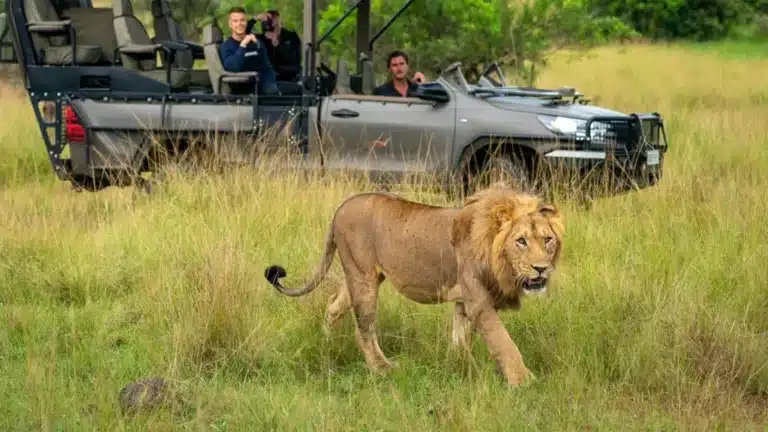
Serengeti November is the month the short rains arrive and the migration turns decisively for home, with the wildebeest herds beginning the long trek back south from the Mara River toward the calving grounds they will reach by December and January. It is a genuinely underrated month, combining a fast greening landscape, some of the lowest rates and crowd levels of the year, and a wildlife spectacle that trades the drama of a river crossing for the quieter but no less impressive sight of vast herds moving steadily across a landscape coming back to life.
Weather in November
The short rains typically begin in early November, arriving as afternoon showers that build through the day and break in intense but usually brief downpours, often clearing within an hour rather than settling into the sustained grey overcast some travellers associate with the phrase rainy season. Daytime temperatures remain warm, generally in the mid to high twenties Celsius, with increased humidity compared with the preceding dry season months. Mornings are noticeably milder than the cold starts typical of August and September, a welcome change for early game drives. Rainfall totals for November are meaningful but not extreme, and roads across most of the park remain passable, though the more remote tracks in the western and southern sectors can become temporarily difficult after a particularly heavy downpour. The transformation of the landscape is rapid and dramatic: within a few weeks of the rains beginning, the parched golden plains of October give way to a deep, vivid green that many photographers and repeat visitors specifically travel to see. Overnight temperatures rise slightly compared with the dry season too, since increased cloud cover traps more heat than the clear skies of August and September allow to escape, so mornings feel milder in a way that is easy to notice after a dry season visit earlier in the year.
Where the Migration Is in November
By November, the wildebeest herds are firmly in retreat from the Mara River, moving back south through the northern and central Serengeti in response to the fresh grazing the short rains produce. This movement is not a single coordinated sweep; herds spread out across the eastern and central sectors, often visible around Seronera, Lobo and the wider central plains, moving at their own pace rather than in the tight, dramatic concentration typical of the crossing season. A second crossing of the Mara and Grumeti rivers occurs during this southward journey, though these return crossings are generally calmer than their northbound counterparts, since water levels are typically lower following the dry season and the urgency that characterises the outbound crossings is largely absent. Guides who have watched both directions of the crossing describe the return journey as visibly less frantic, with herds taking noticeably more time to test the water and cross in smaller, steadier groups rather than the surging mass movement typical of July and August. Wildlife density across the wider park increases through November as the returning herds disperse across a broader area than the concentrated river zone that defined the preceding months.
Crowds and Booking
November stands among the quietest months on the Serengeti’s calendar, with visitor numbers well below the July to September peak and camp availability opening up considerably even at relatively short notice. Rates fall correspondingly, often thirty to forty percent below peak season pricing at the same property, making November one of the strongest value windows of the year for travellers willing to accept a chance of afternoon rain in exchange for meaningfully lower cost and far fewer vehicles at any given sighting. Camps that closed temporarily during the heaviest of the long rains earlier in the year are generally open and fully operational by November, and the short, predictable nature of the rains rarely disrupts a well planned itinerary. For travellers with flexible dates and a preference for solitude over guaranteed peak wildlife concentration, November offers some of the best value found anywhere in the Serengeti’s annual cycle.
Wildlife Beyond the Migration
November’s fresh rains trigger a wider burst of life across the park beyond the returning wildebeest herds. Many resident antelope and gazelle species give birth around this time, since the departure of the massed migratory herds reduces competition for the newly available grazing, and the resulting concentration of vulnerable young draws steady predator interest even away from the wildebeest themselves. Central Serengeti’s resident lion prides remain reliably visible around Seronera throughout November, and the eastern Serengeti, including the Gol Kopjes area, sees increasing wildlife activity as the migration begins to spread back across the plains it will fully occupy for the calving season proper. Bird watching is particularly strong in November, since the rains trigger fresh growth and insect activity that draws both resident species and early arriving migrants, and the deep green backdrop provides striking conditions for photography of any subject.

Named Camps for November
Central Serengeti properties around Seronera work well for November, offering strong resident wildlife alongside good access to the returning herds as they move through the central sector. Lobo, positioned in the northeast, is a particularly good choice for travellers wanting to witness the migration’s return journey directly, since the herds typically pass through this area on their way south. Several of the mobile camps that follow the migration through the year reposition into the central and eastern Serengeti for November specifically to track the returning herds, offering travellers a more intimate, lower cost alternative to the permanent northern properties that sit empty of migration activity by this point in the season. Given the lower overall demand, November is also a reasonable month to consider a slightly more spontaneous booking, since availability at good camps typically remains open well inside the three month mark that would be far too late for July or August.
November Compared with October and December
Against October, November trades the last remnants of crossing activity for a fully returning migration and a rapidly greening landscape, along with a further easing of both crowds and rates. Against December, November generally sees the herds still spread across the central and eastern Serengeti rather than concentrated on the southern short grass plains proper, and rainfall in November, while genuine, is typically lighter and more predictable than the buildup toward the December to March wet season. For travellers deciding between the two, November suits those prioritising value and the visual drama of a greening landscape, while December suits those wanting to be closer to the early stages of the calving season itself.
Practical Considerations for November Travel
A waterproof layer becomes genuinely useful in November in a way it is not during the dry season months, alongside the usual lightweight, breathable clothing suited to warm, humid daytime conditions. Sturdy, quick drying footwear is worth prioritising over dry season boots, since walking safaris and camp grounds can turn muddy after a downpour. Given the rains typically fall in short, predictable afternoon bursts, most operators schedule game drives for the morning and early afternoon specifically to work around this pattern, and travellers should expect their guide to adjust timing day to day based on local rainfall patterns rather than a fixed schedule.
Combining November with Other Parks
November’s lower demand and generally passable roads make it a convenient month for a multi park itinerary. Central Serengeti pairs naturally with Ngorongoro Crater, whose resident wildlife is unaffected by migration timing and whose cooler highland climate offers contrast after several days on the plains below. Tarangire is a strong addition in November too, since the first rains draw its elephant herds away from the dry season concentration around the Tarangire River and disperse them more widely across the park, which some travellers find a more natural, less crowded way to encounter them than the tighter dry season gatherings. Lake Manyara, with its groundwater forest and famously varied birdlife, benefits directly from the November rains and is a worthwhile half day or full day addition for travellers routing through Arusha at either end of a Serengeti trip. A Zanzibar extension also works well from a Serengeti trip timed for November, since the islands sit outside the worst of the short rains and offer a warm, calm beach finish to a safari built around the quieter shoulder season.
Photography in November
The deep green landscape that follows the first rains is one of the most photographed backdrops in the Serengeti’s annual cycle, offering a striking contrast to the golden, dust hazed plains of the preceding dry season months. Dramatic cloud formations building ahead of an afternoon shower produce strong, layered skies that many photographers specifically plan around, and the clarity of the air immediately after a downpour can deliver exceptionally sharp, saturated conditions for both wildlife and landscape shots. Lower vehicle numbers throughout November mean photographers have considerably more freedom to position for a clean composition at any given sighting than during the peak months, and the returning herds moving in loose, spread out groups across open plains offer compositions that differ meaningfully from the tightly packed, dust choked crossing scenes of August and September.

Common Planning Mistakes in November
A frequent misconception is that November’s rains make the Serengeti a poor choice entirely; in practice the short rains rarely disrupt a well planned itinerary, and travellers who avoid the month on this assumption alone miss out on some of the year’s best value and quietest wildlife viewing. Another common mistake is expecting a river crossing on the scale of August or September; while a second, calmer crossing does occur as the herds move south, building an itinerary specifically around witnessing one in November risks disappointment, and the month is better approached with the returning herds and the greening landscape as the primary draw. Finally, some travellers underpack for the humidity and occasional rain, bringing only dry season kit and finding themselves without adequate rain protection or quick drying clothing for the wetter conditions.
Who November Suits
November suits travellers who want strong, genuinely good value wildlife viewing, a dramatically transformed green landscape, and a much quieter park than the crowded months of July through September, and who are comfortable accepting a reasonable chance of a short afternoon shower as part of the experience. It particularly suits photographers drawn to dramatic skies and vivid green backdrops, birders, and travellers who have already experienced a peak season crossing and are looking for a different, calmer chapter of the same annual story. For anyone weighing the Serengeti’s full calendar rather than fixating on the crossing season alone, November deserves serious consideration as one of the year’s genuinely underrated windows, and it is frequently the month recommended to returning visitors who have already witnessed a peak season crossing and want to see the ecosystem’s quieter, greener side without sacrificing wildlife quality.