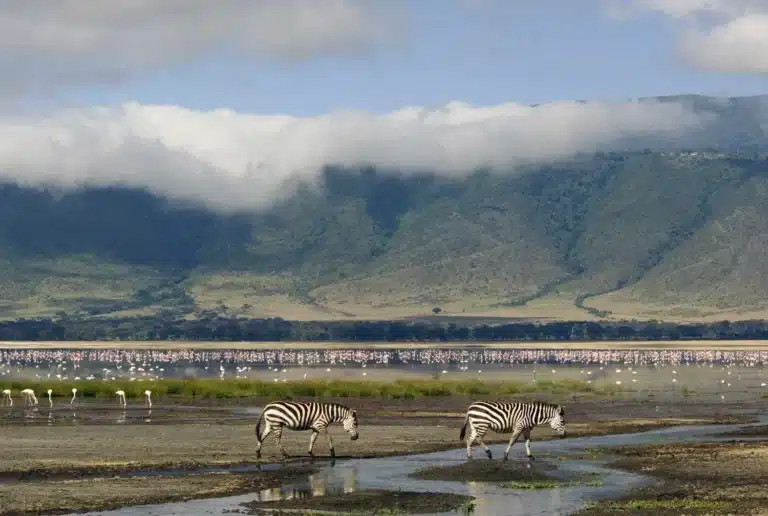
Serengeti Self-Drive is unambiguously permitted. The Tanzania National Parks Authority places no restriction on independent travellers entering in a properly equipped vehicle, and a self-driver faces exactly the same gate procedures, the same roads and the same wildlife access as anyone arriving with a guided operator. The more useful question is not whether it is allowed but whether it is actually a good way to experience the park, and the honest answer depends heavily on the vehicle, the season and how much a traveller values expert tracking over independence.
What TANAPA requires at the gate
A visitor arriving at Naabi Hill Gate, Ndabaka Gate or any other Serengeti entrance in a private vehicle needs a genuine four wheel drive vehicle capable of handling rutted, rocky and occasionally washed-out tracks, valid vehicle registration and insurance documents, and proof of identity for every occupant to calculate the correct entry fee category. Rangers check that the vehicle is roadworthy and appropriately equipped before issuing an entry permit, and a vehicle judged unsuitable for park conditions can be turned away at the gate itself, so arriving in anything less than a proper 4×4 is a genuine risk to the whole trip rather than a minor inconvenience.
Vehicle registration changes the price substantially
One detail that catches many self-drivers by surprise is that the vehicle fee itself varies sharply by registration type. A privately registered East African vehicle pays a modest daily vehicle fee, while a commercially registered vehicle, the category most rental 4x4s and any vehicle used for paid tours fall into, pays considerably more per day, a gap that can run into well over a hundred dollars depending on the vehicle and current TANAPA schedules. Foreign-registered vehicles face additional restriction and scrutiny at the gate, which is why operators renting self-drive vehicles in Tanzania strongly steer clients toward Tanzania-registered cars specifically prepared for park use, rather than a vehicle brought in from Kenya or hired informally.
The roads themselves are the real challenge, not the paperwork
The main corridor running from Naabi Hill Gate through to Seronera, and continuing east and west from there, has a reputation among professional guides for rough surface conditions, a mix of rocky sections and washboard ribbing that punishes a vehicle and its occupants if driven too fast. Speeds above roughly twenty five to thirty kilometres an hour on the worst stretches risk losing control, and a single vehicle rollover is not a hypothetical warning but a documented outcome for self-drivers who misjudge the surface. The park-wide speed limit sits at fifty kilometres an hour, but that figure is a ceiling for well-graded sections rather than a realistic target for the roughest tracks, and a self-driver unfamiliar with reading surface changes at speed is at a genuine disadvantage compared with a professional driver guide who has covered the same roads hundreds of times.
Rules that apply equally to self-drivers and guided vehicles
Off-road driving is banned throughout the park for every vehicle regardless of who is driving, and rangers do enforce this, including through reports from other visitors. Driving between six in the evening and six in the morning is prohibited inside the national park boundary, meaning a self-driver who misjudges timing and is still inside the park after the gate closing hour risks a genuine fine rather than a warning. Feeding wildlife, approaching animals too closely, and using drones without separate TANAPA and Civil Aviation Authority permits are all banned uniformly. None of these rules are stricter for self-drivers, but a self-driver has nobody else double-checking timing, fuel levels or the route back to a gate before dusk, which is precisely the kind of oversight a professional guide handles without a guest needing to think about it.
What self-drive genuinely saves
The financial case for self-driving is real. A self-drive Serengeti trip, covering a rented 4×4, park fees, fuel and public campsite or budget lodge accommodation, typically runs thirty to fifty percent cheaper than the equivalent guided itinerary, since the largest cost a guided safari carries, a dedicated driver guide’s daily fee plus the operator’s margin, disappears entirely. For an experienced overland traveller confident navigating unfamiliar roads without local knowledge, comfortable troubleshooting basic vehicle problems, and unbothered by driving rather than watching for stretches of each day, this saving is a legitimate reason to self-drive.

What self-drive genuinely costs, beyond money
The clearest disadvantage is tracking quality. Professional Serengeti guides operate within a informal but effective radio network, sharing sightings between vehicles from different camps and operators throughout the day, and reading tracks, alarm calls and vulture movement in ways that take years to develop. A self-driver has none of this. Finding a specific pride, a hunting cheetah or a river crossing in progress becomes considerably more a matter of luck than it is for a guided vehicle plugged into that network. Self-drivers also do all of their own navigation across a park covering nearly fifteen thousand square kilometres with limited signage away from the main junctions, and mobile signal is patchy to nonexistent across large sections, meaning a wrong turn late in the day can become a genuine problem rather than a minor detour.
Season matters more for self-drivers than for guided visitors
The dry season, roughly June through October, is by far the more forgiving period for self-driving, since roads are firmer and more predictable, and the risk of a vehicle becoming genuinely stuck drops substantially. The long rains, typically April and May, turn several of the park’s black cotton soil sections into serious hazards even for experienced 4×4 drivers, and self-drivers attempting the Serengeti during this period without local knowledge of which specific tracks are currently passable take on a materially higher risk of becoming stranded, sometimes for hours, in an area with no passing traffic to help.
Who self-drive genuinely suits
Self-drive is a good fit for experienced overland travellers already comfortable with African road conditions, ideally as part of a wider Tanzania or East Africa overland trip rather than a first visit to the continent, travelling in the dry season, in a properly prepared and Tanzania-registered 4×4. It is a poor fit for first-time safari visitors, anyone travelling during the long rains, and anyone whose primary goal is maximising wildlife sightings rather than independence and cost saving, since a guided vehicle’s tracking network and driver experience translate directly into more and better sightings across a typical multi-day stay.
Fuel, supplies and breakdown recovery
Fuel stations inside the Serengeti itself are limited, and a self-driver needs to plan fuel stops around Arusha, Karatu or the last town before the park boundary rather than assuming a station will be available mid-trip. Carrying a spare jerry can of fuel is standard practice among experienced self-drivers covering the western corridor or the far north, where distances between reliable fuel points are genuinely long. Breakdown recovery is the other practical gap between self-driving and a guided safari. A guided vehicle’s operator typically has a support network, a second vehicle, a relationship with a mechanic in Arusha, or at minimum a satellite phone and an established protocol for a breakdown in a remote sector. A self-driver renting a vehicle independently should confirm exactly what recovery support the rental company provides before departure, since a genuine breakdown far from Seronera, without mobile signal, is a materially different problem for a self-driver than for a guided vehicle plugged into an operator’s wider logistics.
A hybrid option worth considering
Travellers drawn to the independence of self-driving but wary of losing tracking quality sometimes combine both. A common pattern is self-driving the transit legs, Arusha to the park boundary and between sectors, while hiring a local guide to ride along for the game viewing days themselves, either a freelance guide arranged through a lodge or a driver guide attached for a specific number of days. This adds a daily guide fee back into the budget, eroding some of the cost saving, but restores much of the tracking network and local knowledge a pure self-drive trip lacks, without requiring a traveller to give up the vehicle itself. It suits travellers who want the flexibility of their own vehicle and schedule but recognise that professional tracking meaningfully changes the quality of sightings on a first Serengeti visit specifically.
Accommodation options that suit a self-drive itinerary
Public campsites, scattered around Seronera, including sites known locally as Ngiri and Tumbili, and further sites near Lobo in the north, are the natural fit for self-drivers on a budget, typically charging a modest per-person nightly fee with basic facilities and no reservation required beyond arriving before dark. Budget lodges such as Seronera Wildlife Lodge accept self-drive arrivals without difficulty, and several rustic tented camps operate on a similar basis, offering a private bathroom without the full-service inclusions of a guided safari’s mid-range or luxury camps. Booking a fixed camp for each night in advance, rather than assuming a campsite will have space on arrival, is sensible during the busier July to October period, when self-drivers competing for the same limited public campsite capacity as budget group tours can find sites fully booked by early afternoon.
What a typical self-drive route through the Serengeti looks like
Most self-drivers approach from Arusha, entering through Naabi Hill Gate after a drive of six to seven hours, then base themselves around Seronera for two or three nights to cover the central plains before deciding whether to push further into the western corridor toward Lake Victoria or north toward Lobo and the Mara River area. Both of these further sectors add considerable driving distance and time on progressively rougher roads, and a self-driver without local knowledge of current conditions should treat any plan to reach the far north or the western corridor as provisional, confirming road status with rangers at Naabi Hill or with other travellers heading the same direction, rather than assuming a route shown as passable on an older map remains so after a wet season.
Language and communication at the gate
Gate staff and rangers generally speak workable English alongside Swahili, and the entry process, while occasionally slow during busy periods, does not typically present a language barrier for self-drivers. Carrying printed copies of vehicle documents and passports, rather than relying solely on phone photographs, avoids delays if a ranger wants to inspect paperwork closely and signal is too weak to load a digital copy quickly. A basic Swahili greeting goes some way toward smoother interactions at gates and checkpoints, though it is a courtesy rather than a requirement for self-drivers to manage the process successfully. Currency is worth planning for too, since some park fees and campsite charges are collected in US dollars in cash, and gates do not reliably accept card payment, so carrying enough clean, undamaged dollar notes for the length of the trip avoids being turned back from a campsite over a payment technicality.