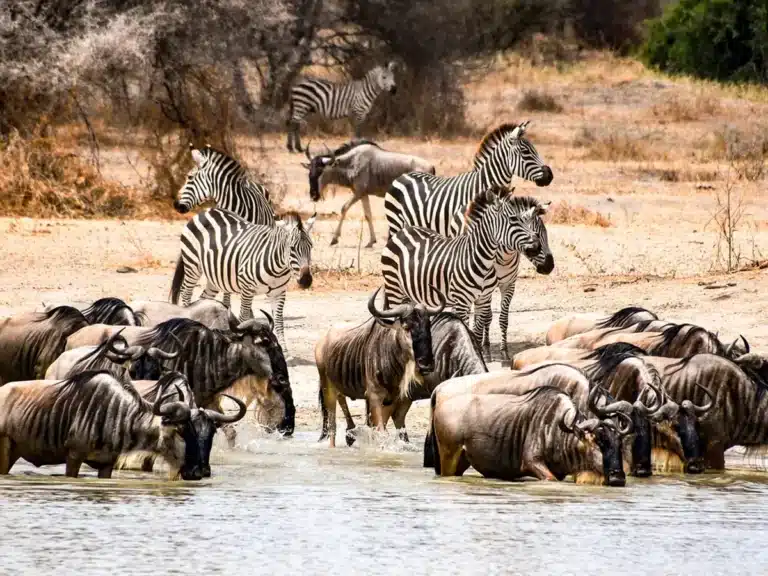
Serengeti photography tips that actually matter tend to be about settings, timing and vehicle etiquette rather than which lens costs the most. Getting a genuinely strong wildlife shot in the Serengeti depends on understanding how the park’s dust, heat and light behave through the day, how to shoot from a moving or stationary vehicle without a tripod, and how to read guide and animal behaviour well enough to be ready before, not during, the moment worth capturing. These are the specifics that separate a memorable image from a technically correct but forgettable one.
Working With Serengeti Light
The single most valuable technical habit on a Serengeti safari is treating the middle of the day as preparation time rather than shooting time. Between roughly 10:00am and 4:00pm, the overhead sun produces harsh, flat light and deep, unflattering shadows on most subjects, and the heat haze rising off open ground softens detail and reduces contrast in a way no amount of post-processing fully corrects. The strongest images come from the first two hours after sunrise and the last two before sunset, when low, warm, directional light adds depth and separates a subject from its background rather than flattening it.
Shooting in RAW format rather than JPEG is worth doing specifically because of how often Serengeti light produces blown highlights against a bright sky or underexposed shadow detail beneath an acacia canopy. RAW files retain enough recoverable data in both extremes to rescue a shot in post-processing that a compressed JPEG would have lost permanently. For anyone shooting on a smartphone rather than a dedicated camera, exposing manually for the sky using the exposure slider, rather than trusting the camera’s automatic metering, prevents the same blown-highlight problem in the field before it happens.
Lens Choice and What Actually Gets Used
A genuinely useful Serengeti kit covers two distinct needs: a telephoto lens in the 200mm to 400mm range or longer for wildlife at typical safari vehicle distances, and a wide angle lens for the park’s landscape scale, which a telephoto lens cannot capture. Photographers who bring only a long lens consistently miss the Serengeti’s other defining image, the sweep of open plains under a dramatic sky, simply because they never switch away from wildlife framing. Carrying two camera bodies, one fitted with each lens type, avoids losing time swapping lenses mid-sighting when a scene shifts from a close predator encounter to a wider landscape moment within seconds.
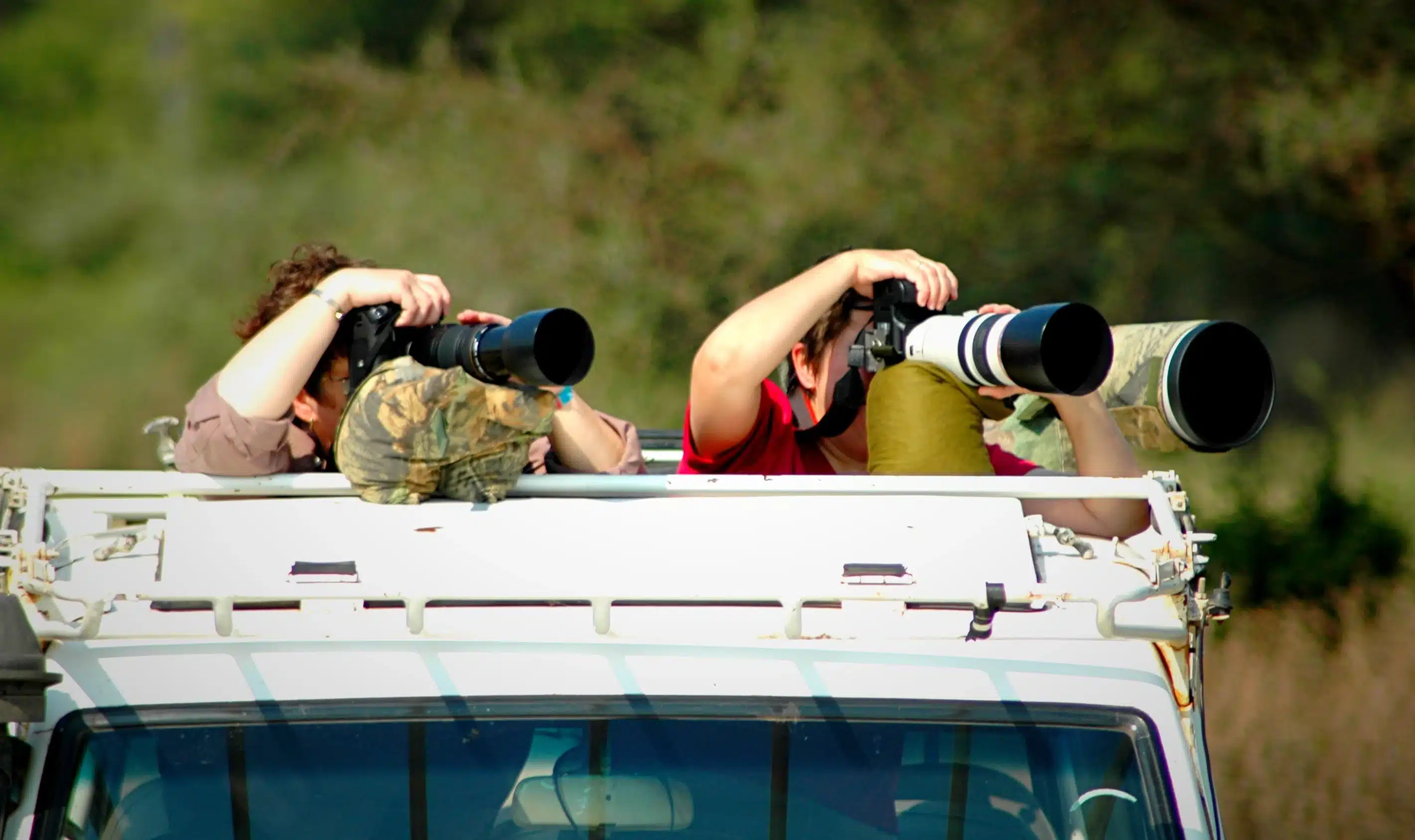
A beanbag rested on the vehicle’s window frame or roof hatch is the standard stabilisation tool on Serengeti game drives rather than a tripod, since tripods are impractical inside a vehicle and monopods are typically prohibited for safety reasons. A beanbag also dampens engine vibration in a way handheld shooting cannot fully replicate, which matters more than most first time photographers expect given how much image sharpness suffers from a running engine’s vibration at longer focal lengths.

Managing Dust and Equipment in the Field
Dust is a constant practical issue rather than an occasional inconvenience, particularly during the dry June through October season when unpaved tracks throw up fine particulate that settles on camera bodies, lenses and memory card ports throughout a full day drive. Changing lenses in the vehicle rather than outside it, keeping a rain cover or dust cover on equipment between active shooting moments, and cleaning a camera’s exterior each evening rather than waiting until the end of a trip all meaningfully reduce the risk of dust reaching a sensor or damaging moving parts over a multi day safari.
Battery and storage management deserve more attention than most visitors give them before departure. Cold pre-dawn starts followed by long, hot midday hours put unusual demands on battery life, and remote camps do not always offer reliable charging access, particularly at smaller tented properties running on generator or solar power for limited hours each day. Carrying more spare batteries and memory cards than seems necessary, and backing up images to a laptop or portable drive each evening rather than trusting a single card for an entire trip, protects against the two most common ways photographers lose images on safari.
Reading the Vehicle and the Guide
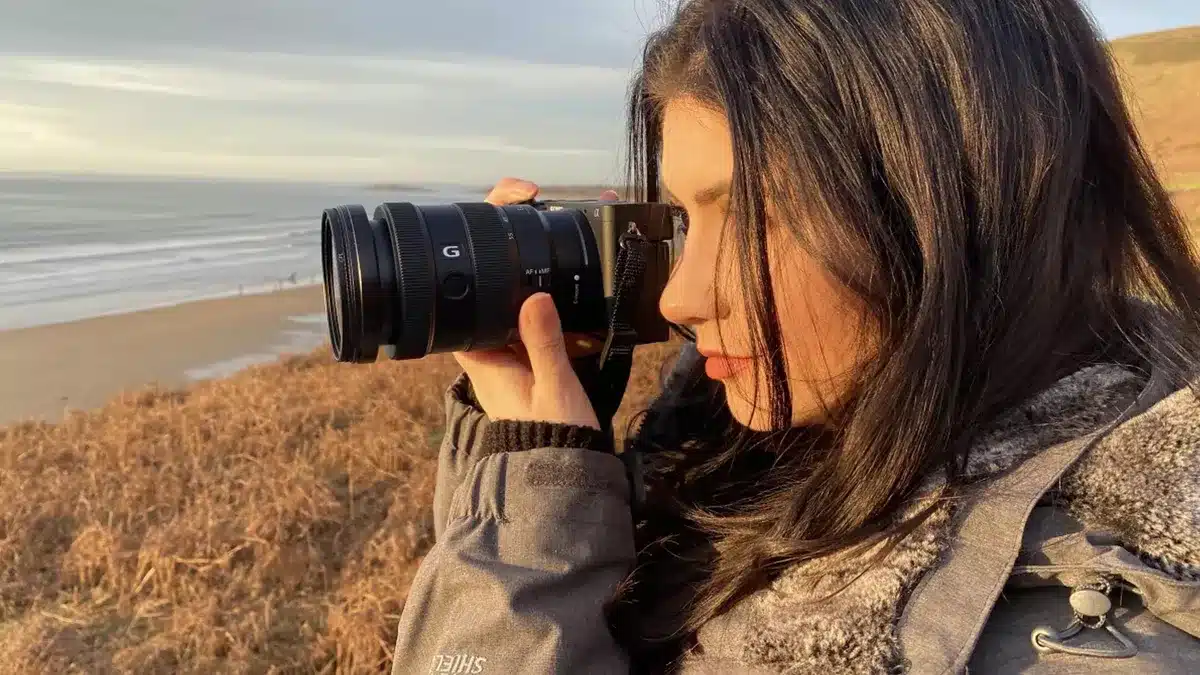
The guide’s positioning decisions affect a photographer’s results more than almost any equipment choice, and communicating clearly and early about what a shot requires makes a measurable difference. Asking a guide to angle the vehicle so the sun sits behind the photographer rather than behind the subject, requesting a slow approach rather than driving directly at an animal, and flagging in advance that photography rather than general viewing is the priority for the drive all help a guide position the vehicle more usefully than they would for a general sightseeing group.
Patience at a sighting matters more in the Serengeti than in almost any other wildlife environment, since predator behaviour in particular often involves long stretches of apparent inactivity before a brief burst of action. Guides with genuine field experience read subtle cues, a lioness’s shift in posture, a herd’s sudden alertness, that signal something is about to happen minutes before it does, and staying at a quiet sighting on a guide’s recommendation rather than moving on prematurely is frequently the difference between capturing the moment and missing it entirely.
Focus Technique for Moving Subjects
Continuous autofocus, rather than single-point autofocus locked and recomposed, is the more reliable setting for wildlife that may shift position without warning, particularly for predators mid-hunt or a herd beginning to move. Back-button focus, separating the focus trigger from the shutter button, gives more control over exactly when a camera re-acquires focus and prevents the shutter from firing on a frame the autofocus system has not actually locked onto, a common source of soft images among photographers used to a single combined shutter and focus button. Setting a fast enough shutter speed, generally at least 1/1000 of a second for genuinely fast action such as a chase or a bird taking flight, matters more than a wide aperture alone in freezing motion cleanly, even though a wider aperture helps in the lower light of early morning or late afternoon.
Composing Beyond the Close-Up
A common mistake among photographers new to safari is treating every sighting as an opportunity for the tightest possible close-up frame. Some of the Serengeti’s strongest images instead use the animal as a smaller element within a wider composition, showing a lone tree on the horizon, the texture of the plains, or a herd’s scale against the landscape it occupies. Deliberately varying focal length and framing at a single sighting, rather than defaulting to maximum zoom every time, produces a more varied and ultimately more compelling set of images from the same encounter.
Including environmental context also matters for storytelling value beyond a single strong frame. A wide shot showing where a pride rests relative to a kopje, or how a wildebeest herd’s line connects to the wider migration route, communicates something a tight portrait cannot, and a trip’s most memorable image sequence usually mixes both approaches rather than relying entirely on one.
Sharing Sightings With Other Vehicles
Popular sightings in busier areas of the Serengeti, particularly around Seronera, frequently draw multiple vehicles, and how a photographer handles that crowding affects both the experience and the results. Arriving early to a developing sighting, before word spreads across the guide radio network, typically means a better vehicle position and fewer obstructed angles than arriving after four or five other vehicles have already settled around the same animal. Where crowding is unavoidable, communicating with a guide about repositioning after a few minutes, rather than staying fixed in a single spot for the entire sighting, often opens up a better angle as other vehicles move on.
Patience also applies to sharing space courteously. Guides generally coordinate informally over radio to avoid every vehicle converging on a sighting simultaneously, and a photographer who accepts a slightly less advantageous initial position in exchange for a quieter, less crowded few minutes later in the same sighting often ends up with stronger, less cluttered final images than one who insists on the best possible angle from the first minute.
Camera Bags and Field Practicalities
A soft-sided backpack style camera bag works better inside a safari vehicle than a rigid case, both because it is easier to access quickly when a sighting develops without warning and because it fits more practically into the limited space available inside a shared vehicle. Keeping the most likely lens already mounted on the body rather than packed away saves the seconds that often determine whether a fast-moving moment gets captured at all, particularly with predator action, which can begin and end within ten or fifteen seconds.
A basic field cleaning kit, a blower, a soft brush and a microfibre cloth, is worth carrying daily rather than leaving in a suitcase back at camp, since dust accumulates over the course of a single drive and a quick clean between sightings prevents it from working its way further into the equipment. Avoiding wet wipes or liquid cleaning solutions directly on a lens in the field reduces the risk of streaking or moisture reaching the lens elements in conditions where a proper clean is not immediately possible.
Night and Low-Light Considerations
Night photography inside the Serengeti itself is limited by the park’s prohibition on driving after dark within most public areas, which restricts night sky and nocturnal wildlife photography to camp grounds or, where available, private conservancies bordering the wider ecosystem that permit night drives. For anyone specifically interested in astrophotography, the Serengeti’s minimal light pollution away from any town makes for genuinely dark skies, and a wide angle lens with a fast aperture, ideally f/2.8 or wider, paired with a stable surface rather than a handheld shot, produces the strongest results for star field images from camp.
Planning a Serengeti photography trip around December 2026 or through the 2027 season benefits from building these habits, RAW capture, two lens setups, beanbag stabilisation, and clear communication with the guide, into the trip from the first game drive rather than treating them as adjustments made only after an early sighting is missed or a shot comes back disappointing.
Reviewing images each evening, rather than waiting until returning home, also has a practical benefit beyond simple backup security. Spotting a recurring technical problem, a consistently soft focus point, an exposure habit that keeps blowing out skies, or a beanbag position that is not quite stable enough, on the second evening of a week long trip leaves several remaining days to correct it, whereas discovering the same issue only after returning home means every affected image from the entire trip is already lost. A short nightly review, even just scrolling through the day’s frames on a camera screen or laptop, is one of the simplest habits that measurably improves a trip’s final results by the time it ends.