A Serengeti and Ngorongoro 5 day itinerary is one of the most efficient ways to see northern Tanzania’s two headline destinations without a rushed pace, typically built around three nights in the Serengeti and one or two nights at Ngorongoro, beginning and ending in Arusha. This structure works because the two parks sit on the same road route, so the transfer between them doubles as a game drive rather than pure transit time, and because the crater’s single standout day of wildlife viewing pairs naturally with the Serengeti’s greater range of terrain and longer stay.
Day 1: Arusha to Central Serengeti
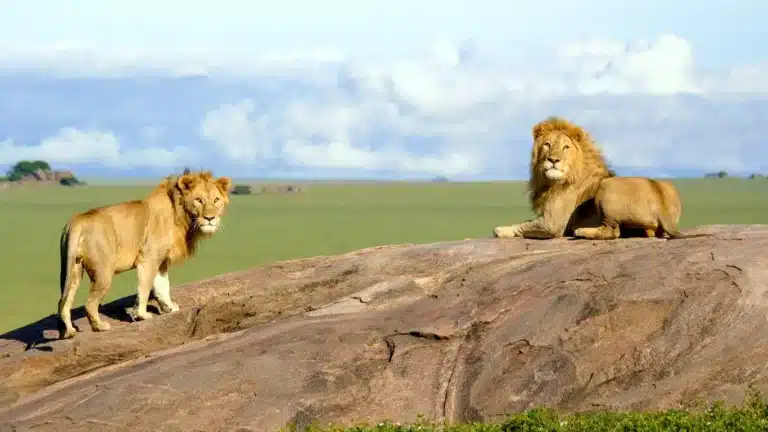
The first day is largely a travel day, covering the roughly 325 to 350 kilometre road journey from Arusha to Central Serengeti, a drive of six to eight hours including stops. The route runs through Mto wa Mbu and Karatu before climbing into the Ngorongoro Conservation Area, passing along or near the crater rim, then descending onto the open plains that lead to Naabi Hill Gate, the formal entrance to Serengeti National Park. Most itineraries schedule a lunch stop at or near Naabi Hill, both for practical reasons and because the gate area itself offers an early taste of the park’s wildlife, with kopjes nearby that are a favoured resting spot for lion. From Naabi Hill, the drive continues into the park with a game drive built into the final leg of the journey, arriving at a Central Serengeti camp, typically in the Seronera area, in the late afternoon in time for a first proper look at the park before dinner.

Day 2: Full day in Central Serengeti
The second day is dedicated entirely to game drives within Central Serengeti, generally structured as a morning drive, a return to camp for lunch and a rest during the hottest part of the day, and an afternoon drive running through to sunset. Seronera and the surrounding valley are among the richest wildlife areas in the entire park, supported by the year-round water of the Seronera River, and this reliability is precisely why most itineraries anchor their longest single stretch of Serengeti time here rather than in a more seasonal sector. Large lion prides are a near-certainty in this area regardless of season, and leopard, cheetah, elephant and hippo are all realistic sightings across a full day of driving, with the exact mix depending on where the guide chooses to focus based on recent activity reported by other vehicles and camp staff.

Day 3: Central Serengeti, second full day, or a shift toward a second zone
A third day gives an itinerary genuine flexibility depending on the season and on what the first two days have already produced. During the drier months, many itineraries use this day for a second full day of game drives in and around Seronera, since the concentration of resident wildlife here rewards a slower, more thorough exploration rather than a rush to a new area. During the migration months, roughly June through October for the northern sector or January through March for the southern plains, some itineraries instead use this day to relocate toward whichever part of the park the migration currently occupies, accepting a longer drive in exchange for a chance at witnessing the migration itself rather than staying purely within Central Serengeti’s resident wildlife. Which approach suits a particular trip depends heavily on the specific dates travelled and on how strongly migration viewing weighs against the reliability of Central Serengeti’s year-round game.

Day 4: Serengeti to Ngorongoro Crater rim
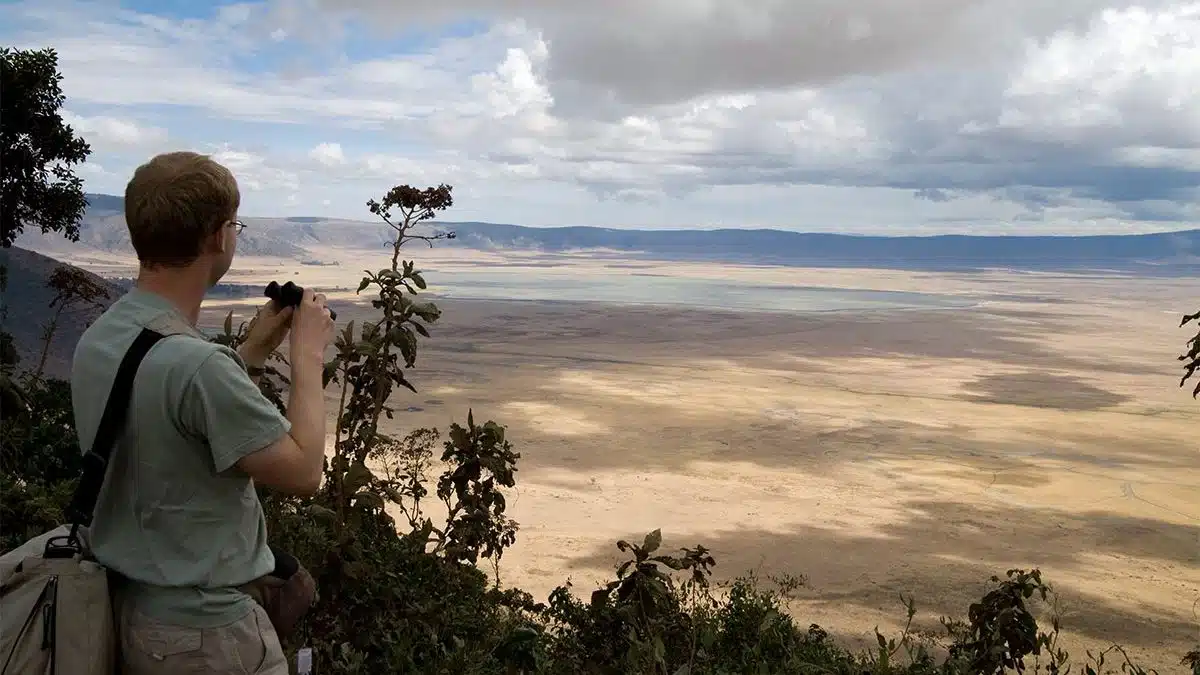
The fourth day retraces the road route in reverse, from Central Serengeti back through Naabi Hill Gate and into the Ngorongoro Conservation Area, with a final Serengeti game drive built into the morning before departure. The drive from Seronera back to the crater rim takes roughly three hours, and the day typically includes a stop at Olduvai Gorge, a short detour off the main route holding genuine significance as one of the sites where important early hominin fossils were discovered, with a small museum worth the modest time it adds to the day for anyone with an interest in human origins. Arrival at a lodge on or near the crater rim generally comes in the late afternoon, with the crater itself, some 2,200 metres above sea level, offering a noticeably cooler climate than the Serengeti plains below, worth bearing in mind for evening clothing.
Day 5: Ngorongoro Crater floor and return to Arusha
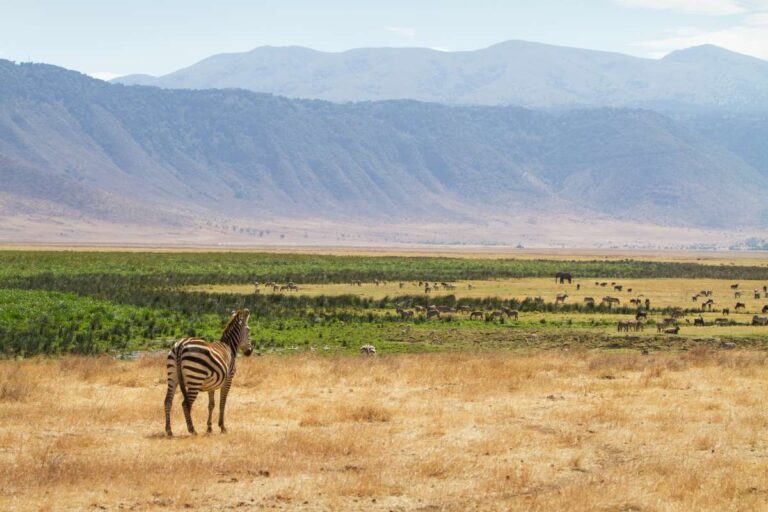
The final day begins early, generally with a descent to the crater floor by around 6:30am to take advantage of the cooler morning temperatures and the period of highest predator activity before the heat of the day sets in. The crater floor, roughly 260 square kilometres in area, holds one of the highest densities of wildlife anywhere in Africa within a genuinely compact and self-contained space, and a five hour game drive here routinely produces sightings of elephant, buffalo, hippo, hyena, lion and, with reasonable luck, the endangered black rhino, giving many itineraries their best realistic chance at a full Big Five day within a single morning. After the crater floor drive, the itinerary climbs back to the rim for a late lunch before the final drive back to Arusha, generally arriving in the late afternoon or early evening depending on how much time was spent on the crater floor and how heavy traffic through Karatu and Mto wa Mbu happens to be that day.
What this itinerary genuinely offers that a Serengeti-only trip does not
The specific value of pairing the Serengeti with Ngorongoro on a five day trip, rather than spending the full five days in the Serengeti alone, is the crater’s exceptional wildlife density concentrated into a single, highly reliable day, which is not something the Serengeti itself reliably replicates in a single day of driving across its considerably larger area. Black rhino sightings in particular are meaningfully more likely in the crater than almost anywhere else on a standard northern circuit itinerary, since Ngorongoro holds one of Tanzania’s more secure remaining rhino populations within a contained and heavily monitored area. The trade-off is time: two of the five days are spent largely on the road rather than on game drives, which is a real cost against a Serengeti-only itinerary of the same length, where every day after arrival can be dedicated fully to wildlife viewing within the park.
Adjusting the balance: more Serengeti nights versus more crater time
The three nights Serengeti, one night Ngorongoro split described above is the most common structure for a five day itinerary, but it is not the only reasonable one. A traveller specifically prioritising the crater, or visiting during a season when Central Serengeti’s game viewing is comparatively quiet, might reasonably shift to two nights in the Serengeti and two on the crater rim, trading some Serengeti time for a second full day exploring the crater floor or the surrounding Ngorongoro Highlands. Conversely, a traveller whose primary interest is the migration itself, travelling during a peak month when the migration sits in a specific and accessible part of the Serengeti, might reduce the crater portion to a single overnight purely to tick the box, prioritising every available hour for the Serengeti’s migration viewing instead. Neither approach is objectively superior; the right balance depends entirely on which specific wildlife experience matters most to the traveller booking the trip.
Fees to budget for across this itinerary
A five day Serengeti and Ngorongoro itinerary structured this way involves several separate and cumulative fees worth budgeting for in advance: Serengeti park entry fees for each day spent inside the park, a Serengeti concession fee for each night spent at a camp inside the park boundary, the Ngorongoro Conservation Area transit fee charged when passing through en route to the Serengeti, and a separate Ngorongoro Conservation Area entry and crater descent fee for the day spent on the crater floor itself. These fees are genuinely significant relative to the overall trip cost and are almost always included within a quoted package price by a reputable operator, but confirming this inclusion in writing before booking avoids any surprise at the point of travel.
Best time of year for this specific five day combination
Because this itinerary allocates only three days to the Serengeti, timing the trip to coincide with strong game viewing in Central Serengeti matters more here than it would on a longer, single-destination trip with room to chase the migration across multiple sectors. The dry season months, roughly June through October, offer the most reliable combination of good weather for driving, strong resident wildlife concentrations around Seronera’s permanent water, and a realistic chance of the migration itself being within reach of Central Serengeti depending on the specific month. The calving season in the southern Serengeti, January through March, offers a different but equally strong case for this itinerary, since the crater and the southern plains sit reasonably close together on the same general route, making a version of this itinerary that leans toward the southern plains during calving season a genuinely strong alternative to the standard Central Serengeti focus described above. The long rains, from roughly March through May, are the one period where this itinerary is hardest to recommend without qualification, since heavy rain can slow the road transfers considerably and reduce visibility in the crater itself, though the trade-off is meaningfully lower camp rates and far fewer other vehicles at any given sighting.
Who this itinerary suits, and who might want a different structure
This particular five day structure suits a first-time visitor to northern Tanzania who wants a genuine, well-rounded introduction to both of the region’s headline destinations without the cost and time commitment of a longer trip, and who is comfortable trading a slightly faster pace for breadth. It suits less well a traveller whose entire trip is built around a single, specific goal, such as witnessing a Mara River crossing during its narrow peak window, since the itinerary’s fixed structure does not leave much room to extend a Serengeti stay reactively if the migration’s timing shifts, as it often does by two to four weeks in either direction depending on that year’s rainfall. For a traveller in that position, a Serengeti-only itinerary of similar total length, with the flexibility to adjust the specific zone visited based on real-time migration reports, is often the better fit, with the Ngorongoro Crater added as a separate short extension either before or after rather than folded into a single fixed five day plan.
Practical notes on pacing this particular itinerary
Because two of the five days involve several hours of road travel, this itinerary rewards travellers who are comfortable with a moderately demanding pace rather than those seeking to minimise time in a vehicle. Building in reasonable rest periods around the midday heat on the full game drive days, and treating the two travel days as an opportunity to see the landscape and stop at Olduvai Gorge or the crater rim viewpoints rather than as pure transit to be endured, tends to produce a noticeably more satisfying trip than an itinerary approached purely as a checklist of destinations to reach as quickly as possible.