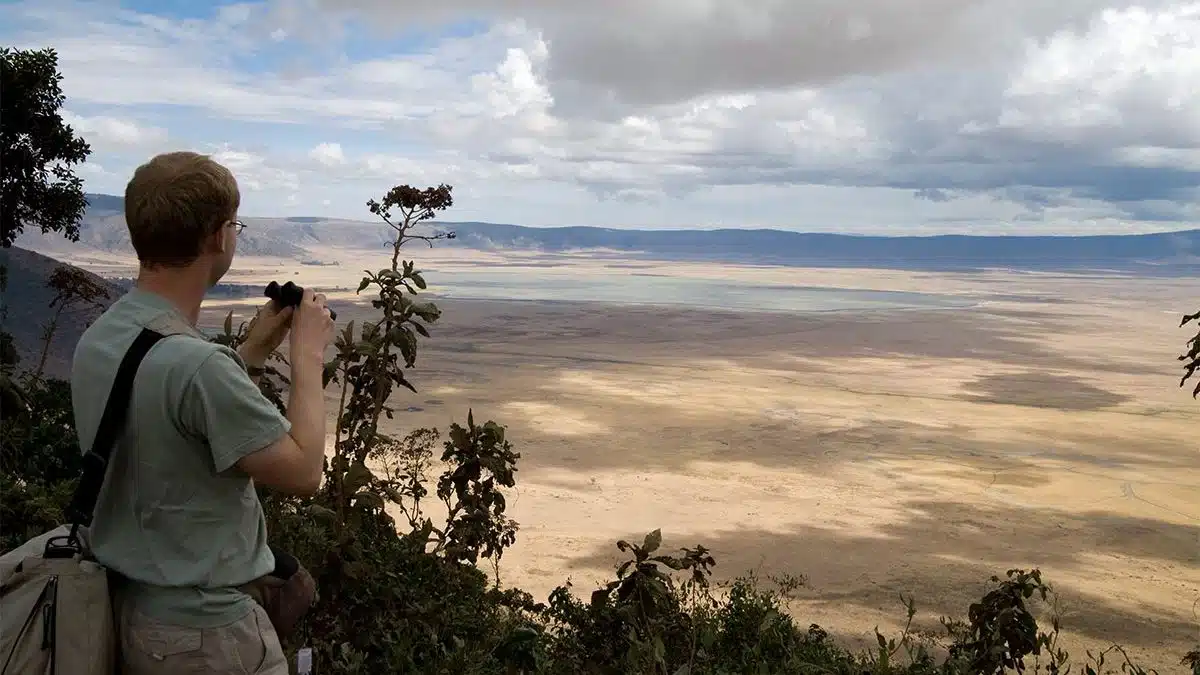
2-Day Ngorongoro Photography Safari: Tarangire Baobabs at Golden Hour — Then the Crater Floor at Dawn
Every drive in this program is timed for photographic light. Day 1 arrives in Tarangire for the golden-hour baobab and elephant window. Day 2 descends the crater at first light — before other vehicles, before the midday haze, with the Big Five fully active on the caldera floor.
Overview
Baobabs at Golden Hour. The Crater Before the Crowds.
ZFI-E4 is RYDER Signature's photography-optimised 48-hour Zanzibar fly-in — every structural element is calibrated for photographic light and subject quality rather than general wildlife viewing.
ZFI-E4 is RYDER Signature’s photography-optimised Zanzibar fly-in program — a 48-hour circuit in which every structural element is calibrated for photographic quality rather than wildlife diversity or time efficiency. The Tarangire arrival time targets the golden-hour window. The Ngorongoro rim overnight enables the pre-dawn descent. The guide selection prioritises photographic skills over naturalist breadth. The vehicle positioning is deliberate and patient. The result is a program that delivers two of the five most photographed wildlife environments on the Northern Circuit — Tarangire’s baobab-elephant golden hour and Ngorongoro Crater’s dawn — within a 48-hour frame accessible from the Zanzibar coast.
The program exists because serious wildlife photographers have specific requirements that a standard safari format does not always meet. Drive timing matters enormously: the difference between arriving at Tarangire at midday and at golden hour is the difference between flat, uninteresting light and the directional warmth that makes the baobab trunks glow. The number of vehicles at a sighting matters: the dawn crater floor has ten vehicles; the mid-morning crater floor has sixty. The patience of the guide at a sighting matters: a brief fifteen-second pause before moving on is useless to a photographer working with a 500mm lens on a slow-moving rhinoceros. ZFI-E4 addresses all three of these variables deliberately.
At the HEL tier, the combination of Crater’s Edge or The Highlands by Asilia for the overnight — properties positioned at the crater rim’s highest accessible point, with direct caldera views from some rooms — and a photography-specialist guide upgrade creates a program that is not available through any other Zanzibar operator in this configuration. RYDER Signature’s field intelligence network, which provides real-time positioning on the black rhinoceros, specific lion prides, and wild dog pack territories, is a further advantage that generic tour operators cannot replicate.
Tarangire golden-hour arrival Day 1, dawn crater descent Day 2 — the two most sought photographic light windows on the Northern Circuit, delivered consecutively.
The 15:00–18:00 golden-hour window in Tarangire — elephant herds backlit against ancient baobabs — is the most distinctive wildlife photography subject in northern Tanzania.
The crater floor before 08:00, before other vehicles arrive — lions at dawn kills, black rhinoceros active, flamingos undisturbed. An exclusive window for rim overnighters.
Staying on the rim enables the earliest legal crater descent — a 2–3 hour advantage over Arusha day-trippers that produces fundamentally different photographic conditions.
Unlike standard itineraries, every drive start and end in ZFI-E4 is positioned for photographic light rather than visitor convenience.
Bean bag camera rests are included in the vehicle at all tiers — essential for telephoto wildlife photography from a moving vehicle.
Itinerary at a Glance
Six Days, Three Parks, One Lifetime Memory
The table below outlines the daily progression of your safari, including overnight locations and meal arrangements.
| Day | Route | Overnight | Meal Plan | Highlights |
|---|---|---|---|---|
| 1 | Zanzibar ✈ Arusha → Tarangire → Ngorongoro Rim | Ngorongoro Rim | L D | ★ Tarangire golden-hour baobab photography · Elephant herds · Rim sundowner |
| 2 | ★ Dawn Crater Photography → Arusha ✈ Zanzibar | B L | Dawn crater descent · Black rhino · Lion at kills · Picnic inside · Return flight |
B = Breakfast · L = Lunch · D = Dinner
Explore the Route
Your Safari Route, Mapped
Follow the animated route from Arusha through the parks.
Investment
Choose Your Safari Style
Every tier delivers the same exceptional guiding, the same game drives, and the same parks. The difference lies in where you sleep.
Mid-Range · MID
Explorer
USD 1,300 from per person
Accommodation Portfolio
🏨 Ngorongoro Rim (1N): Ngorongoro Serena Safari Lodge
- All mainland charter / scheduled flights
- All park and conservation area fees
- All meals as indicated
- Private 4×4 Land Cruiser and RYDER guide
- Flying Doctors emergency evacuation coverage
- Bean bag rests in vehicle
- Golden-hour timed drives
- Full crater photography day
Luxury · LUX
Signature
USD 2,000 from per person
Accommodation Portfolio
🏨 Ngorongoro Rim (1N): Ngorongoro Lodge by Melia
- All mainland charter / scheduled flights
- All park and conservation area fees
- All meals as indicated
- Private 4×4 Land Cruiser and RYDER guide
- Flying Doctors emergency evacuation coverage
- Bean bag rests
- Photography-positioned vehicle
- Dawn crater descent
- Rim sunset setup
High-End Luxury · HEL
Pinnacle
USD 3,000 from per person
Accommodation Portfolio
🏨 Ngorongoro Rim (1N): Crater's Edge / The Highlands by Asilia
- All mainland charter / scheduled flights
- All park and conservation area fees
- All meals as indicated
- Private 4×4 Land Cruiser and RYDER guide
- Flying Doctors emergency evacuation coverage
- Photography specialist guide (upgrade option)
- Bean bag rests
- Private rim sunset setup
- Maximum crater floor time
Day-by-Day
Your Journey, Day by Day
Tarangire Golden Hour
Zanzibar → Arusha → Tarangire → Ngorongoro Rim
The timing of the Arusha arrival and Tarangire transfer is calibrated to a specific objective: reaching the park boundary at approximately 15:00, when the afternoon golden hour begins. This is not an approximation — the 2.5-hour Arusha-to-Tarangire transfer is timed backward from the golden-hour opening, and the aircraft connection to Arusha is selected to support this timing. For photographers, the difference between arriving at Tarangire at 13:00 (midday flat light) and 15:00 (beginning of golden hour) is the difference between acceptable images and extraordinary ones. The 45-minute golden-hour window from approximately 15:30 to 18:00 in Tarangire produces light conditions that are unlike anywhere else in the Northern Circuit: the baobab trunks illuminate from the side, creating deep shadows in their fissures and hollows; the elephant herds move against a backlit grassland that turns gold and copper; and the long horizontal shadows from every animal and tree create graphic compositions of enormous power.
Your guide understands the photographic requirements of this program from the briefing stage. Vehicle positioning is deliberate and specific — perpendicular to the light source, below the subject’s eye line where possible, and stationary long enough for proper exposure without vehicle vibration. Bean bag rests are in the vehicle for telephoto work. The specific circuit driven through Tarangire on Day 1’s afternoon is chosen for photographic access to the elephant-baobab interface rather than for maximum sightings count: quality of encounter over quantity. Wild dogs are tracked using field network intelligence and positioned for approach if located. The Tarangire River areas at golden hour — with the water catching the last light and elephants wading to the opposite bank — are among the most photographed subjects in the Northern Circuit, and your guide knows every accessible vantage point along the river’s accessible sections.
The drive from Tarangire to the Ngorongoro rim property takes approximately 2.5–3 hours via the crater highlands road, arriving after dark. The rim overnight at the Ngorongoro Serena, Ngorongoro Lodge by Meli, or Crater’s Edge (depending on tier) places you at the crater’s edge for the Day 2 descent. At the HEL tier, Crater’s Edge and The Highlands by Asilia are positioned at the rim’s highest accessible point — some rooms have direct caldera views and allow pre-dawn rim photography from the property before the descent. The night sky above the Ngorongoro rim, at over 2,000 metres elevation and far from urban light pollution, is itself a photographic subject for guests with long-exposure capability and tripod equipment.
Dawn Crater
Dawn Ngorongoro Crater Descent → Return to Zanzibar
The 05:30 departure from the rim property is non-negotiable for photography. The Ngorongoro Crater’s photographic quality is inversely correlated with the number of vehicles on the floor — and the number of vehicles on the floor is directly correlated with time. Before 08:00, the day-trip vehicles from Arusha have not yet arrived, and the crater floor has perhaps ten to fifteen vehicles for its entire 260 km² area. After 10:00, there may be sixty to eighty vehicles at the most popular sightings. The pre-08:00 window is exclusively available to rim overnighters, and it is definitively the finest photography window the crater offers.
The crater floor at first light — blue-hour transitioning to golden as the sun crests the eastern rim wall — produces light conditions of exceptional quality. Shadows fall across the caldera floor in long parallel lines from every baobab and acacia. The lion prides are still in overnight positions: typically at kills along the floor drainage lines or transitioning between sleeping positions in the morning light. The black rhinoceros — found most reliably near the Munge Stream and the short-grass areas adjacent to the soda lake — is active in the early morning before retreating to shade in the midday heat. Your guide will prioritise rhinoceros positioning for photographers: approaching with the light behind the vehicle, parking at sufficient distance to avoid disturbing the animal’s natural behaviour, and providing the time to work the subject from multiple angles. The flamingos on Lake Magadi are at their most concentrated in the early morning before wind disrupts the surface reflections.
A picnic lunch inside the crater at a viewpoint selected for its photographic access to hippos and waterbirds extends the floor time through the late morning before the afternoon exit and return to Arusha. The photographic yield of a full ZFI-E4 program — golden-hour Tarangire on Day 1, pre-dawn rim night sky, dawn crater descent on Day 2 — covers three of the five or six most photographed wildlife environments on the Northern Circuit. For photographers based at Zanzibar, it is the highest return per day of any available program.
Where to Stay
Where You Stay Matters as Much as Where You Go
Every property on this route is one we know personally. Here is what's waiting for you each night.
What's Included
Inclusions & Exclusions
✓ What's Included
- All mainland charter / scheduled flights as per itinerary
- Private 4×4 Land Cruiser with pop-up roof on all game drives
- Professional English-speaking RYDER Signature guide throughout
- All nights accommodation as specified per tier
- All meals as indicated in the day-by-day itinerary
- All national park entry fees and conservation area charges
- Bottled mineral water during all drives and transfers
- Flying Doctors emergency evacuation coverage
- 24/7 RYDER Signature concierge support
✗ What's Not Included
- Zanzibar ↔ Arusha / Seronera connection flights (quoted separately)
- Tanzania entry visa (USD 50 — immigration.go.tz)
- Travel insurance with medical evacuation (mandatory)
- Tips and gratuities (USD 30–50/day per vehicle)
- Personal expenses and alcoholic beverages
- Excess luggage above 15 kg + 5 kg carry-on limit
- Optional supplements listed below
Elevate Your Journey
Signature Additions
Optional experiences your specialist can layer into this itinerary — search and select any addition from our full collection.
Common Questions