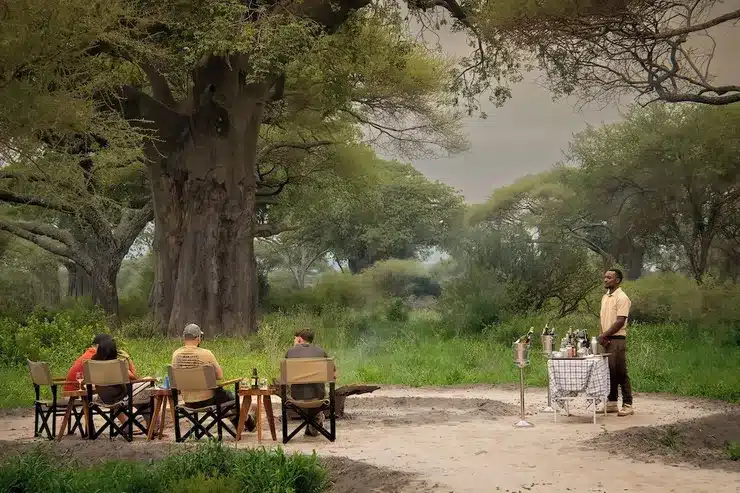
The best time to visit the Ngorongoro Crater depends far less on whether wildlife will be present, since the crater’s resident population of roughly 25,000 large mammals never leaves, and far more on rainfall, mist on the rim and how many other vehicles will be sharing the descent road with you. Unlike the Serengeti, where timing a visit around the wildebeest migration can make or break a trip, the Ngorongoro Crater holds its lions, buffalo, hippos and black rhino in the same enclosed caldera twelve months of the year. That single fact changes the whole planning question. Instead of asking when the animals arrive, the more useful question is which month suits your tolerance for rain, your appetite for crowds and your budget for one of northern Tanzania’s most expensive single day excursions.
Why the Crater Barely Has an Off Season
The Ngorongoro Crater floor sits at around 1,800 metres, enclosed by walls that rise to a rim above 2,200 metres, and this bowl shape traps water, grazing and predators together in an area of roughly 260 square kilometres. Because the animals cannot migrate out in search of better grazing elsewhere, the crater supports the highest density of predators of any protected area in Africa, and sightings of lion, spotted hyena, buffalo and the endangered black rhino are close to guaranteed on any given day, in any given month. What genuinely changes with the seasons is the amount of standing water in the Lerai Forest and around Lake Magadi, the thickness of mist rolling over the rim in the early morning, and the condition of the Seneto descent road and the Lerai ascent road after heavy rain. Even bird life responds to the seasons more visibly than mammals do, since the shallow soda waters of Lake Magadi draw far larger flocks of lesser and greater flamingo when the lake holds more water after rain, then concentrate again into a smaller, easier to photograph group as the lake shrinks through the dry months.

June to October: The Dry Season
This stretch is Tanzania’s classic high season, and for the crater it means clear skies, afternoon temperatures on the floor holding around 19°C to 22°C, and cold, often frost tinged mornings on the rim that make a fleece or down jacket essential for the pre dawn descent. Lake Magadi shrinks during these months, concentrating flamingos into a smaller area and making them easier to photograph in good light. This is also when rim lodges such as Ngorongoro Serena, Sopa Lodge and Lemala Ngorongoro command their highest rates, and when the single access road down into the crater carries the heaviest queue of Land Cruisers at the gate each morning.

November and December: The Short Rains
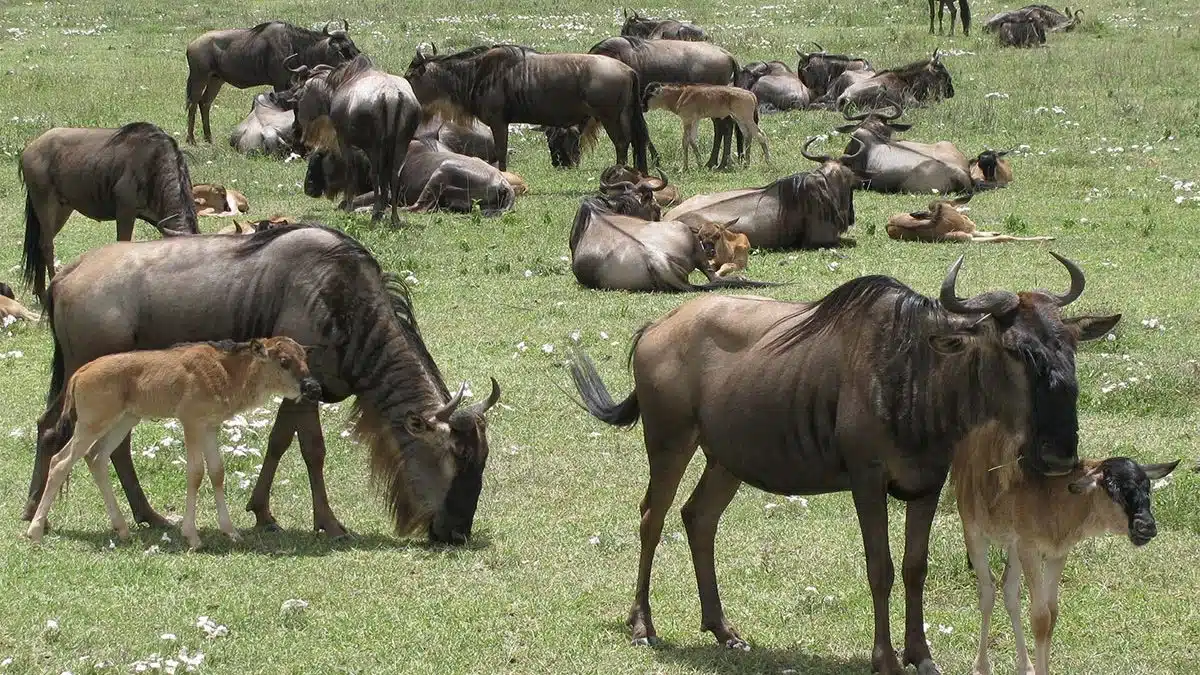
The short rains arrive in bursts rather than as a solid wet season, typically as an hour or two of afternoon downpour rather than a day lost entirely to weather. Rainfall in December averages well over 100mm across the wider conservation area, the highest monthly total of the year by most long term records, yet mornings on the crater floor are frequently clear and bright before the clouds build later in the day. Elephant bulls tend to concentrate around the Lerai Forest during these wetter months, drawn by the fresh growth along the Lerai Stream, and this is a genuinely good period to combine a crater visit with the early stirrings of the wildebeest calving season building on the short grass plains further north around Ndutu and Naabi Hill, outside the crater itself.

January and February: The Driest Interlude in the Wet Season
Confusingly, this pair of months sits inside the wet season on the calendar but behaves more like a dry spell in practice, with rainfall in the conservation area typically lower than either November, December or the long rains that follow. Daytime temperatures on the crater floor climb into the low twenties, the grass across the crater’s open savannah is still green from the short rains, and photographic light tends to be clean and dust free. February in particular coincides with the peak of the wildebeest calving season on the plains north of the crater, which draws many travellers to base themselves at a rim lodge for a day trip onto the Ndutu plains in addition to the standard crater floor descent.
March, April and May: The Long Rains
April is consistently the wettest month across the wider Ngorongoro Conservation Area, with rain that can fall for a sustained period rather than the short bursts typical of the short rains, and the Seneto descent road turns genuinely slick in places. This is also the quietest stretch of the year for tourism across the whole northern circuit, which means noticeably lower rates at rim lodges, thinner crowds at the crater gate, and a landscape on the floor at its most vividly green. Visibility from the rim itself can be compromised by low cloud and mist for a good part of the morning, so travellers prioritising crater floor game viewing over rim views tend to do well in this period, provided they accept the possibility of a wet, occasionally cold day.
Crowds, Rim Mist and What Actually Changes Month to Month
Because the crater floor is managed under a strict permit system, with vehicles typically allowed six hours on the floor and a fixed descent and ascent road network, congestion at popular sightings such as a pride of lion on a kill can become an issue during the July to September peak, when dozens of vehicles converge on the same short stretch of track. Outside these peak months, the same sightings are shared with a fraction of the traffic. Rim mist is a year round possibility given the altitude, but it is most persistent during the long rains and least likely during the dry season, when the sky above the rim is reliably clear by mid morning.
Timing the Crater Against the Rest of a Northern Circuit Trip
Very few travellers visit the Ngorongoro Crater in isolation, since most itineraries combine it with the Serengeti, Tarangire or Lake Manyara as part of a wider northern circuit route. This creates a practical constraint worth factoring into any timing decision: the crater’s own seasonal pattern does not always line up neatly with the best month for the rest of the trip. A traveller building an itinerary around the Serengeti’s wildebeest river crossings, which peak between July and September, will naturally pass through the crater during its busiest and driest months as a result, regardless of whether that traveller would otherwise have chosen that window for the crater alone. Conversely, a traveller timing a visit around the Serengeti’s February calving season on the southern plains is well placed to add the Ngorongoro Crater onto the same trip, since the crater rim sits within a two to three hour drive of Ndutu and the two experiences complement each other on the same week long itinerary.
What the Rain Actually Looks Like on the Ground
Visitors picturing a wet season safari as a washout tend to be pleasantly surprised once they understand how rain behaves in this part of the Rift Valley. Even during the long rains, storms typically build through the late morning and break in the early afternoon, which means the pre dawn descent onto the crater floor and the first two or three hours of game viewing are frequently dry regardless of the calendar month. Experienced guides also read the cloud build up over the rim and time the return ascent to avoid the worst of a downpour on the Lerai ascent road, which becomes noticeably more difficult to negotiate once its clay surface is saturated. A full day lost entirely to rain is rare even in April, though a shortened or muddier drive is common.
Photography Light and Air Clarity by Season
Photographers have a genuine reason to favour certain months over others beyond comfort alone. The dry season from June to September delivers the clearest air and the sharpest long distance views across the crater floor to the far wall, though the trade off is a duller, more uniformly brown landscape and harsher midday light once the sun climbs above the rim. The period from January to May, by contrast, produces a green floor that photographs richly against the dark volcanic soil, along with dramatic cloud formations building over the rim in the afternoon that many photographers actively seek out rather than avoid. Dust, a real issue for camera gear during the dry months, is largely absent once the rains begin.
How Rates and Availability Shift Through the Year
Rim lodges price the year in three broad bands that roughly mirror the seasons described above. Peak season rates apply from roughly late June through September and again over the Christmas and New Year fortnight, when properties such as Ngorongoro Crater Lodge and the Serena and Sopa lodges on the rim fill well in advance and command their highest nightly rates. A shoulder season runs through January and February, with moderate pricing and generally good availability outside the Christmas peak. The lowest rates of the year, often 20 to 30 percent below peak, apply through the long rains from March to May, when some smaller camps reduce their staffing or close briefly for maintenance, so it is worth confirming directly with an operator that a specific property is operating before booking that window.
Matching the Month to the Traveller
Travellers chasing the driest weather and the clearest rim views should target July through October, accepting higher rates and busier tracks in exchange. Those who want strong wildlife density combined with a realistic chance of witnessing calving season activity nearby should look at late January through February. Travellers most concerned with value and solitude, and least concerned about the possibility of a rain delayed morning, will find March through May the most rewarding, with the crater at its greenest and its emptiest simultaneously. None of these windows carries any real risk of missing the crater’s headline wildlife, since the enclosed ecosystem simply does not allow the animals to be anywhere else. Packing for any month should assume a temperature swing of 15°C or more between a pre dawn rim departure and a midday floor stop, since the altitude difference between rim and floor is itself close to 500 metres. Looking ahead to the 2026 and 2027 seasons specifically, this pattern is not expected to shift in any meaningful way, since the crater’s rainfall bands are governed by the same East African monsoon cycle year after year rather than by anything specific to a given calendar year, so a traveller planning now for a December 2026 departure, or for any month across the 2027 travel calendar, can rely on the same seasonal reasoning set out above rather than waiting for updated forecasts closer to the date.