Kenya's Misty
Highland Wilderness
A floodlit waterhole beneath a historic tree hotel, the world's only viable wild population of mountain bongo, and an unusually high frequency of black leopard, all inside a cool, mist laden forest unlike anything else in Kenya.
A Different Kenya Entirely
Cool, mist laden forest cathedral canopy, giant bamboo, and roaring waterfalls replace the familiar open savannah entirely here, a highland ecosystem holding some of Kenya's rarest and strangest wildlife.
Mountain Bongo
The Aberdare Range and the Mount Kenya forest complex hold the only viable wild populations of this forest dwelling antelope, with fewer than 100 individuals estimated to remain.
The Ark and Treetops
Sitting over floodlit waterholes, The Ark and Treetops let guests watch nocturnal wildlife arrive and interact through the night from heated viewing rooms and open decks.
Black Leopard
Aberdare's dense, dark forest has produced an unusually high frequency of melanistic leopard and serval, genuine black cats rather than the standard spotted coat.
The Salient and the Moorland
Aberdare divides cleanly into two ecological zones, a lower forested wedge where most wildlife viewing happens, and a high plateau above it with an entirely different character.
Where Most of the Wildlife Is
A lower altitude wedge of dense montane forest extending toward the range's lower slopes, home to the tree hotels, the bongo, and most of the park's game drives.
A Different Kind of Highland
The high plateau above 3,000 metres opens into rolling heather and tussock grass, with long views across the Central Highlands to Mount Kenya on clear days.
What Sets Aberdare Apart

Mountain Bongo Tracking
This forest dwelling antelope, chestnut flanks striped with white vertical markings and lyrate horns spiralling through the bamboo canopy, exists in the wild only in Kenya's highland forests. Specialist tracking sessions with KWS rangers offer a genuine chance at one of Africa's most exclusive wildlife encounters.

Black Leopard and Melanistic Wildlife
Sightings of genuinely black leopard and serval, produced by an unusually high frequency of melanism in this dark forest environment, happen at the tree hotel waterholes more often here than almost anywhere else on the continent.
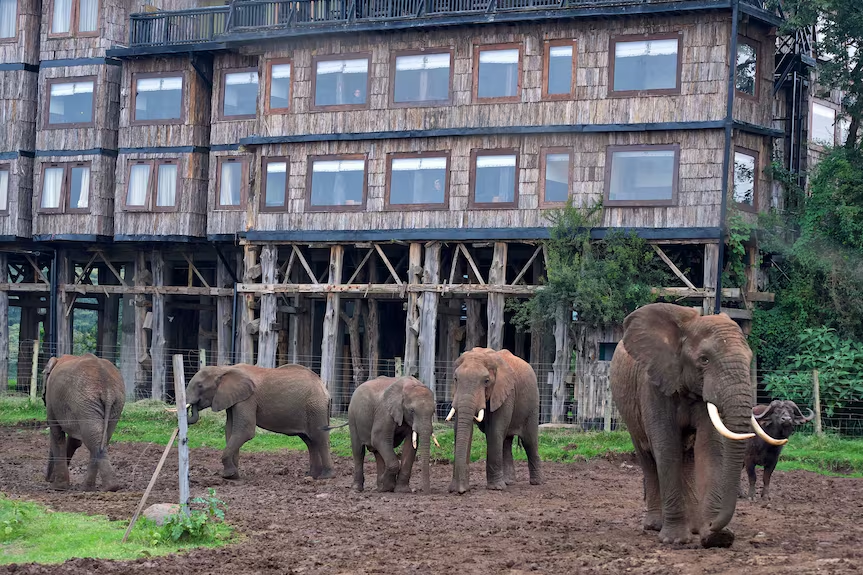 Tree Hotel
 Night Watching
A night at The Ark or Treetops means watching elephant, buffalo, giant forest hog, colobus, hyena, and occasionally lion or rhino arrive at a floodlit waterhole below, staff waking guests by buzzer when something significant shows up.

Highland Waterfalls
Karuru Falls drops 273 metres across three stages, among Kenya's highest, while the Chania and Gura Falls offer beautiful forest settings for photography and a picnic.

Moorland Highland Walks
Rolling heather and tussock grass on the high plateau, with eland and mountain reedbuck and views extending to Mount Kenya, feel closer to Scottish hills than equatorial Africa.
How You'll Spend Your Days
Tree Hotel Night Watching
An overnight at The Ark or Treetops, built directly over floodlit waterholes with multi level viewing decks and a night duty buzzer system, is the defining Aberdare experience for most guests, no need to stay up all night, staff wake you when something significant arrives.
Game Drives
Daytime drives in the Salient cover forest and bamboo edge habitat for buffalo, waterbuck, bushbuck, and forest elephant, while moorland tracks above deliver scenic highland drives with long range views and occasional eland or mountain reedbuck.
Bongo Tracking
Guided sessions with KWS rangers who track current bongo territory in the Salient are physically demanding, steep, dense forest terrain calling for patience and silence, but deliver one of Africa’s most exclusive wildlife encounters.
Waterfall Hikes
Guided hikes to Karuru, Chania, and Gura Falls follow well maintained trails through highland forest, accessible for most fitness levels and among the most rewarding photography in the park.
Fishing
Introduced rainbow trout in the range’s cold, clear highland streams support excellent fly fishing, permits available from KWS for designated trout streams within the park.
The Tree Hotels Work in Any Season
Aberdare receives rain in most months, so season affects daytime game drives and waterfall hikes far more than it affects the nocturnal waterhole experience.
Drier Seasons
Jan to Mar & Jun to Oct
January through March and June through October give the most reliable daytime game drive conditions and the clearest waterfall hikes, with June through October generally the drier and more dependable of the two windows.
Wetter Periods
Apr to May & Nov to Dec
Heavier rain from the long rains in April and May can limit daytime game drives, but the tree hotel experience remains fully rewarding regardless, nocturnal wildlife activity continues, and misty, atmospheric evenings at the waterhole carry a haunting beauty suited to the forest.
Getting to Aberdare
Wilson Airport in Nairobi connects to Nyeri by charter, around 30 minutes, a useful option for guests combining Aberdare with Mount Kenya or the Maasai Mara on a tight schedule.
From Nairobi, allow two to three hours to the park’s Mutubio or Kiandogoro gates, via the Naivasha road for southern access or the Nyeri road for the eastern Salient. Tree hotel guests are typically collected from the Outspan Hotel in Nyeri for the transfer into the Salient.
“The same bamboo thickets that shelter mountain bongo once sheltered Mau Mau fighters through the final years of colonial rule.”On Nyandarua and a Forest That Shaped a Nation
The range carries an older Maasai name, Nyandarua, the drying hide, a reference to its folded profile, and was gazetted as a national park in 1950. During the 1950s Mau Mau uprising against British colonial rule, fighters used the range’s dense bamboo thickets and remote valleys as hideouts, giving this landscape a place in Kenya’s path to independence well beyond its role as a wildlife sanctuary.
The Aberdares also function as one of Kenya’s most important water towers, rivers rising here feed catchments supplying millions of people, farmland, and hydroelectric stations downstream, so protecting the forest is inseparable from national water security. The completion of a 400 kilometre electric fence around the ecosystem in 2009 sharply reduced human wildlife conflict and illegal logging, and stands as one of the more significant large scale conservation infrastructure projects in Kenya’s recent history.
Rebuilding a Population From Almost Nothing
Aberdare’s conservation significance rests largely on its role as the last viable habitat for the mountain bongo, and on its place within Kenya’s Central Highlands water tower system. The Mount Kenya Wildlife Conservancy runs a bongo breeding program reintroducing captive bred animals to the park, gradually rebuilding a wild population that fell to a genuinely precarious level.
Habitat restoration, anti poaching patrols, and community programs linking local livelihoods to forest protection remain the park’s ongoing priorities, work that keeps the corridors connecting Aberdare to the surrounding landscape intact for a species with almost no margin for error.
Duration and Combinations
One to two nights suits most visits, typically a tree hotel stay paired with a day of Salient game drives and a waterfall hike to Karuru. Aberdare works best as part of a wider Central Kenya circuit rather than a standalone destination.
Aberdare + Mount Kenya + Ol Pejeta
The quintessential Central Kenya circuit, misty highland forest, an equatorial mountain summit, and one of Africa's finest rhino conservation programs in a single journey.
Aberdare + Maasai Mara
A striking contrast between Aberdare's lush highland forest and the Mara's vast open plains, migration spectacle, and dense predator population.
Travellers Aberdare Rewards
Rare Wildlife Seekers
Bongo tracking and black leopard sightings offer wildlife encounters genuinely unavailable elsewhere in Kenya.
Tree Hotel Enthusiasts
The Ark and Treetops give guests an elevated vantage point over nocturnal wildlife found at very few other destinations in Africa.
Highland Trekkers
The moorland's trails offer highland trekking of varying challenge and genuinely striking panoramas.
Families
Watching wildlife arrive at a floodlit waterhole from a warm, safe viewing room is engaging and educational for children in a way conventional game drives sometimes aren't.
Aberdare FAQ
The Ark and Treetops are elevated lodges built directly over floodlit waterholes and salt licks. Guests watch from enclosed lounges with panoramic windows or open air decks, often seeing elephant, buffalo, hyena, and occasionally leopard through the night, with a buzzer system that wakes guests when something notable arrives.
Bongo can be encountered in the Salient through specialist tracking sessions with KWS rangers. Sightings are never guaranteed, the population is small and genuinely forest dwelling, but the encounter, when it happens, ranks among East Africa’s most extraordinary wildlife experiences.
A black leopard is a regular leopard whose coat colour comes from an excess of melanin, making its pattern appear black rather than spotted. Aberdare’s dense forest gives dark colouring a genuine survival advantage, producing an unusually high frequency of melanistic leopard and serval here.
The park’s high altitude, 2,000 to 4,000 metres, significantly reduces malaria risk compared to Kenya’s lowland parks, and prophylaxis typically isn’t required above 2,500 metres. Consult a travel health clinic before departure regardless.
The altitude keeps temperatures surprisingly cool, daytime typically runs 10 to 20 degrees Celsius, with evenings and early mornings often dropping below 10. Warm layers are essential year round.
Forest elephant, giant forest hog, bushbuck, buffalo, and the elusive bongo define Aberdare’s wildlife, alongside leopard, spotted hyena, and occasionally lion on the moorland. The park also holds the rare African golden cat and more than 250 recorded bird species.
Begin Planning Your Aberdare Safari
Every Aberdare itinerary we design pairs a genuinely rare wildlife encounter with a night you'll actually remember at the waterhole.