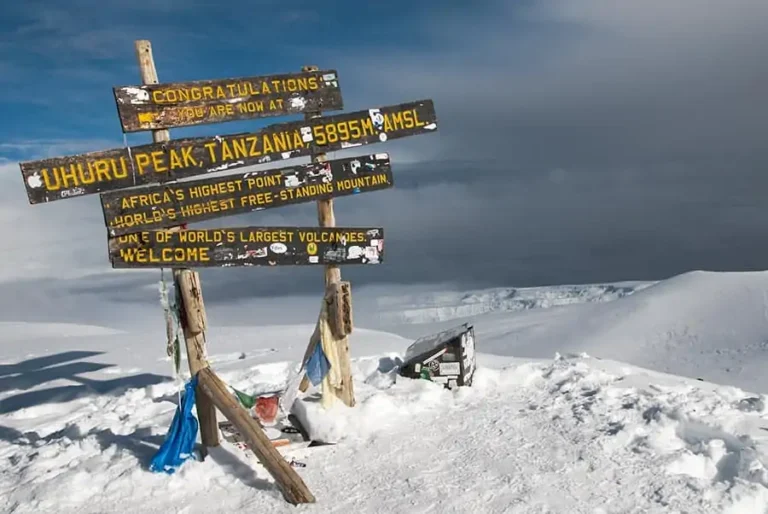
Kilimanjaro is Tanzania’s most commercially competitive trekking market and also one of its least regulated. The mountain generates tens of millions of dollars in revenue annually, attracting operators across a spectrum from genuinely excellent to dangerously inadequate. The consequences of choosing poorly are not merely a substandard experience; on a mountain that rises to 5,895 metres and requires medical management of altitude sickness, poor operator choice has a direct and documented relationship with emergency evacuations and, in extreme cases, fatalities.
The question of what makes a Kilimanjaro operator responsible is worth answering precisely, with specific criteria, not with vague assurances about passion and commitment. RYDER Signature applies the following framework to every operator we work with and every climb we design.
Crew Welfare: The Non-Negotiable Baseline
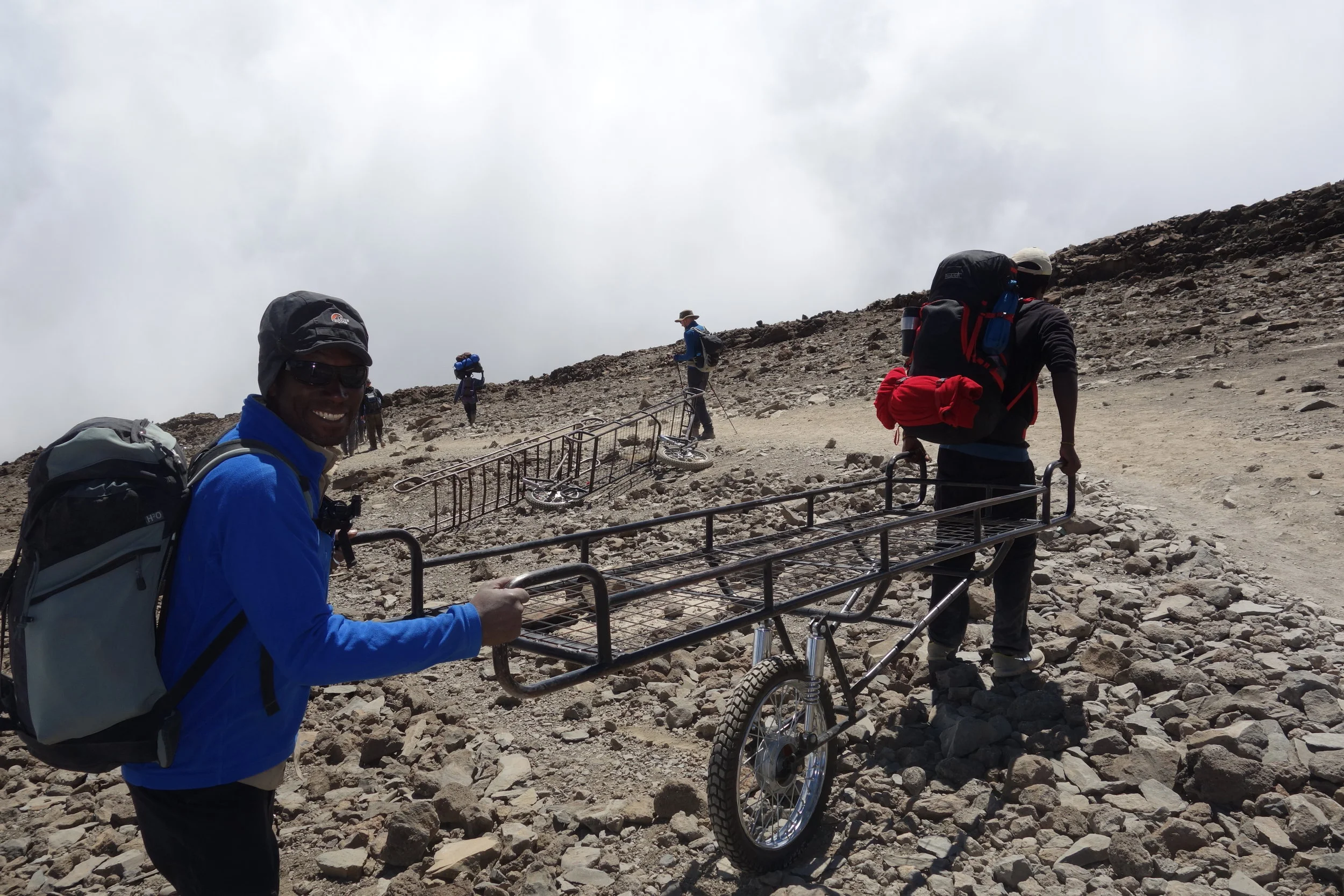
A Kilimanjaro climb requires a significant crew: typically one guide, one assistant guide per two to three climbers, a cook, and porters at a ratio of approximately three per climber. A party of four climbers might involve a crew of fifteen or more people, each of whom is working in extreme cold at altitude without the insulated equipment or medical support their clients receive.
The Kilimanjaro Porters Assistance Project (KPAP) a non-profit organisation based in Arusha has established clear standards for porter welfare and operates a partner programme that independently verifies operator compliance. KPAP partner operators must meet standards for: daily wages above KPAP’s minimum threshold, which tracks above the government’s minimum wage; weight limits per porter of twenty kilograms in the porter’s pack, plus five kilograms of personal gear; provision of appropriate equipment including sleeping bags, rain gear and adequate food; access to accommodation comparable to client accommodation; and prohibition of porter abuse, including non-payment and physical mistreatment.
The simplest question to ask any Kilimanjaro operator is: are you a KPAP partner? If yes, ask to see the certification. If the operator has not heard of KPAP or is defensive about the question, the answer tells you something important.

Guide Qualifications and Ratios
Tanzania’s Wildlife Management Authority licenses mountain guides, but the qualification standard varies. A responsible operator will be able to state clearly what formal qualification their lead guides hold, how many years of guiding experience each has on Kilimanjaro specifically, and what their wilderness first aid certification status is. The lead guide on your climb should be certified in wilderness first aid at minimum; many excellent guides hold WFDP (Wilderness First Responder) or equivalent certification.
Guide-to-client ratios matter on Kilimanjaro for specific reasons. Summit night, in cold and darkness, with climbers in varying states of altitude-related impairment, requires a guide ratio sufficient to monitor every climber and manage a turn-around if one person deteriorates while others continue. A ratio of one guide per three to four climbers is the responsible standard. A single guide leading a party of eight on summit night is understaffed for the conditions.
The practice of using assistant guides who are not formally licensed is common in the industry. Many excellent mountain workers are experienced and capable without formal licensing. What matters is that the lead guide is fully qualified and that the assistant structure is transparent not that every crew member holds the same credential.
Emergency Oxygen and Medical Equipment
Emergency supplemental oxygen is standard equipment on a responsibly managed Kilimanjaro climb. Its use is reserved for climbers who develop severe altitude sickness symptoms requiring immediate descent; it provides a temporary physiological bridge that can prevent a medical emergency from becoming fatal while the descent is being organised. An operator who does not carry emergency oxygen is accepting a risk that is entirely avoidable.

Pulse oximeters devices that measure blood oxygen saturation and heart rate are equally standard on responsible climbs. They allow the guide to monitor each climber’s physiological status at the end of each day and to make informed decisions about continuing versus descending based on objective data rather than client self-report alone. A climber who reports feeling “fine” but whose oxygen saturation has dropped below eighty-five per cent is exhibiting early signs of dangerous altitude response; the guide who has a pulse oximeter can identify and act on this. The one who does not is flying blind.
Ask any operator directly: does every climb carry supplemental oxygen and pulse oximeters? The answer should be yes without hesitation. Any qualifier “we have them available,” “we carry them on request” is inadequate.
Transparency on Success Rates
A responsible Kilimanjaro operator can tell you their summit success rates, broken down by route, with honesty. An irresponsible one either does not track them, inflates them, or quotes an industry average as if it were their own. Summit success rates are an important data point not because the summit is the only measure of a good climb, but because success rates are a proxy for route design quality, guide expertise and acclimatisation discipline.
The honest success rate for a seven-day Lemosho or Machame itinerary with a well-run operator is approximately seventy-five to eighty-five per cent. Claims of ninety-five per cent or above on six-day itineraries should be treated with scepticism the acclimatisation science does not support them, and the only way to achieve them would be to count partial ascents as summits or to define “summit” differently from Uhuru Peak.
Asking for success rate data, and asking specifically for the methodology behind the number, separates operators who are confident in their performance from those who have something to hide.
Environmental Practices
TANAPA requires operators to carry all waste off the mountain. In practice, compliance varies. A responsible operator operates a strict leave-no-trace policy: all waste including human waste is carried out in sealed containers, no camp fires are lit outside designated areas, and the campsite is inspected and cleared before departure each morning.
The use of single-use plastics in camp can be substantially reduced by responsible operators through reusable water containers, biodegradable packaging for food, and waste separation at camp. These practices are not universal, but they are achievable and represent a reasonable standard to expect from a responsible operator.
Pre-Departure Briefings and Medical Screening
A responsible operator contacts every Kilimanjaro client at least four to six weeks before departure to discuss preparation, equipment and medical considerations. They ask about health history, medications, and any prior altitude experience. They provide a realistic briefing on altitude sickness symptoms, the decision criteria for descending, and what each day of the climb will involve. They do not promise summits or minimise the difficulty.
The pre-departure briefing is one of the clearest differentiators between operators who understand the mountain and those who treat it as a logistics exercise. It sets expectations, builds the client’s psychological preparation, and creates an opportunity to identify any medical considerations that should be discussed with a doctor before departure. The briefing call or document is not a formality; it is a safety mechanism.
Pricing: The Red Flag Zone
Kilimanjaro climbs are available at prices ranging from around USD 1,200 to over USD 4,000 per person for comparable routes and durations. The lower end of this range, unless it reflects a specific subsidised community programme, almost invariably involves compromises in crew welfare, equipment, food quality, or guide qualification. Porter wages are the most common area of compression reducing daily crew rates below KPAP standards is one of the few mechanisms by which operators can reduce price without visibly reducing the client experience until the moment when the reduction matters.
This does not mean the most expensive operator is automatically the best. It means that prices below approximately USD 1,800 per person for a seven-day Lemosho climb, from a Arusha-based operator, should trigger specific questions about where the cost reduction is coming from. The question “why are you cheaper than comparable operators?” deserves a direct answer about where costs have been managed, not a marketing response about efficiency.
How RYDER Signature Selects Kilimanjaro Operators
Every Kilimanjaro operator in our recommended network has been personally vetted against the criteria above. We have climbed with their guide teams, reviewed their crew welfare documentation, confirmed their KPAP partner status, inspected their equipment, and reviewed actual success rate data from recent climbs. Operators enter our network based on performance and remain in it based on continued performance. We remove operators whose standards slip, regardless of the inconvenience to our own operations.
We are transparent with clients about which operators we are using and why, and we provide the specific reasons for our recommendations rather than generic assurances. This transparency is deliberate: we want clients to be able to ask the right questions when they speak to an operator directly, and to be in a position to assess the answers they receive.
What is KPAP and why does it matter?
The Kilimanjaro Porters Assistance Project is a non-profit organisation that advocates for the welfare of Kilimanjaro porters through standards development, operator verification and direct support to mountain workers. Their partner programme independently audits operator compliance with specific welfare standards including wages, weight limits and equipment provision. Choosing a KPAP partner operator provides a level of independent verification of crew welfare that self-reported operator claims cannot offer. Their website lists current partner operators and allows climbers to check operator status directly before booking.
How can I verify an operator’s success rate claims?
Ask for success rates broken down by route, by itinerary duration and by year. Ask whether the rate counts Uhuru Peak specifically or includes Stella Point. Ask for the total number of attempts the rate is based on a ninety per cent rate over ten climbs is statistically meaningless; over five hundred it is reliable. Ask for references from recent clients who attempted but did not summit, to understand how those situations were managed. An operator with genuine confidence in their performance will welcome specific questions; one with inflated claims will provide vague answers.
Is a solo guide adequate for a Kilimanjaro climb?
A single guide leading a solo climber is standard and acceptable. A single guide leading a group of more than two or three climbers on summit night is understaffed for the altitude risk. The specific risk is a scenario where one climber deteriorates rapidly and requires immediate descent while others are continuing to the summit a single guide cannot manage this situation alone. Responsible operators staff summit night with a guide ratio sufficient to handle a concurrent emergency and continued ascent without leaving anyone unaccompanied.
What questions should I ask an operator before booking?
The seven most revealing questions: Are you a current KPAP partner? What are your summit success rates by route and duration? Does every climb carry supplemental oxygen and pulse oximeters? What is your lead guide’s certification and years of Kilimanjaro experience? What is your porter-to-climber ratio? What is your policy if a climber shows severe altitude sickness symptoms? And: can you provide references from climbers who did not summit and explain how those situations were handled? The quality of the answers to these seven questions will tell you more than any marketing material.
The Community Dimension of Responsible Kilimanjaro Operations
The crews who carry equipment, cook meals and maintain camps on Kilimanjaro are overwhelmingly from the communities surrounding the mountain the Chagga people who have lived on Kilimanjaro’s southern slopes for centuries, and workers from Moshi, Arusha and the surrounding towns who have built careers in mountain guiding and portering. The economic impact of Kilimanjaro tourism on these communities is significant: an estimated ten thousand to fifteen thousand people derive regular income from the mountain’s climbing industry.
A responsible operator treats this community relationship as a genuine obligation, not a marketing position. This means paying wages that reflect the skills and risks involved, providing equipment that protects crew health in extreme conditions, and creating advancement pathways from porter to assistant guide to lead guide that reward experience and investment. The guide who leads your summit attempt may have spent ten years carrying loads as a porter before earning the qualification and position they hold. That progression is possible when operators invest in their crew and impossible when they treat crew as interchangeable commodities to be sourced at minimum cost.
The best Kilimanjaro operators have guides who have worked with them for five, ten, fifteen years. The relationship between an experienced guide and the operator they work for is one of the clearest indicators of how the operator manages its human relationships. An operator whose guides turn over rapidly, who relies on contract labour from a pool rather than building a committed team, is telling you something about how it prioritises the people who make your climb possible.
What Certification and Accreditation Actually Mean
Beyond KPAP, several accreditation bodies and certification schemes operate in the Kilimanjaro space, some more meaningful than others. TATO membership (Tanzania Association of Tour Operators) indicates a degree of professional standing and provides a complaints mechanism that gives clients some recourse. ATTA membership (African Travel and Tourism Association) is similarly relevant for operators operating at the top of the market. ISO certification and various quality management standards are occasionally claimed but rarely independently verified in meaningful ways.
The honest position is that no certification scheme in the Kilimanjaro space is a complete substitute for direct verification of the specific criteria that matter: guide qualifications, crew welfare, medical equipment and success rate transparency. Certifications are useful starting points; the questions above are the actual test. An operator who is frustrated by detailed questions about their standards has different priorities from one who welcomes them as an opportunity to demonstrate what they do well. This distinction is the most reliable signal available to a climber evaluating their options from a distance.
Red Flags in Operator Research
Specific warning signs in the process of evaluating a Kilimanjaro operator: prices significantly below the market median for a comparable itinerary, particularly on seven-day routes; an inability or unwillingness to provide specific success rate data; guides who are not named in advance and whose qualifications cannot be checked; testimonials that focus exclusively on the summit view rather than the quality of the guiding; no mention of KPAP, porter welfare or crew standards in any marketing material; and resistance to specific questions about medical equipment. Any one of these is worth investigating further; multiple flags in combination are a clear signal to look elsewhere.
The Kilimanjaro market has enough reputable, transparent operators that there is no reason to work with one whose standards are unclear. The summit is the same mountain regardless of which responsible operator you climb with. The difference between the responsible operators is largely one of price, style and specific strengths some are exceptional at expedition-style longer itineraries, others at personalised smaller parties, others at group travel. These are preference decisions. The choice between responsible and irresponsible is not a preference decision; it is the baseline below which no other consideration should apply.
At RYDER Signature, we apply these criteria without exception. The operators we work with on Kilimanjaro have been verified against every standard above and are required to maintain those standards as a condition of our continued partnership. We make this framework available to clients not as a marketing device but as a practical tool for independent evaluation because a client who can identify a responsible operator is more likely to have a safe, well-managed climb, which is what every person on Kilimanjaro deserves.