Is the Ngorongoro Crater worth visiting is a fair question to ask before paying its steep entry and descent fees, and the honest answer is genuinely conditional rather than a simple yes. The crater delivers some of the densest, most reliable wildlife sightings anywhere in Africa, but it also produces some of the most consistent visitor complaints about crowding of any major safari destination on the continent, and a traveller deciding whether to include it deserves a straight account of both sides rather than a marketing gloss over the second half of that trade-off. This assessment draws on published traveller reviews and professional safari writing spanning both strongly positive and openly disappointed accounts, rather than relying on a single perspective, precisely because the crater is unusual in generating such a consistently split verdict among genuinely experienced visitors.
What the crater genuinely delivers
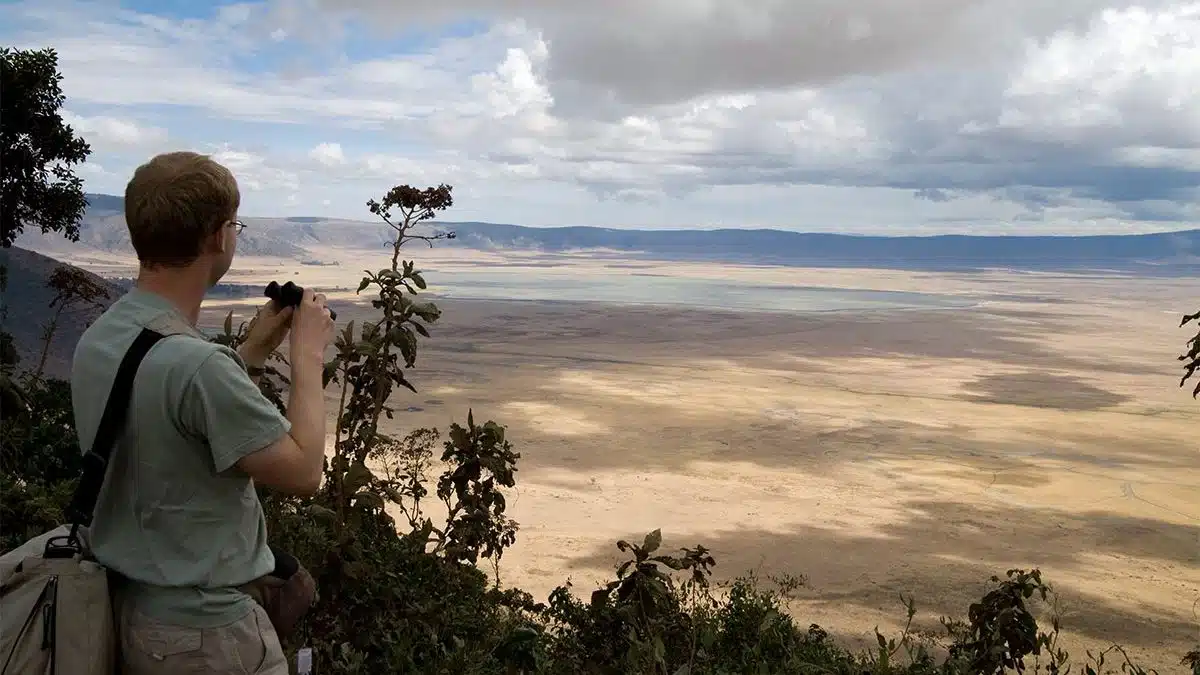
The wildlife density inside the crater is not exaggerated. An estimated 25,000 to 30,000 large mammals live within a floor of roughly 260 square kilometres, concentrated further by permanent water sources that keep animals close to viewable ground even in the driest months. Multiple experienced safari writers and long time guides describe the crater as offering some of the most habituated, close range wildlife behaviour they have encountered anywhere, precisely because the animals have grown accustomed to a high volume of vehicles and no longer alter their behaviour in response to being watched. Black rhino sightings, genuinely difficult almost everywhere else in East Africa, are realistically achievable here in a way they are not in the Serengeti or the Maasai Mara, and the crater’s Lake Magadi reliably draws large flamingo flocks that many other single day excursions cannot match. Guides with long experience in the crater also point to a specific quality of light and backdrop, the forested rim rising sharply behind open grassland, that photographers rarely find replicated at flatter, more open parks elsewhere in the region.

The crowding problem is real, not a rare exception
The single most consistent criticism across independent traveller reviews and professional safari writers alike is vehicle density at popular sightings, and this is not a minor or occasional issue. Multiple published accounts describe a dozen or more vehicles clustered around a single lion sighting as routine rather than exceptional, with some reviewers reporting twenty five to sixty vehicles at a particularly dramatic sighting during peak season. The official guideline limiting vehicles at any one sighting exists on paper but functions in practice as an aspiration rather than an enforced cap, and several experienced reviewers have specifically described the atmosphere at a busy sighting as resembling a queue for a photograph rather than a wilderness encounter. Anyone arriving with an expectation shaped by open, sparsely visited Serengeti game drives should recalibrate that expectation specifically before descending into the crater.

Why the same problem does not apply equally to every visitor
Timing changes this equation considerably, and the crowding described above is disproportionately a peak season, mid morning phenomenon rather than a constant condition. Visitors who descend by six in the morning, ahead of the wave of vehicles arriving from Karatu roughly an hour later, consistently report a genuinely different, quieter experience for the first hour or two on the floor. The wetter months, particularly the calving period around January and February, also draw noticeably fewer vehicles than the July through October dry season peak, in part because rougher roads and less predictable weather deter some operators from running full schedules. A traveller with flexibility on timing has real influence over how crowded their own visit turns out to be, even though the underlying volume of total daily visitors is outside any individual guide’s control.
Cost relative to what is delivered
At close to 350 US dollars per vehicle for the crater descent alone, on top of the standard conservation area entry fee of roughly 82 US dollars per person per day, a Ngorongoro visit is genuinely expensive relative to a comparable day inside Tarangire or even a day inside the Serengeti itself. Several independent reviewers have specifically flagged the sensation of paying twice, once for the conservation area and again for the crater descent, as a source of frustration once the total cost becomes clear. Whether this cost is justified depends heavily on what the visitor is optimising for. Reviewers who came specifically for a rare rhino sighting, for the dramatic rim to floor scenery, or for the sheer density of predators generally describe the fee as justified despite the crowding. Reviewers arriving with limited time who had already had strong sightings elsewhere on the same trip, particularly in the Serengeti, more frequently describe the crater as the day they would have skipped in hindsight.
Who gets the most value from a crater visit
First time safari visitors and travellers with a single day available in northern Tanzania tend to get disproportionate value from the crater, since its combination of accessible black rhino, dense predator populations and dramatic scenery within a single compact area delivers a concentrated experience that would otherwise require several separate park visits to assemble. Photographers benefit from the close range, habituated wildlife even if the crowding at the very best sightings sometimes limits ideal positioning. Travellers on a longer, multi park itinerary who have already spent several days in the Serengeti, by contrast, more often describe the crater as a worthwhile but non essential addition, valuable mainly for the rhino sighting and the rim views rather than for wildlife density that genuinely exceeds what they have already seen elsewhere.
Who is more likely to be disappointed
Travellers whose priority is a genuine sense of wilderness solitude, rather than concentrated wildlife density, are the group most likely to find the crater falls short of expectations, since the crowding at popular sightings is a structural feature of the destination rather than an occasional lapse in management. Visitors arriving with only a half day available, or scheduling their descent for mid morning rather than dawn, are also disproportionately likely to encounter the crater at its most congested, and several published reviews specifically trace their disappointment to arriving later in the day rather than to the crater itself falling short on wildlife.
How the crater compares against the alternative of skipping it
A useful way to frame the decision is to ask what a traveller actually loses by cutting the crater from an itinerary rather than only what they gain by including it. Skipping Ngorongoro on a Tanzania trip that already includes several days in the Serengeti generally means giving up the single most reliable black rhino sighting on the itinerary, along with the crater’s distinctive rim to floor scenery, in exchange for an extra day that could instead be spent deeper in the Serengeti itself or added to a Zanzibar beach extension. For travellers whose primary goal is maximising overall wildlife variety within a fixed number of days, this trade generally favours keeping the crater in the itinerary given how little else in the region reliably delivers rhino sightings. For travellers who have already built a generous Serengeti stay and are tighter on time than on wildlife checklist items, the case for cutting the crater is genuinely stronger than most itinerary planning guides acknowledge.

What guides and operators can actually do about the crowding
Experienced driver guides do have some real influence over how crowded a client’s specific experience feels, even though they cannot change the total number of vehicles inside the crater on a given day. A guide who times the descent for shortly after gate opening, who is willing to move away from an already crowded sighting toward a quieter but still active area of the floor rather than joining the largest cluster of vehicles, and who has a strong enough radio network to hear about developing sightings before they become widely known, can meaningfully improve a client’s experience relative to a guide simply following the largest visible cluster of jeeps. This is one of the clearer cases in East African safari planning where the specific operator and guide booked genuinely changes the outcome, rather than an entirely fixed, unavoidable feature of the destination regardless of who happens to be driving that particular day. It is worth asking a prospective operator directly how they typically approach a crowded sighting, since the answer tends to reveal whether a company treats the crater as a box to tick quickly or as an experience worth actively managing on the client’s behalf.
What a realistic first time visitor should expect
Setting expectations accurately before arrival is probably the single most effective thing a first time visitor can do to avoid disappointment. Arriving expecting an empty, untouched wilderness will likely produce genuine frustration once the reality of vehicle density at popular sightings becomes apparent. Arriving instead expecting a concentrated, somewhat theatrical wildlife experience, closer in feel to visiting a extraordinary but busy natural landmark than to a remote bush camp, allows a visitor to appreciate what the crater does deliver without measuring it against an unrealistic standard the destination was never actually going to meet.
The honest verdict
The Ngorongoro Crater is worth visiting for the specific things it does better than almost anywhere else in Africa, namely reliable black rhino sightings, an exceptionally dense and habituated predator population, and a genuinely dramatic descent from forested rim to open caldera floor. It is not a wilderness experience in the sense that a remote Serengeti concession or a private conservancy in Kenya delivers, and a visitor expecting solitude alongside the wildlife density will likely leave frustrated regardless of how the trip is timed. For most travellers building a northern Tanzania circuit that already includes the Serengeti, one focused, early morning day inside the crater represents a reasonable and genuinely rewarding addition, provided the crowding is understood and planned around in advance rather than discovered as an unwelcome surprise on the day itself.
None of this makes the crater a destination to avoid outright, and it is worth stressing that the great majority of published complaints centre on crowding and cost rather than on the wildlife itself falling short. The scenery, the rhino sightings and the sheer density of grazing animals and predators consistently earn genuine praise even from reviewers who otherwise found the experience more regimented than they had hoped, which suggests the crater’s core offering remains strong even where the visitor management around it draws fair criticism. A traveller who goes in with accurate expectations, times the visit deliberately, and books a guide with a genuine track record in the crater specifically, rather than simply the same operator used for the rest of the trip, gives themselves the best realistic chance of leaving with the experience the crater is capable of delivering rather than the crowded version that generates the bulk of its negative reviews.