Luxury mobile tented camps in the Serengeti are the small, canvas walled properties that physically relocate with the seasons rather than sitting on a single fixed plot year round, and the best of them now deliver a standard of comfort that would have been unthinkable in a tented camp two decades ago. Understanding what actually separates a genuinely luxury mobile camp from a comfortable but ordinary one, and knowing which named properties consistently earn that description from experienced safari travellers, matters more than most people assume before booking, since the word luxury is applied loosely across a huge range of nightly rates and standards in Tanzania.
What makes a mobile camp count as luxury
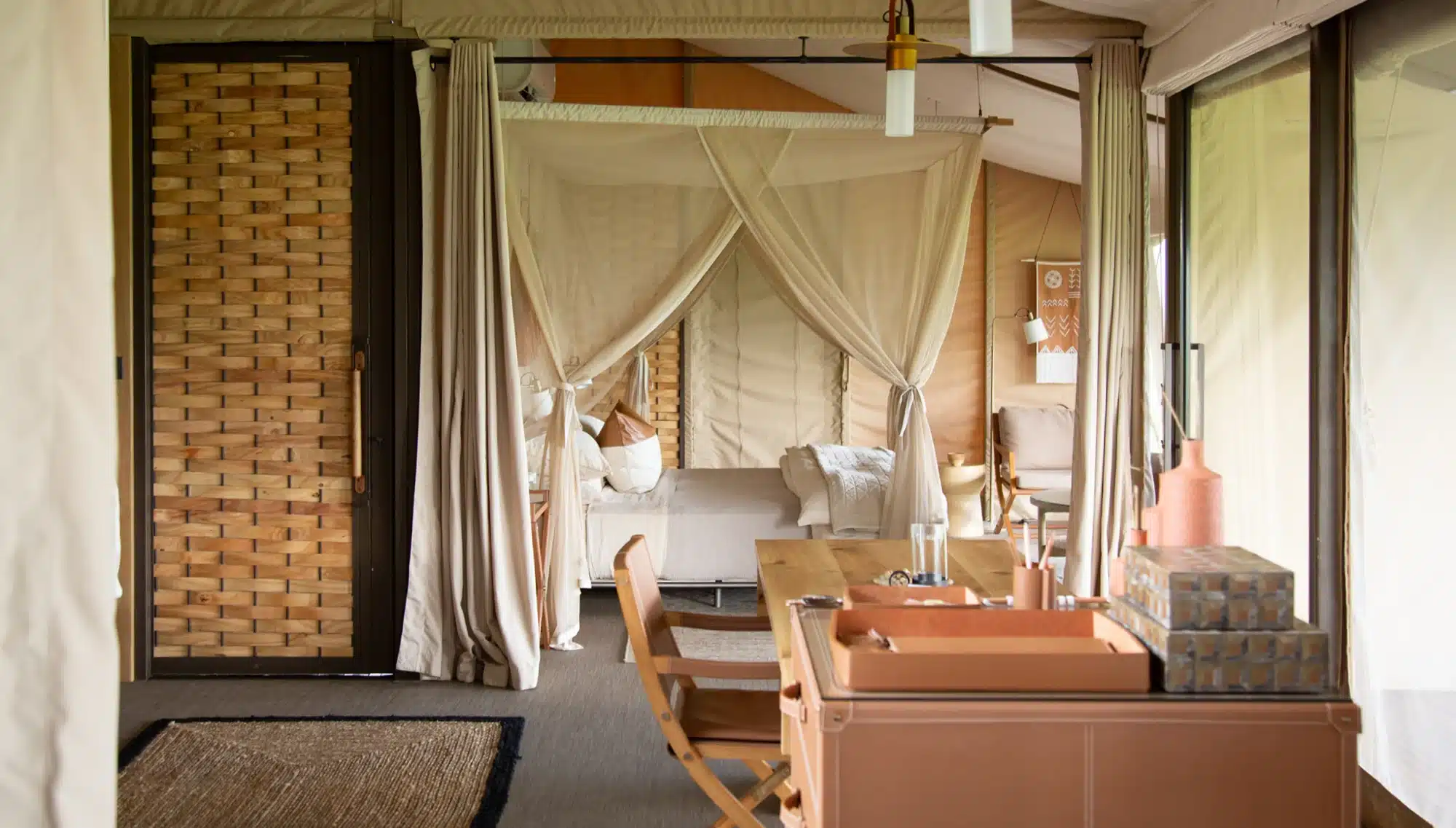
A handful of features separate the luxury tier from a standard tented camp rather than any single defining feature. En suite bathrooms with a proper flush toilet and a hot bucket or solar heated shower are now close to a baseline expectation at this level, but the properties that go further add free standing copper or roll top baths, private verandas facing away from neighbouring tents, and in some cases a small private plunge pool built into a temporary deck structure that can be dismantled and moved with the rest of the camp. Staff ratios run noticeably higher at the luxury tier, often close to one staff member for every guest once guides, butlers, chefs and camp management are counted, and the kitchen typically produces a plated multi course dinner rather than a buffet, frequently with a dedicated chef trained outside Tanzania. Guiding quality is the feature that matters most in practice and is hardest to see from a brochure photograph. The strongest camps retain guides who have worked the same broad area of the ecosystem for a decade or more, which shows up as a materially different rate of quality sightings compared with a camp using a rotating pool of drivers.
Sayari and Lamai Serengeti Camp, Kogatende
Sayari, run by Asilia Africa, sits above the Mara River in the far north of the park near Kogatende and combines a semi permanent structure with the intimacy and land access typical of a mobile camp. Its position makes it one of the strongest bases for the Mara River crossings between July and October, and its eighteen tents include a smaller six tent annexe for guests wanting a more private wing of the property. Lamai Serengeti, also an Asilia property, sits on the Lamai Wedge, a strip of land between the Mara River and the Kenyan border that functions as a private concession with its own access rules, allowing off road positioning at a sighting in a way that is not permitted inside the national park proper.
Nomad Serengeti Safari Camp and Serengeti Under Canvas
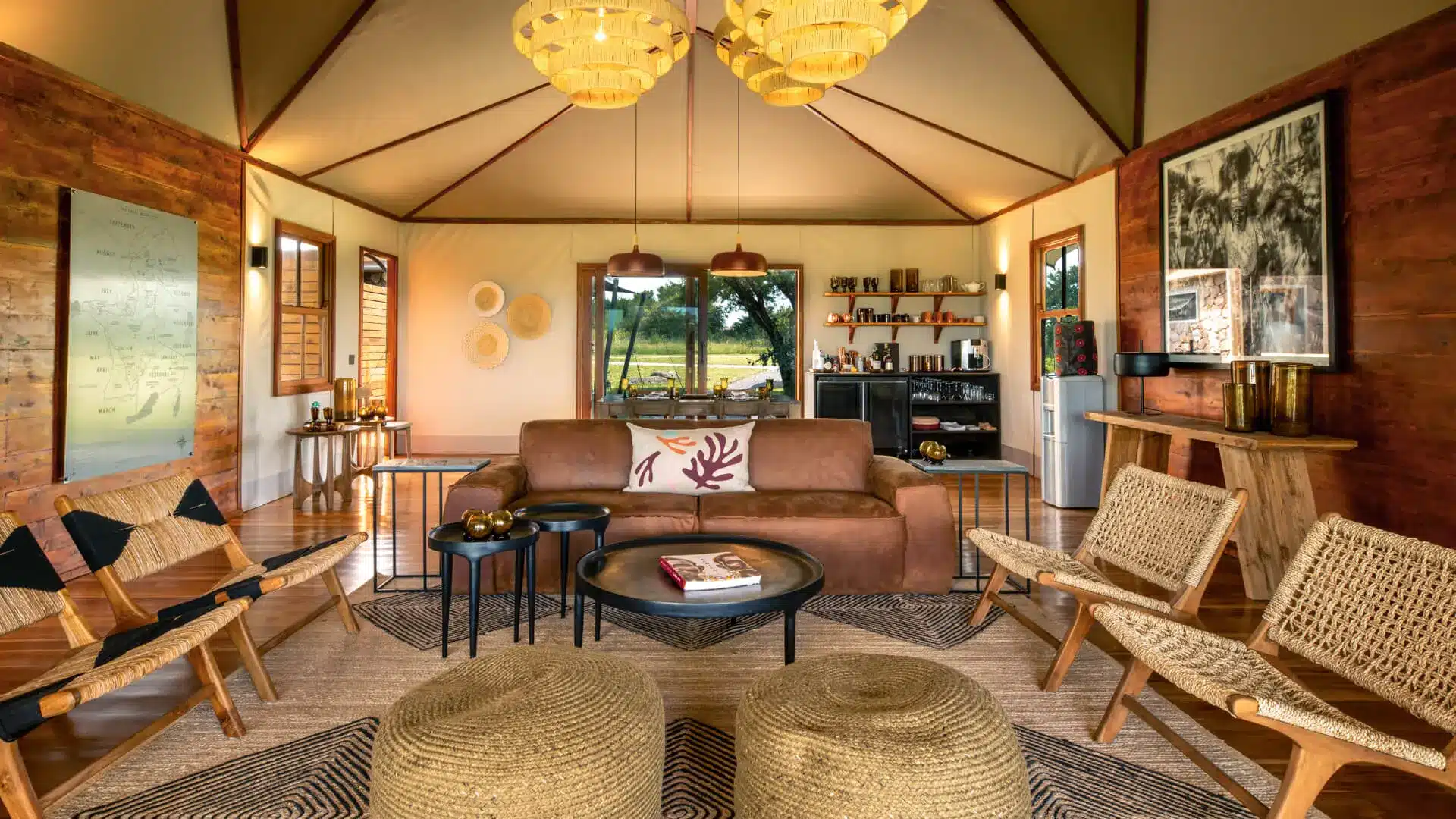
Nomad Serengeti Safari Camp relocates twice a year to stay ahead of the migration, typically running from the southern plains around Ndutu through the calving months before moving north later in the year, and its nine tents are built around a genuinely traditional mobile camp aesthetic, canvas, wood and brass rather than the glass and concrete finishes some newer luxury properties favour. andBeyond Serengeti Under Canvas follows a similar seasonal pattern with a strong reputation for guiding continuity, and its smaller footprint, generally under a dozen tents at any one site, keeps the guest to staff ratio close to the top of the luxury tier.

Singita Sabora Tented Camp, Grumeti Reserves
Singita Sabora sits within the privately managed Grumeti Reserves in the western Serengeti and is built around a 1920s expedition aesthetic, complete with vintage furniture and a colonial era tent design reimagined at ultra luxury standard, including free standing baths and a shared mess tent styled after an old safari expedition dining room. Because Grumeti is a private concession rather than national park land, Sabora’s guests get access to night drives and walking safaris alongside conventional game drives, activities that are not available to camps operating strictly inside Serengeti National Park itself.
Ubuntu Migration Camp and Olakira Camp, southern plains
Ubuntu Migration Camp is a smaller, eight tent operation that leans into an intimate, community focused style of guiding rather than the largest possible property footprint, and it repositions between the southern plains around Ndutu and the western corridor as the migration moves through the year. Olakira Camp, positioned in the same Ndutu region during calving season, follows a comparable relocation pattern and is known within the industry for consistently strong guiding continuity given its relatively small size.
Family suites and solo travel at the luxury tier
Several of the camps named above, including Malaika Ndutu Luxury Camp and Kirimu Camp during the calving season window, offer interconnected family tents that share a canvas wall or a private connecting corridor rather than requiring parents and children to sleep in fully separate structures some distance apart, a detail worth asking about specifically if travelling with younger children, since not every mobile camp offers this configuration even at the luxury tier. Solo travellers booking a luxury mobile camp should expect a single supplement in most cases, typically adding twenty to forty percent to the per person rate quoted for double occupancy, though a small number of camps waive or reduce this during quieter shoulder season weeks when occupancy is naturally lower. Minimum age policies vary by property and are generally more flexible at concession camps offering private vehicles than at smaller camps running shared game drive vehicles, where a young child’s presence affects every other guest’s experience on a shared drive.
The trade-offs against a permanent lodge
A luxury mobile camp is not simply a smaller, more remote version of a permanent lodge, and the differences run deeper than infrastructure. Guests give up a swimming pool, a full spa and the largest suite categories available at the biggest permanent properties such as the Four Seasons in Seronera, in exchange for a smaller footprint, closer proximity to the specific wildlife event driving the season, and typically a more personal relationship with a consistent guiding team over the length of a stay. Weather exposure is also genuinely different: canvas tents, even at the highest specification, transmit heat and cold more directly than a solid walled lodge room, and a severe storm during the rainy season is a noticeably different experience in a tent than behind concrete walls. Guests who prioritise absolute climate control and resort style amenities over intimacy and land access are usually better served by a permanent lodge, while those prioritising the wildlife event itself and a more traditional expedition atmosphere tend to prefer the mobile camp experience specifically.
What the luxury tier costs and when to book it
Nightly rates for the properties above generally run from around 700 US dollars per person at the lower end of this tier up to 1,500 US dollars or more per person at the most exclusive concession camps, before flights, park fees and drinks are added. Because these camps are small by design, often eight to eighteen tents, and because they move to follow a predictable seasonal pattern, the best dated availability at any one of them tends to book out nine to twelve months ahead of a specific migration window, particularly for the Mara River crossing months of July through October and the Ndutu calving season from December through March. A traveller with flexible dates rather than a single fixed week generally has an easier time finding space at six to eight months out, though the smallest and most sought after camps can sell through even that window in a strong season.
Concession access versus national park camps
A useful distinction for anyone comparing luxury mobile camps is whether the property operates on land inside Serengeti National Park itself or on one of the private concessions bordering it, such as Grumeti in the west or the Lamai Wedge in the north. Camps inside the park proper, regardless of nightly rate, are bound by the same Tanzania National Parks rules as every other operator: daylight only game drives, no off road driving, and no walking safaris. Concession based camps operate under separate management agreements that typically permit night drives, off road positioning and walking safaris with an armed ranger, genuinely different activities rather than the same drives conducted with more polish. This is worth understanding before booking on reputation or photographs alone, since two camps at a similar nightly rate can offer meaningfully different activity lists depending purely on which side of an invisible boundary line they sit.
Why mobile camps exist instead of one large fixed property
The mobile format is not simply a marketing choice but a practical response to how the migration actually moves through the ecosystem across the year. A fixed lodge built for maximum comfort near, say, the Mara River crossings would sit largely empty of nearby wildlife for eight months of the year once the herds moved south again, while a camp built for the Ndutu calving grounds would face the same problem in reverse during the crossing season. Operators running mobile camps solve this by physically dismantling the tents, kitchen structure and staff quarters at the end of a season and rebuilding the entire camp at a new site closer to where the wildlife will be, a process that typically takes a dedicated relocation crew one to two weeks to complete for a camp of eight to twelve tents. This also keeps the ecological footprint of any single site relatively light, since the ground beneath a mobile camp is given a rest period between seasons rather than carrying permanent foundations and infrastructure year round.
What a night at one of these camps actually involves
Arrival typically happens by light aircraft into a nearby bush airstrip, followed by a short game drive transfer to camp rather than a direct road journey, which means the first wildlife of the trip is often seen before check in has even happened. Days generally follow a two drive structure, an early morning departure before sunrise timed to catch predators still active from the night, and a second drive in the late afternoon running into a sundowner stop, with the middle of the day left free for lunch, a rest period through the heat, and time at camp itself. Dinner at the luxury tier is usually served as a plated multi course meal in a central mess tent, sometimes moved outdoors around a fire pit depending on the property and the night’s weather, and most camps in this tier include a turn down service each evening along with a hot water bottle or similar touch during the cooler months. Camp staff at this level are typically briefed on each guest’s specific interests, whether that is photography, a particular species, or simply wanting longer stops and fewer vehicle moves, and the better run camps adjust each day’s drive plan accordingly rather than running a fixed route regardless of who is in the vehicle.
How to choose between them
The right choice depends more on timing and zone than on any ranked preference among these properties. A traveller focused specifically on the Mara River crossings should prioritise Sayari or Lamai given their position in the far north during July through October. A couple wanting the deepest sense of old fashioned expedition style luxury, with genuine access to activities beyond the vehicle, is better served by Singita Sabora in the Grumeti Reserves. Anyone travelling specifically for the December through March calving season should look toward Nomad Serengeti Safari Camp, Ubuntu or Olakira in the Ndutu area rather than any of the northern properties, since none of the camps built around the Mara crossing operate anywhere near the calving grounds during those months.