A walking safari in the Serengeti is possible, but the honest answer to whether it is allowed depends heavily on where in the ecosystem a traveller means, since the core national park and the private concessions bordering it operate under genuinely different rules, and confusing the two is one of the most common reasons visitors end up disappointed after booking what they thought was a walking safari.
The short answer: not inside the core national park
Within Serengeti National Park itself, general walking is not permitted. Visitors cannot walk freely outside their lodge, camp or a designated picnic area without an armed ranger present, and this restriction exists specifically because of dangerous wildlife, including buffalo, lion and hyena, moving through the same areas visitors would otherwise walk. Tanzania National Parks Authority regulations restrict genuine walking activity within the core Serengeti to a small number of specific, controlled situations rather than offering it as a general activity available to any visitor who requests it, which is a meaningfully different approach from what some of Kenya’s private conservancies offer just across the border.

Where walking safaris actually happen in the wider Serengeti ecosystem
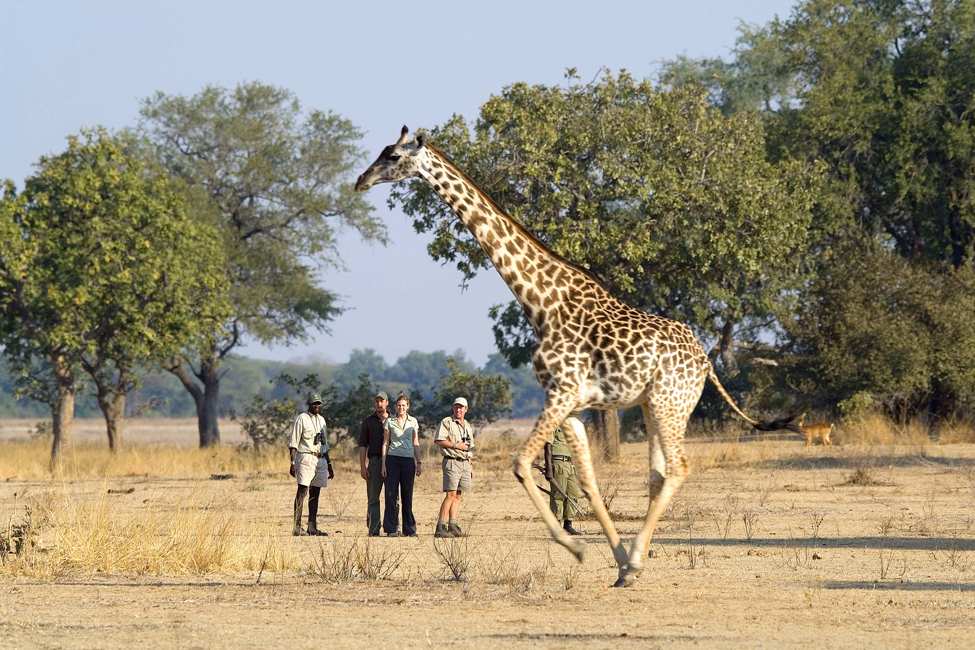
Genuine walking safaris in this part of Tanzania take place almost exclusively in the private concessions and reserves bordering the national park rather than inside its formal boundary. The Grumeti Reserve, sitting along the park’s western edge, is the best known of these, offering guided walks led by a qualified walking guide alongside an armed ranger, focused on tracking, smaller mammals, birdlife and plant knowledge at ground level rather than close encounters with predators. The Ikoma Wildlife Management Area, adjoining the park’s north western boundary near Fort Ikoma gate, offers similar walking activity for guests staying at camps within its concession.
Further north east, private concessions in the Loliondo area near Klein’s Camp also run walking activity under the same general model: a small group, typically capped at six guests or fewer, moving in single file, led by an experienced guide and accompanied by an armed ranger, with a safety briefing mandatory before every outing. None of this happens inside the Serengeti’s own national park boundary; it happens on land adjacent to it, under different management and different rules, which is precisely why confirming the exact location of a proposed walk matters before booking.
What a Serengeti area walking safari is actually like
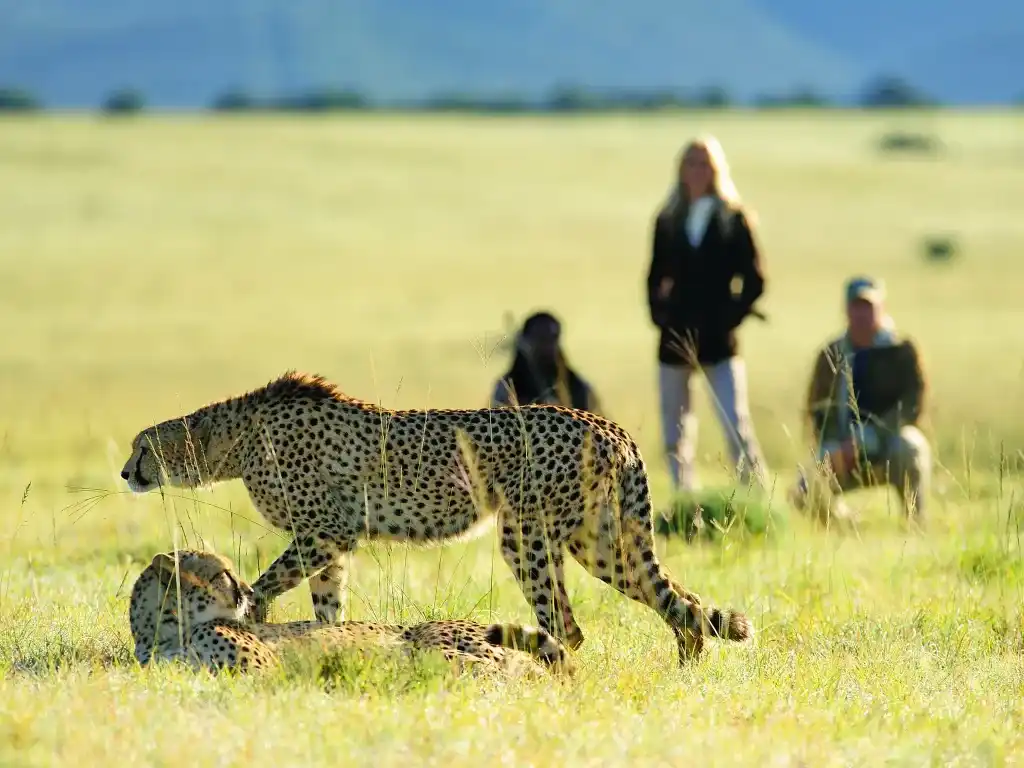
A typical walk runs two to three hours, almost always in the early morning while temperatures are cool and animals are more active, and is not designed around stalking large predators on foot. The experience is built instead around tracking skills, reading spoor and signs of recent animal movement, identifying birds and smaller mammals at close range, and understanding plant use and ecology in a way that is simply impossible from inside a vehicle. Encounters with larger animals do happen, but guides deliberately maintain distance rather than approaching, and the entire structure of the activity, from group size to the mandatory pre walk briefing, is built around minimising risk rather than manufacturing close encounters.
Most camps offering this activity set a minimum age requirement, typically between twelve and sixteen years old, since the ability to stay quiet, controlled and attentive to a guide’s instructions near wild animals is considered essential and younger children are not judged reliably capable of it. Guests should also expect to walk in a single file line, avoid loud conversation, and follow the guide’s directions immediately and without argument if wildlife is encountered at closer range than planned.
Best time of year for a walking safari here
The dry season, roughly June through October, offers the best walking conditions across this part of Tanzania. Grass is shorter, footing is firmer, and visibility for both guides and guests is considerably better than during the long rains from March to May, when vegetation grows quickly and tracking becomes more difficult. This dry season window also overlaps with the period when the Serengeti’s northern zones see the migration’s Mara River crossings, meaning a walking safari in the Grumeti or Ikoma concessions can realistically be combined with vehicle based migration viewing during the same trip without requiring a significant change in season or timing.
Why the distinction between park and concession matters so much
Private concessions bordering national parks operate under lease arrangements that typically grant the operating camp exclusive or near exclusive use of a defined area, which is what allows activities like walking, night driving and off road positioning that are not available inside the national park itself. This is the same basic model that governs Kenya’s well known private conservancies around the Maasai Mara, and it explains why a camp located just outside the Serengeti’s formal boundary can often offer a noticeably different range of activities from a camp of similar quality located inside the park, even though both might be marketed under the general heading of a Serengeti safari.
Travellers specifically interested in a genuine walking safari should confirm directly with their operator, before booking, exactly where the walking activity takes place, whether that is a private concession bordering the park or simply a short guided stroll around a lodge perimeter that has been described more ambitiously in marketing material. The difference between these two things is considerable, and it is not always obvious from a camp’s general description or photography.
What this means for planning a Serengeti itinerary
A traveller who wants both classic Serengeti game drives and a genuine walking safari experience needs to build a stay at a camp within one of the bordering concessions, most commonly Grumeti or the Ikoma area, into their itinerary rather than assuming any Serengeti lodge will offer the activity. This usually means adding a specific property to the plan, often at a premium over standard in park lodges, given the exclusivity the concession model provides. For travellers whose primary interest is vehicle based game viewing and the migration itself, this is not a necessary addition, but for anyone specifically drawn to the walking safari experience popularised by Tanzania’s southern circuit parks such as Nyerere and Ruaha, understanding that the same activity exists in the Serengeti area only outside the park boundary is essential to booking the right camp in the first place.
How this compares with Tanzania’s southern circuit
Walking safaris are considerably more established as a core activity in Tanzania’s southern parks, particularly Nyerere, the former Selous, and Ruaha, both of which permit extensive walking within the park boundary itself under TANAPA rules that differ from the more restrictive approach taken in the northern circuit parks. Nyerere in particular is regarded as Tanzania’s premier walking safari destination, offering multi day guided walks with fly camping along the Rufiji River in a way the Serengeti area simply does not replicate. Visitors whose primary interest is an extended walking safari experience, rather than a shorter addition to an otherwise vehicle based Serengeti trip, are generally better served building a trip around Nyerere or Ruaha directly rather than trying to recreate that experience in the Serengeti’s bordering concessions, which offer a genuine but comparatively limited version of the same activity.
Safety record and why the rules exist as they do
The restrictions on walking within the Serengeti’s core boundary are not arbitrary caution; they reflect a genuine safety consideration specific to the park’s very high density of dangerous game, particularly buffalo and lion, moving through open, low visibility grassland that offers little natural cover for either wildlife or walkers to see each other coming from a distance. Where walking is permitted, in the bordering concessions, the terrain and vegetation density are broadly similar, and safety is instead managed through smaller group sizes, mandatory armed ranger accompaniment, strict single file movement and pre walk briefings covering exactly what to do if a dangerous animal is encountered at close range. Handled this way, the established safety record for guided walking safaris across Tanzania and Kenya is very strong, and serious incidents are rare, but the structure exists precisely because the underlying risk is real rather than theoretical, which is worth understanding rather than treating the rules as simple bureaucracy.
Cost implications of adding a walking safari component
Camps within private concessions such as Grumeti typically command a meaningful premium over comparable standard lodges inside the national park, reflecting both the exclusivity of the land and the additional activities, including walking, that the concession model unlocks. Travellers building a walking safari component into a Serengeti area trip should expect this premium to apply across the full stay at that camp, not simply as a supplementary charge for the walk itself, since the underlying cost driver is the exclusive land lease rather than the specific activity. For travellers on a tighter budget, a shorter one or two night stay at a concession property specifically to include the walking activity, combined with a longer stay at a standard in park lodge for the main game viewing portion of the trip, is a reasonably common way to include the experience without extending the premium rate across an entire safari.
What to ask an operator before booking a Serengeti area walking safari
Given how easily a short guided stroll can be described in marketing language similar to a genuine bush walk, travellers should ask their operator several specific questions before booking rather than relying on a camp’s general description. Worth confirming directly: whether the walk takes place inside the national park boundary or within a bordering concession, since only the latter offers a genuine multi hour walking experience; how long the walk actually runs, since some camps offer only a short perimeter stroll rather than a proper two to three hour outing; whether an armed ranger accompanies the walk in addition to the walking guide, since this is a standard safety requirement rather than an optional extra; and what the minimum age requirement is, since this varies meaningfully between camps and can rule out a walk for younger members of a family group entirely.
Operators experienced with this specific activity will answer these questions readily and in detail, and any hesitation or vagueness in response is itself useful information, since it often indicates the walking activity on offer is closer to a lodge perimeter stroll than the genuine bush walking experience the marketing description implies.
The wider point about activity access on a Serengeti safari
Walking is one of several activities, alongside night drives and off road positioning, that follow the same basic pattern across the wider Serengeti ecosystem: available in the private concessions bordering the park, restricted or unavailable inside the national park itself. Travellers building a Serengeti itinerary specifically around activity variety, rather than around a particular wildlife highlight such as the migration, should treat this pattern as a general planning principle rather than something to research separately for each individual activity, since the underlying reason, the concession model unlocking exclusivity that the national park’s own regulations do not permit, applies consistently across all three.
Understood this way, choosing where to stay on a Serengeti safari becomes less about comparing photographs of similar looking tented camps and more about deciding, honestly, which activities actually matter for a particular trip. A traveller purely focused on ticking off the migration and the Big Five from a vehicle loses very little by staying inside the national park proper, where camp choice is widest and rates are generally lower. A traveller who specifically wants walking, night driving or off road flexibility as part of the experience needs to build the itinerary around a concession property from the outset, since these are not activities that can be added on at short notice once a standard in park lodge has already been booked.