Serengeti in February is best understood as two overlapping stories: the specific spectacle of peak calving on the southern plains, and the broader, less discussed picture of what the rest of the park and the month as a whole actually looks like for a visitor. Most coverage of Serengeti February focuses almost entirely on the newborn wildebeest calves and the predators that follow them, and that focus is deserved. But a traveller planning a February trip also needs the practical detail that sits around that headline event: what the weather is actually doing, how crowded camps and booking windows are, what happens away from Ndutu, and how far in advance the best positions need to be secured.
Weather in February, Precisely
February sits at the tail end of Tanzania’s short dry interlude between the short and long rains, and it is, on average, the wetter of the two “dry-ish” months that bracket it, with rainfall typically running to around 100 millimetres over the month across roughly thirteen rain days, somewhat higher than January’s figure. Daytime temperatures remain among the warmest of the year, generally 27 to 28 degrees Celsius, with overnight lows around 15 degrees Celsius. Humidity is noticeably higher than during the July to September dry season, and showers, while still generally brief, can be more intense than January’s when they do arrive. This is the last genuinely warm, largely dry stretch before the long rains of March and April settle in more persistently, which is itself part of why February draws such concentrated visitor demand.
What Is Genuinely New in February Versus January
Rather than repeat the detailed mechanics of the calving season itself, covered at length elsewhere on this site, it is more useful here to be precise about what changes between January and February specifically. By February, the wildebeest herds that were gathering and arriving on the southern plains through January have become fully concentrated, with the overwhelming majority of the year’s roughly half a million calves born within a three week window centred on this month. The practical shift for a visitor is one of density and intensity rather than location, since the plains around Ndutu are broadly the same ground visited in January, but the wildlife present on them, both prey and the predators drawn to newborn calves, is markedly more concentrated by February.
Life Beyond the Calving Grounds
It is easy to assume the entire Serengeti revolves around Ndutu in February, but the rest of the park continues largely as normal. Central Serengeti around Seronera holds its usual resident lion and leopard populations, generally with noticeably fewer visitors than the concentrated crowds further south, since most February travel is specifically timed and routed toward the calving grounds. The western corridor and northern Serengeti are both quiet in February, well outside their own seasonal peaks, which makes them a genuine option for travellers who want a lower key Serengeti experience in the same general window without competing for space on the southern plains. A traveller who splits a February trip between a few nights on the calving grounds and a few nights in a quieter zone often gets the best of both: the headline spectacle and genuine breathing room afterwards.

Crowd Levels and Vehicle Density
February is one of the most heavily booked months on the Serengeti calendar specifically because of the calving spectacle, and this shows up most visibly as vehicle density at the best sightings on the Ndutu plains. Popular predator sightings during peak calving weeks can draw a genuinely large number of vehicles converging from the various camps in the area, more so than the same location would see in quieter January. This is one of the clearest arguments for choosing a camp with private concession access or one specifically positioned with strong guide radio relationships and early morning departure times, since these factors materially affect how much of the crowding a guest actually experiences rather than simply reads about afterwards.
Booking Lead Times
February’s calving season camps around Ndutu are among the most competitively booked properties in the entire Serengeti calendar, generally requiring booking nine to twelve months ahead for the best dates at the smallest, most sought after operations, and at least six months ahead even for larger properties with more available beds. This lead time is comparable to the northern zone’s July through October crossing season booking window, and travellers who leave a February Serengeti trip to within a few months of travel should expect a materially reduced choice of camps, particularly among the smaller mobile operations positioned closest to the main concentration of calving activity.
Photography Conditions
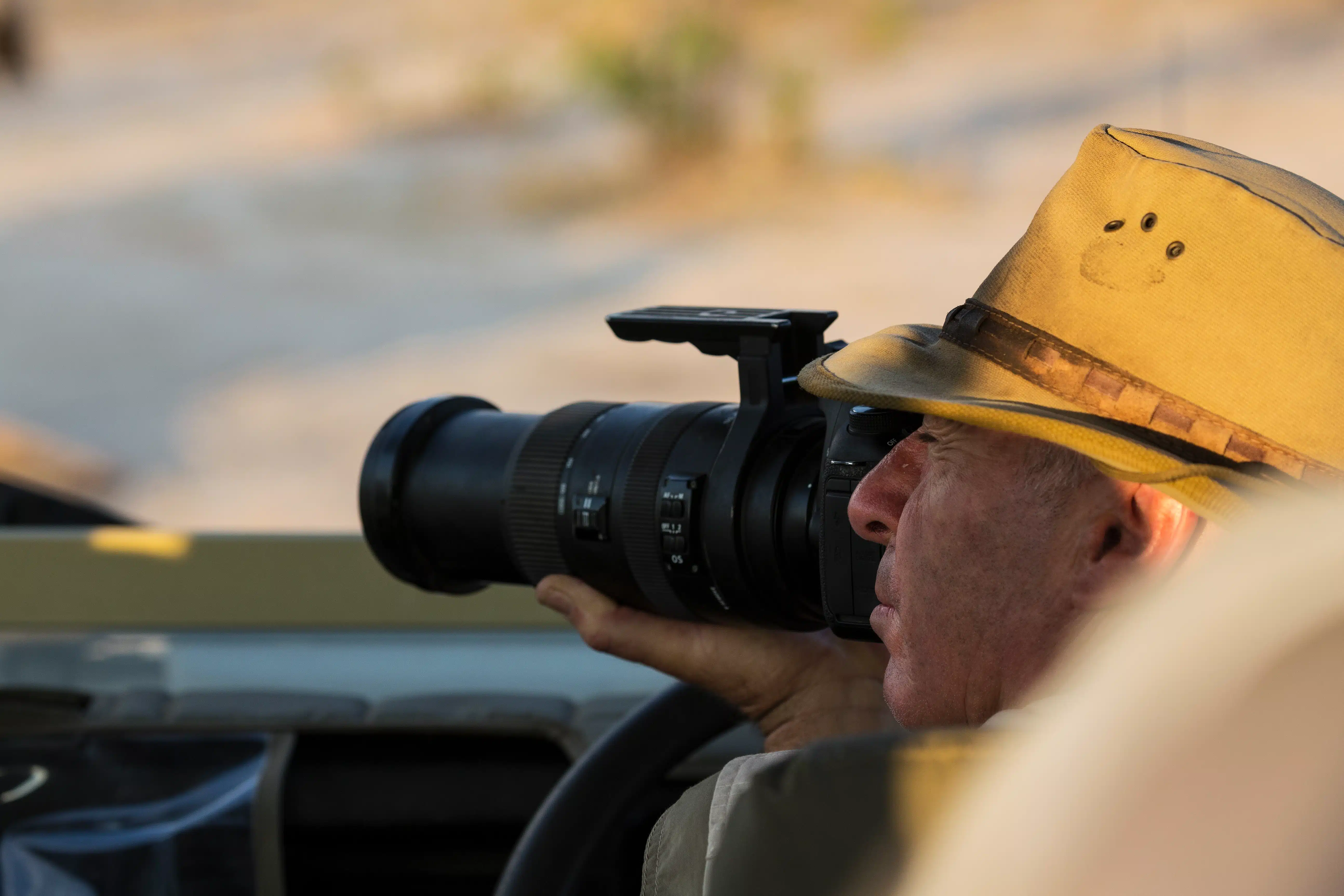
February offers some of the most productive wildlife photography conditions anywhere in the Serengeti’s calendar, driven by the sheer density of predator and prey interaction on the open, largely treeless plains around Ndutu, which provide unobstructed sightlines rarely available in the more wooded central and northern zones. Light conditions carry more variable cloud cover than the driest months, producing softer, more dramatic skies, though this comes with a genuine chance of a shower interrupting a session, so weatherproofing for camera equipment is worth planning for rather than assuming will not be needed.
What to Pack for February
February’s packing list closely mirrors January’s: light, breathable layers for warm days, a fleece or light jacket for cool early mornings, and a proper rain layer given the marginally higher rainfall than the preceding month. Given the higher likelihood of a dusty, occasionally muddy plains environment around Ndutu specifically, footwear that can handle both dry dust and the possibility of mud after a shower is worth prioritising over lighter sandals or trainers that suit drier zones better.
Combining February With Ngorongoro
February’s timing pairs naturally with a visit to Ngorongoro Crater, since the crater’s resident wildlife is unaffected by the migration calendar and offers reliably strong, dense sightings regardless of season, providing a useful counterpoint to a few days spent specifically chasing the calving spectacle on the plains below. Given the crater’s proximity to Ndutu, a common itinerary structure sees travellers spend two or three nights on the plains for calving season proper, followed by one or two nights on or near the crater rim before returning north or flying onward, making efficient use of the short driving distance between the two areas.
Getting to the Southern Plains in February
Road access to Ndutu in February faces the same black cotton soil challenges as January, and with marginally higher average rainfall, the practical risk of a vehicle being genuinely delayed after a heavy shower is slightly greater in February than the month before. Operators experienced in the area generally build contingency time into February game drive schedules for exactly this reason. Fly-in access via Ndutu’s airstrip remains a reliable alternative for travellers on a tighter schedule, and given February’s high demand, confirming both road and flight logistics well ahead of arrival, rather than assuming last minute flexibility, is worth doing.

If the Exact Peak Week Cannot Be Secured
Because the most concentrated few weeks of calving are also the most heavily booked period of the year, not every traveller will be able to secure a camp for the absolute peak. This is less of a problem than it might appear. Calving activity does not switch on and off sharply; the process runs across a broader window from late January through into March, with February simply representing the statistical peak rather than the only viable time to witness it. A camp booked for early February or the final days of January will very likely still see substantial calving activity and the associated predator interest, even if the single busiest week of the season falls slightly outside those dates, which makes flexibility around the exact travel week a genuinely useful tool for anyone struggling to secure their first choice camp at short notice.
Families and Group Travel in February
February’s calving season, while spectacular, involves genuine predator activity, including kills, playing out in full view at relatively close range, which is worth considering for families travelling with younger children who may find this intense rather than purely exciting. Most camps in the Ndutu area do not restrict access based on this content, unlike the minimum age policies some mobile camps apply for other reasons, but parents travelling with younger children may want to discuss with their guide in advance how explicitly a given sighting will be narrated and approached, since guides can generally moderate proximity and commentary considerably if asked.
Who Should Choose February
February suits travellers whose primary goal is witnessing the calving season at its most concentrated and who are willing to book far in advance and pay peak season rates for the privilege, as well as photographers specifically targeting predator prey interaction on open plains. It suits less well anyone strongly averse to crowds at the most popular sightings, since February’s vehicle density on the Ndutu plains during the peak weeks is a genuine trade-off for the wildlife concentration on offer, and anyone hoping to combine calving season with strong migration activity in the northern or western zones, since those areas are quiet during this specific window and offer only resident game rather than migration related sightings during February itself. Understood correctly, February is not simply “calving month” in isolation; it is the most intense expression of a process that begins building in December and January, sitting inside a warm, humid, occasionally showery month that rewards travellers willing to book early and accept genuine crowds at the very best sightings in exchange for genuinely extraordinary wildlife density.