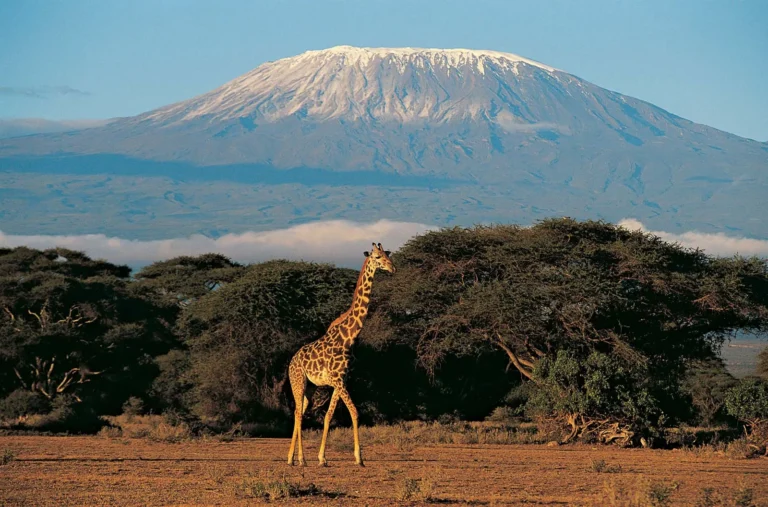
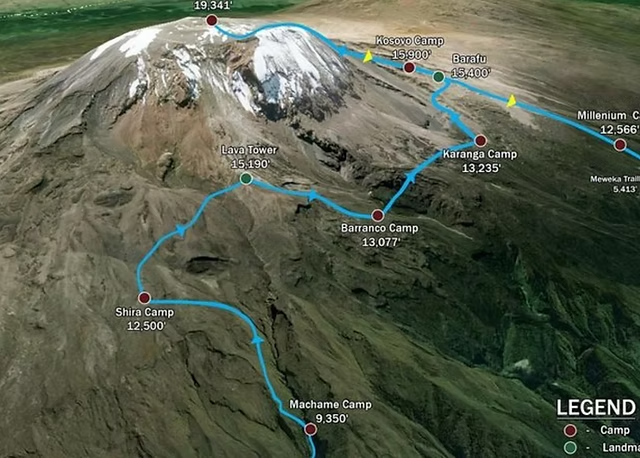
Kilimanjaro is a mountain with no bad time to climb and at least two genuinely good ones. The question of when to go is asked so frequently and answered so variably that a straightforward response feels almost suspicious. The honest answer is that the two primary climbing seasons, January to March and June to October, offer materially better conditions than the shoulder periods, but that experienced guides have stood on the summit in every month of the year and the mountain has been summited in the rain, the cold and the cloud as often as in the sunshine.
What the seasons affect is probability. The probability of good summit visibility, the probability of dry paths, the probability of cold rather than very cold summit nights. RYDER Signature climbers benefit from understanding these probabilities before booking rather than after arriving at base camp.
Kilimanjaro’s Two Climbing Seasons
Tanzania has two rainy seasons: the long rains from approximately March to May, and the short rains from November to December. These correspond to the two main periods to avoid on Kilimanjaro not because climbing is impossible during them, but because conditions are harder, summit visibility is poor, paths are muddy and the experience is less enjoyable than the alternative.
The two reliable dry seasons are January to mid-March (the warm dry season, often called the “short dry”) and late June to October (the main dry season, the most popular climbing period). A third window late March through May is the wet season and is generally avoided. November is transitional and unpredictable. December is increasingly popular because of holiday availability and conditions are typically good, though summit temperatures are among the year’s lowest.
January to Mid-March: The Warm Dry Season
January and February are among the finest months on Kilimanjaro. The mountain is dry, the trails are in good condition, temperatures at altitude are warmer than the June-October period, and the crowds are noticeably lighter. There is a particular quality to Kilimanjaro’s summit views in February the plains below are green from the short rains, the atmosphere is clear, and the light has an intensity that the dustier August days do not quite replicate.
The main summit season runs from late June through October, and many climbers schedule around those months through habit or because of when the Masai Mara migration is happening. This creates an opportunity in January and February: comparable conditions with fewer other parties on the mountain. For climbers combining Kilimanjaro with a safari in the northern parks, a January or February Kili climb followed by a game drive in Tarangire or Ngorongoro works logistically and benefits from the season for both activities.
Mid-March is transitional. The long rains can arrive early or late; a climb starting in early March will typically find good conditions, while one starting in late March is risking the onset of the rainy season. If planning a March climb, build in flexibility at the start date and monitor forecasts with your operator in the weeks before departure.
June to October: The Main Climbing Season
The June to October window is Kilimanjaro’s peak climbing period and the most recommended for first-timers. The mountain is reliably dry, paths are firm underfoot, and the camps are staffed and equipped for the volume of climbers at this time of year. Summit visibility in July and August is typically excellent many of the celebrated Kilimanjaro summit photographs, with the entire curvature of the earth visible below the Rebmann Glacier, are taken in this period.
The trade-off is crowds and cold. July and August are the busiest months on Kilimanjaro and the most popular routes Machame and Lemosho can be heavily trafficked. The same period is also the coldest for summit nights; temperatures on the crater rim in July can reach minus fifteen degrees Celsius or below. This is cold by any reasonable standard, but it is manageable with proper equipment and does not present a greater physical challenge than a well-equipped climber in good health cannot meet.
September and October see the crowd levels begin to thin as the northern hemisphere summer season ends, while conditions remain very good. A September climb on Lemosho has, in our experience, a particularly favourable combination of trail conditions, crowd levels and weather. October is also excellent, with the added possibility of dramatic cloud formations as the atmosphere begins to shift toward the short rains.
What Happens at the Summit in Each Season
Summit night is the decisive moment of any Kilimanjaro climb, and the conditions at 5,895 metres vary meaningfully between seasons. In the January-March window, summit temperatures typically range from minus five to minus twelve degrees Celsius at Uhuru Peak, with lighter winds. In July and August, temperatures can drop to minus fifteen or lower with stronger katabatic winds blowing down from the crater. Both are survivable and both produce hundreds of summits every year; the preparation required is the same, but the margin for being underprepared is smaller in the colder months.
Sunrise timing also varies. A July summit attempt, departing at midnight from high camp, arrives at Stella Point around five or five-thirty, just before dawn. The summit sunrise in mid-winter occurs around six-fifteen and the light on the summit glaciers at this moment is exceptional. In February, the sunrise is earlier and the summit can be reached in developing daylight rather than full darkness which some climbers prefer and others find reduces the drama of the experience.
The Short Rains Window: November to December
November is the most variable month on Kilimanjaro. It falls in the short rains season, which can arrive in October or not until December and varies in intensity year by year. A November climb is a calculated risk that an experienced operator can help you navigate with current forecast data. Some November climbs are outstandingly clear; others encounter persistent cloud and wet conditions that make summit day challenging.
December is increasingly popular, partly because of Christmas-New Year availability and partly because the short rains typically end by mid-December, leaving the mountain in reasonable condition. Summit temperatures in December are among the year’s lowest comparable to July but conditions are generally dry. The Christmas week sees a significant spike in climbers on all routes, which affects camp crowding.
The Long Rains Season: March to May
March to May is the season that experienced operators consistently advise against. The long rains bring persistent cloud, muddy trails, wet equipment and a significantly higher likelihood of a clouded-out summit. The mountain is climable porters work it year-round but the experience for a leisure climber is considerably harder than the alternative seasons provide. Success rates in the wet season are lower, and the quality of the experience on the non-summit days is affected by the rain.
The argument for climbing in the wet season is almost entirely cost-related: operators reduce prices, and the mountain is quiet. If cost is the binding constraint and the summit is the primary goal, a Rongai route climb in April benefiting from the northern approach’s rain-shadow characteristics can produce adequate conditions at a lower price point. This is an option worth considering with your operator if budget is a genuine concern, with full understanding of the tradeoffs.
Kilimanjaro Compared to Other East Africa Activities by Season
Most RYDER Signature clients combine a Kilimanjaro climb with a safari and sometimes a beach extension. The seasons that work best for Kilimanjaro align reasonably well with the safari calendar. January and February are excellent for both: dry on the mountain, good game viewing in Tarangire, Ngorongoro and the southern Serengeti. June to October covers the Great Migration season in the Serengeti’s northern reaches, and Kilimanjaro’s main season overlaps cleanly. The Zanzibar beach season is year-round with a preference for the dry months of June to October and January to March aligning again with the Kili climbing windows.
The combination that creates the most scheduling tension is a safari anchored in the Masai Mara in September or October paired with a Kilimanjaro summit attempt in the same two-week window. Both are excellent in this period, and the logistical sequence fly to Kilimanjaro International, climb, descend, transfer to Arusha, fly to Nairobi, drive to Mara is entirely manageable with proper planning. Allow a minimum of twelve days total for this combination, preferring fourteen.
How RYDER Signature Times Kilimanjaro Climbs
Our standard guidance for Kilimanjaro timing is: first preference is January or February for clients who are flexible; second preference is September or early October for those constrained to school holiday periods. We actively discourage bookings in March and April unless the client understands the conditions clearly and has specific reasons for those dates.
We monitor seasonal forecasts in the weeks before any climb and brief clients on current conditions. Kilimanjaro’s weather is influenced by broader Indian Ocean patterns and can be predicted with reasonable accuracy two to three weeks in advance. An operator who does not provide this pre-departure briefing is missing an opportunity to prepare clients appropriately for what they will encounter.
Can you climb Kilimanjaro in the rain?
Yes — the mountain does not close during the wet season and many climbers successfully summit during March to May. What the rain affects is path conditions (muddy and slippery), equipment (harder to keep dry), summit visibility (typically poor) and overall experience quality. The summit is achievable in wet conditions with appropriate gear; the journey to it is meaningfully less pleasant than in the dry seasons, and success rates are lower. Climbing in the wet season is a legitimate choice with real tradeoffs, not an impossible option.
Which month has the highest summit success rates?
Success rates are highest during the main dry season from late June to October, with July and August showing the most consistent results due to stable, dry conditions. January and February also show very good rates. The lowest rates occur in March to May during the long rains. Within the good climbing periods, the month matters less than the route chosen and the number of days on the itinerary a well-designed seven or eight-day itinerary in any of the recommended months will out-perform a five-day itinerary in peak season.
Is Kilimanjaro more crowded than other major trekking peaks?
Kilimanjaro receives roughly 35,000 to 50,000 climbing attempts per year, which is substantial for a high-altitude route but manageable compared to Nepal’s most popular trekking circuits. The crowding is concentrated: on Machame and at Barafu Camp in July and August, the numbers are noticeable. On Lemosho, Rongai or the Northern Circuit in the same period, the experience is considerably more spacious. Route selection is a more effective crowd management tool than seasonal timing.
What is the best month to combine Kilimanjaro with the Serengeti migration?
July to early August covers both the main Kilimanjaro climbing season and the peak of the Great Migration river crossings in the northern Serengeti and Masai Mara. A twelve to sixteen-day trip combining a seven-day Lemosho climb with a five to seven-day northern Serengeti stay works well logistically and covers both highlights. The sequence climb first, then safari is generally preferred because the physical recovery from high altitude is better undertaken before the safari than after, when the game drives would otherwise occur during the first few days of readjustment to sea level.
Reading the Mountain’s Daily Weather Rhythm
Regardless of the season you choose, Kilimanjaro has a consistent daily weather pattern that every climber should understand. Mornings are typically the clearest period, particularly at altitude. By mid-morning, cloud begins to build from the warmer lowlands below, rising up the mountain’s flanks and often obscuring the views by early afternoon. By late afternoon, particularly in the wet seasons, precipitation is common at lower elevations. Summit night starting at midnight takes place before the cloud-building cycle begins, which is why departing at midnight rather than early morning is standard on all routes.
Understanding this pattern helps manage expectations on the mountain. The views from Shira Plateau on day two of a Lemosho climb may be spectacular at eight in the morning and invisible by eleven. This is not a failure of the day; it is the mountain’s standard behaviour. Summit morning, when the departure from high camp at midnight delivers climbers to Stella Point just before or just after sunrise, typically offers the clearest views of the entire climb, before the cloud builds. Climbers who struggle most with Kilimanjaro’s weather are often those who expect consistent visibility throughout the ascent; those who understand the rhythm and concentrate on early morning clarity enjoy the mountain considerably more.
Planning Your Booking Around the Best Window
Booking a Kilimanjaro climb requires lead time that many travellers underestimate. The best camps at the base of the mountain, the best guide teams, and the most experienced operators are in demand year-round but particularly in the peak July-October window. Booking six months in advance is the minimum for a peak season climb; nine months is better for the most reputable operators. January and February availability is better, which is another advantage of that under-appreciated window not only are conditions often excellent, but the best operators are bookable with shorter lead times.
Permit allocation for Kilimanjaro is managed by TANAPA, and the number of climbers per route per day is theoretically capped. In practice, the cap has been loosely enforced during peak season, contributing to the crowding on the most popular routes. Booking early with a reputable operator secures your date; leaving it late introduces both availability risk and the higher probability of being assigned to a lower-priority guide team.
A Note on Climate Change and Kilimanjaro’s Glaciers
The celebrated glaciers of Kilimanjaro the Rebmann, Decken, Kersten and Northern Icefield are retreating at a rate that has been well-documented since the early twentieth century. Photographs from 1912 compared with the mountain today show a dramatic reduction in ice coverage. The glaciers are expected to disappear within this century, possibly within the next two to three decades.
This is a legitimate reason to include Kilimanjaro in an itinerary sooner rather than later if the glacier experience is important. The summit currently provides extraordinary views of permanent ice at the equator a geological and visual anomaly that is genuinely remarkable. The ice fields are still substantial enough to be impressive; the summit rim walk between Stella Point and Uhuru Peak passes alongside glaciers that tower several metres above the path. This will not always be the case.
Climate change also affects the mountain’s weather patterns in ways that are less predictable than the glacier retreat. Established seasonal patterns are shifting, and the long rains and short rains seasons are both arriving with less reliability than they did twenty years ago. This is a reason to work with an operator who monitors conditions actively in the run-up to your climb, rather than planning on the basis of historical averages alone. The general seasonal framework remains valid, but the edges of each season are less reliable than they once were, and real-time monitoring provides better guidance than historical charts for any climb planned more than six months in advance.
For any client uncertain about timing, our recommendation is simple: share your ideal travel dates, your flexibility window and any constraints, and we will map those against the current seasonal picture and the availability of the guide teams we work with. Kilimanjaro timing is not a puzzle with a single correct answer; it is a set of overlapping probabilities that an experienced operator can help you navigate toward the combination most likely to produce the experience you have come for.
The mountain rewards those who take the timing question seriously and penalises those who dismiss it as a secondary concern. A poorly timed Kilimanjaro attempt wet, crowded, rushed can produce a miserable experience on a genuinely extraordinary mountain. A well-timed one, designed around the right season, the right route, and the right number of days, is among the most memorable physical achievements available to a well-travelled person who has no technical climbing experience whatsoever.
The mountain is there. The seasons are knowable. The planning is yours to do, and doing it well with an accurate seasonal picture, a well-chosen route and a reputable operator shifts the probability of a summit experience as close to certainty as this mountain permits. That shift is worth the research.