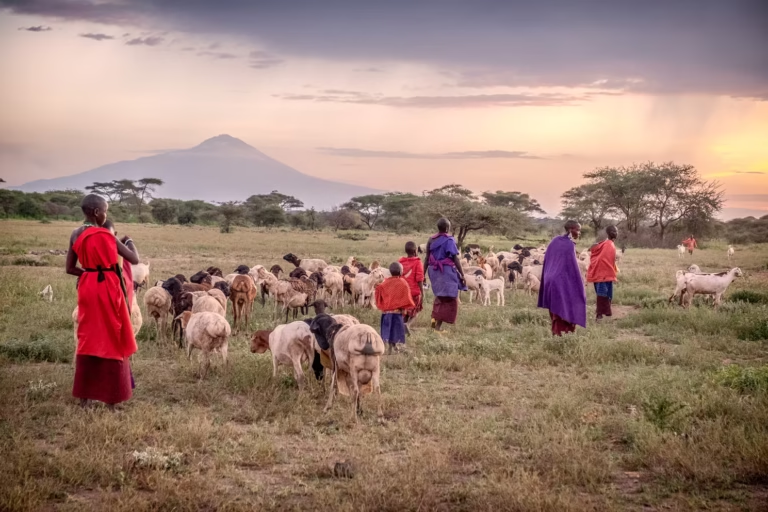
Wildlife tracking is one of the oldest and most sophisticated knowledge systems that human beings have developed. Long before GPS telemetry, camera traps or aerial survey, tracker-guides in East Africa were locating specific animals — not categories of species but individual animals known by their tracks — across enormous territories of bush terrain using a combination of ground sign reading, ecological knowledge and the intuitive pattern recognition that only years of dedicated observation can build. The modern safari guide’s tracking skills are a continuation of this tradition, refined and expanded by the specific requirements of vehicle-based wildlife tourism in protected areas.

The Primary Tracking Methods
Ground sign reading is the foundational tracking skill: the ability to extract information from the physical evidence that animals leave on the ground. Tracks — the imprints of feet in soil, dust, mud or sand — are the most direct sign, and reading them is more complex than identifying the species. A skilled tracker reads the track for gait information (the relationship between stride length and track depth reveals speed), for body weight (larger individuals produce deeper, wider impressions at equivalent gait), for freshness (the crispness of the track edge, the moisture in the disturbed soil, the presence of wind-blown particles filling the impression), and for direction and destination (the angle of the track relative to the slope, the convergence of multiple tracks toward a waterhole or a shade tree).

Scat analysis — reading animal droppings for species identity, diet composition, individual size and freshness — is a companion skill to track reading that fills in information the tracks alone cannot provide. The buffalo scat that contains specific grass species confirms both the species and the current feeding habitat; its placement and water content indicate freshness and the direction of movement since it was deposited. A guide who can read scat information explicitly, explaining its content to the vehicle, is providing a window into the animal’s behaviour between visual encounters that pure track reading cannot achieve.

Alarm Calls and Ecosystem Communication
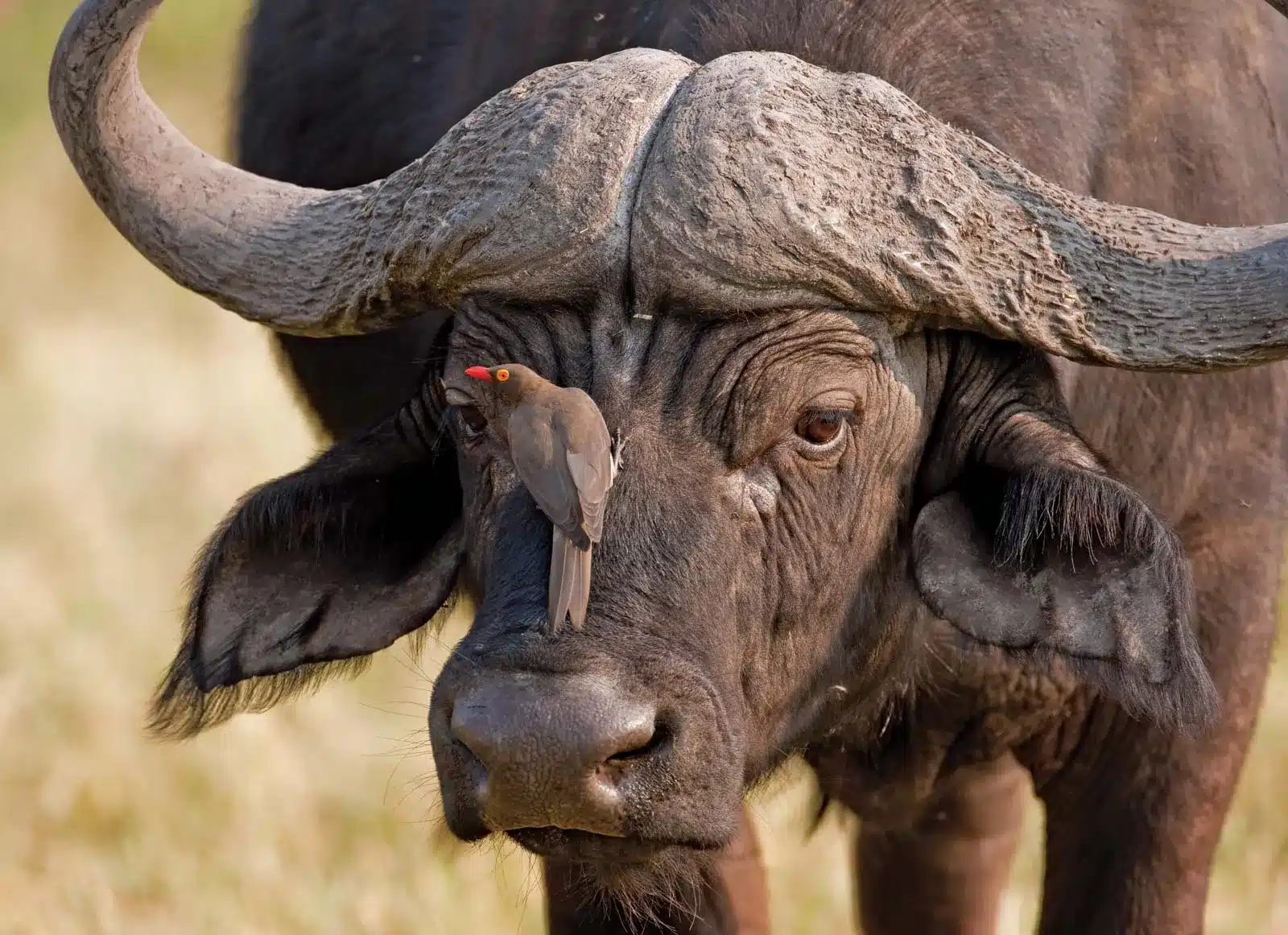
The bush has its own alarm system — a network of bird and mammal calls that broadcast information about predator presence to any species within hearing range that has learned to interpret it. The impala’s explosive bark announces predator proximity and is the most common alarm call in East Africa’s mixed-species areas. The vervet monkey’s different alarm calls for aerial predators (eagles) versus terrestrial predators (leopard, snake) are species-specific enough to provide predator category information. The alarm call of the oxpecker, giving a sharp churring call and taking flight from its animal host, announces that the animal has detected something alarming. The starling’s alarm behaviour above a grass section signals the presence of a predator that the vehicle cannot yet see.
A guide who is reading the alarm call network in real time — hearing an impala bark at two hundred metres and navigating toward the disturbed area before the cause becomes visible — is using the ecosystem’s own communication infrastructure as a tracking tool. This skill is the hardest to teach and the clearest differential between excellent guides and adequate ones; it requires years of listening before the alarm calls become legible at the speed and distance at which they arrive in the field.
Scent and Wind Awareness
Predators navigate largely by scent, and a guide who understands wind direction and its implications for animal behaviour is using the same physical information the predator uses. The vehicle approaching a pride of lions downwind is invisible in the olfactory sense; the same approach upwind broadcasts the vehicle’s presence hundreds of metres before it arrives. The guide who positions the vehicle thoughtfully relative to wind direction — arriving at a sighting from downwind, suggesting a wider detour around a sensitive sighting to maintain a downwind position — is managing the encounter with ecological awareness rather than simply navigating toward the GPS mark.
Scent posts — the specific features of a landscape where animals mark their territory through glandular secretions, urine and scratch marks — provide information about territorial boundaries, the timing of recent passage, and the identity of specific individuals in systems where marking behaviour is individual. The leopard’s scratch marks on the fig tree bark — deep, parallel, at a specific height — are a territorial advertisement that can be approximately dated by the freshness of the sap and the soil disturbance at the base. A guide who identifies and explains a scent post is connecting the vehicle’s passengers to the specific social communications of the landscape’s residents.
Technology in Modern Tracking
GPS telemetry collars, radio collars and camera trap networks have transformed the information available to guides in conservation areas that operate research programmes. Ol Pejeta‘s rhino tracking uses telemetry to locate collared individuals; several Serengeti research projects share lion and wild dog GPS data with guide teams; the Amboseli Trust for Elephants has built a four-decade individual database that Amboseli guides access for specific family identification. This technology does not replace traditional tracking — collars fail, battery life is finite, not every individual in a population is collared — but it adds a layer of real-time locational data that extends the guide’s effective search range.
The most effective tracking combines both traditions: the traditional ecological reading of ground sign and alarm systems, which reveals what is happening anywhere in the landscape regardless of collar coverage, combined with telemetry data that confirms presence and provides directional guidance in the specific areas where collared individuals are operating. Guides who use both are more effective than those who rely on either exclusively.
The Tracking Skills Hierarchy
Not all guides track with the same skill level. The hierarchy within guide teams at East Africa’s best camps reflects genuine capability differences that are not always visible from outside the vehicle. The senior tracker who walks ahead of the vehicle in specific terrain, reading sign at ground level in ways that even an experienced guide cannot match from behind a windscreen, occupies a specific role that is distinct from the guide’s. Many of East Africa’s best camps employ dedicated trackers — specialists who have spent decades developing ground sign reading specifically — working alongside the guide as a team. The tracker locates and interprets; the guide navigates and communicates. This division of labour produces sighting quality that exceeds what either individual can achieve independently.

Can travellers learn tracking skills on a safari?
Yes, and the most engaging safaris consistently involve the guide teaching the passenger how to read sign rather than simply reading it for them. A guide who hands the binoculars to a guest and asks them to find the feature in the grass that suggests a lion is hiding there — rather than pointing directly to it — is teaching observation skills in real time. Walking safaris specifically provide the opportunity to read track sequences, identify scat, observe scent posts and interpret alarm calls as active participants rather than observers. Any safari guest who expresses genuine interest in learning to read sign will find that most experienced guides are excellent teachers given the opportunity.
How do guides know where specific animals are likely to be at specific times of day?
Experienced guides in any specific ecosystem develop what is best described as a mental model of the landscape’s predictable dynamics: where specific pride territories fall, which shade trees the lions use at different times of year, which waterholes attract elephants at what time of day in which season. This model is built from thousands of game drive hours in the specific terrain and from daily information shared within the camp’s guide network — what was seen at what location at what time during the previous day’s drives. A guide who has been working in the same ecosystem for ten years has a predictive capacity that is genuinely uncanny to outside observers and that is simply the accumulated weight of specific, attentive observation.