Tanzania vs Kenya Safari: Which Destination Is Right for You?
The Tanzania vs Kenya safari debate is one of the most enduring conversations in East African travel. Both countries hold an almost mythical status in the safari world. Both sit at the heart of the world’s most extraordinary wildlife ecosystem. And both are fully capable of delivering experiences that fundamentally change how you see the natural world.
But they are not the same. The differences between a Tanzania safari and a Kenya safari are real, meaningful, and consequential for your planning. Understanding those differences — and being honest about which matters most to you — is the single most important step in choosing the right East African destination.
This guide presents a comprehensive, honest comparison drawn from direct field experience across both countries. It is not designed to declare a winner. It is designed to help you make the right choice for your specific journey.
The Fundamental Character of Each Country
Before comparing parks, wildlife, and logistics, it helps to understand the broader character of the safari experience each country offers.
Tanzania is defined by raw scale and ecological integrity. It is a country where you can drive for hours without encountering another vehicle, where wildlife corridors remain intact across vast distances, and where the wilderness still feels genuinely untouched. Tanzania’s philosophy of conservation has favoured limiting visitor numbers and maintaining large, undeveloped protected areas — a strategy that prioritises ecological health over tourist volume. The result is a safari experience that often feels closer to true wilderness than anything available elsewhere in Africa.
Kenya is defined by accessibility, diversity, and the extraordinary innovation of its conservancy model. Kenya was, in many ways, the birthplace of modern safari tourism, and that legacy shows in the quality and sophistication of its tourism infrastructure. More importantly, Kenya’s network of private conservancies — community-owned wildlife areas adjacent to national reserves — has created a model for wildlife tourism that delivers exceptional experiences while generating genuine benefits for local communities. The conservancy model allows off-road driving, night game drives, and walking safaris in areas of outstanding wildlife quality, creating a tier of access simply unavailable in many of Tanzania’s standard national park areas.
Wildlife: Comparing the Two Countries
Tanzania’s Wildlife Advantage
Tanzania holds the single largest volume and diversity of wildlife in East Africa. The country’s protected areas together cover over 38% of its total land area — one of the highest conservation land ratios anywhere in the world. This scale translates directly into wildlife density, ecological completeness, and the kind of landscapes where the Great Migration can unfold as nature intended.
The Serengeti ecosystem — spanning the Serengeti National Park, Ngorongoro Conservation Area, Maswa, Loliondo, and adjacent areas — is the largest and most ecologically intact savannah ecosystem on earth. It supports the full complement of Africa’s large mammals in numbers that surpass any other single ecosystem. The Serengeti’s lion population alone — estimated at over 3,000 individuals — represents the largest contiguous lion population in Africa.
Tarangire National Park delivers elephant concentrations during the dry season that are unmatched anywhere on the continent — herds of hundreds gathering at the Tarangire River create scenes of overwhelming scale. Ruaha National Park, largely unknown to mass tourism, hosts Africa’s greatest density of wild dogs and enormous lion prides that have been studied for decades. Selous/Nyerere National Park is Africa’s largest wildlife reserve by area, offering boat safaris, walking safaris, and ecosystems that see only a fraction of the visitor numbers at the more famous northern parks.
For the single most diverse and voluminous wildlife experience in Africa, Tanzania wins decisively.
Kenya’s Wildlife Advantage
Kenya’s case for wildlife excellence rests not on volume but on access quality. The Masai Mara National Reserve and the private conservancies that surround it deliver wildlife encounters that are, in certain respects, superior to what Tanzania’s public national parks allow.
Masai Mara National Reserve is internationally celebrated for its big cat populations — lions, leopards, and cheetahs are encountered here with a reliability that consistently surprises even experienced safari travellers. The Mara’s permanent rivers, lush grass, and year-round rainfall create a productive ecosystem that supports large resident wildlife populations even outside Great Migration season.
Private conservancies — Naboisho, Mara North, Olare Motorogi, Ol Kinyei, and others bordering the Mara — take the experience further still. In these community-owned areas, unlimited off-road driving positions guests exactly where the wildlife is, rather than where the road happens to run. Night game drives — impossible in Tanzania’s national parks — reveal the nocturnal dimension of the ecosystem: serval cats hunting in the long grass, leopards descending from trees, bat-eared foxes at their burrows, and lions moving through camp perimeters in absolute darkness. Walking safaris with armed ranger guides bring the bush to eye level in ways no vehicle can replicate.
Amboseli National Park offers Kenya’s most visually distinctive experience — elephant families and large bull elephants moving against the backdrop of Mount Kilimanjaro, Africa’s highest peak, rising above the cloud line in impossible majesty. The Amboseli Elephant Research Project has documented individual elephants here for over 50 years, and the knowledge embedded in the ecosystem — carried by guides who know individual animals by name and history — adds a narrative depth that is genuinely exceptional.
Samburu National Reserve in northern Kenya offers a wildlife profile unavailable anywhere else in the region — the “Special Five” species found only in the semi-arid north: reticulated giraffe, Grevy’s zebra, Somali ostrich, beisa oryx, and gerenuk. The riverine habitat of Samburu also produces reliable leopard and lion sightings in an ecosystem that feels dramatically different from the Mara or Amboseli.
The Great Migration: Tanzania vs Kenya
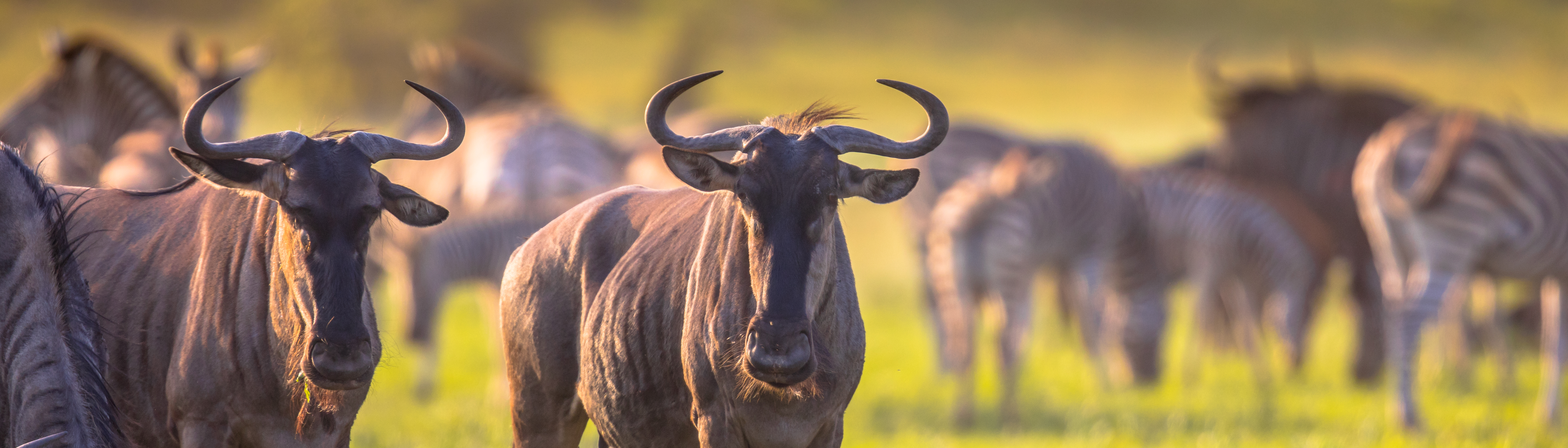
The Great Migration is the single most anticipated wildlife event in East Africa, and understanding where it sits in any given month is critical to choosing between Tanzania and Kenya.
The Migration Calendar
January – February: Southern Serengeti, Tanzania Calving season. Over 500,000 wildebeest calves born in a concentrated window. Extraordinary predator density in the Ndutu area. The most emotionally powerful — and most undervisited — phase of the migration.
March – May: Central Serengeti, Tanzania The long rains. Herds dispersed across lush plains. Less concentrated wildlife viewing, but exceptional landscape beauty and minimal tourist presence.
June – July: Western Serengeti, Tanzania The Grumeti River crossings — dramatic, crocodile-intense, and far less crowded than the Mara crossings in August and September.
July – October: Northern Serengeti (Tanzania) and Masai Mara (Kenya) The iconic Mara River crossings. The most dramatic and most photographed phase of the migration. Both countries offer outstanding positioning; the northern Serengeti’s Lamai Wedge often delivers more intimate viewing with fewer vehicles than the Kenyan side.
November – December: Eastern Serengeti and return south, Tanzania The herds return through the Loliondo area before cycling south. Short rains bring green landscapes and calving begins to build again.
Verdict: Tanzania hosts the migration for the majority of the year and in its most ecologically complete form. Kenya offers the river crossing drama from July to October — and the Masai Mara’s conservancies provide superior vehicle access and positioning for crossing events. Both countries deliver genuine migration experiences; the right choice depends on your travel dates.
National Parks and Reserves: Side by Side
Tanzania’s Key Destinations
| Park | What It Offers | Best Season |
| Serengeti National Park | Great Migration, Africa’s highest predator density, vast scale | Year-round; peak July–Oct |
| Ngorongoro Crater | Highest lion density, black rhino, enclosed ecosystem | Year-round |
| Tarangire National Park | Massive elephant herds, baobab landscape, 550+ bird species | June–October |
| Ruaha National Park | Wild dogs, large lion prides, remote wilderness | June–October |
| Selous / Nyerere NP | Boat safaris, walking safaris, hippo, crocodile | June–October |
| Mahale Mountains | Chimpanzee tracking, Lake Tanganyika | June–October |
Kenya’s Key Destinations
| Park / Reserve | What It Offers | Best Season |
| Masai Mara National Reserve | Big cats, river crossings, year-round wildlife | Year-round; peak July–Oct |
| Private Mara Conservancies | Off-road, night drives, walks, exclusive access | Year-round |
| Amboseli National Park | Elephants and Kilimanjaro backdrop, research depth | Year-round; dry season best |
| Samburu National Reserve | Special Five, northern endemics, river predators | Year-round |
| Ol Pejeta Conservancy | Black and white rhino, last northern white rhinos | Year-round |
| Laikipia Plateau | Private, conservation-led, diverse habitats | Year-round |
Costs: Tanzania vs Kenya Safari
Both countries represent premium safari destinations, and pricing reflects this. However, meaningful differences exist at various points in the comparison.
Tanzania’s national parks charge among the highest park entry fees in East Africa — particularly the Serengeti and Ngorongoro, where daily non-resident fees can reach USD 70–100 per person per day per park. These fees are justified by the quality of the ecosystem and the scale of conservation investment, but they must be factored clearly into any budget.
Kenya’s national parks generally charge lower entry fees, though private conservancy fees — charged additionally to Mara National Reserve fees when using conservancy-based camps — bring the total access cost to a similar level. Conservancy fees fund community conservation programmes and are an essential component of the model’s success.
At the luxury accommodation level, costs are broadly comparable between the two countries. Tanzania’s most exclusive camps command similar nightly rates to Kenya’s finest conservancy properties — the distinction is less about price and more about what that price delivers in terms of access, exclusivity, and experience.
Kenya’s relative advantage on cost is most apparent for mid-range travellers — the proximity of the Masai Mara to Nairobi means road transfers are viable (reducing charter flight costs), and the density of accommodation options across the conservancy network provides more competitive pricing than Tanzania’s fly-in dominated model.
Logistics and Getting There
Kenya offers logistical advantages for most international travellers. Nairobi’s Jomo Kenyatta International Airport is one of Africa’s primary aviation hubs, with direct connections from London, Amsterdam, Dubai, Addis Ababa, Johannesburg, and multiple European and Middle Eastern gateways. Most Kenya safari itineraries can begin with a same-day or next-morning domestic flight from Nairobi to the first destination.
Tanzania is primarily accessed via Kilimanjaro International Airport (serving Arusha and the Northern Circuit) or Julius Nyerere International Airport in Dar es Salaam. Both airports have good international connections, though the routing options are somewhat fewer than Nairobi. Arusha is Tanzania’s safari capital — a vibrant, well-equipped city where most Northern Circuit itineraries begin and end.
For travellers arriving from the United States, United Kingdom, or continental Europe, both countries are broadly similarly accessible in terms of overall journey time. The specific routing advantage depends on airline choices and connecting hubs.
The Conservancy Advantage: Kenya’s Unique Contribution
One dimension of the Tanzania vs Kenya comparison deserves particular attention: Kenya’s conservancy model creates a tier of wildlife access in the Greater Mara ecosystem that does not exist in equivalent form in Tanzania’s national parks.
In Naboisho, Mara North, Olare Motorogi, and the other conservancies bordering the Masai Mara, each property is typically granted exclusive driving rights across a designated territory. Only the vehicles of that specific property operate in that section — meaning you may be the only people watching a lion hunt, a leopard returning to a cached kill, or a cheetah teaching cubs to stalk.
Furthermore, the off-road capability means your guide can position the vehicle exactly where the wildlife experience demands — facing the right angle for light, at the right distance for safety and comfort, and in the right place for the unfolding drama of the scene. This level of control simply does not exist in Tanzania’s national parks, where designated roads determine your route regardless of what the wildlife is doing fifty metres away.
For guests who prioritise intimate, exclusive, unhurried wildlife encounters, Kenya’s conservancies offer a genuinely distinctive value proposition.
Rhino: Kenya Leads Clearly
For travellers with a specific desire to see rhinoceros — and this is often a primary driver — Kenya offers significantly superior opportunities.
Ol Pejeta Conservancy in the Laikipia Plateau hosts the largest population of black rhinoceros in East Africa, with over 160 individuals within a 90,000-acre conservancy. It is also home to the world’s last two northern white rhinoceros — a deeply moving conservation story. Lewa Wildlife Conservancy, adjacent to Ol Pejeta, hosts both black and white rhino with excellent viewing reliability.
Tanzania’s Ngorongoro Crater offers the best rhino sightings in Tanzania — with approximately 20–25 black rhinos resident on the crater floor — but the reliability and frequency of encounters does not match Kenya’s dedicated rhino sanctuaries.
Cultural Experience: Both Countries Excel, Differently
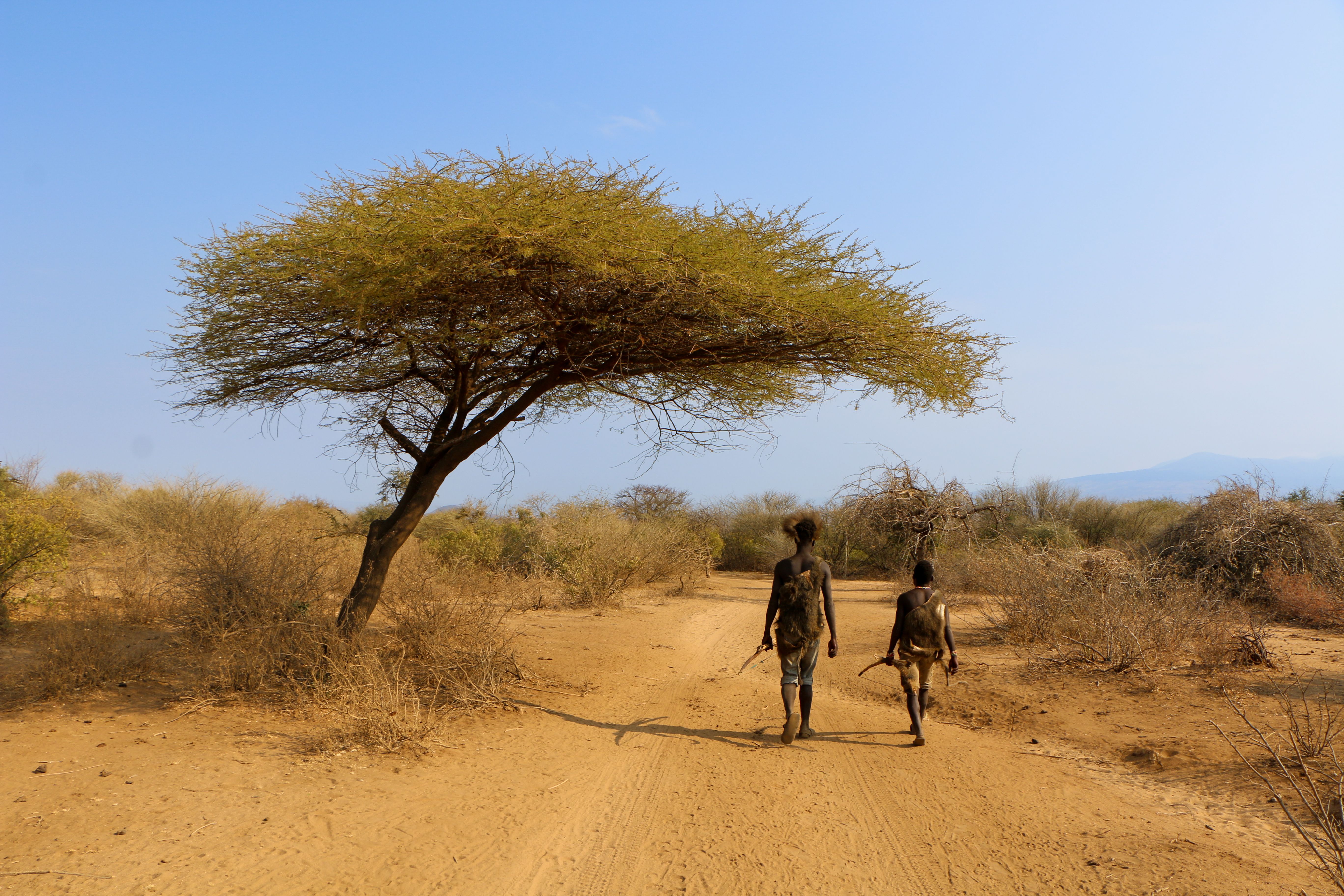
Tanzania’s Northern Circuit offers a rich tapestry of experiences that extend beyond the Maasai heritage. The region is home to diverse tribes, each with its own unique traditions and lifestyles. One of the most fascinating groups is the Hadzabe tribe, one of the last remaining hunter-gatherer societies in the world.
The Hadzabe people have lived in the areas around Lake Eyasi for thousands of years, relying on their deep knowledge of the land and wildlife to survive. They utilize traditional hunting techniques and foraging skills, which provide a stark contrast to the more settled lifestyles of the Maasai. Visiting the Hadzabe gives travelers a glimpse into a way of life that has remained largely unchanged, showcasing their skills in hunting with bows and arrows and gathering wild fruits and roots.
Encounters with both the Maasai and Hadzabe communities along the Northern Circuit highlight the rich cultural heritage of Tanzania, offering profound insights and genuine human connections that enhance the overall safari experience.
Kenya’s Maasai communities are similarly central to the conservancy model — many of the Mara’s conservancies are community-owned by Maasai landowners who have chosen to lease land for wildlife conservation rather than cattle grazing. The relationship between the conservancy model and Maasai land rights is one of East Africa’s most important and inspiring conservation stories, and time spent with community members in this context carries real depth.
Beyond the Maasai, Kenya offers the extraordinary cultural heritage of the Swahili coast — Lamu, Malindi, and Mombasa are UNESCO-listed coastal cities with centuries of Swahili, Arab, and Portuguese history that provide a rich counterpoint to safari experience.
Making the Decision: Tanzania or Kenya?
Choose Tanzania if:
- The Great Migration is your primary goal — you want the full ecological story across all seasons
- Sheer wildlife volume and ecosystem scale matter most to you
- You want the Serengeti’s vast, untracked wilderness or Ngorongoro’s crater floor
- Chimpanzee tracking, Ruaha’s remote wildness, or Tarangire’s elephant spectacle are on your list
- You want to combine safari with Mount Kilimanjaro or the beaches of Zanzibar
Choose Kenya if:
- Intimate, exclusive wildlife encounters with off-road access are your highest priority
- Night game drives and walking safaris are important parts of your vision
- Rhino tracking is on your bucket list
- You want Kilimanjaro views with your elephant encounters (Amboseli)
- Samburu’s rare northern species or Laikipia’s conservation-led model appeal to you
- Logistics from Nairobi provide a convenient hub for your overall travel plan
Choose both if:
- You have 10 or more days
- You want to experience the full breadth of what East Africa offers
- You want to follow the Great Migration across the Tanzania-Kenya border
- You seek the maximum diversity of wildlife, landscape, culture, and access in a single journey
Frequently Asked Questions
Can I visit Tanzania and Kenya in the same trip without it feeling rushed?
Yes — with 10–14 days, a combined Tanzania-Kenya itinerary flows beautifully. We typically allocate 6–8 days to Tanzania (Serengeti, Ngorongoro, and optionally Tarangire) and 3–4 days to Kenya (Masai Mara conservancy and optionally Amboseli or Samburu), finishing on the Kenya coast or returning via Nairobi.
Is Tanzania better than Kenya for first-time safari visitors?
Both countries make excellent first safaris. Tanzania’s Northern Circuit — Serengeti, Ngorongoro, Tarangire — delivers the broadest and most ecologically complete introduction to East African wildlife. Kenya’s Masai Mara combined with a private conservancy offers a more concentrated, intimate, and accessible introduction. The best choice depends on your travel dates and wildlife priorities.
Which country is better for photographers?
Kenya’s conservancies offer the greatest photographic control — off-road vehicle positioning, night drives, and walking safari access. Tanzania’s Serengeti and Ngorongoro deliver the most iconic landscape and wildlife photography scenes. Many of the world’s finest safari photographers work extensively in both countries, using each for what it uniquely offers.
Is crossing the Tanzania-Kenya border straightforward?
Yes. For international travellers, crossing between Tanzania and Kenya is well-managed — typically via chartered flight between airstrips, which handles the border formalities efficiently. Separate visas are required for each country; Tanzania’s e-visa and Kenya’s ETA are both applied for online before travel.