How to Plan a Luxury Safari in Tanzania: A Step-by-Step Guide
Planning a luxury safari in Tanzania is one of the most rewarding travel decisions you will ever make — and one of the most complex if you approach it without the right framework. Tanzania is not simply a destination; it is an entire world of interconnected ecosystems, seasonal wildlife events, remote airstrips, and extraordinary camps, each requiring careful coordination to deliver the seamless, deeply personal experience that luxury travel demands.
This step-by-step guide walks you through every stage of the planning process — from the very first questions you should ask yourself to the final details that separate a good safari from an unforgettable one. Whether you are planning your first East African journey or returning to Tanzania for a deeper exploration, this framework will ensure you approach every decision with clarity and confidence.
Step 1: Define What “Luxury” Means to You
Before selecting a single destination or camp, it is essential to understand what kind of luxury experience you are seeking. In the context of Tanzania safari travel, “luxury” encompasses a spectrum far wider than thread counts and swimming pools.
Experiential luxury centres on unparalleled wildlife access — private vehicles, expert guides with park-specific knowledge, exclusive concession areas where off-road driving is permitted, and the freedom to stay at a sighting as long as the moment demands.
Physical luxury prioritises exceptional accommodation — spacious tents with freestanding bathtubs, gourmet bush dinners under a canopy of stars, butler service, and interiors designed to blur the boundary between camp life and the surrounding wilderness.
Relational luxury values the quality of human connection — a guide who knows you by the end of Day One, a camp manager who remembers how you take your morning coffee, and a team whose warmth feels genuine rather than scripted.
Conservation luxury resonates with travellers who want their spending to have a direct, measurable positive impact — camps that fund anti-poaching operations, support community schools, and restore critical wildlife habitat.
Most luxury safari guests prioritise some combination of all four. Understanding your own hierarchy of values shapes every subsequent decision in the planning process.
Step 2: Establish Your Travel Dates — and Understand How They Drive Everything
In Tanzania, timing is not merely a logistical consideration — it is a fundamental determinant of what you will experience. The same parks in different months deliver entirely different safari stories.
Tanzania’s Two Core Seasons
The Dry Season (June – October) is Tanzania’s peak safari period. As rainfall recedes, vegetation thins dramatically, concentrating wildlife around permanent water sources. The Great Migration occupies the northern Serengeti during this window, with the Mara River crossings reaching their peak drama between July and October. Game viewing visibility is at its finest, and the cool, clear days make for the most comfortable conditions in the field.
However, the dry season commands peak pricing across all luxury accommodation, and the most sought-after camps at prime positions within the Serengeti, Ngorongoro, and Tarangire typically fill 9–12 months in advance. Planning early is not a suggestion — it is a necessity.
The Green Season (November – May) is one of Tanzania’s best-kept secrets. The short rains (November–December) and the calving season window (January–February) both offer extraordinary wildlife experiences with significantly fewer visitors and meaningfully lower accommodation rates. The landscape is visually spectacular — lush, vivid, and photographically captivating. Furthermore, January and February in the southern Serengeti’s Ndutu area deliver some of the most dramatic predator-prey interactions in the entire safari calendar, as hundreds of thousands of wildebeest calves are born on the open plains.
The long rains (March–May) are the one period we approach with greater selectivity — heavy rainfall can limit road access in certain parks and reduces sightings in high-grass conditions. Nevertheless, even the long rains offer genuine rewards for experienced travellers who understand how to work with the conditions.
Aligning Your Dates with Specific Wildlife Events
| Travel Window | Primary Wildlife Event | Best Park(s) |
| January – February | Calving season — extraordinary predator activity | Serengeti (Ndutu), Ngorongoro |
| June | Dry season begins, Grumeti River crossings | Western Serengeti, Tarangire |
| July – October | Great Migration Mara River crossings | Northern Serengeti, Masai Mara (Kenya) |
| October – November | Elephant peak season, dry season tail | Tarangire, Ruaha |
| November – December | Short rains — birding and landscape photography | All northern circuit parks |
Step 3: Select Your Parks and Build Your Routing
Tanzania’s protected areas cover over 30% of the country’s land mass — a staggering conservation commitment that underpins the quality of the wildlife experience. Understanding which parks to combine, and in which sequence, is critical to the flow and coherence of your luxury safari.
The Northern Circuit: Tanzania’s Signature Safari Route
The Northern Circuit encompasses the parks most frequently visited by international luxury travellers, and for excellent reason. The combination of wildlife diversity, ecological variety, and logistical accessibility makes it the most complete introduction to Tanzanian safari available.
Serengeti National Park is the centrepiece. At over 14,763 square kilometres of savannah, woodland, and riverine forest, the Serengeti is the world’s most famous wildlife ecosystem — home to Africa’s largest lion population, the highest density of predators on the continent, and the stage for the annual Great Migration. The park’s zones — southern plains, central Seronera valley, western corridor, and remote northern Lamai Wedge — each offer distinct wildlife experiences and should be matched to your travel dates and priorities.
Ngorongoro Crater is one of the world’s most extraordinary natural amphitheatres — a collapsed volcanic caldera 19 kilometres across, enclosing a permanent wildlife community of approximately 25,000 large mammals. The crater hosts the highest density of lions in Africa, one of East Africa’s most important black rhinoceros populations, and an accessible, permanently resident community of all the major East African species. A full day on the crater floor is a deeply immersive experience — intimate in scale compared to the Serengeti’s vast expanses, yet overwhelming in its wildlife concentration.
Tarangire National Park is the Northern Circuit’s most underrated gem. During the dry season, the Tarangire River becomes the only permanent water source across a vast surrounding landscape, drawing wildlife concentrations of extraordinary scale — elephant herds of hundreds gathering at the river’s edge, massive buffalo aggregations, and predator activity that rivals any park in East Africa. The park’s ancient baobab landscape provides an iconic visual context unlike anything else in Tanzania.
Lake Manyara National Park, while smaller, is an excellent opener or closer for the Northern Circuit — its tree-climbing lions, extraordinary flamingo populations on the soda lake, and dense hippo concentrations in the Lake Manyara channel make for a rewarding half-day or full-day addition.
The Southern Circuit: Tanzania’s Wild Frontier
For the most experienced safari travellers or those returning to Tanzania after covering the north, the Southern Circuit offers a different dimension entirely.
Ruaha National Park — Tanzania’s largest park at over 20,000 square kilometres — is one of Africa’s last genuinely wild frontiers. It hosts the continent’s greatest density of wild dogs, Africa’s largest lion population outside the Serengeti, and an ecosystem so remote and so rarely visited that even a full week here rarely produces another vehicle at a wildlife sighting. Ruaha requires commitment — long fly-in times and limited camp options — but rewards that commitment with an intimacy and rawness that the busier northern parks cannot replicate.
Selous Game Reserve (Nyerere National Park) — Africa’s largest wildlife reserve — offers wildlife experiences unavailable anywhere on the northern circuit: boat safaris on the vast Rufiji River, walking safaris through landscapes unchanged for millennia, and access to the dense woodland habitats preferred by large hippo, crocodile, and buffalo populations. This is also the most accessible starting point for chimpanzee tracking in Mahale Mountains.
Step 4: Determine Your Logistics — Road, Air, or Both
The manner in which you move between Tanzania’s parks fundamentally shapes the quality and depth of your luxury safari experience.
Fly-In Safari: The Luxury Standard
Charter flights between Tanzania’s parks via a network of bush airstrips are the defining luxury logistics choice for any safari of 10 days or fewer. A road transfer between the Serengeti and Ngorongoro takes 5–7 hours on rough tracks; a charter flight covers the same distance in 45 minutes. Every hour saved in transit is an hour gained in the field — and in a luxury safari context, that calculation is decisive.
Beyond time efficiency, fly-in logistics open access to Tanzania’s most remote destinations — parks like Ruaha and Mahale Mountains are accessible by road only via multi-day overland journeys. Charter aircraft transform these into accessible extensions of a comprehensive itinerary.
The aerial perspectives of Tanzania’s landscapes are themselves extraordinary — the vast sweep of the Serengeti plains from 1,500 feet, the perfect geometry of Ngorongoro’s caldera from above, the flamingo-pink lakes of the Rift Valley from the air — these are views that genuinely enhance the experience.
Road Safari: When It Works
Road transfers retain genuine value between parks that are geographically close and scenically rewarding. The route from Arusha to Tarangire (approximately 2 hours on mostly tarmac road) passes through compelling Maasai landscape and is entirely manageable. The descent into the Ngorongoro Conservation Area by road, through highland Maasai territory, is beautiful. These shorter road transfers add dimension rather than consuming time.
For longer multi-park journeys, however, we strongly recommend fly-in logistics to preserve the pace and quality of the luxury experience.
Combined Approach
Most of our most successful itineraries use a combination of both — road for short, scenic transfers near Arusha, charter flights for inter-park connections, and return to Arusha or Kilimanjaro International Airport by air.
Step 5: Choose Your Accommodation — Strategically, Not Just Aspirationally
Accommodation selection in a luxury Tanzania safari context goes far beyond choosing a beautiful property. The right camp positions you in the optimal wildlife territory for your dates, provides the level of service and intimacy appropriate to your travel style, and often unlocks exclusive access to areas unavailable from public park lodges.
High-End Luxury: Exclusive and Transformative
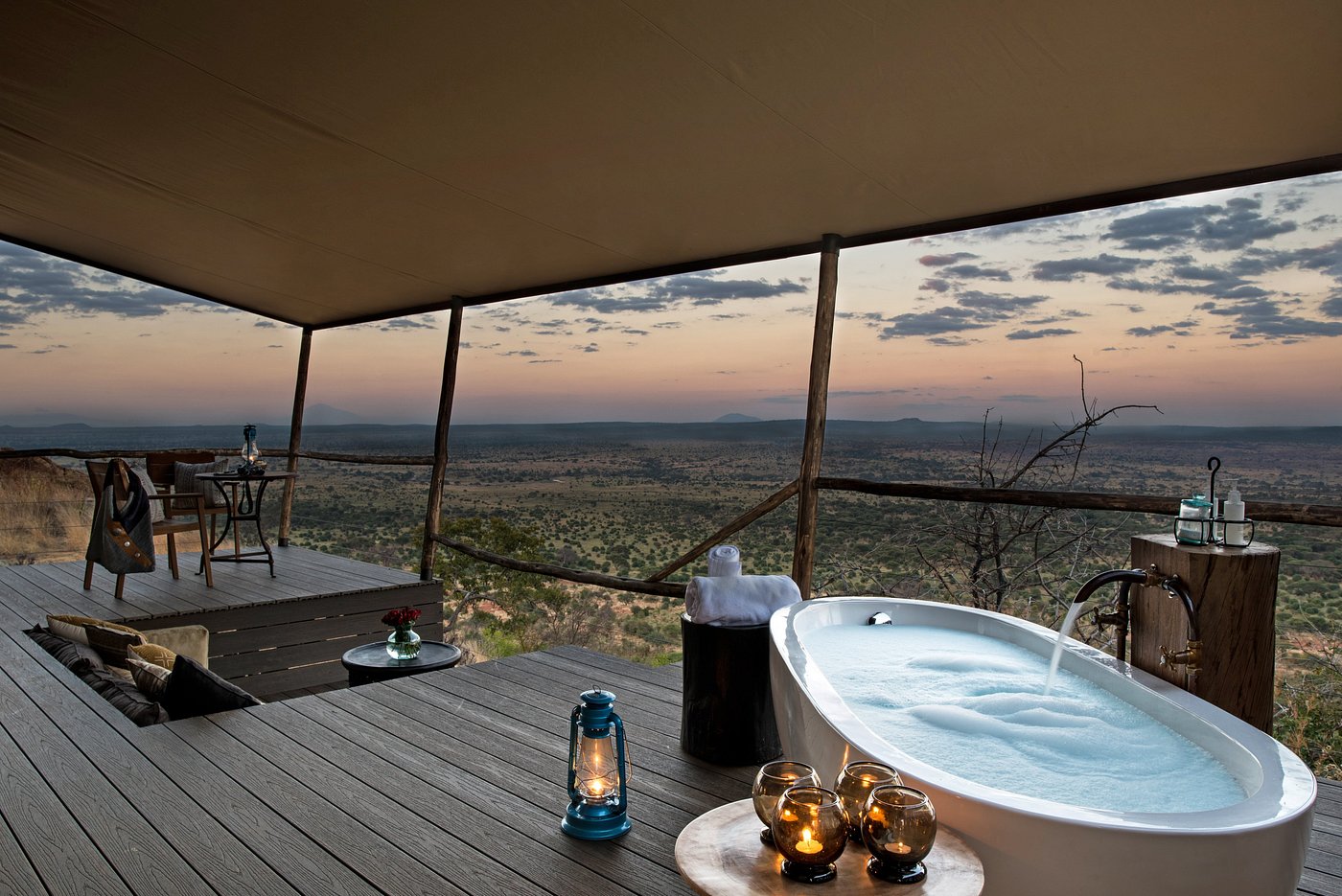
At the apex of Tanzania’s accommodation spectrum are camps of 6–12 tents maximum, positioned within private wildlife concessions or exclusive areas of national parks. These properties offer unlimited off-road vehicle access, night game drives, private guided walking safaris, and bespoke daily programmes designed around your specific interests.
The physical experience at this level is extraordinary — freestanding bathtubs positioned to overlook floodlit waterholes, dining tables set on open river banks with hippo silhouettes in the water below, and morning coffee delivered to your tent before first light as the bush wakes around you. More importantly, the exclusive wildlife access that private concession positioning provides is simply unavailable at any price through standard park lodges.
Luxury: Premium and Deeply Satisfying
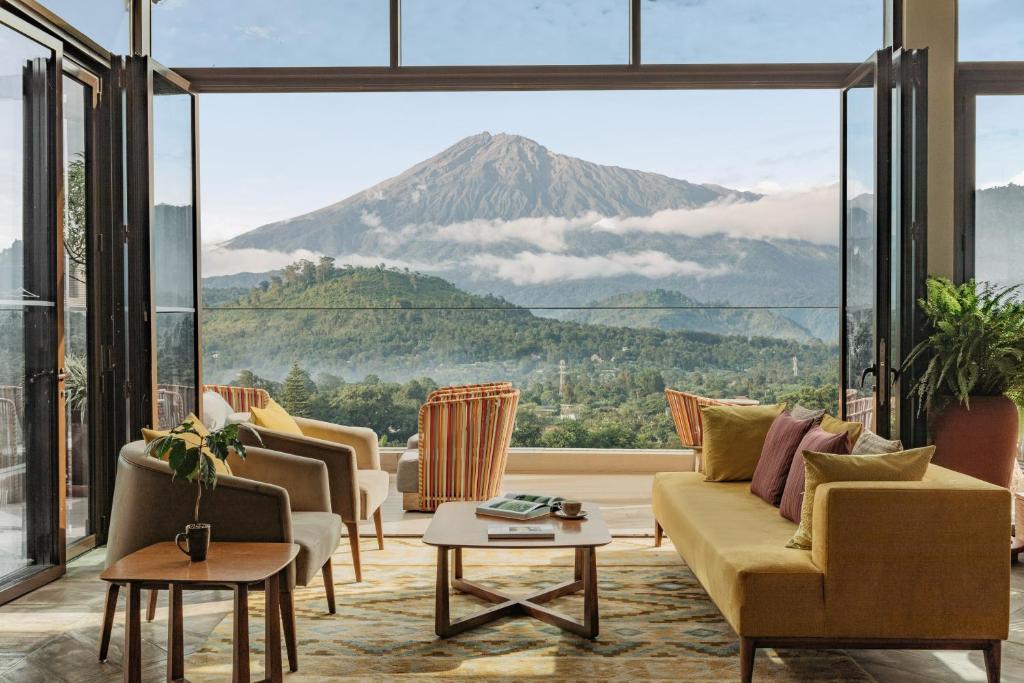
Tanzania’s luxury tier — camps with 12–24 tents, en-suite facilities, private verandahs, excellent cuisine, and dedicated professional guide service — delivers an extraordinary experience at a meaningfully more accessible price point. Many properties at this level include private vehicle options and are positioned in or adjacent to prime wildlife territories.
The distinction between this tier and ultra-luxury is primarily one of scale, exclusivity, and bespoke personalisation rather than wildlife access or service quality.
Sequencing Your Accommodation
We recommend sequencing accommodation from the most remote and physically demanding to the most comfortable as the safari progresses. Beginning in Ruaha or the far northern Serengeti and ending with a night on the Ngorongoro rim before departure creates a journey arc that feels natural — an adventure that ends in reflection rather than beginning in it.
Step 6: Build in the Add-On Experiences That Elevate the Safari
A well-planned luxury Tanzania safari incorporates one or two exceptional add-on experiences that move beyond standard game drives and create moments that become the centrepiece stories guests tell for decades.
Hot Air Balloon Safari over the Serengeti
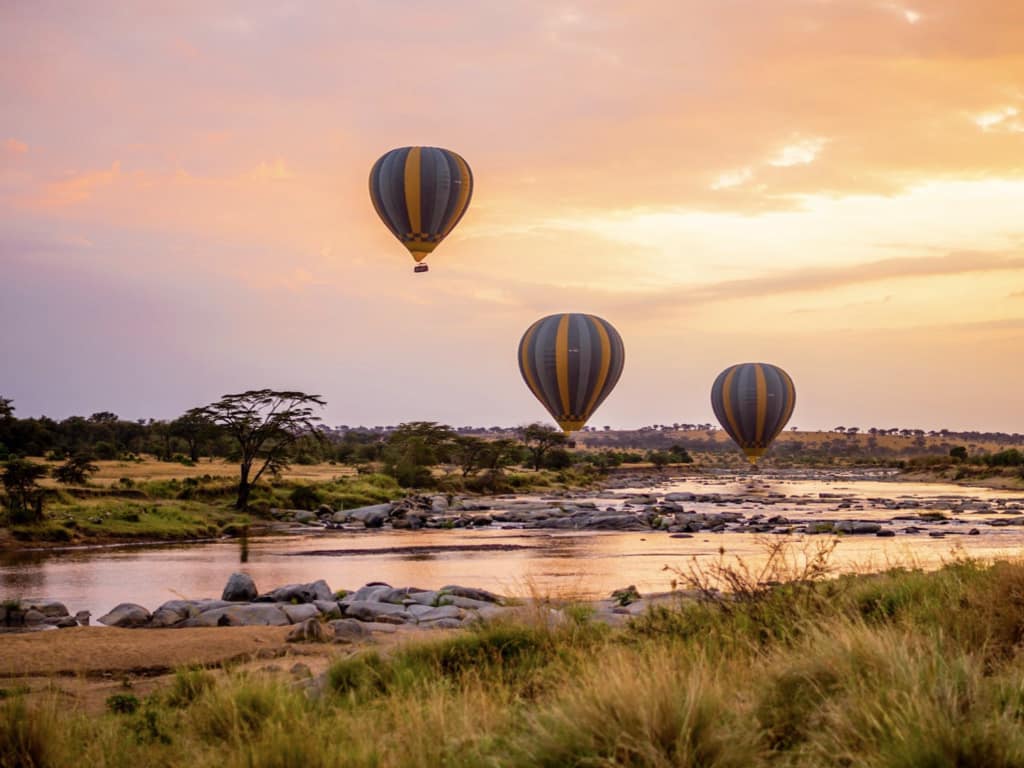
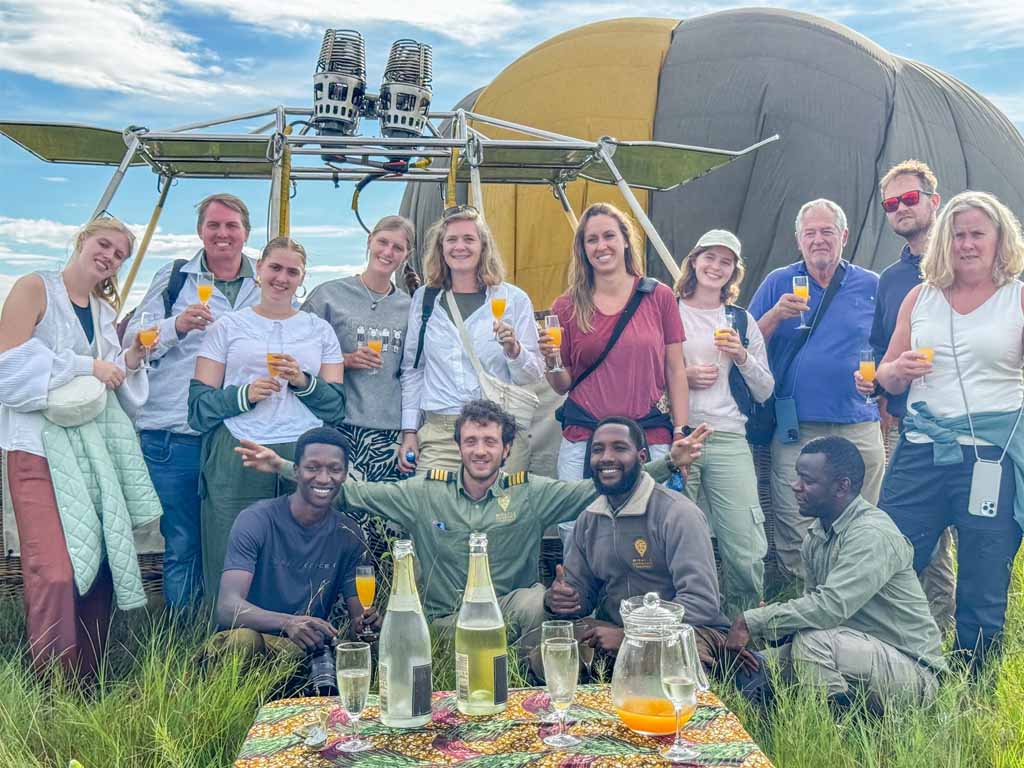
Rising at 05:00, climbing silently into the sky as the Serengeti plains emerge below in the growing light, watching the wildlife patterns of the savannah from 1,000 feet as the balloon drifts with the morning breeze — this experience has no equal in East African travel. It concludes with a full champagne bush breakfast on the plains. Cost: approximately USD 550–650 per person. Duration: approximately 4 hours from camp departure to return.
Walking Safari in Ruaha or Selous
A professionally guided walking safari with an armed ranger fundamentally changes your relationship with the bush. At ground level, every sense engages with the ecosystem in ways impossible from inside a vehicle. Reading tracks, identifying plants by scent, understanding the interconnected fabric of the ecosystem from within it — a half-day walking safari is among the most profound wildlife experiences available anywhere.
Chimpanzee Tracking, Mahale Mountains
Mahale Mountains National Park on the shores of Lake Tanganyika is the site of one of Africa’s most extraordinary wildlife encounters — spending time with wild chimpanzee communities in their forest habitat. The journey to Mahale itself — a flight to Kasanga followed by a boat transfer across the lake — is an adventure, and the remoteness of the destination amplifies the sense of reaching somewhere genuinely special.
Ngorongoro Crater Floor Breakfast
Some camps positioned on the crater rim offer early morning descents with a full bush breakfast set up on the crater floor itself — a private table on one of Africa’s most famous landscapes, with wildlife moving around you. This arrangement requires advance coordination and is only available through operators with the right camp relationships.
Cultural Experience with Maasai Communities
Time with Maasai communities along Tanzania’s Northern Circuit is not an add-on to be treated lightly. An authentic, respectful visit — arranged through operators with genuine community relationships rather than theatrical “cultural villages” — provides profound context for the landscape you are passing through. The Maasai have coexisted with East Africa’s wildlife for centuries, and their perspective on this landscape is irreplaceable.
Step 7: Plan Your Beach Extension
Tanzania’s geographic position means that ending your safari with several nights on the Indian Ocean coast requires no additional flights — Zanzibar, Pemba Island, and Mafia Island are all within 2 hours of Arusha or Dar es Salaam by air.
A beach extension serves multiple purposes. It provides physical rest after the energy expenditure of early morning game drives and long days in the field. It offers a dramatic environmental contrast — the wildness of the savannah giving way to the languid beauty of turquoise Indian Ocean water. And it extends your immersion in East Africa’s extraordinary culture, history, and natural beauty beyond the wildlife experience.
Zanzibar — with its UNESCO World Heritage Old Town of Stone Town, extraordinary beaches, spice plantations, and world-class diving and snorkelling — is the most natural choice for a post-safari beach extension. Three to four nights is the ideal duration — sufficient to decompress, explore Stone Town, and spend meaningful time on the beaches without outstaying the luxury of the contrast.
Step 8: Understand Your Total Investment
Luxury Tanzania safari pricing requires transparency and careful unpacking. A headline price that appears comprehensive rarely is — and understanding the full cost of your journey before you commit is essential to accurate budgeting.
What Should Be Included in a Luxury Safari Quote
- Full-board accommodation at each property
- All scheduled game drives (morning and afternoon)
- All park fees and conservation levies for each park
- Internal charter flights between parks (itemised separately but clearly stated)
- Airport transfers (from Kilimanjaro/Arusha to first camp, and return)
- Emergency medical evacuation coverage
- Laundry service at participating properties
- Non-alcoholic beverages throughout
What Is Almost Always Additional
- International flights to/from Tanzania
- Travel and comprehensive medical insurance
- Visa fees (Tanzania e-visa: approximately USD 50 per person)
- Tips and gratuities for guides and camp staff (approximately USD 20–35 per vehicle per day for the guide)
- Premium or specialty alcoholic beverages at some properties
- Add-on experiences (balloon safari, chimpanzee permits, cultural visits)
- Curio shop and personal purchases
Indicative Total Cost for a Luxury 10-Day Tanzania Safari (Northern Circuit + Zanzibar):
- Two adults, luxury tier accommodation, fly-in logistics, all park fees included
- Estimated range: USD 18,000 – 28,000 total for two (excluding international flights and insurance)
Step 9: The Pre-Departure Checklist
With your itinerary confirmed and deposits paid, the months before departure require attention to several practical details that determine how smoothly your journey unfolds.
Vaccinations and Health: Consult a travel health clinic at least 6–8 weeks before departure. Standard recommendations for Tanzania include yellow fever (required if transiting through certain countries), typhoid, hepatitis A, and antimalarial precautions. Your specific requirements depend on your home country, health history, and exact itinerary.
Travel Insurance: Comprehensive travel insurance for a luxury safari should include cancellation coverage (covering the full trip cost), emergency medical evacuation, baggage loss, and trip interruption. Specialist safari travel insurance policies are available and worth considering given the investment involved.
Visa: Tanzania’s e-visa application is completed online at immigration.go.tz. Apply at least 2 weeks before departure. Requirements and processing times can vary — earlier is always better.
Safari Clothing: Neutral, earth-toned clothing in lightweight, breathable fabrics is the standard. Avoid bright colours, which can startle wildlife. Essential items include: long-sleeved shirts for sun and insect protection, fleece or softshell jacket for cool mornings (especially at Ngorongoro), sturdy walking shoes if walking safaris are planned, wide-brimmed sun hat, and high-SPF sun protection.
Photography Equipment: Bring more memory cards and batteries than you think you need. A 100–400mm telephoto lens delivers the finest results for wildlife photography from a safari vehicle. A bean bag camera rest is more practical than a tripod in a moving vehicle. Dust protection for equipment is essential during the dry season.
Frequently Asked Questions
How far in advance should I plan a luxury Tanzania safari?
For travel during peak season (July–September), begin planning 10–14 months in advance. The finest luxury camps at prime locations fill rapidly — some are fully booked 12 months out for August. For green season travel, 4–6 months provides adequate lead time in most cases, though popular camps book up even in the quieter months.
Is Tanzania safe for luxury safari travellers?
Tanzania is a politically stable, internationally well-connected safari destination with a strong tourism infrastructure. Safety on safari is managed through professionally trained guides, established park protocols, and emergency medical evacuation partnerships. The primary health considerations are malaria prevention and sun protection — both of which are straightforward to manage with proper preparation.
What is the minimum number of days for a worthwhile luxury Tanzania safari?
Seven days is the minimum for a genuinely satisfying luxury Northern Circuit safari — covering the Serengeti, Ngorongoro, and Tarangire with fly-in logistics between parks. Ten days allows for a more relaxed pace and the addition of a Zanzibar beach extension. For those wishing to combine the north with southern circuit parks like Ruaha, 12–14 days is ideal.
Can luxury safaris be customised for specific interests?
Absolutely. Luxury safari planning at its finest is entirely bespoke. Photography-focused itineraries prioritise specific light conditions, private concession access, and vehicle configuration. Honeymoon safaris incorporate private dining experiences, romantic camp setups, and accommodation with exceptional intimacy. Family safaris include age-appropriate activities, camp selection based on child-friendliness, and pacing that respects children’s energy levels.
Should I combine Tanzania with Kenya?
Yes — if your schedule allows 10 or more days. A combined East African itinerary capturing the Serengeti and Ngorongoro in Tanzania alongside the Masai Mara and a conservancy experience in Kenya delivers the full breadth of what the region offers. The Great Migration crosses between both countries, and the contrast between Tanzania’s raw wilderness and Kenya’s conservancy model creates a richer, more complete picture of East African safari excellence.