Hidden Gems in Kenya: Beyond the Masai Mara
The Masai Mara is exceptional and its fame is entirely deserved. But Kenya’s safari landscape extends across a geographical and ecological range that the Mara, for all its excellence, represents only in part. From the semi-arid thornbush of the north to the remote salt lakes of the Rift Valley, from the elephants and rhinos of the central plateau to the extraordinary marine ecosystem of the coast, Kenya contains some of East Africa’s most distinctive and least-visited wildlife destinations each with a specific character, a specific wildlife community, and a specific experiential quality that no other destination replicates.
For first-time Kenya visitors returning for a second journey, for experienced safari travellers looking beyond the standard circuit, or for anyone planning a Kenya itinerary that reaches deeper into what the country genuinely offers, these are the destinations that reward the detour.
1. Laikipia Plateau — Kenya’s Conservation Innovation Hub
The Laikipia Plateau occupies a vast area of central Kenya’s highland savannah, stretching north and west from Mount Kenya’s foothills across a landscape of private and community ranches that have been progressively converted to conservation use over the past three decades. Laikipia is not a national park it has no formal government protection status and yet it is one of Kenya’s most significant wildlife areas and arguably its most innovative conservation landscape.
The Conservation Model
Laikipia’s conservation model is distinct from both the national park system and the Masai Mara’s community conservancy approach. Most of Laikipia’s wildlife land is held on large private ranches some historically established cattle operations, others purpose-converted to conservation that have individually adopted wildlife-friendly land management practices. The result is a fragmented but increasingly connected network of private and community conservation areas that collectively support one of Kenya’s most diverse and healthiest wildlife communities.
The plateau holds Kenya’s second-largest elephant population outside the parks system, significant black rhino populations (Lewa and Ol Pejeta, both within Laikipia, hold the two largest black rhino populations in Kenya), healthy lion and leopard populations, and species rarely encountered elsewhere in Kenya Grevy’s zebra, reticulated giraffe, beisa oryx, and gerenuk are all resident across Laikipia’s drier northern sections.
Ol Pejeta Conservancy
Ol Pejeta is Kenya’s finest single-destination conservancy for conservation depth and species diversity. Covering 90,000 acres of Laikipia grassland and forest, it holds the largest black rhino sanctuary in East Africa and is home to the world’s last two northern white rhinos Najin and Fatu, a mother and daughter whose survival represents the final chapter in a species’ history. Both animals are under 24-hour armed guard.
The northern white rhino encounter at Ol Pejeta is not a comfortable wildlife experience in the way a cheetah sighting is comfortable. It is profoundly moving, ethically demanding, and intellectually challenging in ways that the straightforward celebration of wildlife abundance cannot match. The guides who facilitate these encounters communicate the story with a depth and honesty that creates not just a wildlife memory but a moral one.
Beyond the rhino, Ol Pejeta’s wildlife is outstanding excellent lion, cheetah, leopard, and African wild dog sightings in a well-managed, relatively compact territory with good off-road access and night drives available.
Lewa Wildlife Conservancy
Lewa, directly north of Mount Kenya on the Laikipia Plateau’s eastern edge, is one of Kenya’s pioneering conservation success stories a former cattle ranch converted to a wildlife conservancy in the 1980s that has grown into one of Africa’s most respected conservation operations and a UNESCO World Heritage Site.
Lewa’s specific credentials: the second-largest black rhino population in Kenya, the largest population of Grevy’s zebra anywhere in the world, exceptional lion viewing on open grassland with excellent vehicle access, and a commitment to community development in the surrounding areas that has become a model for conservation-based community benefit programmes across East Africa.
The landscape is specifically beautiful rolling grassland and acacia savannah with the full profile of Mount Kenya as a constant backdrop, the mountain’s equatorial snow visible on clear mornings and its forest-covered lower slopes providing a dramatic green frame to the plateau’s tawny plains.

2. Samburu National Reserve and the Ewaso Nyiro — Kenya’s North
Samburu National Reserve sits on the banks of the Ewaso Nyiro River in Kenya’s dry, semi-arid north approximately 325 kilometres north of Nairobi in a landscape that looks and feels entirely different from anything in the southern safari circuit. The ochre-red soil, the sparse acacia and doum palm vegetation, the bleached riverine forest along the Ewaso Nyiro’s banks, and the dry heat of northern Kenya’s interior create a sensory context quite distinct from the Mara’s rolling green grasslands.

The Samburu Special Five
Samburu is the definitive destination for Kenya’s northern endemic species a group of five animals found in the semi-arid northern ecosystem that are absent or extremely rare in the parks of the south. For any Kenya safari visitor who wants to maximise their species list or who has a specific interest in the ecological diversity of East Africa beyond the savannah standard, Samburu is essential.
Reticulated giraffe: The most beautiful of Africa’s giraffe subspecies, with a pattern of large, clearly defined geometric patches separated by narrow white lines more graphic and more vivid than the Masai giraffe’s irregular blotches. Reticulated giraffe move through Samburu’s doum palm groves in family groups and are encountered in numbers that make photography straightforward.
Grevy’s zebra: The world’s largest wild equid, with narrow pin-stripe markings and distinctive large rounded ears that give it a profile unlike the common plains zebra. Grevy’s zebra are now globally endangered, with fewer than 2,500 individuals remaining. Samburu and the broader northern Kenya ecosystem holds the majority of the world’s surviving population making any encounter with these animals both a privilege and a conservation encounter.
Gerenuk: The long-necked antelope, sometimes called the “giraffe gazelle,” that stands on its hind legs to reach foliage from acacia branches two metres above the ground. This uniquely adapted feeding behaviour, regularly observed in Samburu, is one of the bush’s most extraordinary behavioural spectacles and one of the most reliably photographed in East Africa.
Beisa oryx: The northern equivalent of the common oryx, with subtle colouration differences and slightly different horn characteristics. Found in Samburu’s more open areas in small groups and pairs, typically at the drier edges of the reserve where the doum palm thickets give way to open gravel plains.
Somali ostrich: The northern ostrich subspecies, distinguished by the male’s blue neck and legs (rather than the southern ostrich’s pink-red colouration) during breeding season. Samburu’s open areas support resident Somali ostrich populations that are encountered regularly on morning game drives.
The Ewaso Nyiro River
The Ewaso Nyiro provides Samburu’s permanent water and in a landscape as dry as northern Kenya’s interior, permanent water concentrates wildlife with extraordinary effect. Large Nile crocodiles are resident in significant numbers along the river’s sandy banks and deeper pools. Elephant families cross the river at regular fording points known to experienced guides. Buffalo herds graze the river margins at dawn. And the riverine forest along the banks supports an exceptional leopard population. Several individuals in different territories along the river are known to Samburu’s guides by name, history, and ranging pattern.
3. Matthews Range and the Namunyak Wildlife Conservancy
North of Samburu, the Matthews Range rises from the surrounding semi-arid plains to create a range of forested hills and deep valleys that constitute one of the most important elephant habitats in northern Kenya and one of the most rarely visited destinations in East Africa. The Namunyak Wildlife Conservancy, managed by the local Samburu community with support from conservation partners, protects a vast territory of extraordinary ecological importance.
The Namunyak experience is defined above all by elephants and remoteness. Large elephant herds including some of Kenya’s most impressive tuskers use the Matthews Range’s permanent water sources and forested valleys as a dry-season refuge, and the experience of encountering them in this genuinely wild, vehicle-free landscape is radically different from any national park encounter.
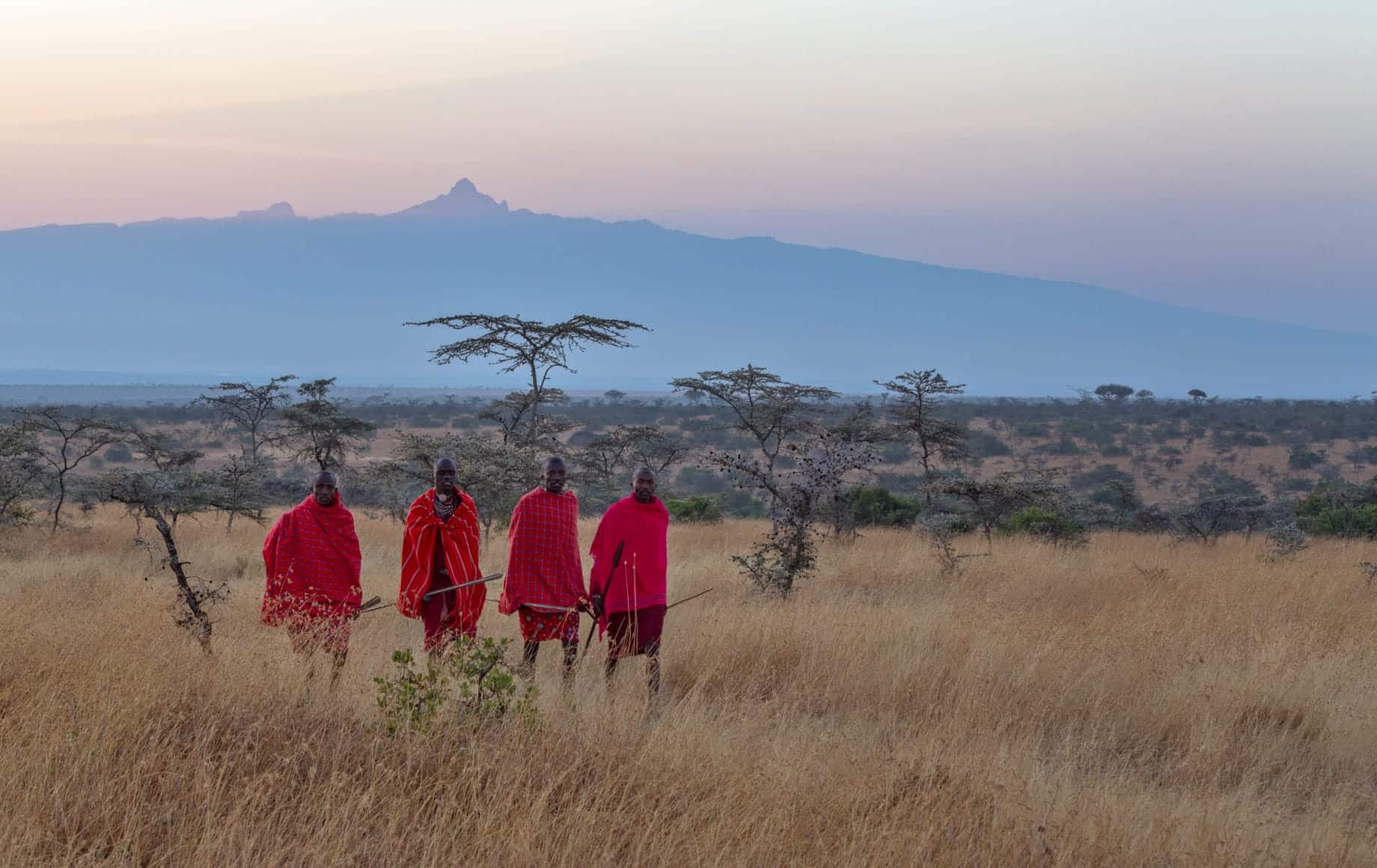
Walking with Samburu warriors as guides in the Namunyak territory tracking elephant on foot through dense bush, understanding the landscape from the perspective of a community that has coexisted with wildlife for centuries, and camping in a landscape where no other tourists are present is an experience that defies ordinary safari vocabulary. It is not comfortable. It is not predictable. And it is among the most genuinely transformative experiences available to any serious Africa traveller.

4. Chyulu Hills — The Green Backdrop to Amboseli
The Chyulu Hills a range of young, beautifully formed volcanic cones covered in montane forest on the southern edge of Kenya’s highland zone are visible from Amboseli’s northern game drive circuits as a dramatic green backdrop to the park’s semi-arid plains. Most visitors see them from a distance. Very few visit them directly.
The Chyulu Hills National Park protects one of Africa’s youngest and most ecologically significant volcanic landscapes. The hills were formed less than 500 years ago geologically instantaneous and their porous volcanic soils capture an extraordinary volume of rainfall, which percolates down through the rock to emerge as the crystal-clear Mzima Springs in Tsavo West approximately 40 kilometres away. Protecting the Chyulus is therefore not merely a landscape or biodiversity priority it is a direct water supply security requirement for the entire Tsavo ecosystem.
Walking in the Chyulu Hills through the montane forest on the range’s upper slopes, across the open volcanic grassland of the crater rims, and through the dense lower bush provides a Kenya experience entirely different from any savannah safari. The endemic bird community of the highland forest, the extraordinary geological freshness of the volcanic landscape, and the views from the summit cones across to Kilimanjaro on clear days create a destination of genuine, distinctive beauty.

5. Meru National Park — Elsa’s Legacy
Meru National Park, northeast of Mount Kenya in Kenya’s northern lowlands, holds a specific place in conservation history as the park where Joy and George Adamson rehabilitated Elsa the lioness the subject of the book and film “Born Free” in the 1960s. This history is part of Meru’s identity and its guide narrative, but the park deserves attention on its own ecological merits entirely independent of its literary fame.
Meru is one of Kenya’s most ecologically diverse parks covering a broad altitudinal range from the drier north to the wetter forest zones near its southern boundary, and supporting an exceptional wildlife community that includes rhino (in a secure sanctuary), large elephant populations, a recovering lion population, the full suite of northern endemic species (reticulated giraffe, Grevy’s zebra, Somali ostrich), and over 400 bird species.
The park was severely impacted by poaching in the 1980s and 1990s and has required significant rehabilitation. The recovery is ongoing and impressive Meru’s wildlife populations have recovered meaningfully, and its road network and accommodation have been progressively improved. The park now offers a genuinely excellent safari experience with notably lower visitor numbers than Samburu or the southern parks creating a quality of wilderness atmosphere that is increasingly rare in Kenya’s better-known destinations.

6. Hell’s Gate National Park — Walking and Cycling Country
Hell’s Gate National Park, 90 kilometres northwest of Nairobi in Kenya’s Central Rift Valley, is the only Kenyan national park where visitors are permitted to walk and cycle freely through an active wildlife area. The park’s dramatic landscape a deep gorge carved by ancient volcanic and water action, dramatic rock towers, hot springs, and open grassland can be explored independently on foot or by bicycle, creating a safari experience of complete physical engagement that no other Kenyan park provides.
Hell’s Gate is not a big five destination lion and elephant are absent from this relatively small and heavily human-adjacent park. Buffalo, zebra, warthog, various antelope species, and a genuinely excellent raptor community are the wildlife. But the experience of cycling through open grassland among zebra herds, of descending into the gorge on foot to stand beside steaming volcanic vents and crystal-clear hot spring pools, and of exploring a dramatic geological landscape on one’s own terms and at one’s own pace, creates a wildly different and specifically energising form of nature engagement.
Hell’s Gate is best visited as a day trip from Nairobi or as a component of a broader Lake Naivasha and Central Rift Valley itinerary that includes the Aberdares, Mount Kenya foothills, and Lake Nakuru’s flamingo concentrations (subject to current water and flamingo conditions).

Planning a Beyond-the-Mara Kenya Itinerary
The destinations above can be incorporated into Kenya safari itineraries in several natural ways:
Northern Kenya Explorer (9–11 days): Nairobi → Samburu (3 nights) → Ol Pejeta or Lewa (2 nights) → Masai Mara Conservancy (3–4 nights) → Nairobi. A comprehensive introduction to Kenya’s ecological breadth, covering the northern endemics, the rhino conservation story, and the Mara’s conservancy experience.
Laikipia Focused (7–8 days): Nairobi → Lewa (2 nights) → Ol Pejeta (2 nights) → Borana or other Laikipia ranch conservancy (2 nights) → Nairobi. A specifically conservation-focused itinerary for guests whose primary interest is rhino, Grevy’s zebra, and conservation innovation.
Matthews Range Expedition (10–12 days): For adventurous travellers: Nairobi → Samburu (3 nights) → Namunyak/Matthews Range (3 nights) → Ol Pejeta (2 nights) → Masai Mara (3 nights) → Nairobi. Kenya’s full north-to-south wildlife arc with genuine wilderness camping.
Frequently Asked Questions
Is Samburu significantly different from the Masai Mara? Entirely different, and this is the most important reason to include it. Samburu’s landscape, atmosphere, wildlife species, and access character are all distinct from the Mara. The northern endemics are found nowhere else in Kenya’s safari circuit. The dry, dramatic character of northern Kenya’s interior creates a sensory context that the Mara’s rolling grasslands do not replicate. Samburu and the Mara are the finest complementary pairing in Kenya; experienced together, they reveal the full breadth of what East Africa’s wildlife world contains.
Is Ol Pejeta appropriate for first-time safari visitors? Yes. Ol Pejeta’s excellent infrastructure, accessible location (3–4 hours from Nairobi by road or 40 minutes by charter flight), and outstanding wildlife — including rhino, lion, cheetah, and wild dog make it one of Kenya’s most rewarding first safari destinations. The northern white rhino encounter is emotionally challenging in specific ways that are appropriate for adults and older teenagers, and the camp guides manage the conservation conversation with sensitivity and depth.
Can the Matthews Range be visited without camping? Some properties offer permanent or semi-permanent luxury accommodation within or adjacent to the Namunyak territory. However, the full Matthews Range experience, the wilderness walking, the Samburu guide partnership, and the remoteness that defines this destination’s character is most fully realised in a bush camping format. For travellers who prefer a degree of physical comfort alongside genuine wilderness, several Namunyak properties combine canvas accommodation with authentic wilderness access.